Camargue birds and cattle: a natural symbiosis explained
The Camargue is a landscape where horses, bulls and flocks of pink flamingos share salt, reedbeds and lagoons. This article explains how birds and grazing livestock form a living network of benefits and tensions, shaped by centuries of manade culture and modern conservation.
🚀 Key Takeaways
- Core concept : Birds and cattle interact in ways that benefit feeding, pest control and habitat shaping.
- Practical tip : Best observation times are at dawn and dusk, and avoid nesting zones from April to July.
- Did you know : The Camargue regional park, created in 1970, helped protect breeding sites and restored flamingo populations.
Pink wings flash at sunrise. Imagine a herd of Camargue horses, a band of cattle, and a cloud of flamingos threading the blue of Vaccarès lagoon.
Terre et vol
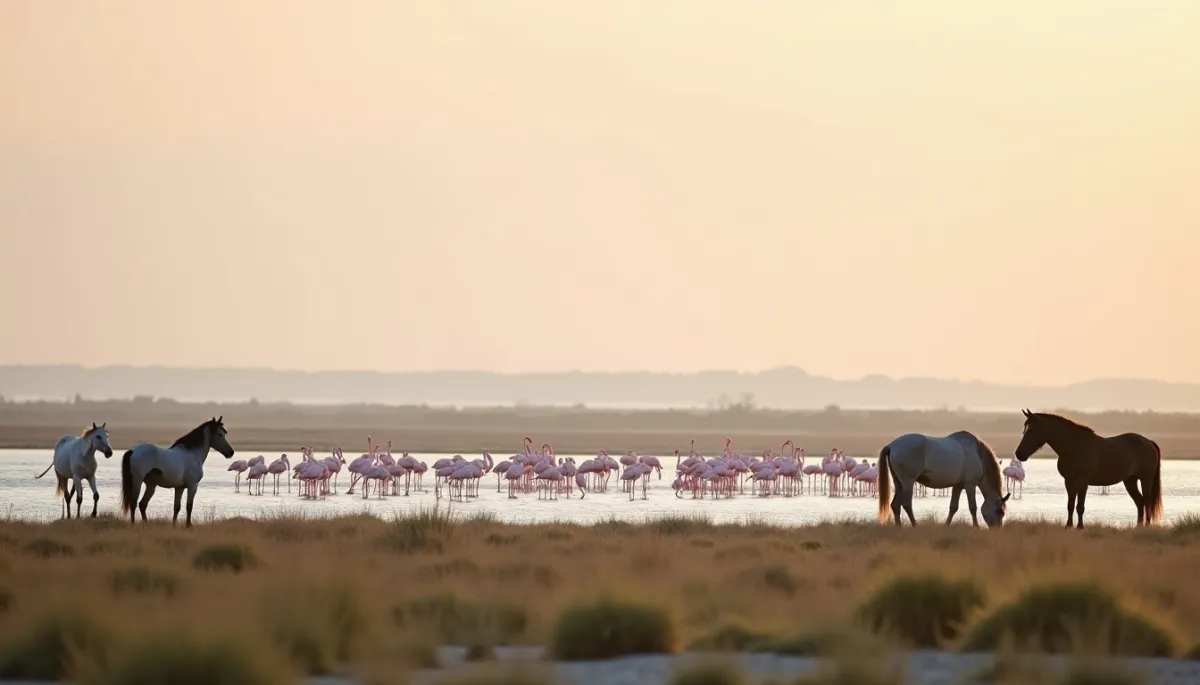
The protagonists are familiar: the flamant rose (Phoenicopterus roseus), the aigrette garzette (Egretta garzetta), the héron cendré (Ardea cinerea), and the traditional livestock of the manades, Camargue horses and bulls. These species meet daily across the delta, from the salt pans near Salin-de-Giraud to the reedbeds around Saintes-Maries-de-la-Mer.
Birds use shallow waters and mudflats for feeding, while cattle and horses graze salt-tolerant grasses and stir up the substrate. That movement makes invertebrates and small fish accessible, creating feeding opportunities for wading birds. Observers report seeing flamingos filter-feed in the wake of a grazing herd, a quietly coordinated scene repeated each season.
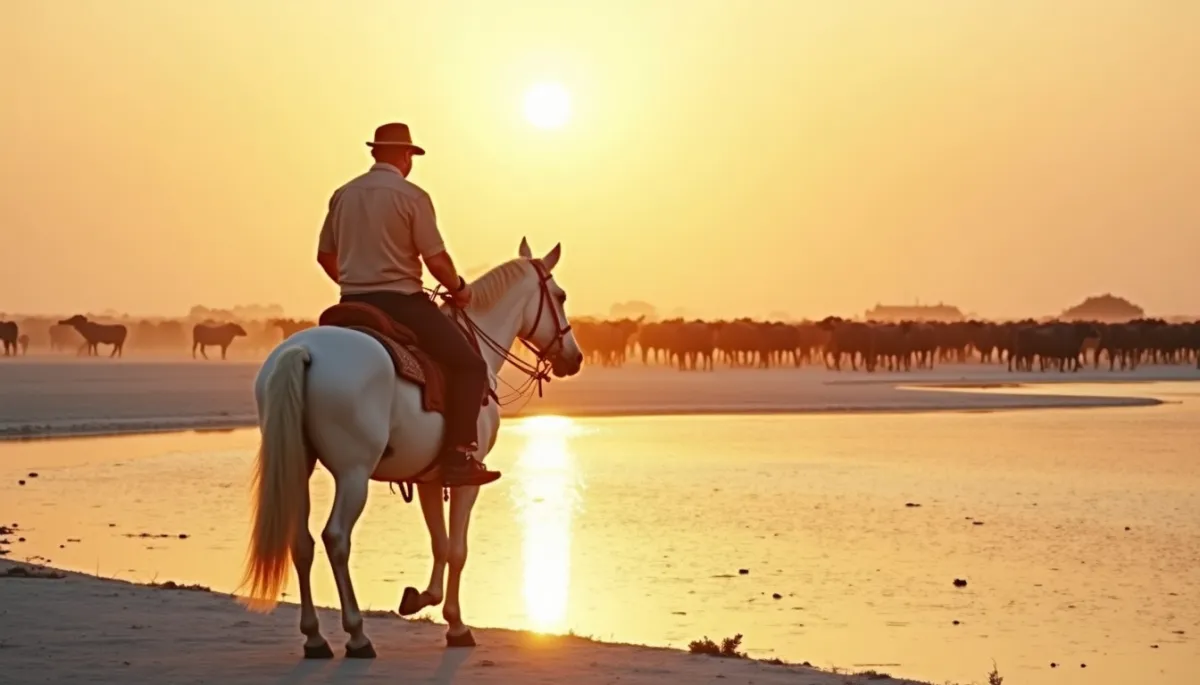
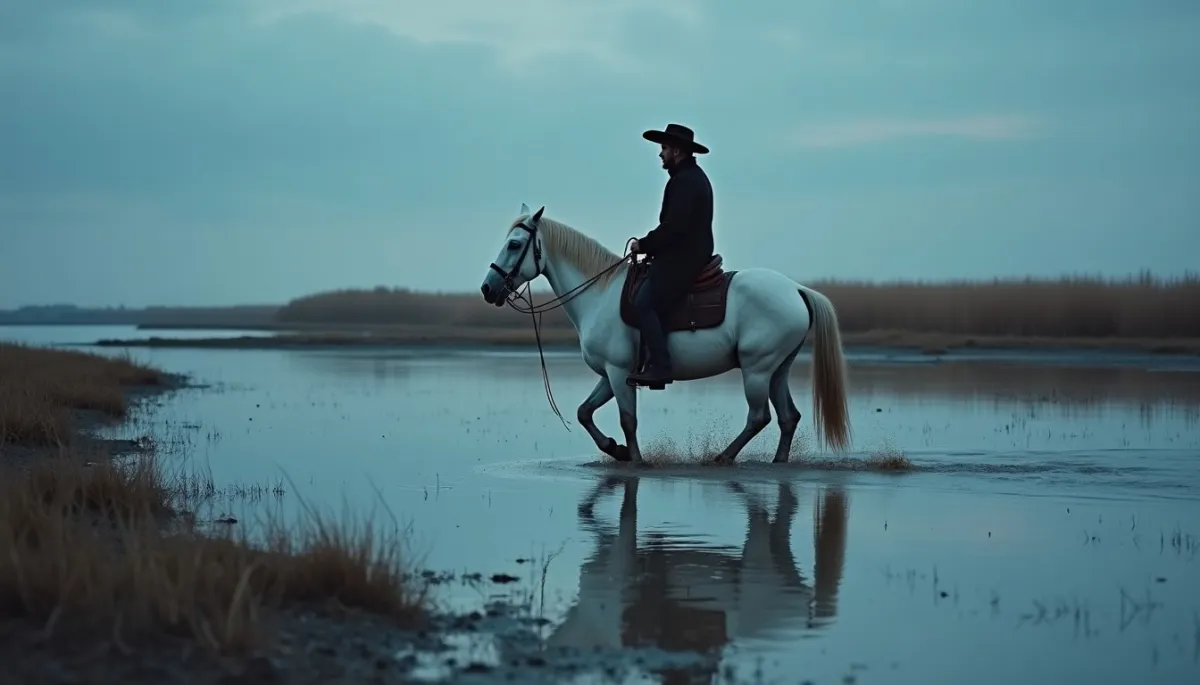
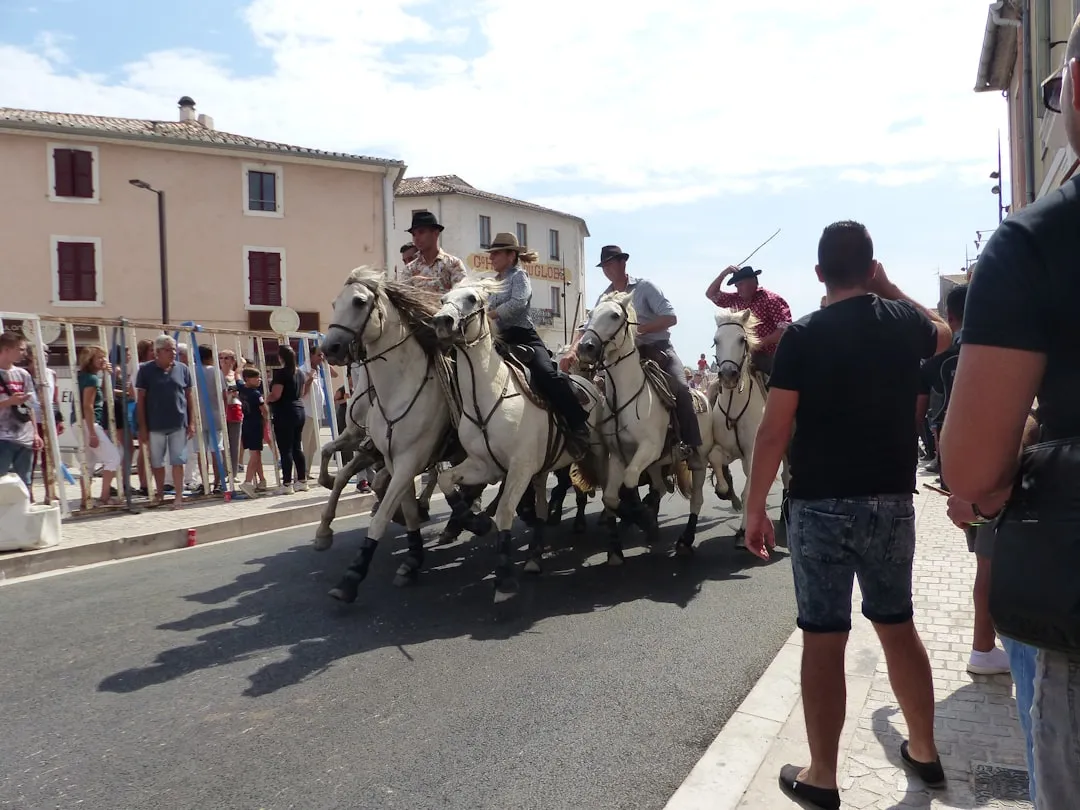
Local people, the gardians (mounted herders), and the manadiers (herd owners) know these rhythms well. Their work, visible during transhumances and seasonal moves, shapes where birds will nest or feed. The Camargue's identity is therefore as much cultural as ecological, woven out of human, bovine and avian presences.
Récoltes partagées
At first glance, the relationship looks simple: birds eat what cattle uncover. But it goes further. Aigrettes and hérons remove ectoparasites from livestock and feed on insects that flourish in grazed pastures, providing a natural pest control. This interaction reduces parasite loads for animals and lowers the local need for chemical treatments.
Historically, salt-extraction and rice cultivation changed water levels and created mosaics of habitats. Since the creation of the Parc naturel régional de Camargue in 1970, some sites have been managed to favor both livestock grazing and bird conservation. The managed ponds at the Vaccarès lagoon and the Etang du Fangassier are good examples where human activity and wildlife coexist.
Anecdotes from the manades are plentiful. One gardian I met near Le Sambuc described flamingos following the herd into a shallow lagoon, then moving off together. Another manadier in the 1990s experimented with rotational grazing, noticing an immediate increase of lapwings and plovers using recently grazed fields.
Read alsoCamargue wines and terroirs
Conflits et cohabitations
Yet the balance is fragile. Intensive agriculture, urbanization near Arles, and altered hydrology can shift saline patterns and flush out nesting sites. Breeding seasons, typically from April to July for many waders and flamingos, are especially sensitive to disturbance.
There are also occasional tensions between conservation goals and manade economics. For instance, restrictions on certain marshlands to protect bird colonies can limit grazing area, pushing some owners to adapt herd sizes or grazing schedules. Local councils and park managers increasingly use compensated agreements to align conservation and pastoral activities.
Looking forward, climate change is an overarching uncertainty. Rising sea levels and modified rainfall could change the distribution of lagoons and reedbeds. The strength of the Camargue model lies in its culture of adaptation: gardians have long adjusted transhumance routes and practices. Supporting them, through subsidies and knowledge exchange, helps keep that adaptability alive.
For visitors, respect is simple. Use binoculars, stay on marked paths, and keep distance from nesting colonies. Visit in early morning or late afternoon, join a guided manade visit, and prefer small local operators who know the sensitivity of the sites. That way, you witness an ancient symbiosis without breaking it.