Camargue salt and livestock: a vital balance for wildlife
On the flat salt pans of the Rhône delta, industry and tradition meet a fragile wildlife. From flamingos to Camargue horses, salt shapes a unique landscape where grazing and evaporation write a century-old pact.
🚀 Key takeaways
- Core concept : Salt production creates hypersaline habitats that sustain specialized fauna and support pastoral traditions.
- Practical tip : Visit salt pans at late afternoon, stay on marked paths, prefer guided tours to learn from paludiers and gardians.
- Did you know : Brine shrimp (Artemia) in the pans feed flamingos, whose pink hue comes from their diet.
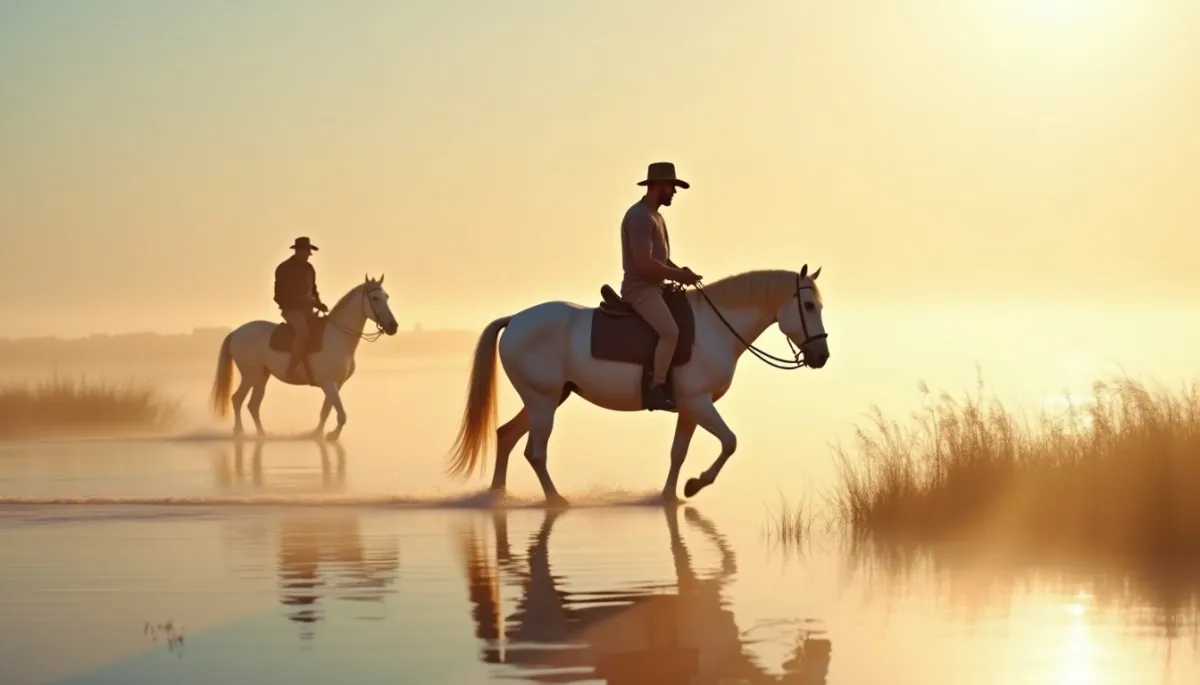
The light in the Camargue can change a life. Imagine a line of white salt pans catching the sun, a gardian on a grey Camargue horse crossing a pink lagoon where flamingos feed.
Salt and life
The salt pans are more than industry. They are layered habitats: from brackish marshes to hypersaline basins, each zone hosts adapted species. Thin crusts of salt reflect the sky, while below, microscopic life buzzes and feeds wading birds.
Flamingos (Phoenicopterus roseus) are the emblem. They concentrate in the Camargue to breed and feed. Their chicks depend on sheltered, saline basins for nurseries, away from terrestrial predators. The brine shrimp Artemia is a keystone food, abundant in high-salinity ponds.
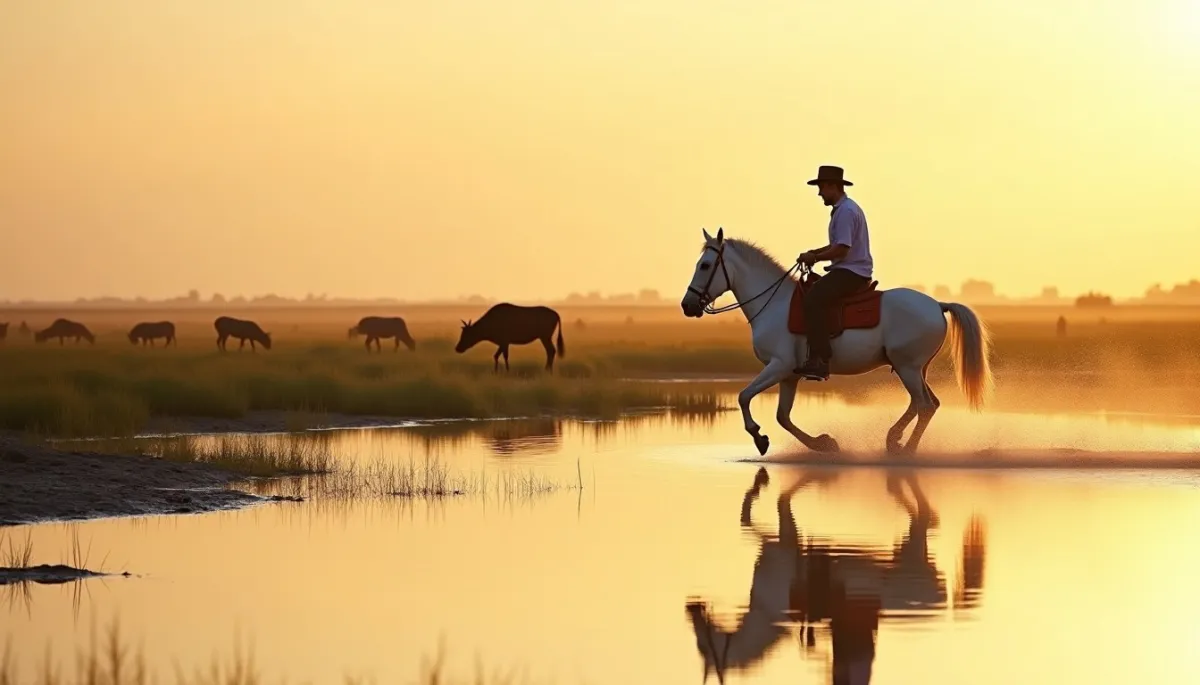
Livestock also benefit. The Camargue horse and the white bulls of the manades graze reedbeds and saline prairies, maintaining open habitats. Grazing prevents reed overgrowth, preserving shallow lagoons necessary for migratory birds.
Salt origins
Salt exploitation in the Camargue has ancient roots. Salt has been collected in the Rhône delta since Antiquity and through the Middle Ages, linked to ports like Aigues-Mortes. Over centuries, the technique evolved from small paludiers' basins to large engineered pans.
In the 19th and 20th centuries, industrialization expanded the pans, introducing mechanical harvest and extensive water management. Yet local paludiers (salt workers) retained traditional knowledge: timing of sea-water inlet, depth control, and the sequence of ponds needed to obtain fleur de sel or coarse salt.
Today, a mosaic of public reserves, private salines and agricultural lands shapes the delta. Notable sites such as Salin-de-Giraud and the Étang de Vaccarès sit beside manades (livestock ranches), producing both salt and pastoral products that define Camargue identity.
Tensions and fragilities
Balance is fragile. Intensive salt extraction or altered water flows can change salinity gradients, threatening Artemia populations and the birds that feed on them. Conversely, abandonment of traditional grazing leads to reed encroachment, silting of lagoons and loss of shallow feeding grounds.
Conflicts sometimes arise between conservationists and industrial operators over water allocation, chemical runoff risk, and landscape transformation. In recent decades, collaborative initiatives have grown: joint management plans between park authorities, salines and manades aim to coordinate seasonal water levels and grazing schedules.
Climate change adds pressure. Sea-level rise, hotter summers and changing rainfall modify evaporation patterns, forcing adaptive management. Local actors—paludiers, gardians, biologists—are experimenting with flexible sluice opening dates and rotational grazing to maintain habitat heterogeneity.
For visitors and locals, the lesson is clear: salt is not a neutral commodity. It is an ecological engine, a cultural marker and a resource to be stewarded. When you walk near the pans, respect fences, follow guided routes, and ask a paludier about the rhythm of the tides. You will learn how every tramontane wind, every summer evaporation, is part of a living pact between the sea, the land and those who tend it.