Gardians' festival: Immersion in Arles on May 1st
Every May 1, Arles fills with horses, hats and salt-dried light. The Fête des Gardians is a living pageant where Camargue herdsmen and their horses reclaim a public stage.
🚀 Key Takeaways
- Key concept : The Fête des Gardians celebrates the gardians (Camargue herdsmen) and their manades (herds), every May 1 in Arles.
- Practical tip : Arrive early near the arenas or Place de la République, wear sun protection and try a bowl of gardiane de taureau.
- Did you know : The Camargue horse is traditionally grey, bred to work in marshy grounds and closely linked to local cattle work.
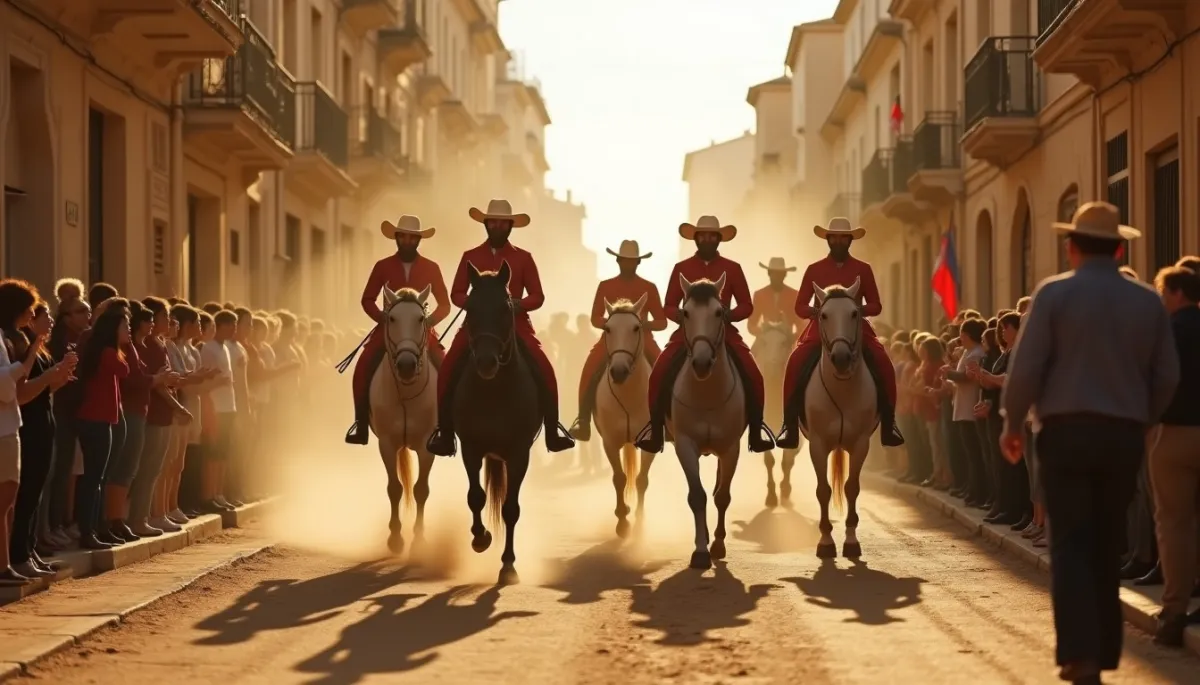
Horses clip-clop through a narrow Arles street, bells chiming, a sun-washed crowd leaning out of windows. You feel a dusted, ancestral rhythm, as if time had paused to salute a living trade.
Matin en selle
The morning of May 1 unfolds like a ritual. From dawn, manades roll into Arles, long columns of horses and riders threaded through the old town. The spectacle often begins around the arenas and the Place du Forum, then winds toward the river and the arenas for demonstrations.
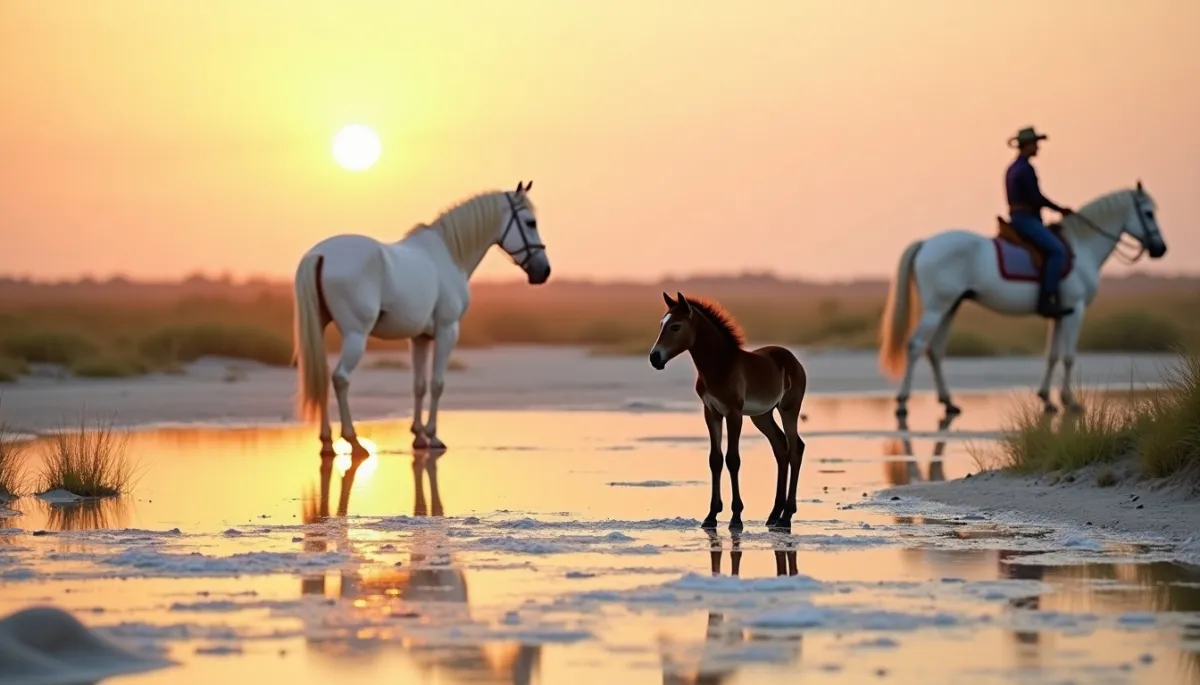
Gardians wear practical clothes that have become emblematic: sturdy boots, wide-brimmed hats and the red sash or scarf sometimes seen in historic photos. They ride Camargue horses, compact and sure-footed, bred for marshes and for managing bulls. The visual contrast of white horses and dark bulls is central to the pageant.
Families of manadiers (herd-keepers) come from villages in the Camargue, sometimes from generations who kept the same herd. The event is at once a show, a market of traditions, and a workday turned public ceremony.
Traditions en action
The heart of the fête is practical traditions made visible. You will see abrivados (escorted movements of bulls), demonstrations of horse-handling, and moments that resemble the tasks of a working day: guiding, separating, showing the herd. The course camarguaise (a non-lethal bull game) often frames the afternoon, with raseteurs showing agility.
Names and faces vary: some gardians are local celebrities within their manade, others are quiet horsemen whose expertise only reveals itself in their calm control of an animal. The manades themselves are an institution, herds of bulls and horses owned by families or companies, often named and registered.
Anecdotes abound. Older Arlésiens will tell you about a procession halted by a sudden spring shower, the horses unruffled while the crowd scattered under awnings. Young gardians sometimes arrive with smartphones in saddle bags, mixing tradition and modernity. You will hear Provençal words whispered in the crowd, and the little jokes passed between riders before a tricky manoeuvre.
Racines camarguaises
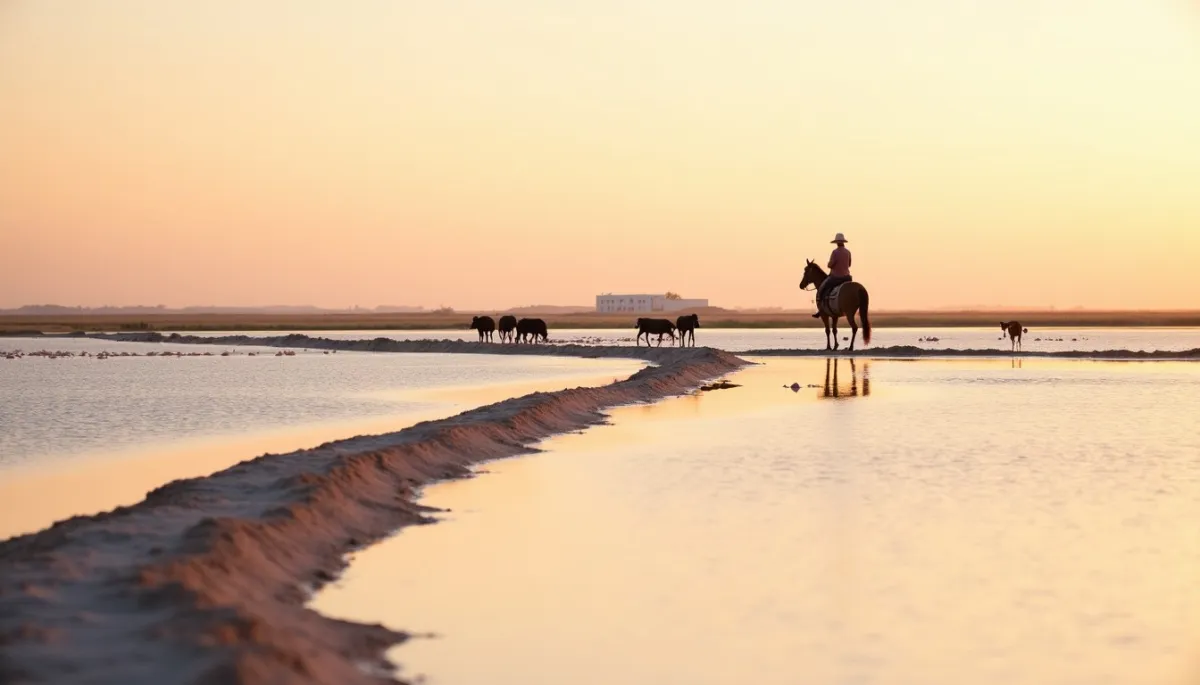
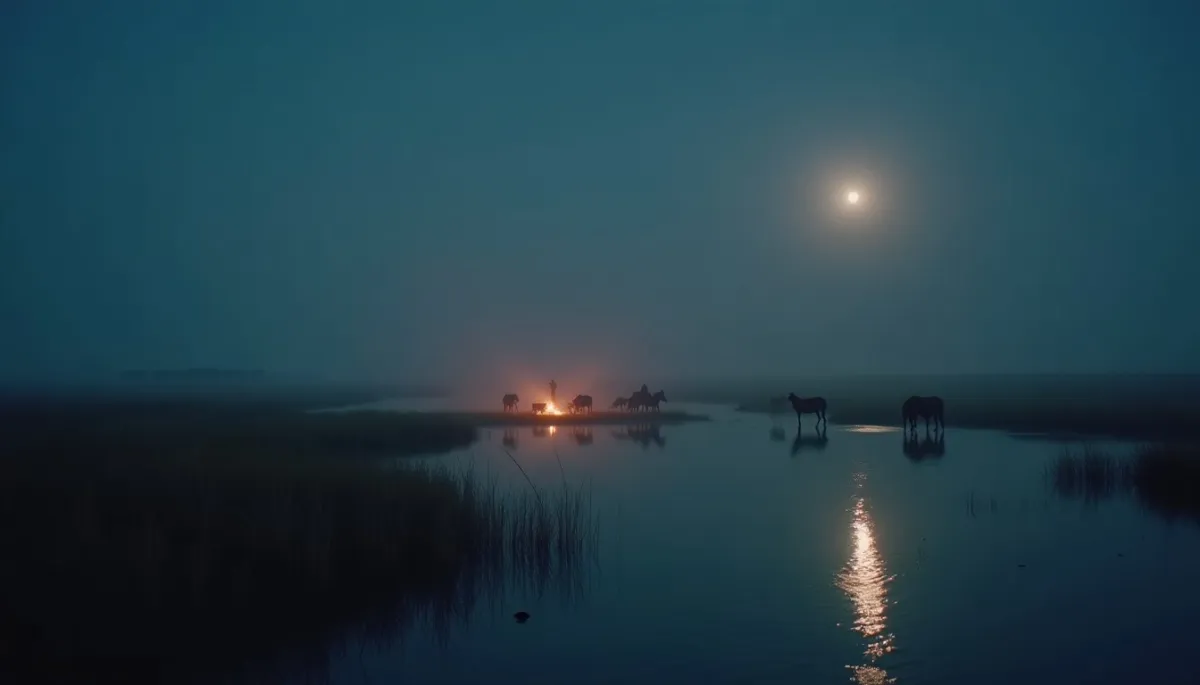
Why does this fête still matter? The answer lies in land and labor. The Camargue is a delta of marshes and salt flats where horse and bull breeding shaped daily life for centuries. The gardians emerged as specialists, herding animals across reed and brackish soil, a role impossible without a specific saddle, a certain gait and intense knowledge of animals.
Historically, these practices were both economic and cultural. Salt harvests, shepherding and cattle rearing created a social fabric where skills were taught within families. Over time, festivals crystallized those practices into public identity: showing animals, celebrating a patron saint in some places, and marking seasonal cycles.
Modern pressures have not erased this identity. Agricultural policies, tourism, and the protection of biodiversity (notably the Parc naturel régional de Camargue) have all intersected with the gardians' lives. Some manades adapted by offering equestrian tourism, others remained dedicated to traditional breeding for the bulls used in local courses.
Vers un avenir partagé
There are tensions. Urban growth in Arles, tourism that sometimes flattens nuance into spectacle, and the economic fragility of small manades create contradictions. How to keep practices alive without turning them entirely into a show for visitors? That question guides many local debates.
Yet there are reasons for optimism. Associations, museums (like the Musée de la Camargue) and local schools offer apprenticeship programs. Initiatives to label products and breeds, plus the growing interest in sustainable tourism, help fund the continuity of herds and training of new gardians.
For visitors, the best approach is respectful curiosity: watch, listen, taste local dishes such as gardiane de taureau (a slow-cooked beef or bull stew), and, if offered, exchange a few words with a manadier. You will bring away more than images, you will have touched a living craft that still shapes the Camargue landscape.