The Camargue museum: understanding the bond between people, horse and water
The Musée de la Camargue invites you to listen to the land. Between salt, reeds and hooves, the museum tells how people and horses shaped a landscape.
🚀 Key Takeaways
- Core idea : The museum explains the interdependence of man, horse and water in the Camargue.
- Practical tip : Visit in spring to see gardians and horses active near the étangs.
- Did you know : The word manade refers to a semi-wild herd managed by a small number of gardians (traditional cowboys).
There is a sound that is unmistakable: the soft clack of hooves on marshy ground. Imagine standing at the museum entrance, the wind carrying the scent of salt and algae.
Land and ritual
The Musée de la Camargue (located in Saintes-Maries-de-la-Mer, within the Rhône delta) frames the landscape as a cultural object. Exhibits show maps, photographs, and artifacts that link daily work to waterlines and tides.
Objects are simple: bridles, branded letters, a gardian's jacket, old salt pans diagrams. Yet each item carries a story of adaptation, like the lightweight tack designed for wet soils, or boots repaired dozens of times, testimony to harsh winters in the marshes.
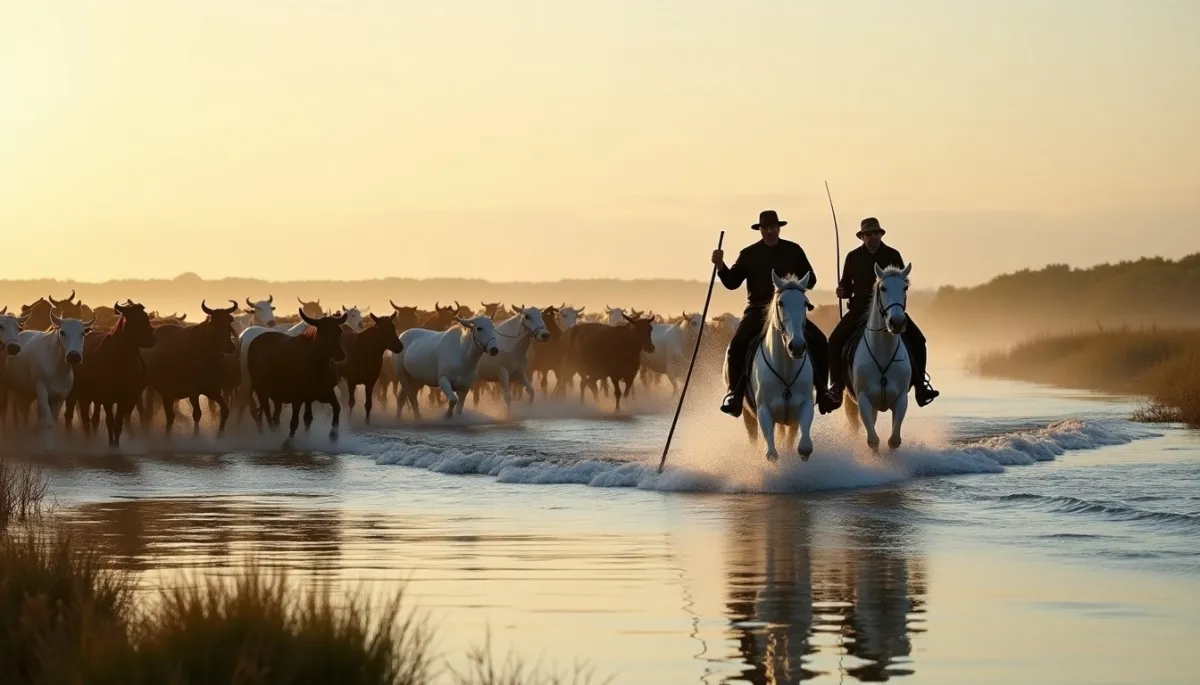
Visitors encounter folios on Folco de Baroncelli (a key figure for Camargue identity), postcards from the early 20th century, and photos of manades crossing shallow étangs. These pieces reconnect the visitor to a living practice, not a fossilized past.
People who shaped the delta
Gardians are central. They are the mounted herders of bulls and horses, whose techniques evolved to work in reed beds and salt flats. The museum explains their seasonal rhythm: roundups (abrivado and bandido), salt harvests, and bull games in local arenas.
The Camargue horse appears not as a breed of pure spectacle, but as a working partner. Small, robust, and adapted to brackish soil, it has been used for centuries to move cattle and patrol marshes. An explanatory panel clarifies the term manade (a herd, often semi-feral, managed by a manadier).
Anecdotes animate the rooms. One panel recounts how, in 1909, Folco de Baroncelli helped institutionalize local festivities and valorize the gardian as cultural emblem. Another recalls how rice growers and gardians negotiated water rights, a daily choreography at the heart of Camargue life.
Water as architect
Water is both resource and limit. The museum dedicates space to the hydrology of the delta: the Rhône's sediments, the étangs, the canals built in the 19th century to drain or irrigate. Old engineering plans show how human interventions reshaped marshes to allow agriculture and grazing.
Interactive displays explain salinity gradients, and how salt extraction once coexisted with pastoralism. Photographs from the 1950s show men in flat-bottom boats tending to reed beds, reminding us that the Camargue is a landscape of work as much as of birds.
The museum also points to modern threats: expanding tourism, water management upstream, and industrial projects. Panels encourage visitors to consider conservation measures and to respect the seasonal cycles that sustain manades and birdlife.
Tradition in motion
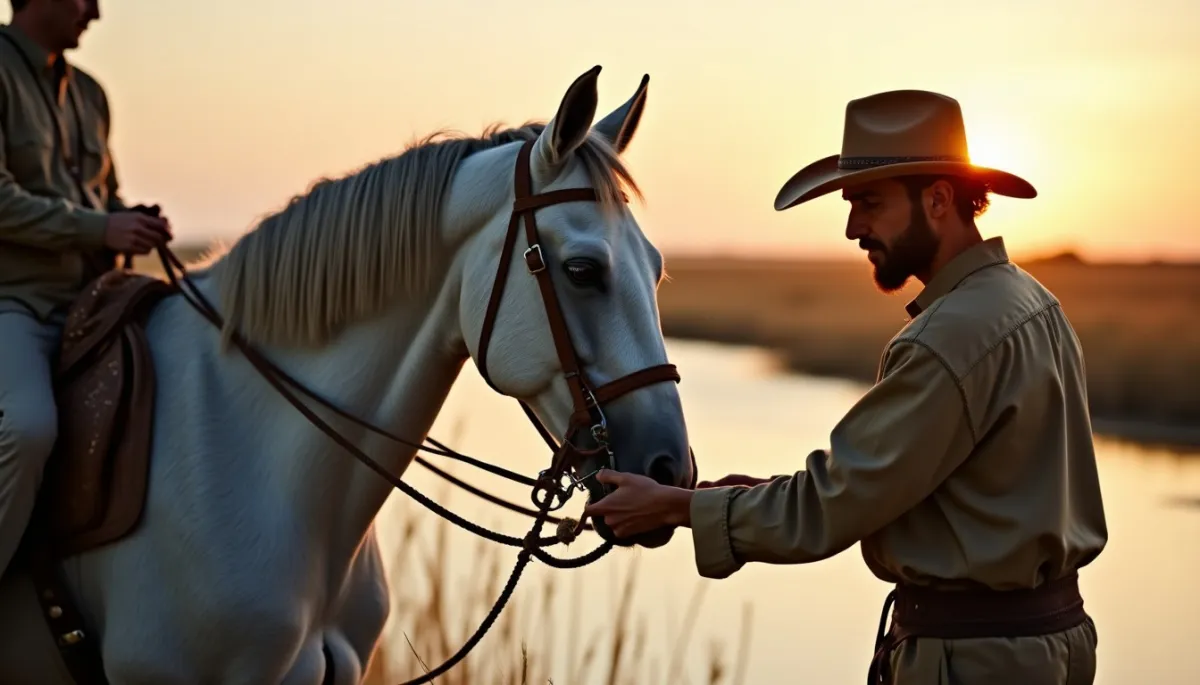
The Musée de la Camargue is more than exhibits. It programs live demonstrations, conferences, and occasional manade visits. In spring, gardians sometimes bring horses near the museum, offering an immediate lesson in handling and communication.
Workshops teach traditional leather repair, bridle-making, and the specific language of horse calls. For city dwellers, these moments are revelations: the gardian's whistle, a subtle body shift, the compact strength of the Camargue horse.
Yet the museum balances celebration with critique. It invites reflection on modernization: how do breeders keep traditions alive while complying with European sanitary standards, or adapting to climate change? The answer is never simple, and the museum presents multiple perspectives.
Practical advice
Plan your visit in the morning to catch a guided tour and to see the light on the étangs. Bring binoculars for birdwatching and wear rubber-soled shoes for muddy paths.
If you want to go further, combine the museum visit with a trip to a local manade (book ahead) and to the Parc naturel régional de Camargue, created in 1970, where interpretive trails explain salt and reed ecology.
Finally, listen. The museum's strength is in its ability to reconnect you to living sounds: water lapping, horses shifting weight, gardians calling. These are the elements that have sustained the Camargue for generations.