The Camargue horse's natural diet: what the sansouire hides
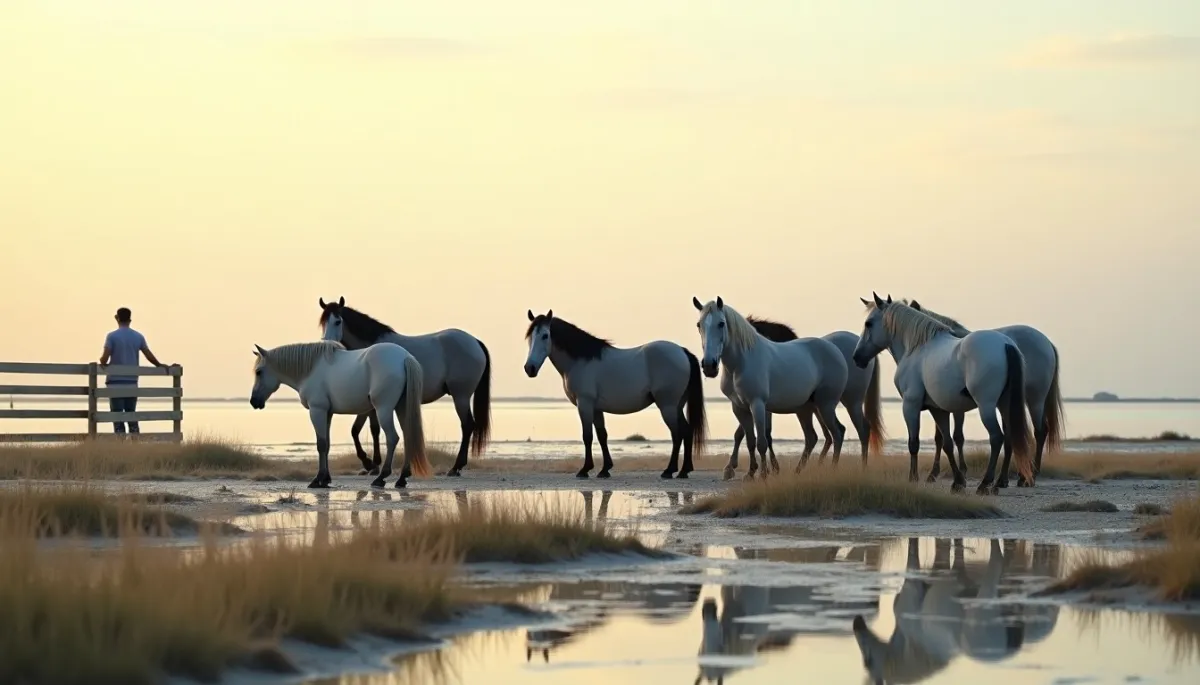
Along the brackish edges of the Camargue, horses graze where land meets sea. The sansouire offers more than salt; it feeds a tradition.
🚀 Key Takeaways
- Key concept : The sansouire is a saline meadow with halophytic plants that supply minerals to Camargue horses.
- Practical tip : Always provide fresh water and a mineral block when horses graze the sansouire.
- Did you know : Gardians lead horses to these flats for improved hoof toughness and endurance, a practice rooted in centuries of local husbandry.
Pure and windy. A herd of grey horses moves like a low cloud across the salt flats.
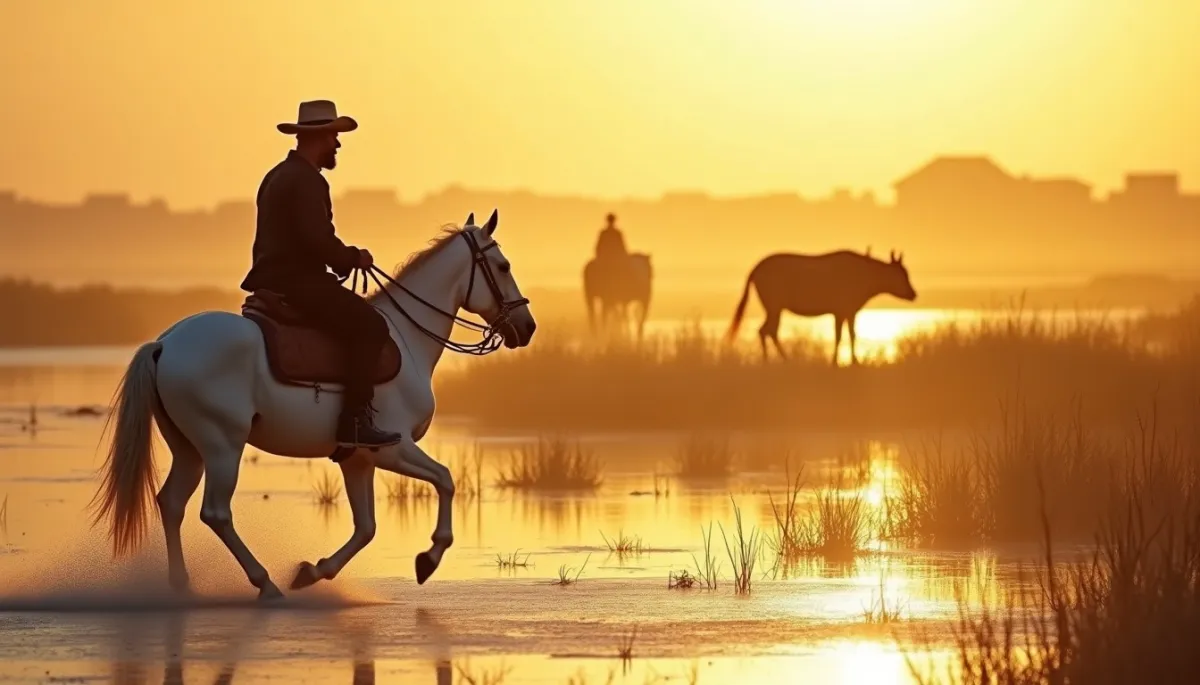
It is dawn near Saintes-Maries-de-la-Mer, with the horizon a silver line. Gardians open a wooden gate and the manade slips into the sansouire. Horses lower their heads on compacted saline turf, sampling samphire and salt grasses. In summer the air smells of brine and lucidity; in winter, of peat and cold iron. The scene is timeless, but what the animals eat here has subtle consequences for their bodies and for Camargue life.
Herbe salée
The sansouire is a salt-influenced meadow where halophyte plants thrive. You will find species such as Salicornia (samphire), puccinellia and other salt-tolerant grasses, reeds and small shrubs. These plants accumulate sodium, chloride and trace minerals, imparting a distinct mineral profile to the forage.
For the Camargue horse, adapted over generations to this environment, that forage supplies not only energy but a palette of minerals. Gardians know that grazing in the sansouire can harden hooves and maintain muscle tone, because the plants are often lower in lush sugars and higher in fibrous content than inland pastures.
Concrete anecdote: older manadiers in the delta still recount horses preferring the saline fringe after storms, the salt apparently stimulating appetite. Local veterinarians, when consulted, confirm increased salt intake but caution about balancing freshwater intake to avoid dehydration.
Racines anciennes
The relationship between horses and the sansouire is historical. Since at least the Middle Ages, the delta was used seasonally by stockmen, and the modern image of the gardian and his grey horse crystallized in the 19th and early 20th centuries. Folco de Baroncelli, a figure of Camargue identity in the early 1900s, celebrated the manade and its link to land and livestock.
Manades, the semi-wild herds managed by gardians, developed husbandry practices adapted to tides and salinity. Grazing rotation, access to freshwater canals, and selective use of marshes are traditions rooted in survival and in protecting the marsh ecosystem.
Scientific studies on halophyte forage in Mediterranean wetlands underline adaptations: animals consuming these plants show altered electrolyte intake and require attentive management. The Camargue horse evolved culturally and physiologically alongside these conditions, becoming a hardy, frugal breed prized for work in wetland terrains.
Équilibre fragile
Yet the sansouire hides contradictions. Salt-rich plants provide minerals, but excessive intake can mean increased thirst, electrolyte imbalance and, over time, altered forage availability when sea levels or human activity change the marsh salinity.
Modern pressures add complexity. Drainage, rice cultivation, tourism and climate-driven sea intrusions modify salinity patterns. In some years, custodian gardians report that horses need supplemental feed and mineral blocks earlier than before, especially during dry summers when fresh marsh greens decline.
Practical advice: monitor body condition score, ensure constant access to clean freshwater, and use veterinary guidance for mineral supplementation. Rotational grazing and preserving freshwater corridors in the manade are essential to keep the traditional diet viable.
Ultimately, the sansouire is more than a grazing area. It is a cultural landscape that shapes the Camargue horse, and it teaches a lesson: animal diets are rooted in place. To preserve the breed's health and the marshes, guardians, scientists and local authorities must work together to maintain that delicate balance between salt, water and pasture.