The Camargue knife: the guardian's indispensable tool
The Camargue knife is more than a tool, it is a symbol of a working life shaped by salt, reeds and horseback. For gardians past and present, this folding knife is an everyday companion from the manade to the feria.
🚀 Key Takeaways
- Core concept : The Camargue knife is a practical folding knife used by gardians for herding, tack work, and daily tasks.
- Practical tip : Choose a blade around 8-11 cm with a horn or wood handle, and oil it after salt exposure.
- Did you know : The knife reflects cross-border influences (Spanish navaja, French cutlery traditions) and local identity.
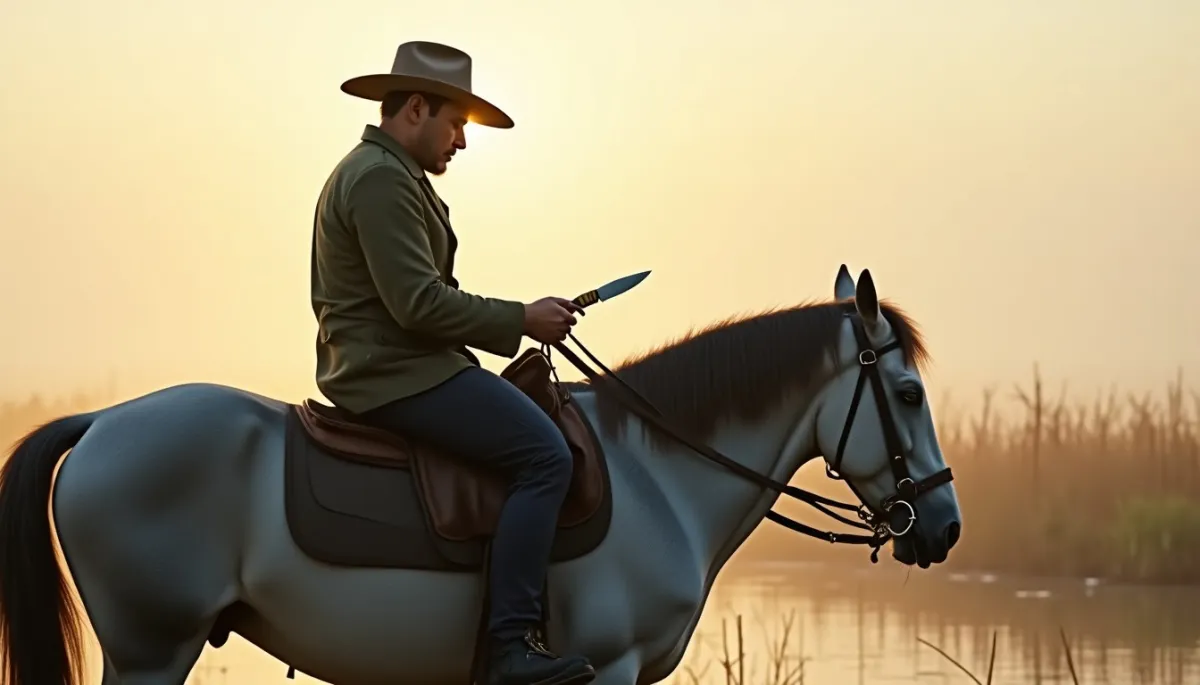
Salt on the leather, sunlight on the blade. A gardian closes his knife and mounts his grey Camargue horse.
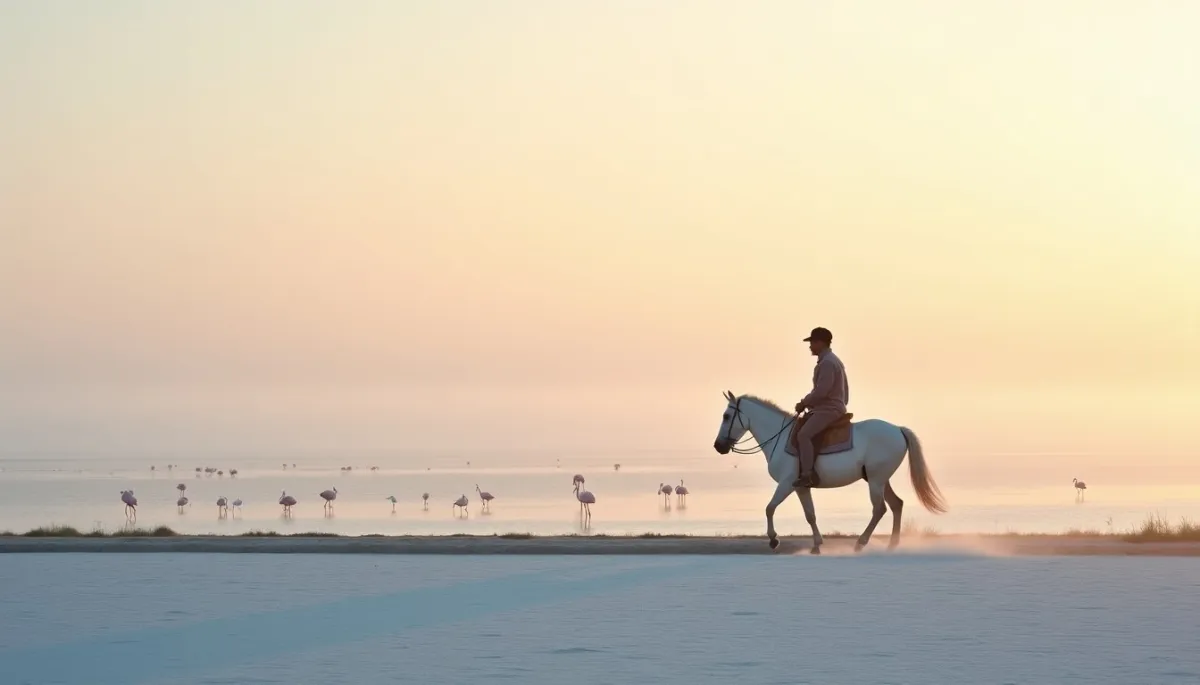
The scene is Saintes-Maries-de-la-Mer at dawn, the herd (manade) breathing mist over the marsh. The knife rests in the pocket of a short wool jacket, ready to cut a rope, trim a strap, or carve a mark on wood. That small movement, practiced every day, ties the man to his craft.
objet quotidien
The Camargue knife is a folding pocket knife used by gardians, the mounted herdsmen of the Camargue. It is typically compact, robust, and easy to handle while on horseback. The blade length commonly ranges between 8 and 11 centimeters, a size that balances usefulness and safety.
Materials matter: handles are often horn (bull horn), olive wood, or other local woods, and the blade is forged in carbon or stainless steels depending on maintenance habits. Many knives you meet in the marshes show a worn handle and a patina on the steel, proof of daily use rather than display.
Words you should know: "manade" means a herd, usually of bulls or horses. "Gardian" names the mounted worker who manages that herd. These terms are part of a language born from the land and the task.
histoire vivante
The knife’s shape and function evolved from Mediterranean folding knives, with influences coming from the Spanish navaja and French craft centres such as Thiers (a historic cutlery town). Its adoption grew with the rise of modern manades in the 19th century, when mounted herding became more codified.
Folco de Baroncelli (1869-1943), a shepherd, writer and defender of Camargue traditions, helped popularize the image of the gardian in the early 20th century, and with it the everyday objects that defined their life, the knife included. Annual gatherings in Saintes-Maries-de-la-Mer, recorded since the 19th century, display this living heritage.
Anecdotes survive: older gardians recall using the knife in the 1950s to strip reed for shelter repairs, or to free a tangled cheval’s rein during an abrivado. These small stories show how indispensable the tool was long before tourist boutiques began selling decorative versions.
usage concret
On a practical level, the knife is used to cut rope and twine, pare leather, prepare bait or food, and even trim the mane. Its compactness allows a gardian to open it with one hand while holding the horse with the other.
For daily maintenance, a few rules: dry the blade after contact with salt, apply a thin layer of oil, and hone with a stone when the edge dulls. Carbon steel takes a patina but sharpens easily; stainless steel resists rust but requires careful sharpening technique.
If you buy one: prefer a full metal rivet or solid liner, test the locking (if present) for safety, and favour local materials for handle authenticity (horn, olive wood). Many authentic knives are made by regional artisans or by workshops in Thiers that produce for Camargue makers.
tradition et marché
The knife lives between working tradition and souvenir culture. At festivals such as the annual pilgrimage of Saintes-Maries-de-la-Mer, you will find both worn working knives and polished tourist models. The challenge is to preserve the tool’s function while avoiding its trivialization as mere ornament.
Local makers and guilds sometimes run demonstrations showing how a gardian uses his knife in the field, or how a blade is forged and fitted to a horn handle. These moments are important to transmit technique and respect for materials to younger gardians and visitors.
For collectors, provenance matters. A knife used in a manade, with visible repairs and a documented history, tells more than a factory-fresh souvenir. The true charm is the story it carries: a cut made to adjust a saddle, a notch from a winter evening repair, a blade sharpened by hand.
conseils pratiques
When choosing a knife for field work, test the ergonomics on your palm, check the blade length for practicality, and prefer simple mechanisms that can be serviced in the field. Avoid overlarge blades that risk accident while on horseback.
Carry it wisely: in a pocket closed by a flap or in a leather sheath on the belt. Respect local regulations for carrying folding knives, which vary by country and situation (events, public spaces).
Finally, remember that the knife is a partner of daily life in the Camargue. Learn a few gestures (how to open safely, how to clean between uses), and you will keep both edge and memory intact.