Camargue salt and livestock: a vital balance for wildlife
🚀 Key Takeaways
- Key concept : Salt pans create salinity gradients that feed brine shrimp and microalgae, essential for flamingos and other waders.
- Practical tip : Visit in spring or autumn for peak bird activity, and prefer local fleur de sel to support sustainable producers.
- Did you know : The Camargue salt tradition links medieval salt routes from Aigues-Mortes to the modern village of Salin-de-Giraud.
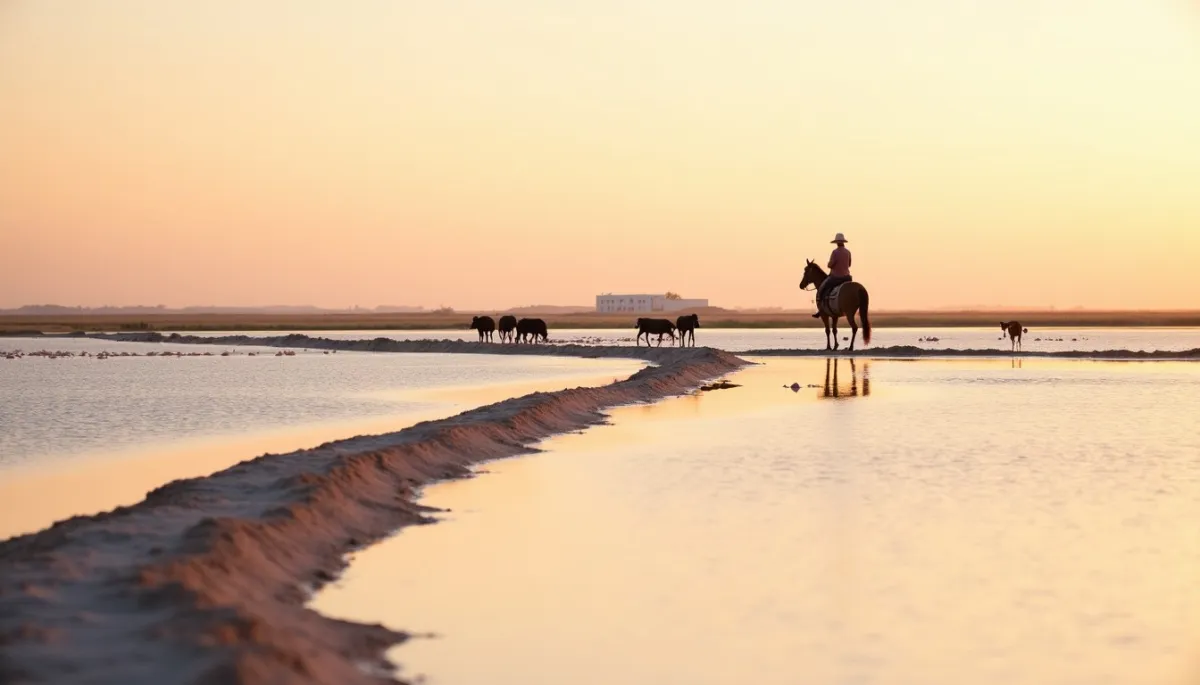
There is a pink tide on the salt. Walking along a narrow dyke, you can see long bands of water changing color, from green to intense pink, the surface trembling with birds.
Salines vivantes
The salt pans of the Camargue are not empty industrial flats. They are a patchwork of basins where salinity rises step by step, creating a mosaic of microhabitats. Each pond hosts a different community, from green microalgae to Artemia salina (brine shrimp), the tiny crustaceans that feed flamingos.
Historically, salt has been harvested here since the Middle Ages, with Aigues-Mortes as a medieval port of salt trade. The rhythmic lines of the salins shape both economy and nature. In the 19th century, the organization of salt works intensified, and the hamlet of Salin-de-Giraud grew around those operations.
Today the salt industry produces gros sel and fleur de sel, and the graded evaporation process unintentionally supports biodiversity. The shallow crystallizer ponds are especially important as feeding grounds for thousands of birds. In spring and autumn, the flats resonate with the calls of waders and the stately groups of flamingos filtering brine.
Herbes salées
Alongside birds, the Camargue's livestock—Camargue horses and the robust black bulls—have adapted to halophytic grasslands. These animals graze on spartina and salicornia, plants tolerant to saline soils. Their grazing maintains open spaces, preventing reeds (phragmites) from taking over.
Gardians, the mounted herders of the Camargue, and saliniers, the salt workers, share the same terrain. Their practices have coexisted for generations: seasonal grazing patterns, movement of herds, and paths used to reach salt pans all contribute to a living cultural landscape.
There are anecdotes of collaboration: on some estates, gardians and salinier teams coordinate so cattle avoid vulnerable bird breeding areas during nesting season. These local arrangements are small, pragmatic, and effective.
Entre tradition et menace
But the balance is fragile. Industrial changes, the alteration of water management, and the pressure of tourism can disrupt salinity regimes. When water circulation is modified, the succession of ponds changes, and some key habitats shrink or disappear.
Climate change and rising sea levels add a further threat. Salt pans depend on controlled exchanges between the sea and the marshes. Unmanaged intrusion or prolonged droughts upset the timing of algae blooms and Artemia cycles, with direct consequences for birds that time their migrations to local food availability.
To face these challenges, owners, companies and the Parc naturel régional de Camargue (created in 1970) have developed cooperative management. Adaptive measures include adjusting water flows, setting aside resting basins for birds, and timing harvests to reduce disturbance during breeding. Supporting local producers by choosing Camargue fleur de sel is a concrete way for visitors to contribute.
For those who come to see this fragile choreography: plan visits outside peak nesting in summer, stay on marked paths, and consider guided tours that explain the web of salt, livestock and birds. The story of Camargue salt is not only about a condiment. It is about a negotiated landscape where human work and wild life keep one another alive.