May pilgrimage: chevaliers, gardians and faith at the Saintes-Maries
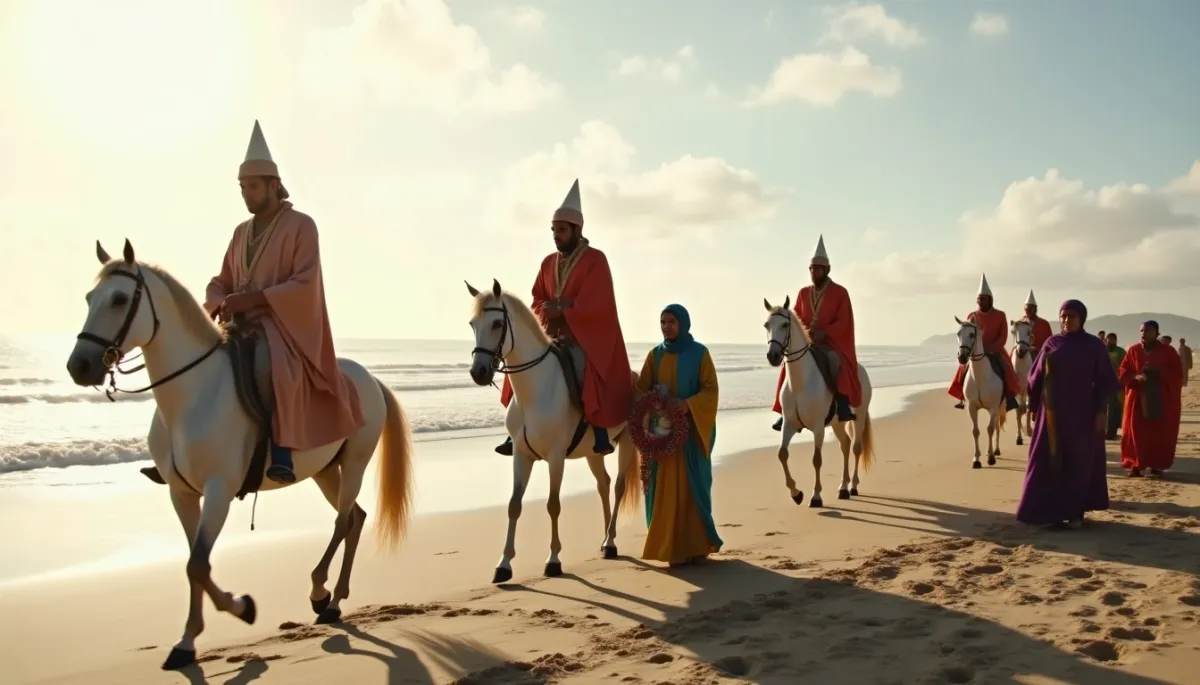
Every late May, the shore of Saintes-Maries-de-la-Mer becomes a meeting place of horses, prayer and song. The Camargue gardians and the Romani pilgrims share the sand, the sea, and a ritual that has folded centuries into a single day.
🚀 Key Takeaways
- Core concept : A Camargue pilgrimage combining horseback tradition and Romani devotion.
- Practical tip : Arrive early, respect the procession space, and watch from the Quai and beach exits.
- Did you know : The statue of Saint Sarah is carried to the sea and dipped, a moment that draws Roma from across Europe.
The sand fills with hoofprints and whispered prayers. You can hear the rattle of bits, the low murmur of chants, and the salt on the air.
Au coeur de la cavalcade
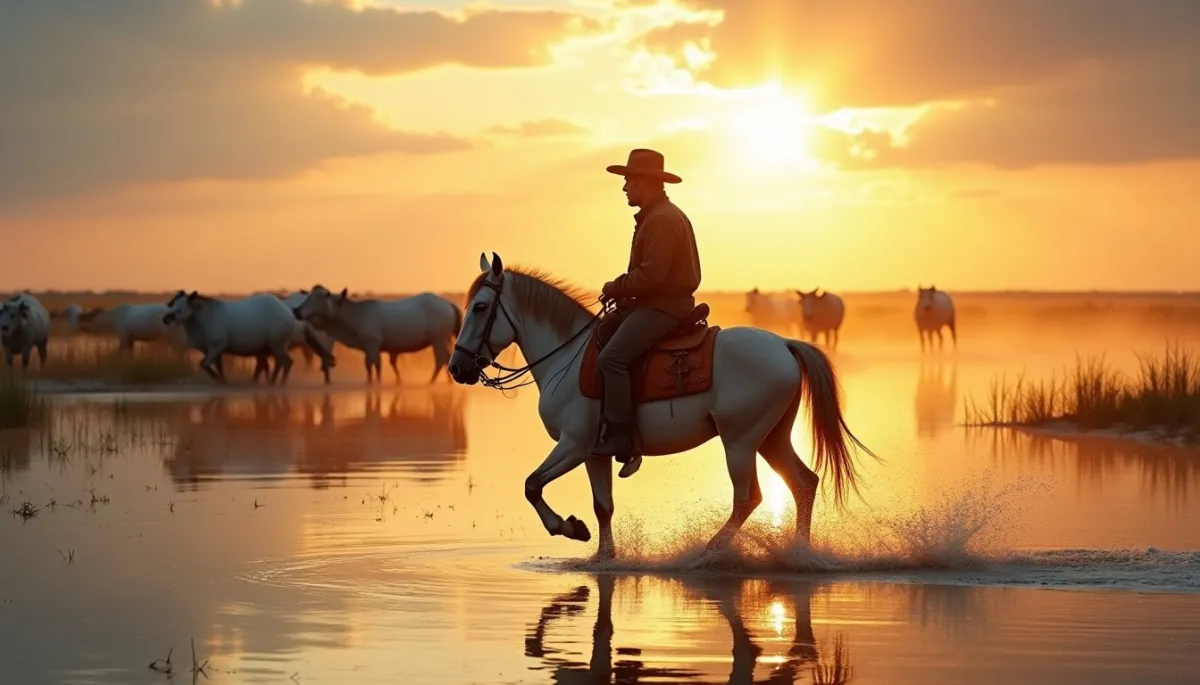
The protagonists are immediately visible: the gardians, mounted on compact, white Camargue horses, and the pilgrims, many of Romani origin, clustered around simple statues of the Saintes. Gardians wear flat-brimmed hats, high boots, and that informal elegance born of daily work in marsh and salt. Their horses, known for agility and calm, guide the procession from the village to the sea.
At the center of the ritual stands the statue of Saint Sarah, called Sara la Kali. Traditionally, she is carried from the chapel to the shore, surrounded by clergy and laypeople. The statue is then lowered toward the water, sometimes dipped, while Roma sing, dance and offer garlands. This moment is the emotional summit of the pilgrimage.
The procession also includes mounted figures sometimes called chevaliers in local storytelling, riders who take on a quasi-ceremonial role, leading columns along the shore. Their presence links medieval pageantry with the pragmatic horsemanship of the Camargue, and it gives the event a visual drama that photographers and pilgrims remember for years.
Racines vivantes
The legend anchoring the festival goes back to antiquity. According to local tradition, two Maries and their servant Sarah landed on the Camargue coast after fleeing the Holy Land. The town name, Saintes-Maries-de-la-Mer, preserves that memory. Over centuries the site became a place of Marian devotion, and by modern times a recognized destination for Romani pilgrimage, who venerate Sara la Kali as their patron.
Historically, the modern form of the pilgrimage crystallized in the 19th and 20th centuries, as travel became easier and communities from Spain, Romania and beyond could make the journey. By late May, tens of thousands of visitors sometimes converge on the small town, creating an exchange between local gardian culture and international Romani traditions.
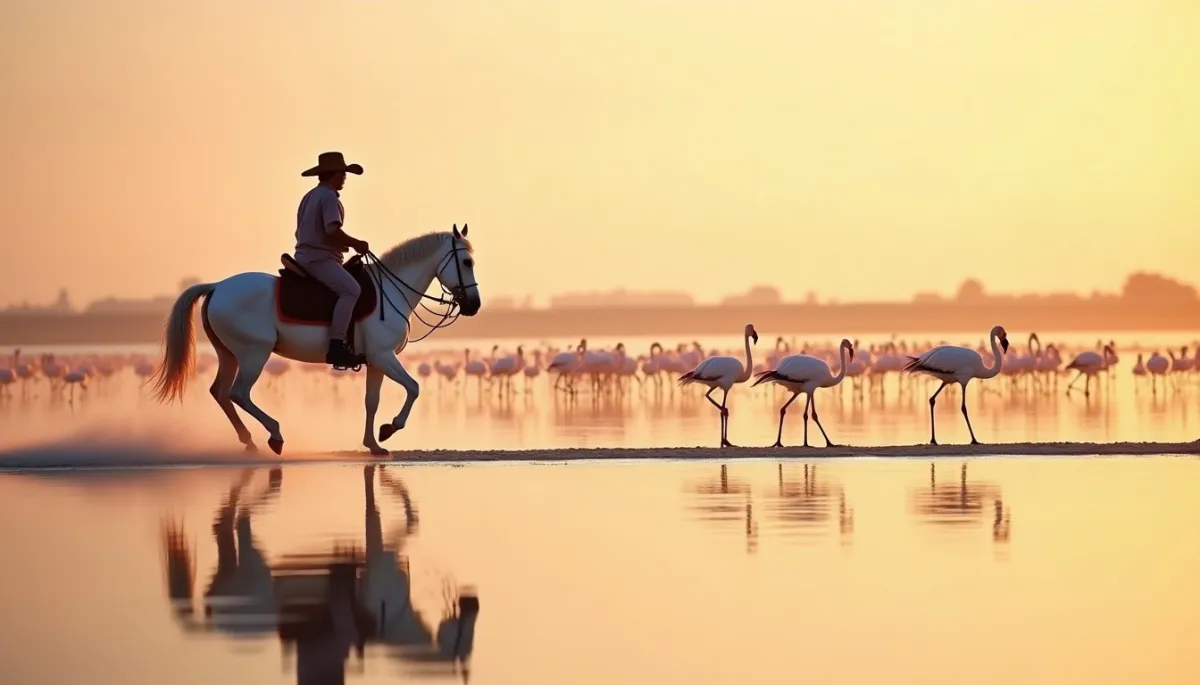
The Camargue itself shapes the rite. Wetlands, salt flats and wide beaches demand specific skills, developed by generations of gardians. Their tools, such as the long fourche (a fork-like pole used for handling bulls and equipment), and their techniques of herding differ from those of North American cowboys or Argentine gauchos, yet the comparison is natural: all are horse cultures that live close to the animals they work.
Tensions et renaissances
The pilgrimage is not immune to tensions. The influx of visitors tests local infrastructure, and debates arise between preserving sacred spaces and accommodating tourism. Locals sometimes complain about overcrowding, while pilgrim leaders seek respect and access during the most sacred moments. Authorities balance public order, religious freedom and protection of the fragile Camargue environment.
At the same time, the event is a living culture that adapts. In recent decades, organizers improved crowd routes, signage and sanitary facilities. The gardian brotherhoods coordinate with municipal services to keep horses and people safe, and environmental associations raise awareness about dune protection and waste management during peak days.
For visitors, the pilgrimage offers concrete ways to participate respectfully. Step back during the procession, avoid taking the statue or obstructing clergy, ask before photographing close-up rituals, and support local artisans. Visiting the small museum in Saintes-Maries-de-la-Mer sheds light on the town’s maritime archaeology, the legend of the Maries, and the long collaboration between horsemen and the sea.
Pratiques et conseils
Practical advice improves the experience. Plan accommodation well in advance, as hotels and campsites fill early in May. Use designated parking and shuttle services to avoid blocking horse routes. Bring sun protection, sturdy shoes for sandy streets, and a small water bottle.
Listen to local voices. Gardians appreciate calm around stables, and Romani groups value space during devotional moments. Buying crafts or food from local stalls supports the economy, and a modest donation to the parish helps maintain the chapel and processional statues.
Finally, allow time to wander after the formal rites. The town’s narrow streets, the salt pans near the lighthouse, and the sound of horses at dusk reveal the deeper Camargue: a landscape of work, faith and continuity, where the pilgrimage of May is both a spectacle and a living thread in communal memory.