A day in the life of a gardian: Between marshes, wild bulls and freedom
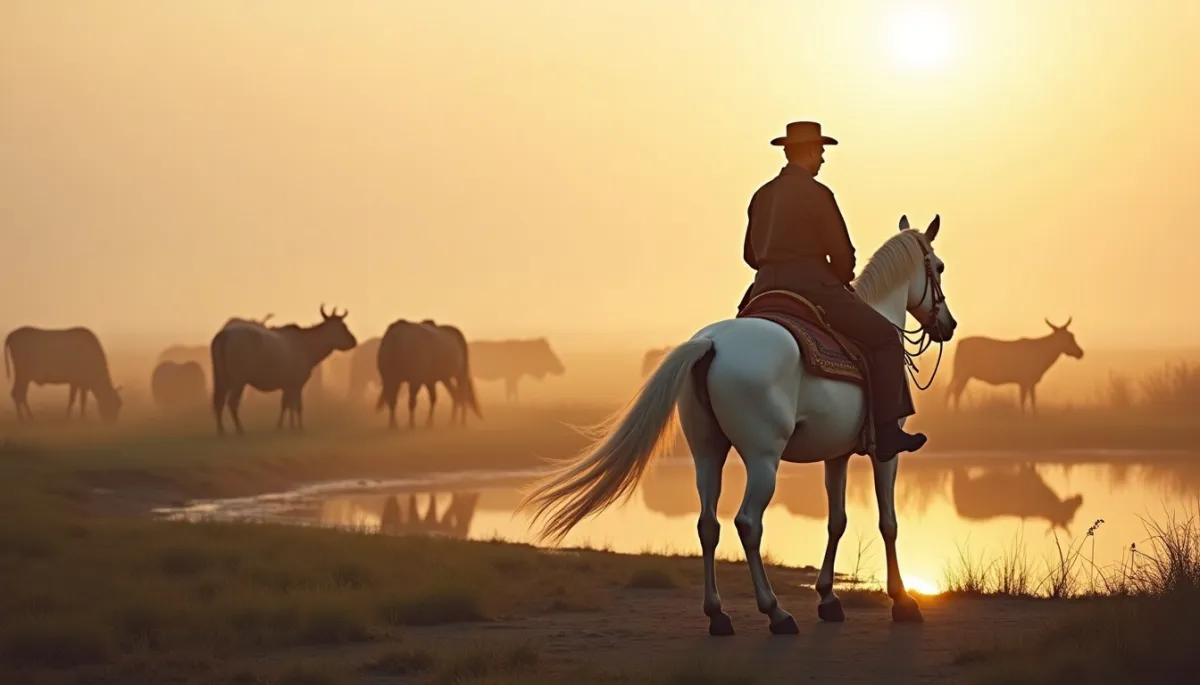
In the Camargue, dawn belongs to the gardians. Their day unfolds between salted marshes, white horses and the black silhouettes of bulls.
🚀 Key Takeaways
- Concept key : A gardian is the mounted herder of the Camargue, guardian of horses and taureaux in a manade (traditional herd).
- Practical tip : Attend an abrivado early in the morning in Saintes-Maries-de-la-Mer, wear boots and binoculars.
- Did you know : The Camargue saddle is unique, called "selle gardiane", designed for long hours on rough ground.
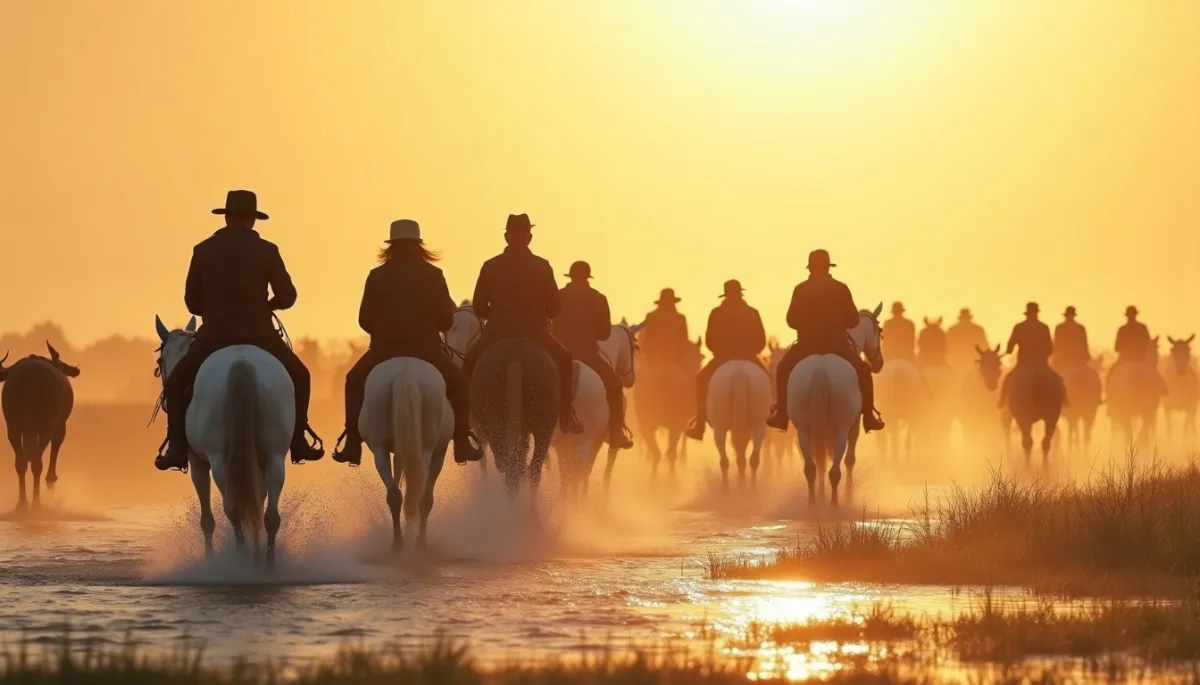
Sunrise smells of salt and wet grass. A gardian urges his Camargue horse forward, the hooves stirring mist above a shallow canal.
au coeur des marais
Gardians ride where land and sea meet. The Parc naturel régional de Camargue, created in 1970, protects the mosaic of reedbeds, saline flats and lagoons where they work.
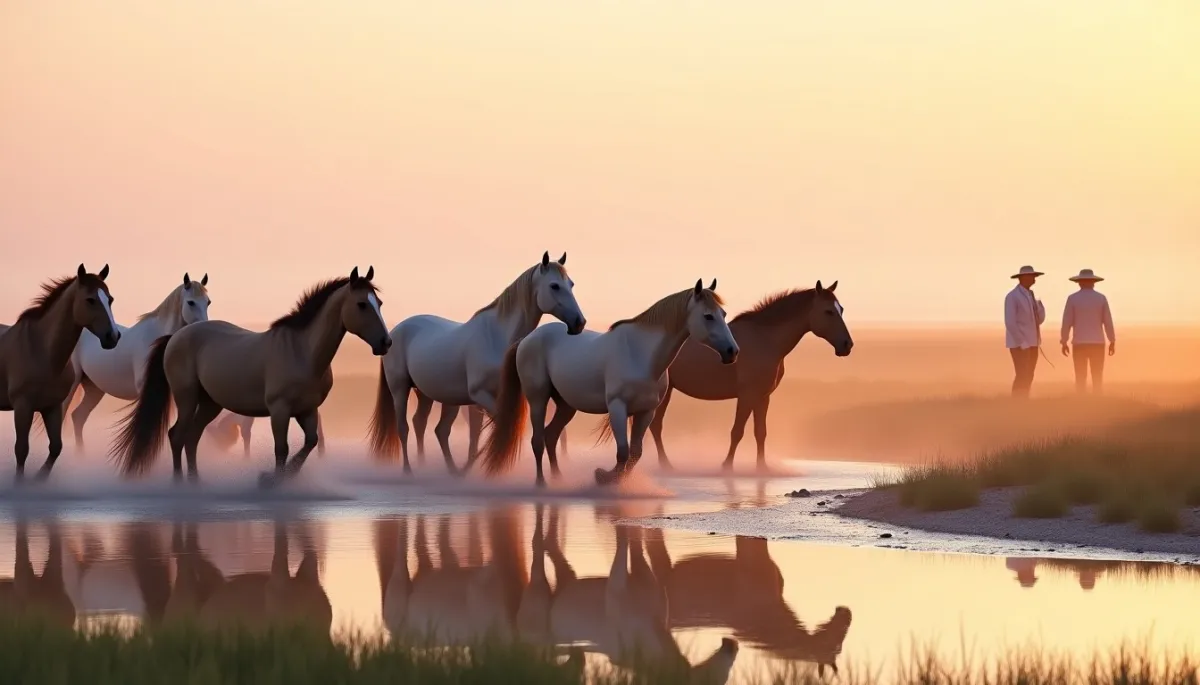
The typical image is a rider on a low, sturdy white horse, the Camargue horse, leading cattle across flooded meadows. These horses are small, hardy, and adapted to the brackish ground.
Morning chores begin before breakfast. The herd is checked, calves are counted, fences and canals inspected. A manade is a working ecosystem; every broken reed or clogged drain has consequences for the herd's movement.
taureaux et traditions
Camargue bulls, black and muscular, are not bred for killing. They are born and raised to be free and to run in arenas for the course camarguaise, a bloodless contest of agility and courage.
Manadiers are the breeders who run manades. Names vary across the region, but the rhythm of life is similar. Marking calves, selecting animals for festivals, and preparing for abrivados are seasonal rituals.
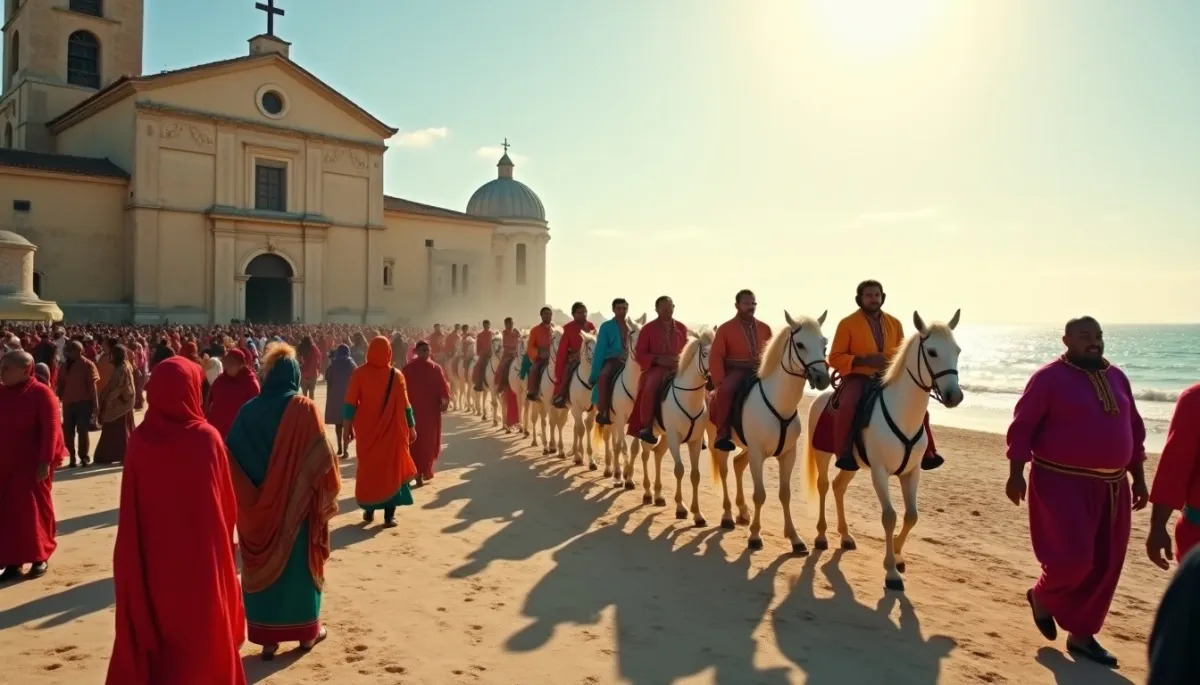
Local festivals, like the pilgrimage and ferias of Saintes-Maries-de-la-Mer, still rely on gardians to drive bulls through streets and to escort processions. These traditions link the present to centuries of pastoral life.
selles et savoir-faire
The tools are as symbolic as they are practical. The selle gardiane sits low and close to the horse, offering stability when crossing mud and water. Gardians use long ropes and lassos to shape movements, and their gestures are fast and precise.
An anecdote: a young gardian I met in Les Saintes told me that his grandfather taught him to read the weather in the sky and the reeds. That skill decides when to move a herd and when to shelter it.
Visitors who want to meet gardians should come respectfully. Ask before entering a manade, follow local instructions during an abrivado, and never approach calves or bulls on your own.
liberté et défis
Freedom is central to the Camargue identity. Bulls run semi-wild, horses roam, and gardians act as custodians rather than owners in the strict sense.
But the job faces modern pressures: land development, rising tourism, and changing EU regulations on livestock. Balancing tradition with ecology and safety is an ongoing negotiation.
Still, early morning rides, the low neigh of horses and the sight of black bulls on a plain keep attracting those who want to feel a different tempo of life. To witness it is to understand a region that has made its living between water and horizon.
Practical tips: visit a manade during off-season for a calmer experience, bring waterproof boots, and book a guided abrivado to learn the vocabulary: manade (herd), manadier (breeder), abrivado (escort of bulls), course camarguaise (arena sport).