From Andalusia to Camargue: Shared roots of cattle riders
From the marshes of Andalusia to the salt flats of the Rhône delta, mounted cattle work carries a common language of gestures and tools. This article traces the threads connecting vaqueros and gardians, their horses, their festivals and the men who kept traditions alive.
🚀 Key Takeaways
- Key concept : Andalusian vaquero techniques influenced working riding in the Camargue.
- Practical tip : Visit manades and attend the abrivado in Saintes-Maries-de-la-Mer, best between May and September.
- Did you know : Folco de Baroncelli founded the Nacioun Gardiano in 1909 to preserve Camargue traditions.
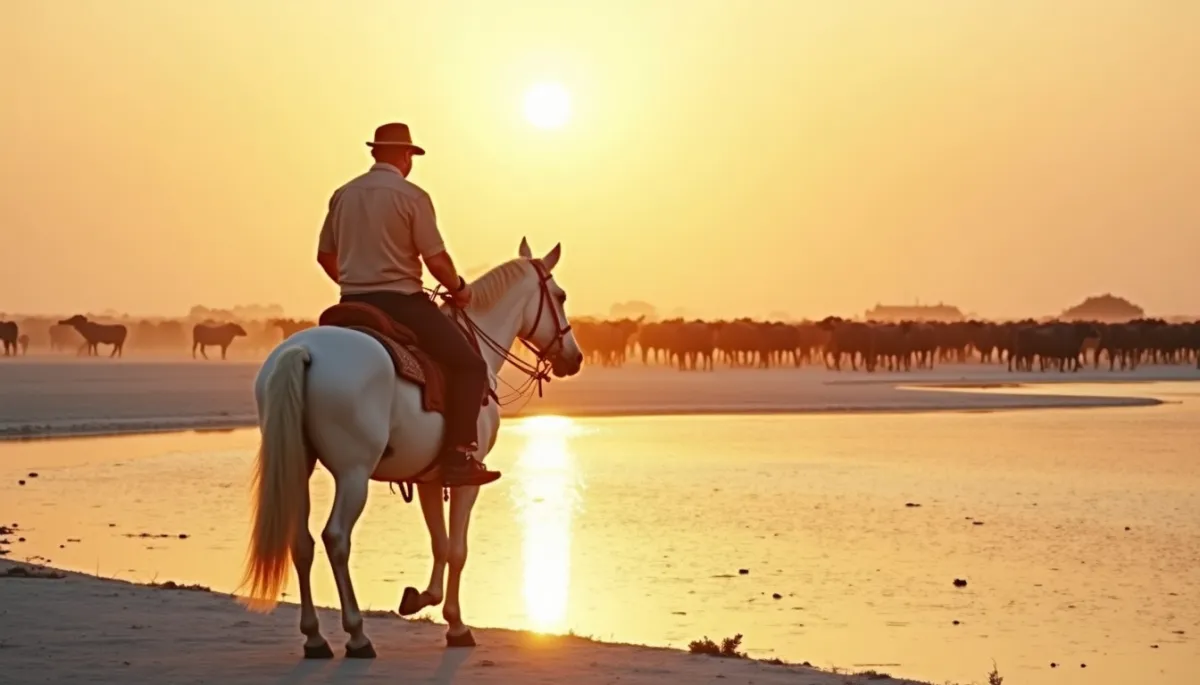
Horse and salt. A guardian leans forward, reins in one hand, rope coiled on the saddle, the Camargue sun low over the marshes.
Visible heritage
The first thing you notice, whether in Seville or Saintes-Maries-de-la-Mer, is the posture: the low seat, the slack rein held in one hand, the rider ready to pivot. These practical gestures are centuries-old solutions to the same problem, moving and handling large, often obstinate, bovines from horseback.
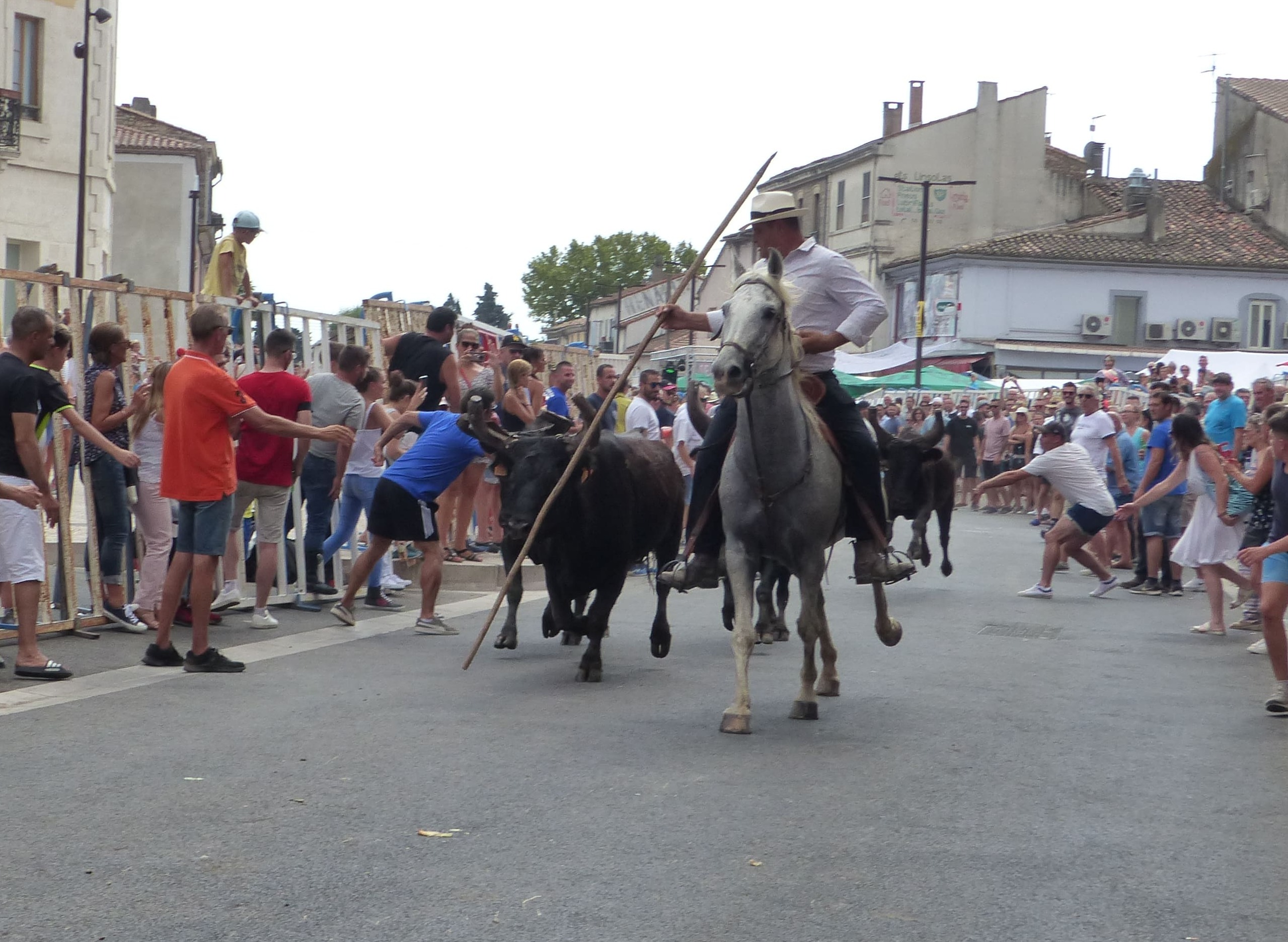
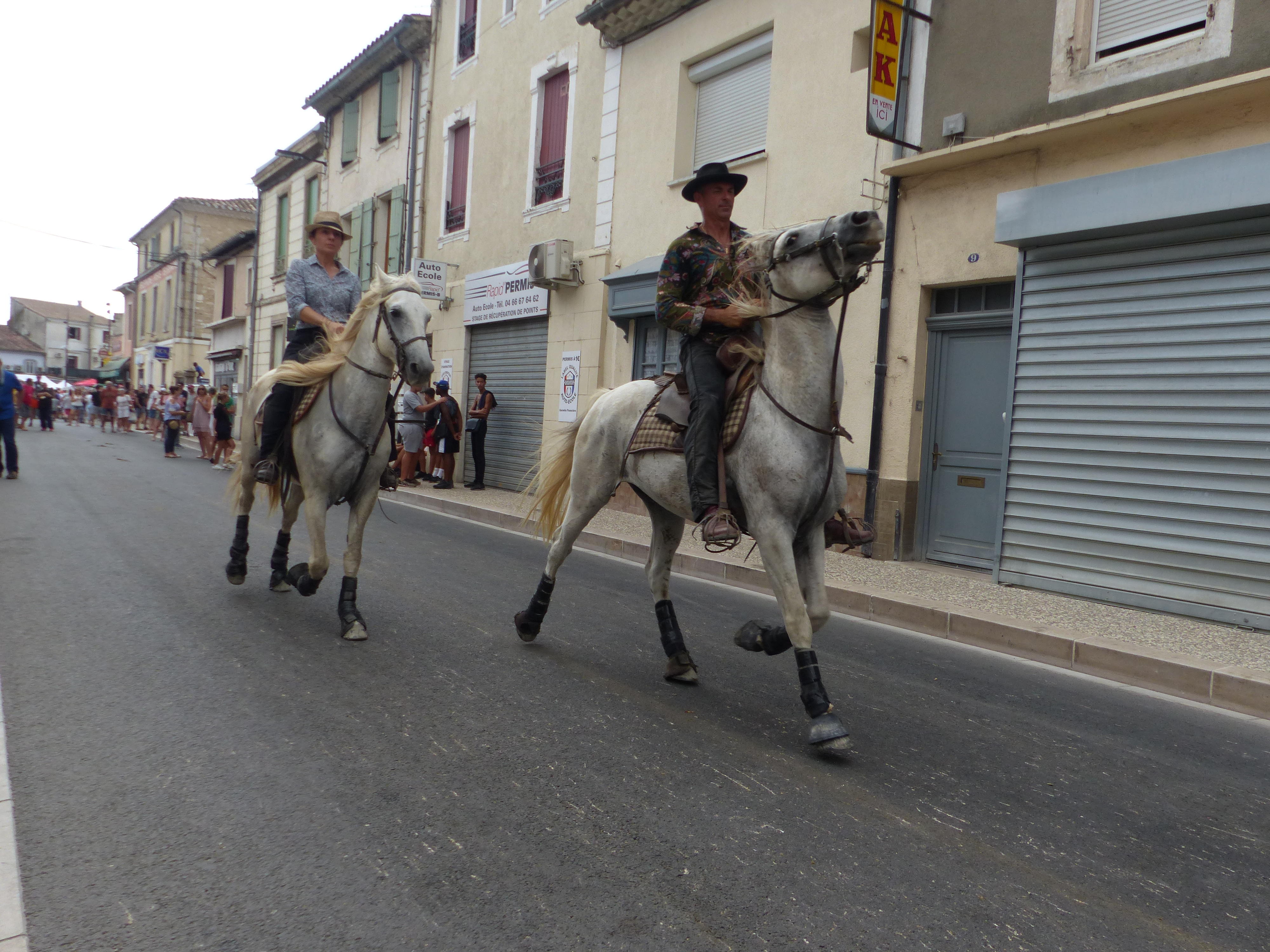
In Camargue, the gardians work in manades (semi-feral herds) that graze the marshes. Their white horses, small, sturdy and adapted to wetlands, answer to a riding style focused on agility rather than flamboyance. In Andalusia, the doma vaquera (working-riding tradition) developed for similar tasks; it privileges quick turns, precise weight shifts and use of the garrocha (long pole) for herding and handling.
Material culture overlaps: rope craft (lasso or reata), saddles designed for long hours in the saddle, protective clothing. The festivals mirror each other too. The Camargue abrivado and the Andalusian romería or feria both stage mounted herding displays, to the delight of townsfolk and visitors.
Shared roots
The vaquero culture of southern Spain has deep roots. By the 16th century, mounted cattle work in Andalusia and Extremadura had already shaped techniques exported to the Americas with conquistadors and settlers; the vaquero is the ancestor of the charro and the North American cowboy. Less often told is the reverse flow: ideas and migrants flowed back into southern France across centuries of trade, migration and conflict.
One clear historical moment is the early 20th century. In 1909, Folco de Baroncelli-Javon, a gentleman-proprietor born in 1869, founded the Nacioun Gardiano to formalize Camargue identity. He borrowed language and pageantry reminiscent of Spanish traditions, while insisting on local particularities: the manade system, the course camarguaise (the non-lethal bull game), and the specific Camargue horse type.
The 20th century also saw practical exchanges. After the Spanish Civil War (1936-1939), many Andalusian and Spanish workers settled in Provence, bringing craftsmen skills, rope techniques, horse tack and stories. Festivals, folk songs and horsemanship lexicon interwove, creating a shared cultural fabric visible today.
Tensions and renewal
Despite commonalities, differences matter. The Spanish corrida (bullfight) and the Camargue course are distinct in meaning and ritual. Andalusian riding can emphasize haute école elements and ornate dress, while gardians prize utility and terroir—working the marshes in all weathers.
Modern pressures complicate things. Agricultural mechanization, tourism and urban pressure threaten manades and seasonal grazing. Yet paradoxically, tourism and a renewed interest in regional identity have helped fund cultural revival. The Nacioun Gardiano and municipal fêtes attract funding and volunteers who keep training young gardians and preserve oral techniques.
If you want to explore: go to Saintes-Maries-de-la-Mer during the pilgrimage (late spring) or to Arles for the feria. Respect the rules at manades: ask permission before approaching horses, stay behind protective barriers during abrivados, and listen to the gardian's instructions. Bring close-toed shoes, a hat, and patience. The stories you hear there—an old man recalling rope knots learned in Seville, a young gardian taught by his grandfather—are the living proof of a shared past between Andalusia and the Camargue.