American cowboy vs French ranger: two worlds, the same passion for the great outdoors
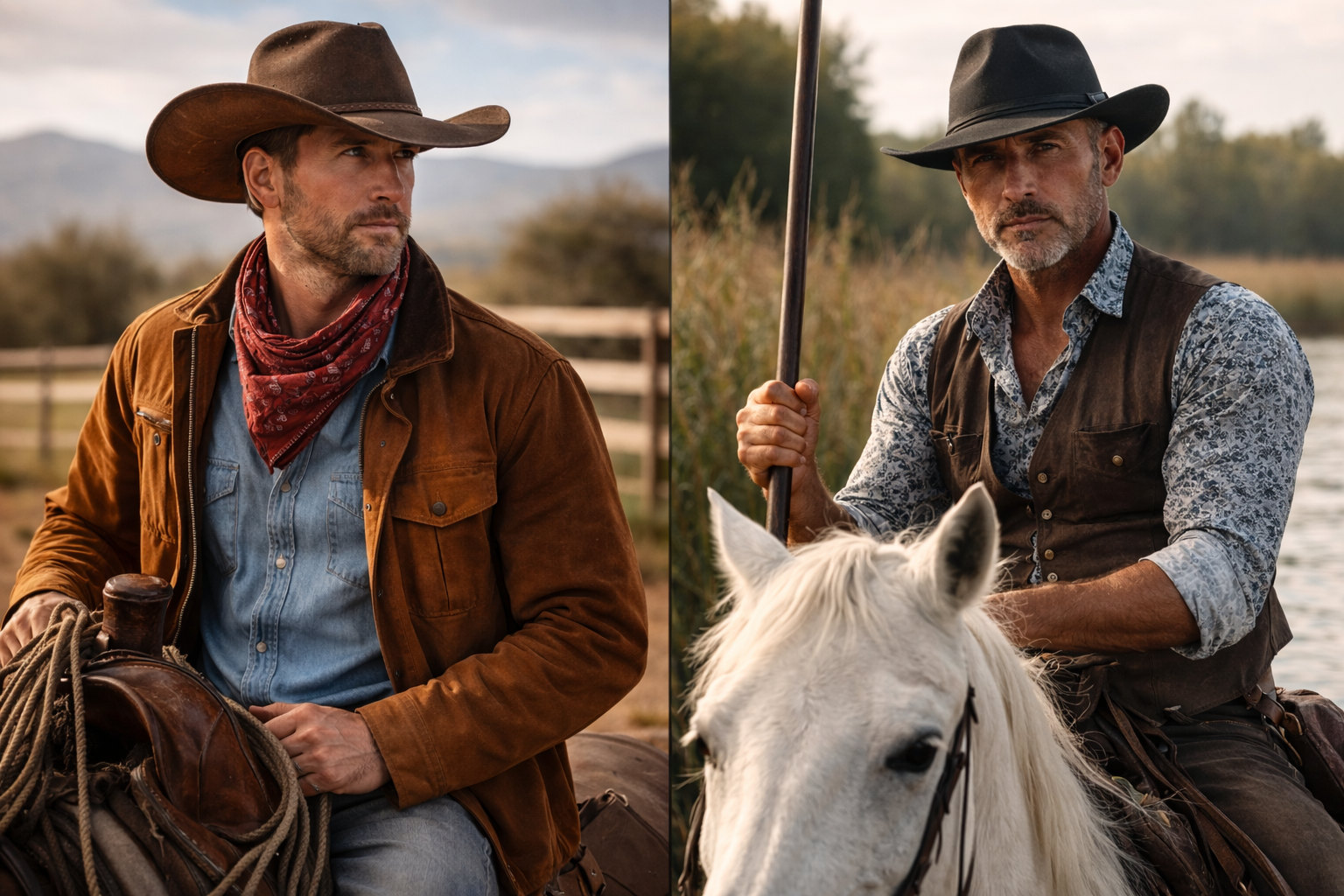
The cowboy and the herdsman seem to come from opposite universes, yet they share the same tempo: working horse riding, caring for herds and a loyalty to the great outdoors. These two figures show how the landscape shapes a culture and how, in return, culture protects the land.
🚀 The essentials
- Key concept: Cowboy and herdsman are cattle riders, trained by their environment and history.
- Practical advice: Visit a herd in Saintes-Maries-de-la-Mer or a ranch such as King Ranch to see the work of the herds.
- Did you know: The Camargue horse is one of the oldest in Europe, while the Quarter Horse is one of the most adapted to working livestock in the United States.
The image of the rider who cuts through the dust or crosses the reeds belongs as much to the Great Plains as to the marshes of the Camargue. In both cases, the rhythm of life obeys the seasons, the herds and the vagaries of the weather.
But behind the postcard lie distinct stories: the influence of Spanish vaqueros in the American West, and Mediterranean and Provençal traditions in the Camargue. Together, they form a global family of livestock crops to be discovered in the field.
Origins and visible heritage
The roots of the cowboy go through the vaqueros introduced by the Spanish, then through the great cattle drive trails like the Chisholm Trail and through the ranches from Texas to Wyoming. Establishments like King Ranch were breeding and range management laboratories that shaped cowboy equipment.
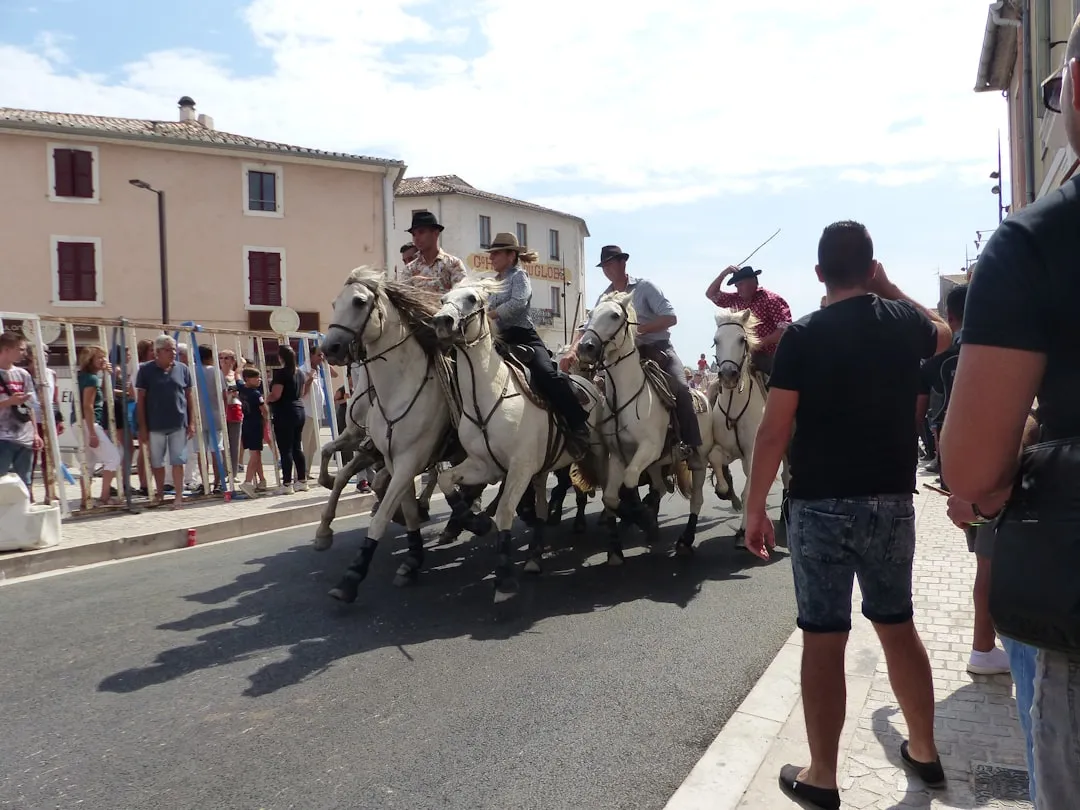
In the Camargue, the gardian was born from a Mediterranean breeding tradition, centered on herds. Saintes-Maries-de-la-Mer and Arles remain places where ancestral practice is shown to the public, during ferrades and abrivados which transmit immemorial gestures.
Tools, techniques and everyday life
Both traditions rely on the horse, the rope and a keen eye. Cowboys often favor the Quarter Horse for its acceleration and quick stopping, use the lasso and wear protection adapted to the brush. Their daily life combines fence maintenance, long climbs and herd movements.
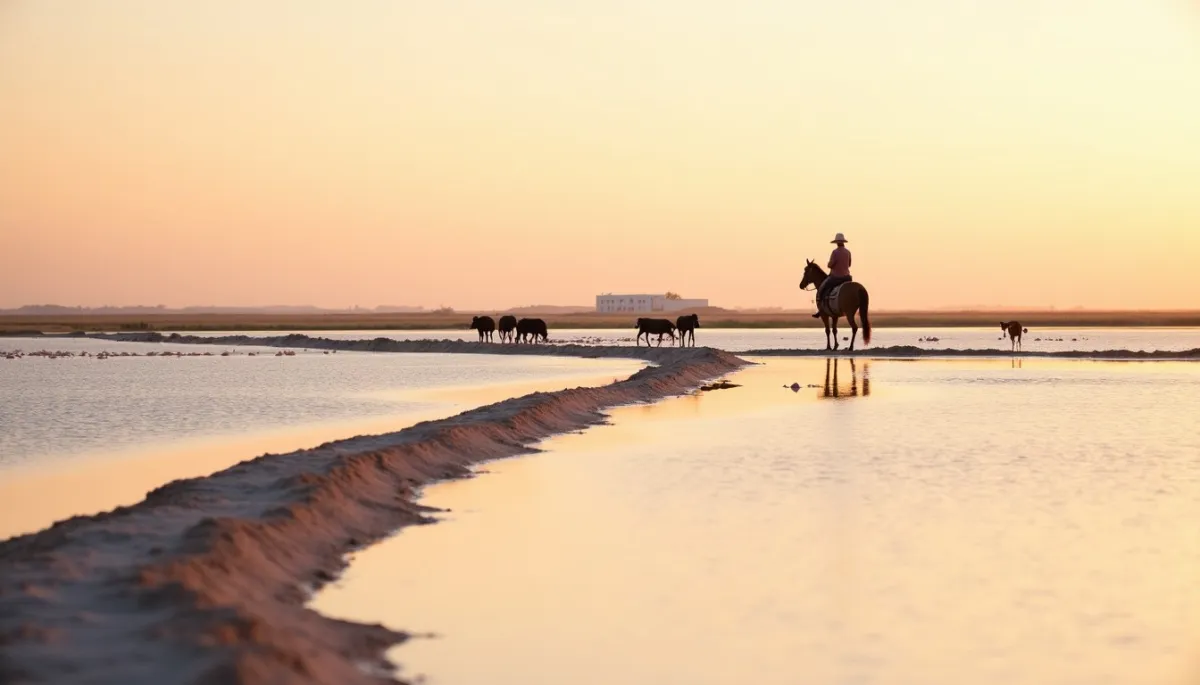
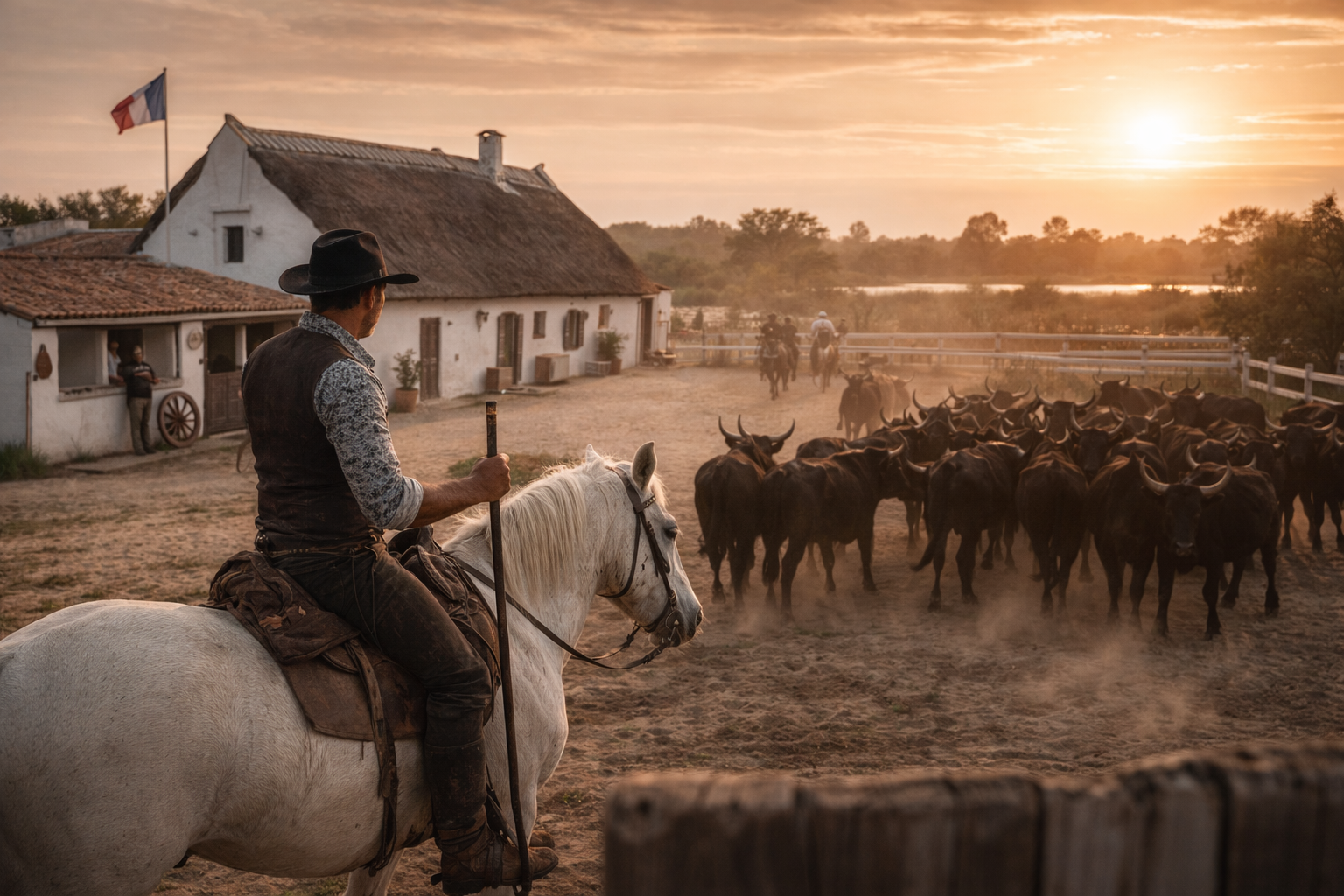
The herdsmen ride the Camargue horse, small and robust, perfectly adapted to loose and saline soils. The herdsman guides the bulls, moves the animals between the salt plains and the reed beds, and practices ferrade, a collective operation to identify the calves. The upholstery is pragmatic and designed for the humid environment of the delta.
Landscapes and adapted breeds
The American plains require endurance and speed over long distances, hence more powerful horses. The Camargue requires agility and confidence on soft ground, hence a more compact and tenacious horse.
Seeing a Quarter Horse perform a tight turn in a rodeo is as instructive as watching a Camargue horse maneuver a bull in the reed bed. Each race is a living response to its environment.
Rituals, festivals and community life
In the United States rodeo and trail rides are modern expressions of ranch work, public stages where speed and dexterity are judged. In the Camargue, votive festivals, the abrivado and the ferrade combine devotion, local identity and practical management of herds under the gaze of the inhabitants.
Both worlds cultivate oral traditions, songs and a code of conduct around responsibility towards the earth. The vocabulary changes, but the respect for the animal and the territory remains the same, whether in a country ballad or a Provençal song.
Why the earth connection remains the same
At the heart of both the cowboy and the ranger is a relationship of care. These riders read the ground, the sky and the behavior of the herd. Their authority is practical, acquired with the seasons and transmitted by the elders.
For the traveler, the lesson is clear. To understand these cultures you have to listen. Visit a herd, attend a ferrade, then cross the Atlantic to visit a working ranch. You will find different landscapes, the same pride and a shared desire to preserve open spaces.
Where to observe them today
In the Camargue, go to Saintes-Maries-de-la-Mer, to the Camargue Regional Natural Park and to the manades which open their doors for demonstrations. In the United States, Texas and Wyoming remain essential stops, as do certain historic ranches and museums that offer tours.
Time your visit during a local holiday to see practices in context, and choose responsible operators who respect animal welfare and local economies. You will thus witness the technical mastery and living life of the territory.