Career or calling? How to become a professional gardian today
In the marshes of the Camargue, a profession lives between salt, reeds and herds. Becoming a gardian today mixes ancestral skill, formal training and seasonal experience.
🚀 Key Takeaways
- Core concept : The gardian is both herder and guardian of Camargue traditions.
- Practical tip : Combine a CAPa or Bac Pro agricole with seasonal work in a manade.
- Did you know : The Parc naturel régional de Camargue was created in 1970 to protect this unique pastoral system.
Close your eyes and smell the salt and hay.
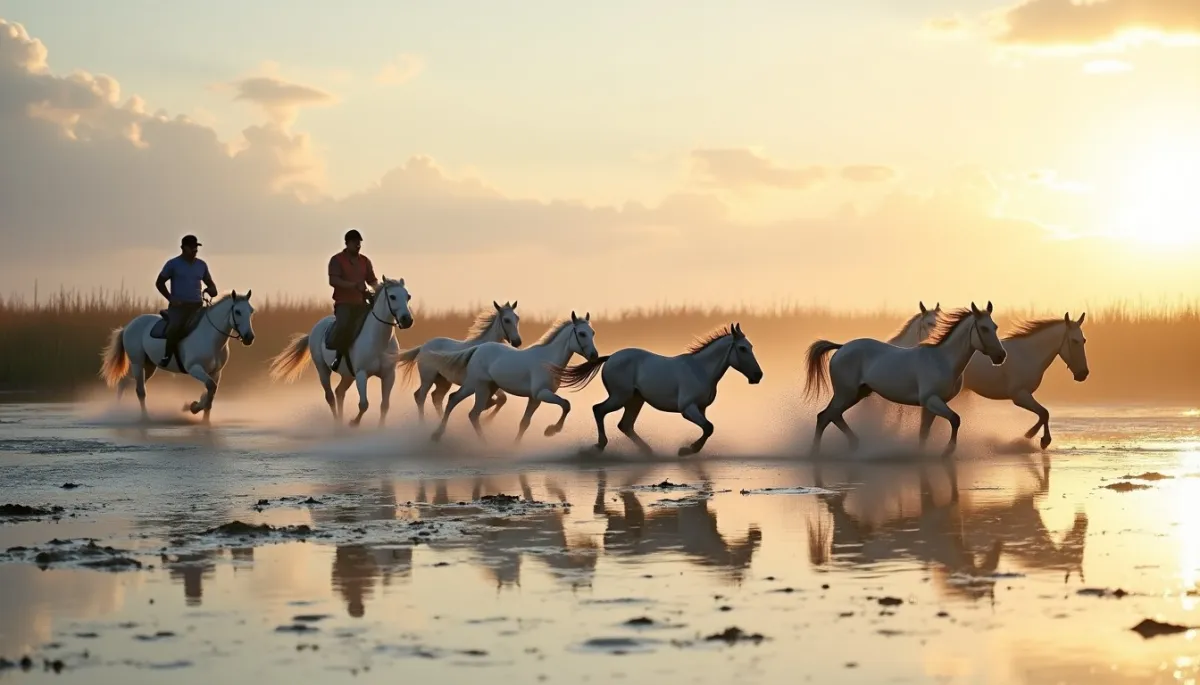
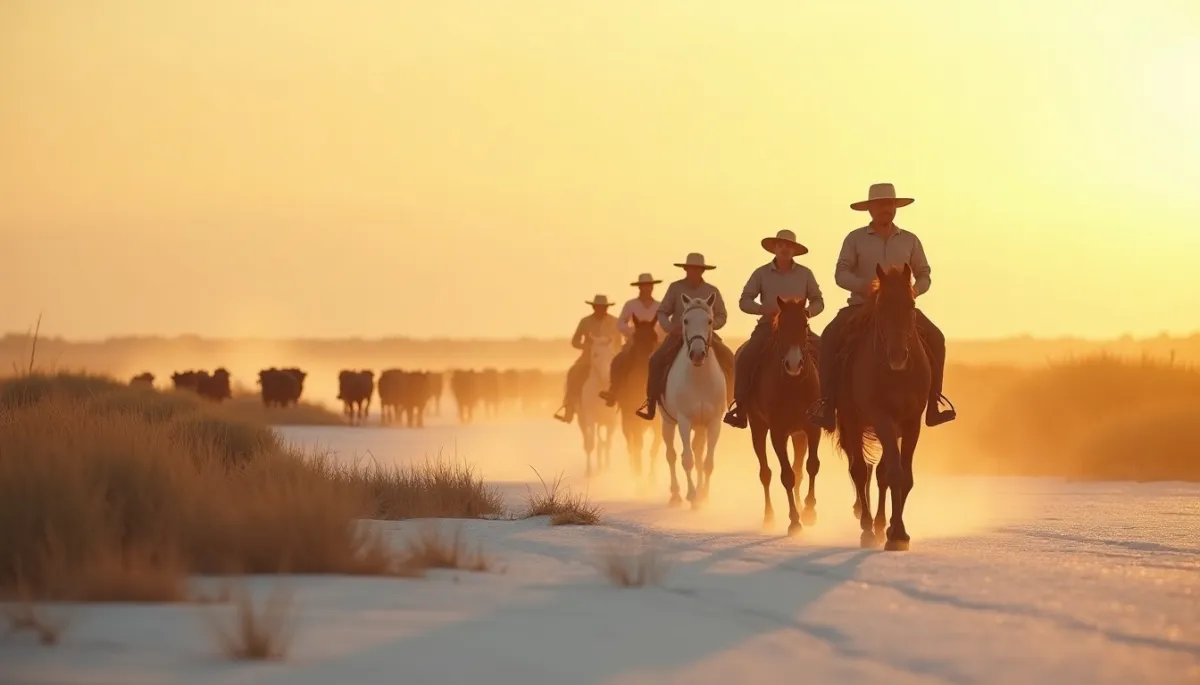
At dawn, a line of riders crosses the white plains, horses low to the ground, as black bulls lift their heads. The gardians, wide-brimmed hats and short jackets, steer the manade toward the marshes. You hear the bell of a mare and the soft conversation in Provençal; the light of Saintes-Maries-de-la-Mer turns the reeds to gold. This is work and ritual, where every gesture counts.
Héritage vivant
The gardian is above all an heir. Rooted in the Camargue for centuries, his role crystallized during the 19th and early 20th centuries as manades (herds) organized around cattle and the small, dark Camargue horse. Folco de Baroncelli-Javon (1869-1943) popularized and defended these traditions, advocating for local language and turns of life that connect breeds, fairs and devotion.
Public rituals such as the pilgrimage of the Saintes-Maries-de-la-Mer and the abrivado (running of bulls through the streets) required skilled riders. From the 1920s onward, gardians became visible actors of regional identity, custodians of both animal welfare and celebration choreography.
In 1970 the Parc naturel régional de Camargue was created, recognizing the ecological and cultural value of marshlands, saline flats and pastoral practices. Today, many manades work with the park to maintain biodiversity; the gardian is thus also a livestock manager and landscape steward.
Les routes qui mènent
How do you become a professional gardian? There is no single path. Traditional entry remains the apprenticeship in a manade: seasonal work, summer jobs and being taken on as a jeune gardian under the authority of an experienced manadier. Practical experience is priceless.
For formal training, several agricultural diplomas are relevant. A CAP agricole (CAPa) specializing in breeding or animal care, a Bac Pro CGEA (Conduite et gestion d'une entreprise agricole), or the BPREA (Brevet professionnel responsable d'exploitation agricole) give technical and managerial foundations. For equine skills, the BPJEPS équitation complements riding and teaching competencies.
Combine certificates with tangible experience: spend a year as seasonal staff during the festivals of Saintes-Maries-de-la-Mer, join a manade near Arles, Aigues-Mortes or Le Sambuc, and learn to handle the ferrying of bulls and the care of Camargue horses (a hardy, small breed adapted to wetlands).
Entre traditions et modernité
Being a gardian today reconciles ritual and regulation. Animal welfare norms, health controls and administrative constraints have grown since the 1990s, pushing manades to professionalize record keeping, vaccination and transport. This changes how a gardian documents his work.
Economic pressures are real. Tourism offers income—rides on horseback, shows, and agri-tourism—yet it can conflict with pastoral cycles. Droughts and rising costs of feed and fuel have made many manadiers rely on subsidies or diversified activities since the 2000s. The Common Agricultural Policy (CAP) of the EU also influences grazing policies and payments.
Still, contradictions remain. Young gardians must be both technicians (handling health protocols, machinery, digital tracking) and poets of movement, able to read the herd and the weather. The craft is physical, often solitary, but it also opens to communities: local fêtes, schools, and conservation projects that highlight the gardian as cultural ambassador.
Conseils pratiques
Start early and be mobile. Seasonality rules; accept short contracts and learn vehicle and trailer handling. License B and experience with horse trailers are assets.
Network with regional actors: manades around Saintes-Maries-de-la-Mer, the Parc naturel régional de Camargue, and local Chambres d'agriculture. Ask for a formal apprenticeship contract (contrat d'apprentissage) or a seasonal work agreement (CDD saisonnier).
Keep learning. Take basic veterinary and first-aid courses for equines and bovines, and, if possible, a module in agribusiness management. Respect for tradition and openness to regulation will make you employable and respected.
Derniers regards
Is it a métier or a passion? In the Camargue, it is both. The gardian is paid to tend animals and land, but he also preserves gestures older than state maps. With the right training, an appetite for hard days and a readiness to adapt, a young person can step into an ancient role and help carry it into the 21st century.
Ride out at dawn, and you will understand why so many choose this life: the motion, the herd, and that simple, stubborn beauty of salt and hooves.