The Camargue bridle and bit: understanding traditional tack
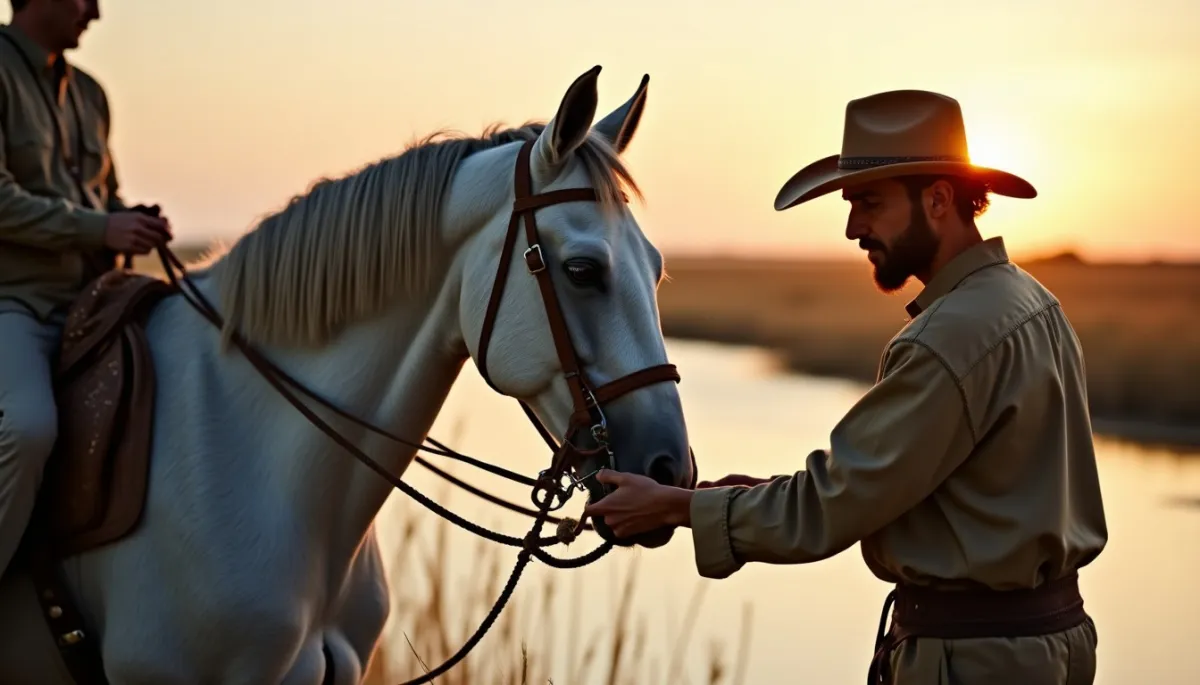
The Camargue bridle and bit are more than tools. They are the visible link between a horse, a gardian, and the marshlands they tame.
🚀 Key Takeaways
- Core concept : The filet (bridle) and mors (bit) are simple, robust and adapted to herding in wet, open terrain.
- Practical tip : Check for correct fit and smooth edges; prefer a mild snaffle if you are unfamiliar with Camargue-style bits.
- Did you know : Gardians passed these designs down through families and manades, combining utility and identity.
Light on the salt air, heavy with history. Imagine a low sun over the marshes, horses stamping in shallow water, a gardian adjusting his filet before an abrivado.
At the water's edge
The image of a gardian at the water's edge says everything about the Camargue tack. A simple headstall, often braided or made of oil-darkened leather, rests against the noble, grey face of the Camargue horse. The mors, visible between the horse's lips, looks unostentatious, built to endure mud, reeds, and long hours in the saddle.
These scenes are common around Saintes-Maries-de-la-Mer, in the manades of Méjanes or in the marshes near Arles. The tack is used daily, for herding black bulls (taureaux) and for festivities such as the local ferrade and the Fête des Gardians.
Close observation reveals small regional flourishes. Some bridles show simple metal plaques or a stamped leather browband. The overall aesthetic favors function: easy repair, resilience to salt, and a design that allows quick hands during an abrivado or when roping a calf.
Roots and lineage
To understand the filet and the mors, one must meet the gardians. These cattle herders, organized into manades (herds) and led by a manadier, preserved a working culture through the 19th and 20th centuries. Folco de Baroncelli-Javon (1869-1943) is a key historical figure who helped codify Camargue identity, celebrating its costumes, language and rites.
The tack itself evolved from practical needs. Salt marshes require materials that do not rot quickly; hence the preference for tanned leather, sometimes waxed, and metal bits that resist corrosion. Families of gardians often repaired bridles themselves, passing down patterns that became identifiers of a particular manade.
Anecdotes survive in oral memory. An elderly gardian I met in 2018 near Méjanes remembered how his grandfather reshaped a bitten bit with a simple file after a hard day's work, bringing a horse back into service rather than buying new hardware. That thrift shaped designs that are easy to maintain in the field.
Form and function
Technically, the filet is the bridle — straps, browband, and any noseband — while the mors is the metal piece placed in the horse's mouth. Camargue mors are typically straightforward, prioritizing control suited to cattle work. Riders need clarity under pressure: the tack must transmit signals reliably during sudden turns and in crowded herds.
For non-specialists, a few terms help. A snaffle bit (mors de filet simple) acts mainly on the mouth, offering clear and relatively gentle cues. A curb bit (mors à branches) applies leverage and is used by experienced hands. The gardian's approach tends to favor simplicity because the horses must respond instantly in open, unpredictable spaces.
Choosing the right combination depends on the horse's training, the rider's hands, and the task. In tourist demonstrations, many manades opt for gentler bits to show the horse's suppleness. In contrast, for rounding up bulls across hectares of marsh, sturdier bits are common, always balanced with careful fitting and know-how.
Tradition under pressure
Tradition does not mean immobility. Since the late 20th century, tourism and equestrian sport have influenced equipment. Some manades adapt modern materials like stainless steel and synthetic leather for better longevity and hygiene. Others keep strictly to ancestral methods as an act of cultural preservation.
There are debates within the Camargue community. Purists argue that the original shapes and materials belong to the patrimony of the region. Innovators answer that advances in ergonomics and animal welfare justify change. Both perspectives meet in a practical compromise: using improved materials while retaining the silhouette and handling characteristics of the traditional filet and mors.
Regulation and veterinary awareness also push for safer tack. Local equestrian federations and manades increasingly recommend bit fitting checks, padded nosebands to avoid chafing, and regular cleaning to prevent infections. These measures preserve both the horse and the heritage.
Practical advice
If you visit a manade or try a Camargue saddle experience, ask to see the bridle off the horse. Inspect the mors for smooth joints and rounded edges. Ensure the filets are not frayed at stress points, and check buckles for rust. A well-maintained bridle speaks of respect for the animal and for tradition.
Beginner riders should request a mild snaffle and a fitted headstall. Let a gardian adjust the tack; their hands are trained for decades to find the precise balance between authority and subtlety. Watch an abrivado to see how horse and rider communicate without harshness.
Finally, consider a small souvenir: a braided leather rein or a stamped browband. Such objects, often handmade in the region, carry the practical logic of the marshes and a story you can retell at home.