The Camargue bull (Raço di Biòu): a breed shaped by the marshes
The Raço di Biòu is not just a breed, it is a landscape in muscle and horn. Rooted in the salt meadows of the Rhône delta, these bulls embody a way of life that has resisted modern uniformity.
🚀 Key Takeaways
- Core concept : The Raço di Biòu is a local, semi-feral cattle breed adapted to Camargue marshes.
- Practical tip : Visit a manade in spring to see the ferrade and meet a gardian.
- Did you know : Course camarguaise is a bloodless bull game, where the raseteur collects rosettes from the bull's head.
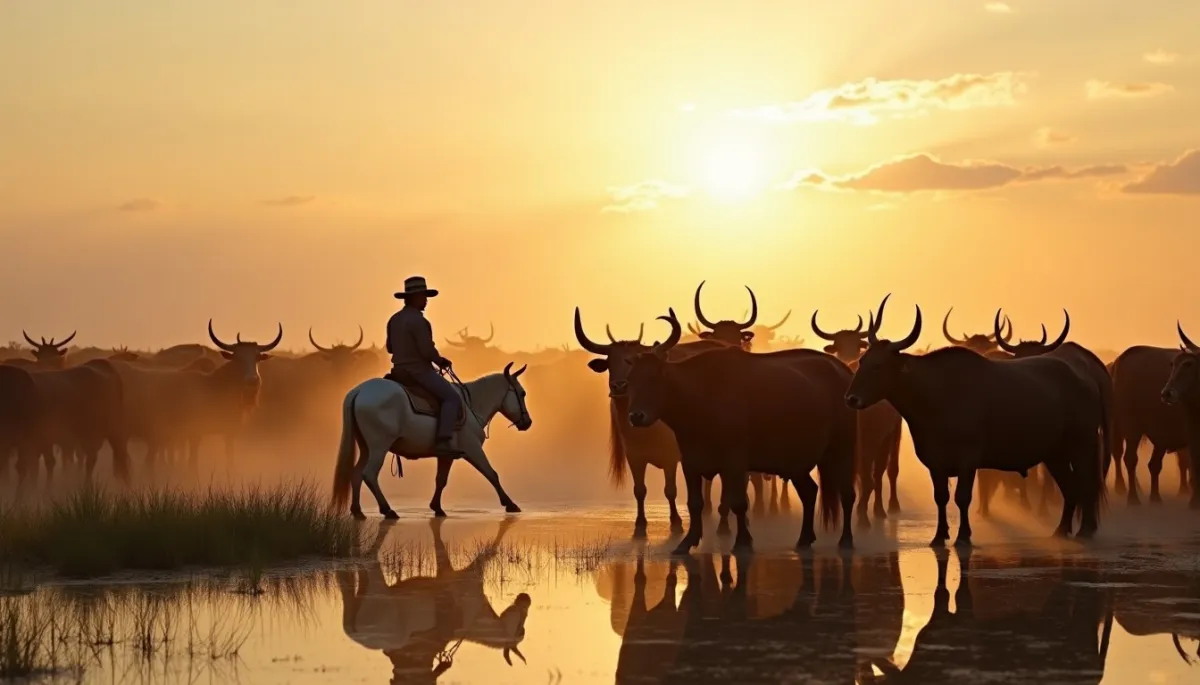
Black as stormwater, compact and alert, the Camargue bull pierces the horizon. Imagine a low, flat plain where water and sky swap colors, and a herd moves like a dark tide across the reed beds.
Des marais vivants
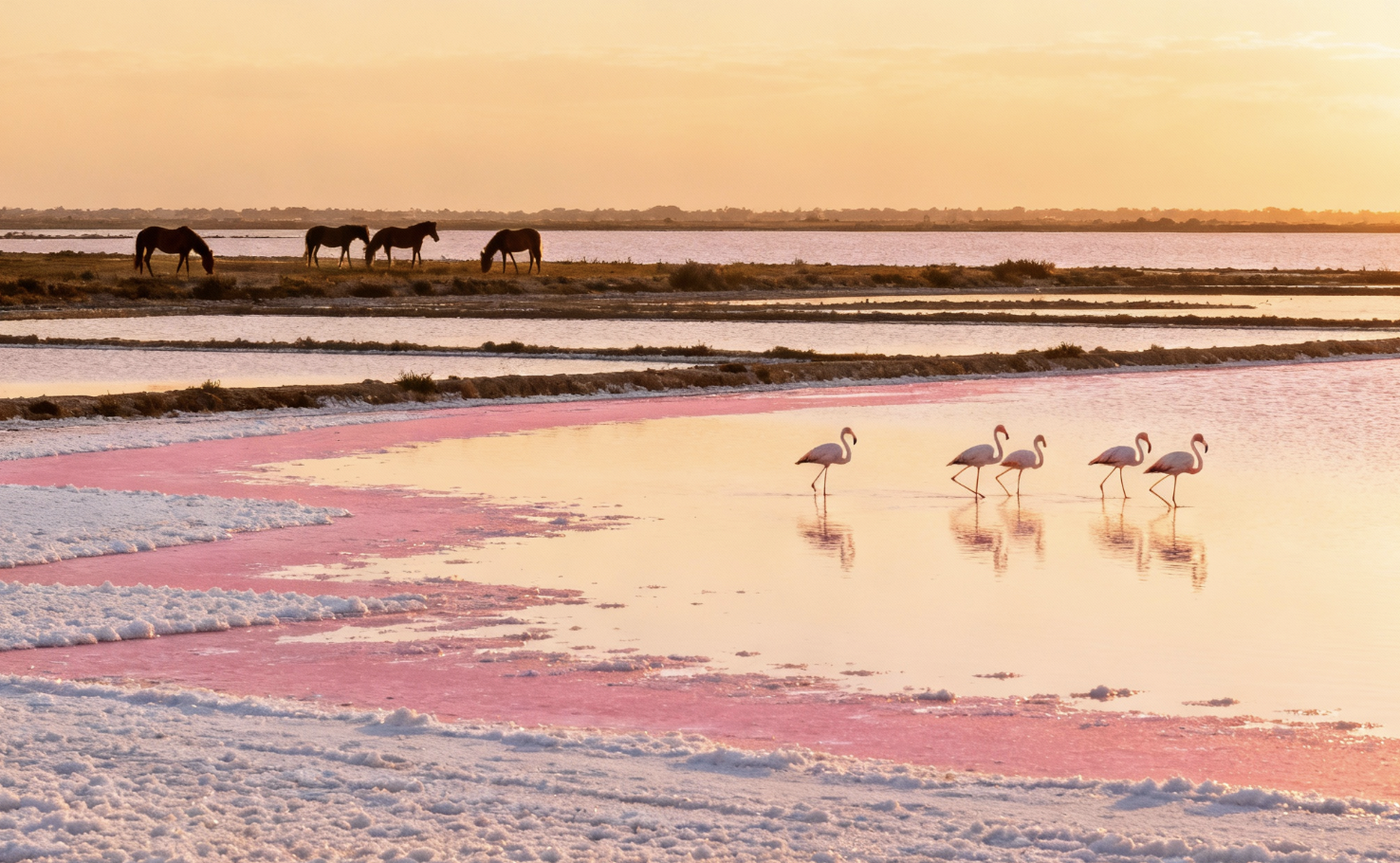
The Raço di Biòu is the product of the Camargue itself. For centuries, cattle grazed the salicornia and salt-tolerant grasses of the delta, developing short, robust bodies, strong hooves and a calm resistance to humidity and salt.
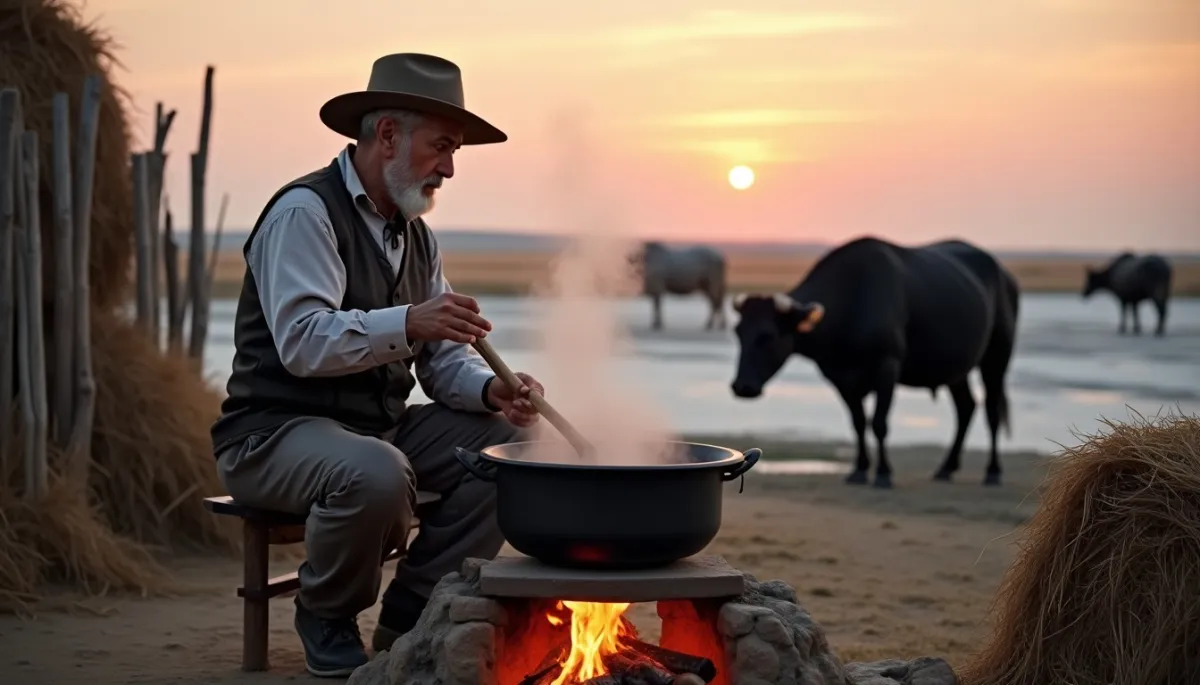
These animals live in manades, semi-feral herds managed by manadiers and gardians. A manade is both a herd and an estate, where cattle roam freely most of the year and are gathered only for specific operations.
Folco de Baroncelli (1869-1943) helped to shape the modern image of Camargue traditions, valorizing gardians and the local cattle. His cultural activism, early in the 20th century, contributed to a heritage identity that protects the Raço di Biòu in local celebrations.
Le métier des hommes
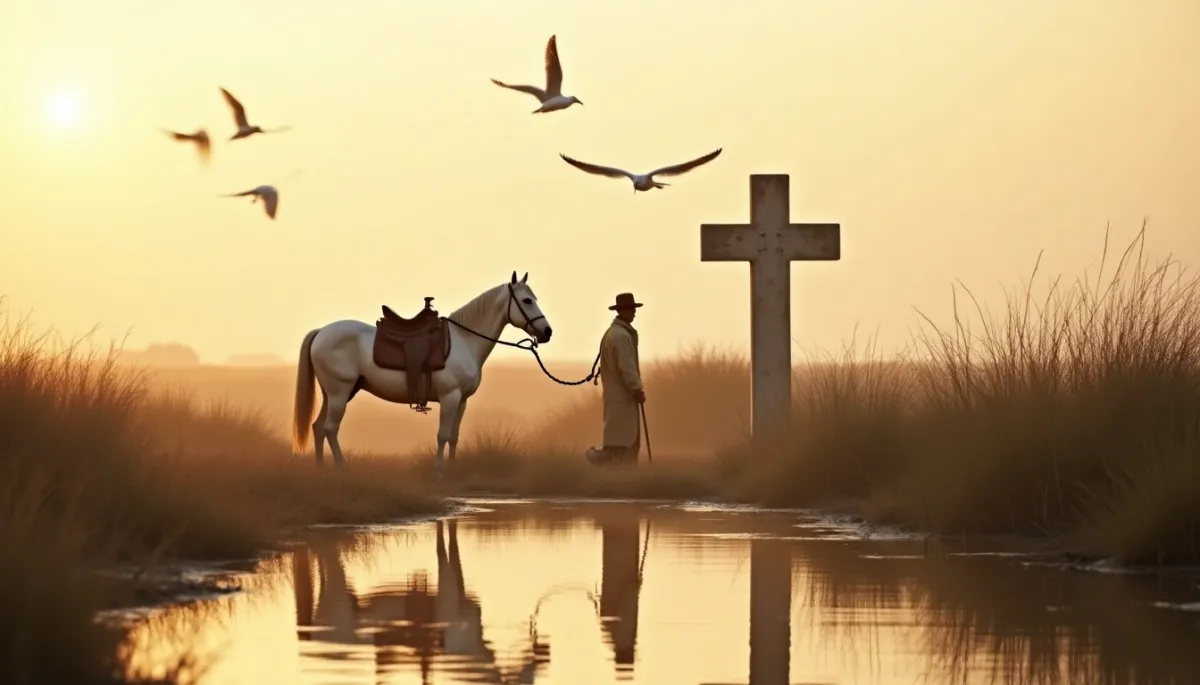
Gardians are the mounted herders of the Camargue, working on the small, hardy Camargue horse. Their tools are simple, their knowledge intimate: reading the wind, the water levels, the mood of a bull, and the geography of the marsh.
Every spring, ferrade gathers a manade. During ferrade the herd is rounded, calves are marked or vaccinated, and selections are made for breeding. The ferrade is both practical and ritual, a moment where human and bovine lives cross paths.
The Raço di Biòu supplies bulls for course camarguaise, a spectacle distinct from Spanish bullfighting. In this regional sport, raseteurs, agile men and women, enter the arena to pick a cocarde (rosette) from the bull's head, without injuring the animal. It is a test of speed, respect and technique.
Menaces et avenirs
The breed faces pressures, from land use changes to economic constraints. The draining of marshes for agriculture, urbanization near Arles and tourism shifts have altered grazing patterns. Protection of wetlands is therefore crucial to the Raço di Biòu.
Creation of the Parc naturel régional de Camargue in 1970 helped stabilize the landscape, offering legal recognition that benefits biodiversity and traditional farming systems. Yet, manades remain small operations, reliant on niche markets and festivals.
To support the breed, visitors can choose local products, attend an abrivado or book a guided visit at a manade. Practical advice: go in spring or early summer for ferrade, bring waterproof footwear, and ask to meet a gardian to understand the living skills behind the breed.
Ultimately, the Raço di Biòu is a living archive. Each horn, each scar, recalls tides, shepherds and centuries of adaptation. To see a manade moving across the marsh is to see a culture sustained, not frozen, by its environment.