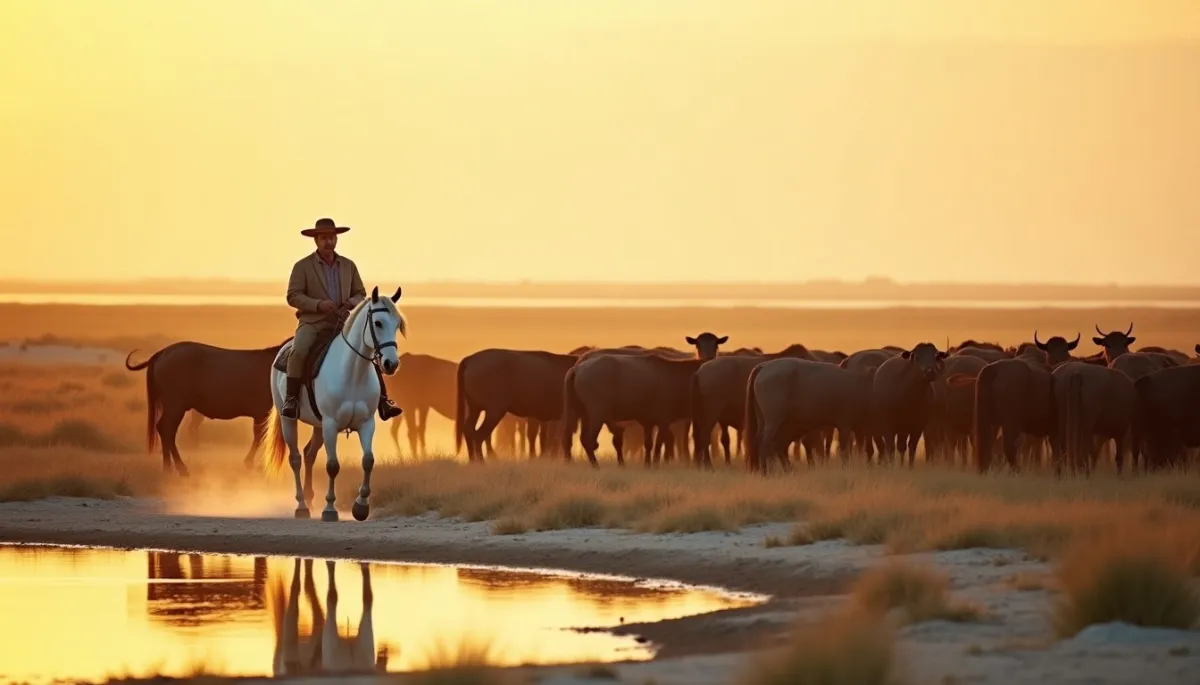
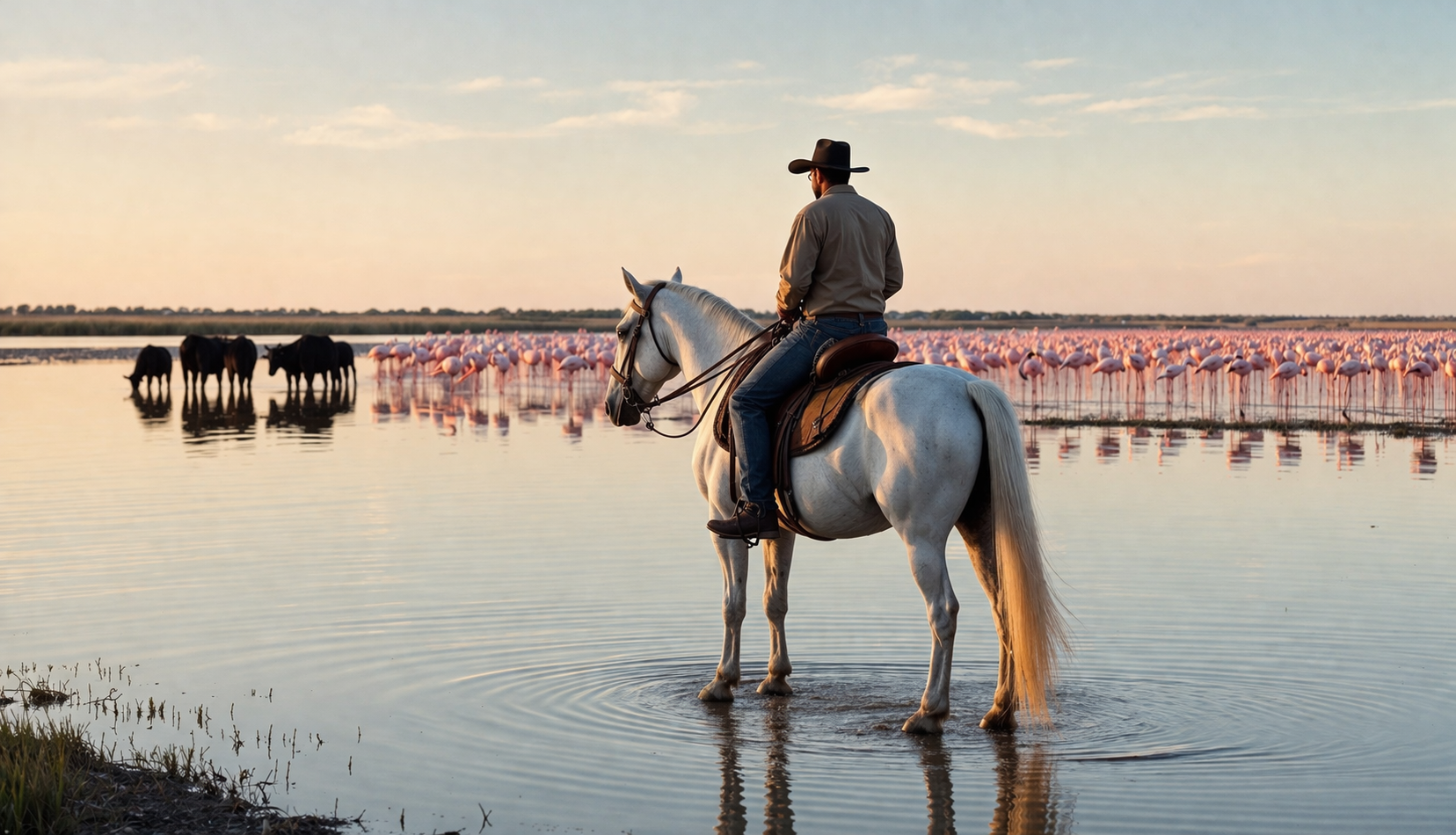
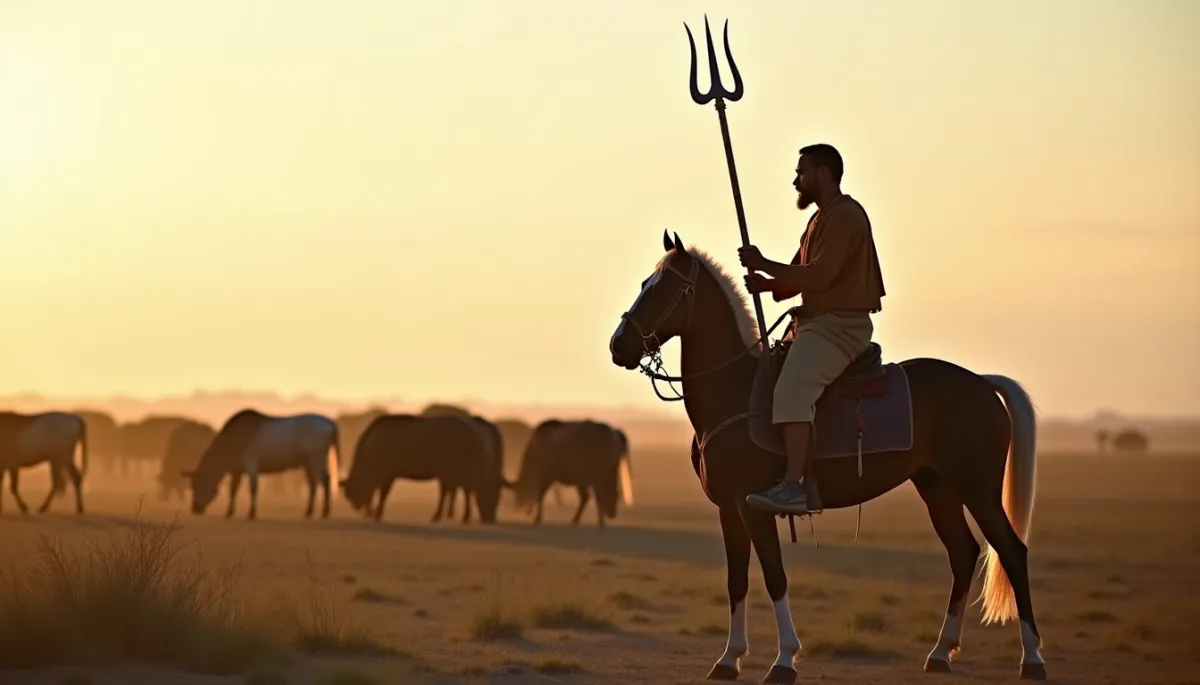
The gaze of Camargue: When horses and bulls cross the river
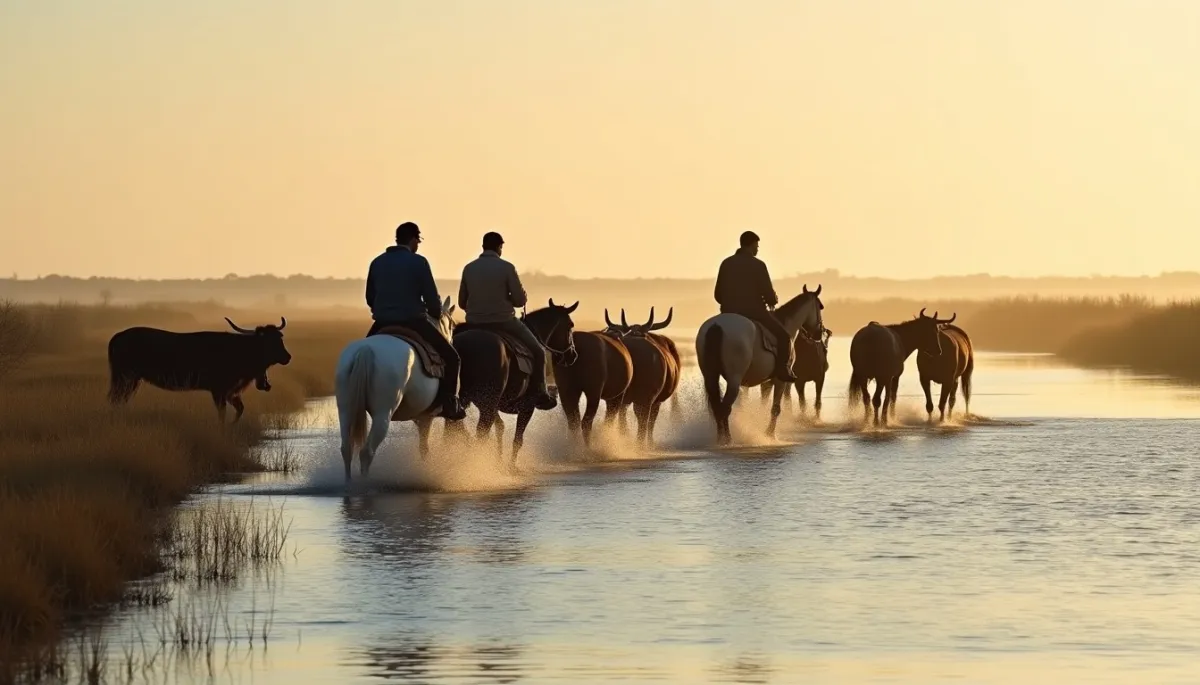
The gaze of Camargue is a living image: dark bodies moving through shallow water under a wide sky. In the Rhône delta, gardians still guide manades across channels, a practice that links pastoral life, memory and landscape.
🚀 Key Takeaways
- Key concept : The gaze is the river crossing of horses and bulls managed by gardians and manades in the Camargue.
- Practical tip : Best time to witness crossings is late spring to early autumn, near the Petit Rhône banks and around Saintes-Maries-de-la-Mer.
- Did you know : Camargue horses are one of the oldest European breeds and are naturally adapted to marshy terrain.
Water, sun, hooves. The first sight is a ripple of dark backs and white manes, a motion that seems older than the maps.
Imagine a low river bend at sunrise, the flat delta stretched to the horizon. Gardians in flat hats guide a dozen horses, perhaps a handful of bulls, the animals moving shoulder to shoulder. Waders of reeds, the air thick with salt and birdsong. A small boat waits for supplies. The crossing is both work and choreography: precise, spare, and rooted in centuries of delta life.
eaux en mouvement
The gaze is, in its simplest form, a herd crossing a watercourse. It can be a planned transfer between pastures, a manoeuvre to bring animals to the salt marshes, or an emergency response when floods or fires force movement.
Read alsoCamargue wines and terroirs
In practical terms, gardians use the rhythm of the herd and the current. Horses (the Camargue horses) often lead, their instincts for shallow water guiding the bulls, which are heavier and more reticent. The herd stays compact; dispersion in water risks injury and stress.
There's a vocabulary: abrivado and bandido refer to driving bulls through streets or lanes during festivals, but the gaze is the same idea applied to the river. The difference lies in space and stakes. On water, the gardian reads depth, bottom, and tide, rather than cobbles and crowds.
héritiers du delta
Who keeps this tradition alive? The gardians, those mounted herders of the Camargue, descendants of a mixed Provençal and Iberian stock. Their work is organized around the manade, a traditional ranch where bulls (for course camarguaise) and horses are raised.
Famous names in Camargue stock are often local, like the manades that open gates for festivals in Arles and Saintes-Maries-de-la-Mer. But most gardians you will meet are anonymous, lineages of hands and reins, carrying practices that changed little since the 19th century when the Rhône's management shaped local pastoral economies.
Historically, moving herds across the delta has been strategic. From the 1800s, with salt extraction and rice cultivation, pastures shifted and the gardian adapted. The gaze remained a practical answer to geography: a way to use land on both banks and preserve grazing cycles.
rythme et raison
Why talk about the gaze now? Because the Camargue faces pressure: tourism, land zoning, climate change. The crossing highlights tensions between tradition and modernity. Roads, canals and tourism routes sometimes disrupt old pathways, requiring new agreements between manades and authorities.
Climate change alters the rhythm of tides and floods. In 2003 and again in the 2010s, unusual floods forced larger, more dangerous crossings. Gardians had to adapt methods, using small motorboats as safety backups and timing moves with greater meteorological precision.
At the same time, tourism has turned the gaze into a spectacle. Visitors come for photographs and festivals. That attention can be a double-edged sword: it brings economic support, but risks staging a living practice into a performance. Many manades now set rules to protect animals and respect agrarian timing.
traits contradictoires
The tradition is robust, yet fragile. Modern farming equipment, motorised trailers, and regulations make some crossings obsolete; at the same time, a renewed interest in local identity strengthens the gardian's role.
There are also ethical debates. Course camarguaise, the local bull sport, is under scrutiny regarding animal welfare. Gardians argue that the gaze itself is pastoral necessity, not entertainment. The nuance is essential: the crossing is a management technique, not a spectacle by default.
Looking forward, many manades combine old and new: crossing during low-impact hours, using veterinary checks, coordinating with environmental agencies. The gaze adapts, keeping its heartbeat while answering contemporary obligations.
For the traveler who wants to witness a gaze: ask permission, avoid flash photography, keep distance and follow the gardian's instructions. Early morning or late afternoon provide the best light, and the memory of hooves in water is something to carry home.