The mysterious origins of the Camargue horse: direct descendant of prehistoric horses?
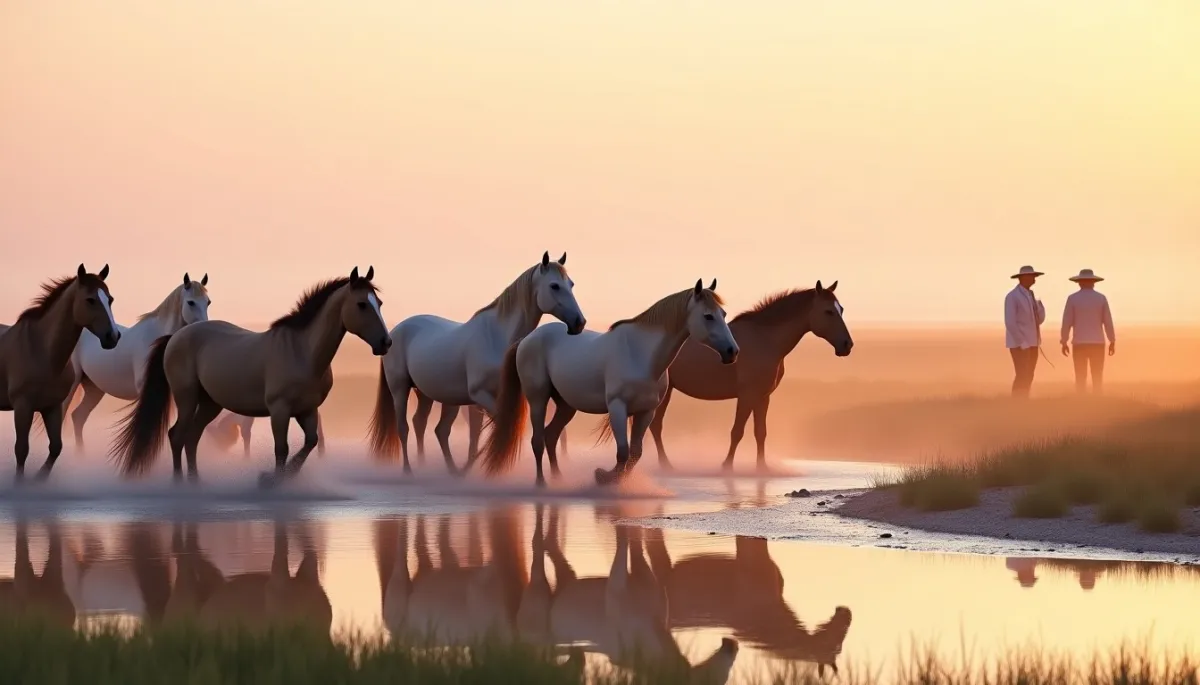
The pale horses of the Camargue have fed imaginations for centuries, standing like ghosts on salt pans and reed beds. Are they the living echo of Europe’s wild horses, or the product of centuries of selection and regional isolation?
🚀 Key Takeaways
- Concept key : The Camargue horse is ancient in appearance but its link to Pleistocene horses is complex, involving continuity and later admixture.
- Practical tip : To meet a manade, head to Saintes-Maries-de-la-Mer or the Parc naturel régional de Camargue in the morning and ask respectfully to observe the herd.
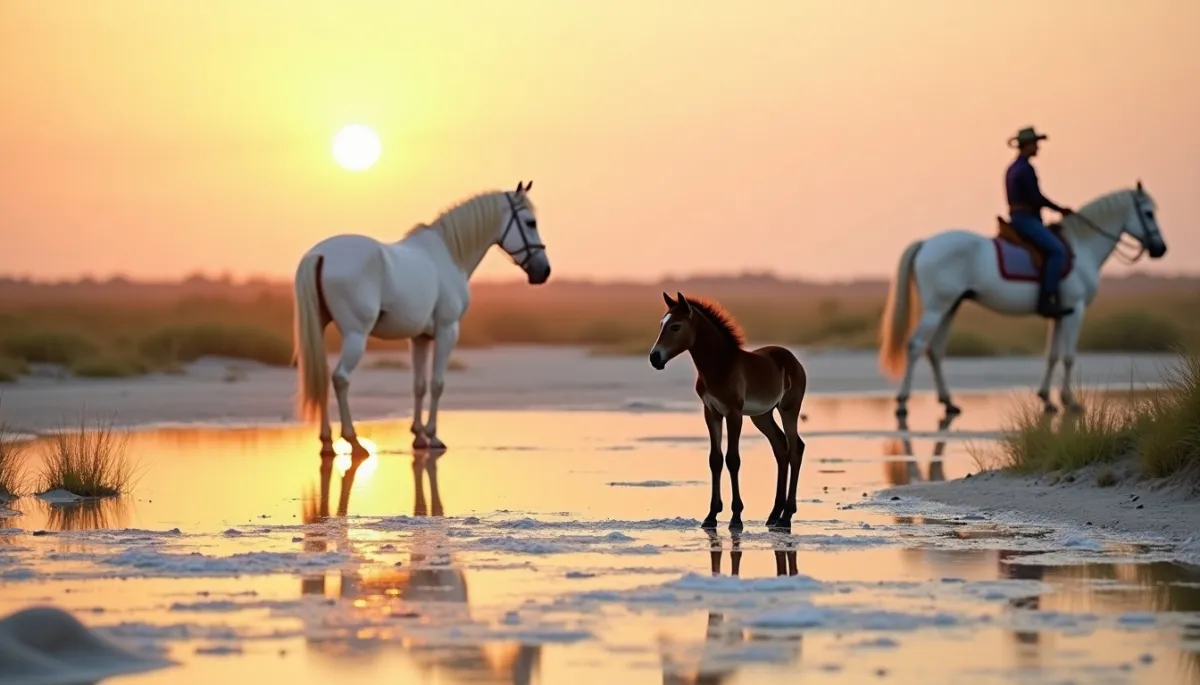
- Did you know : Foals are born dark and progressively turn white, a trait prized and managed by gardians for generations.
Light, wind, water: the Camargue horse appears like a vision at dawn.
Imagine a low horizon, pink salt pans, and a dozen small grey horses moving through reeds, nostrils shining, manadiers in flat-brimmed hats nearby. The scene is cinematic, but it is also the daily reality of the manades, the semi-wild herds kept by gardians who have ridden these horses for generations.
Terre et robe
The Camargue horse (often called Camarguais) is compact, hardy, usually 1.35 to 1.50 m at the withers, and famously turns white with age. Its silhouette, short-coupled and solid, fits the marshes and the work of the gardian, the mounted cattle herder of the delta.
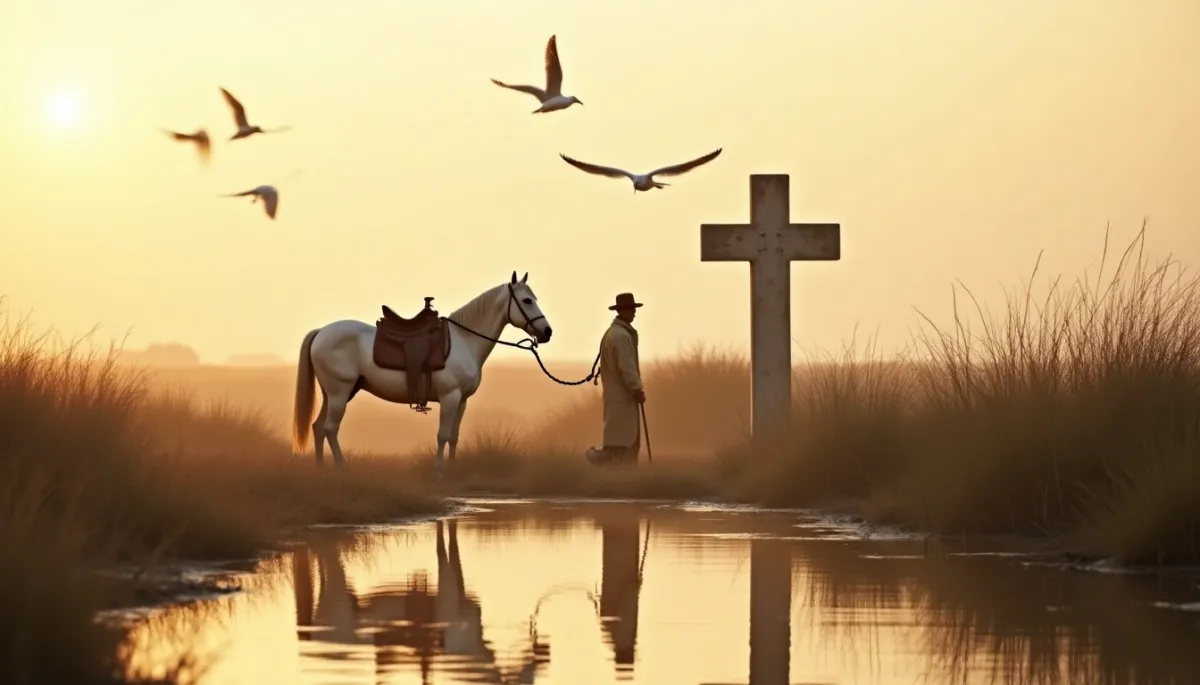
Historically the herd system (manade) organized life in the Camargue. The manade is more than a herd, it is a way of life, codified in the late 19th and early 20th centuries by local figures such as Folco de Baroncelli (1869-1943), who promoted regional customs and helped shape the modern image of the Camargue horse.
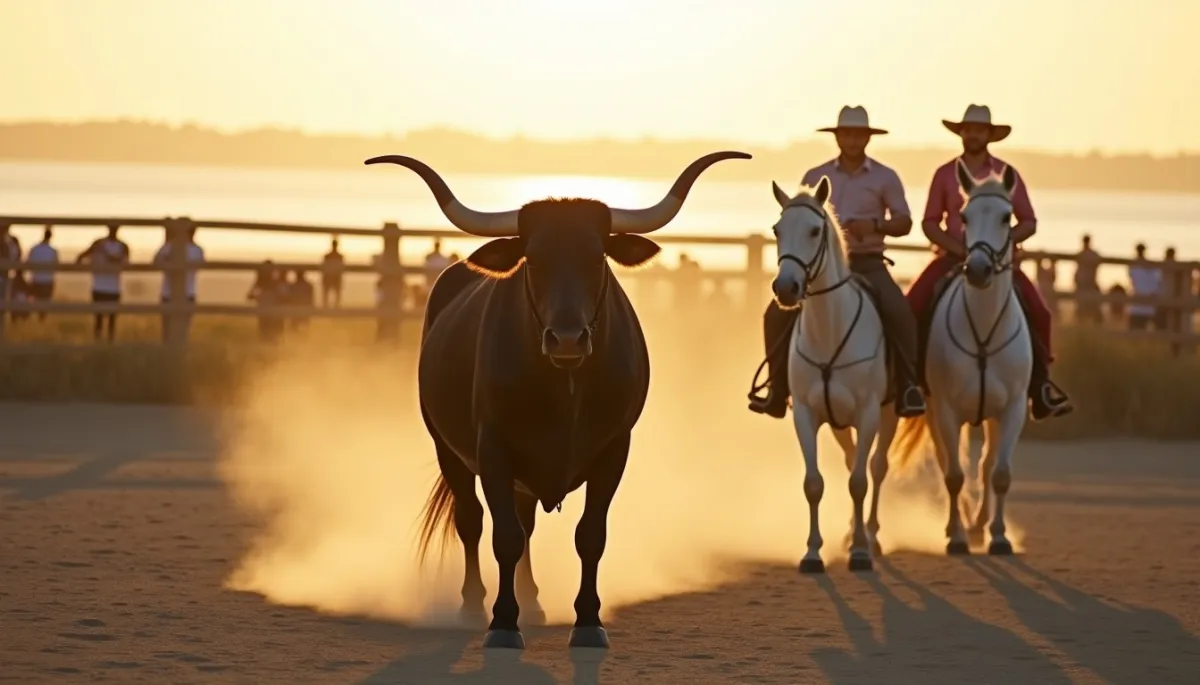
From local fêtes to the Arles Feria, the Camargue horse is both working animal and cultural emblem. It carries bulls, moves stock, and participates in abrivados, those dramatic runs through village streets where gardians display their art.
Racines enfouies
People have long imagined an unbroken line from Pleistocene horses to today’s Camargue herd. There are reasons for the myth: Paleolithic art across southern France portrays horses, and the wetlands of the delta have sheltered animals for millennia.
Scientific evidence complicates the romance. Archaeological data show wild horses (genus Equus) in Europe since the Ice Age, and domestic horses were widespread in Europe after about 3000–2000 BCE, following domestication events on the Eurasian steppes. Genetic studies published since the 2000s indicate that while the Camargue shares ancient mitochondrial lineages found in Iberian and European horses, its genome also carries signatures of later admixture and selective breeding.
In short, continuity exists, but it is not a single thread. Isolation in marshy habitat, selection by local breeders, and occasional introductions of outside blood have all shaped the Camargue horse over centuries.
Entre science et légende
Local memory and folklore keep the prehistoric hypothesis alive. Visitors hear versions that the Camargue horse is a “primitive” survivor, unchanged since prehistory. That view feeds the aura of authenticity treasured by gardians and regional promoters.
Researchers, for their part, emphasize nuance. Genetic markers show connections to Iberian types and other Mediterranean breeds, yet do not prove a direct, unbroken descent from Ice Age populations. The horse we see today is the result of environment, human practice, and time.
Practical advice for the curious: respect the manade and its rules, attend a matinée with a local guide, and ask to see foals to observe the dark-to-white transition. Visit the Parc naturel régional de Camargue, created in 1970, and speak with manadiers to catch both the science and the stories.
Whether myth or lineage, the Camargue horse continues to fascinate. It is at once a working partner, a cultural icon, and a reminder of how landscapes and human hands shape living history.