The most beautiful sunsets in Camargue
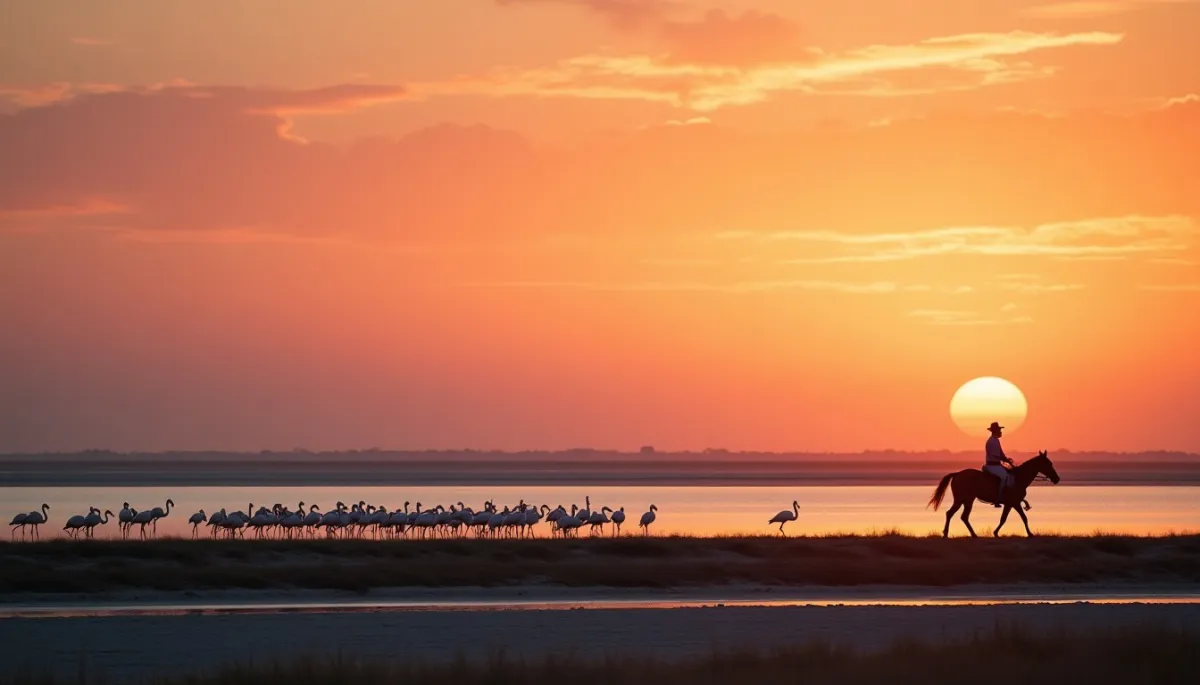
Camargue at dusk is a slow, incandescent ritual. Across salt and reed, the sky ignites and the land returns its color in mirrored pools.
🚀 Key Takeaways
- Core idea : Camargue sunsets are shaped by lagoons, salt pans and wide horizons.
- Practical tip : Aim for 30 minutes before and after sunset, and favor Salin-de-Giraud or the Espiguette for reflections.
- Did you know : The Parc naturel régional de Camargue was established in 1970; its flamingo colonies often silhouette against the last light.
It stops you in your tracks.
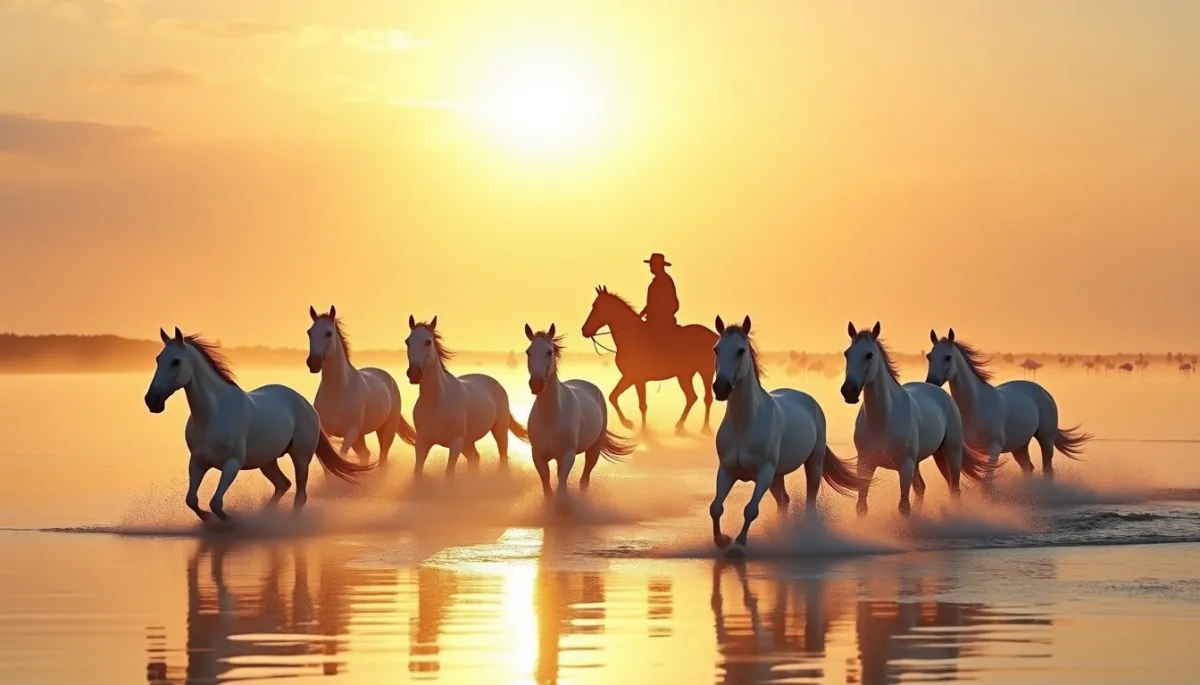
Imagine standing on the sand of the Plage de l'Espiguette, wind in your hair, the Atlantic behind you and, ahead, a ribbon of pink salt pans and shallow lagoon. As the sun sinks, clouds are set aflame; flamingos muster in a distant mirror, and a gardian on horseback rides home along a dike. The scene is at once ancient and cinematic.
Marshes and mirrors
The large lagoons of the Camargue, above all the Étang de Vaccarès, are the engines of sunset drama. Water spreads across shallow basins, multiplying color. Vaccarès, visible from observation points near La Capelière, often becomes a sheet of molten copper at dusk. Photographers frequent this zone because the flat water creates perfect reflections.
At Salin-de-Giraud, the industrial salt pans add geometry to the view. The white and pink gradations of crystallizing salt reflect light like a thousand tiny mirrors; some evenings the pans turn rose gold. Salins-du-Midi developed these works across the 19th and 20th centuries, and today they are part landscape, part living memory of local industry.
Wild beaches such as Beauduc and the Espiguette offer another spectacle. There, the horizon is uninterrupted. With the Atlantic on one side and the lagoon on the other, you can watch color propagate across two distinct palettes, which is rare in European coastal landscapes.
Voices at sunset
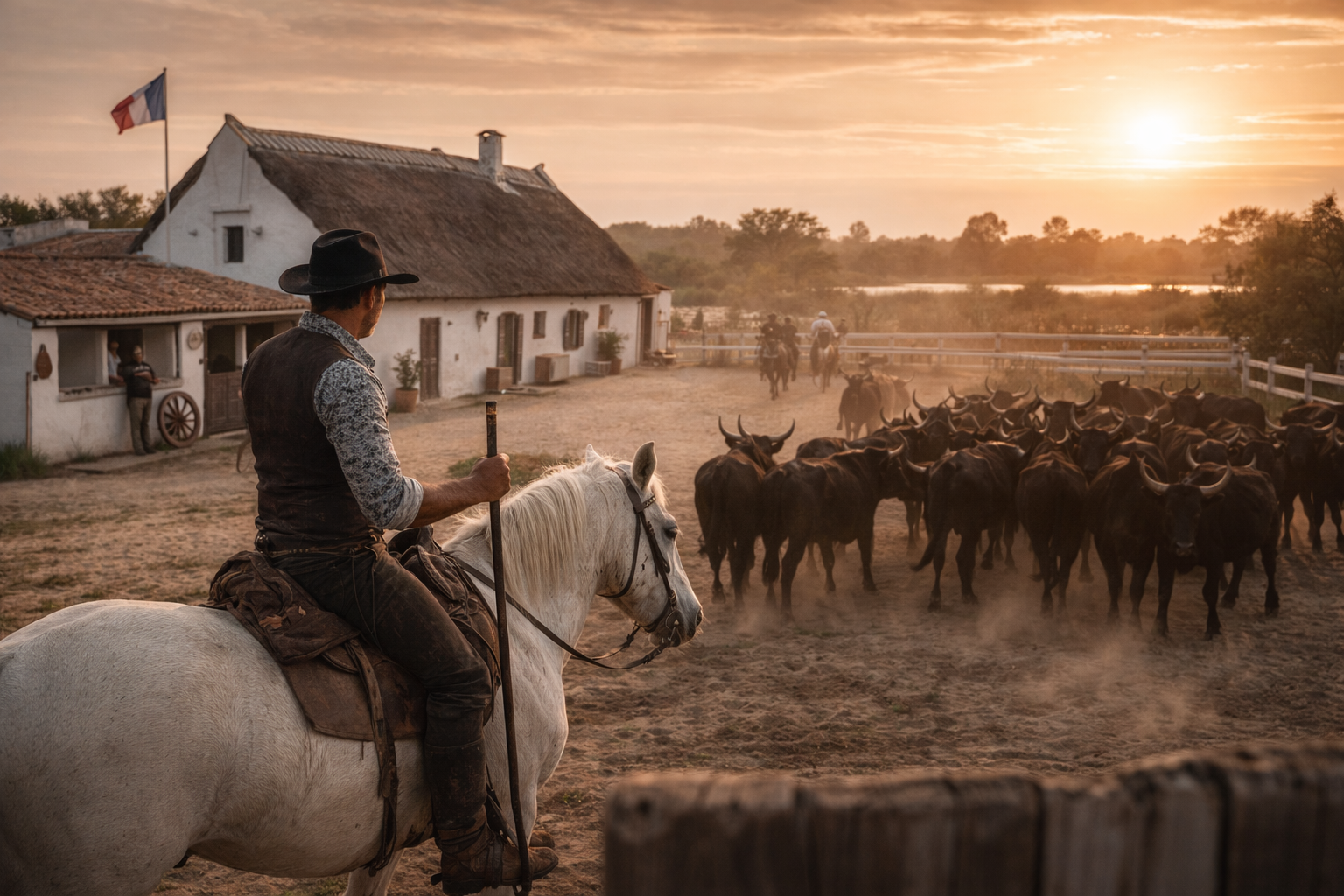
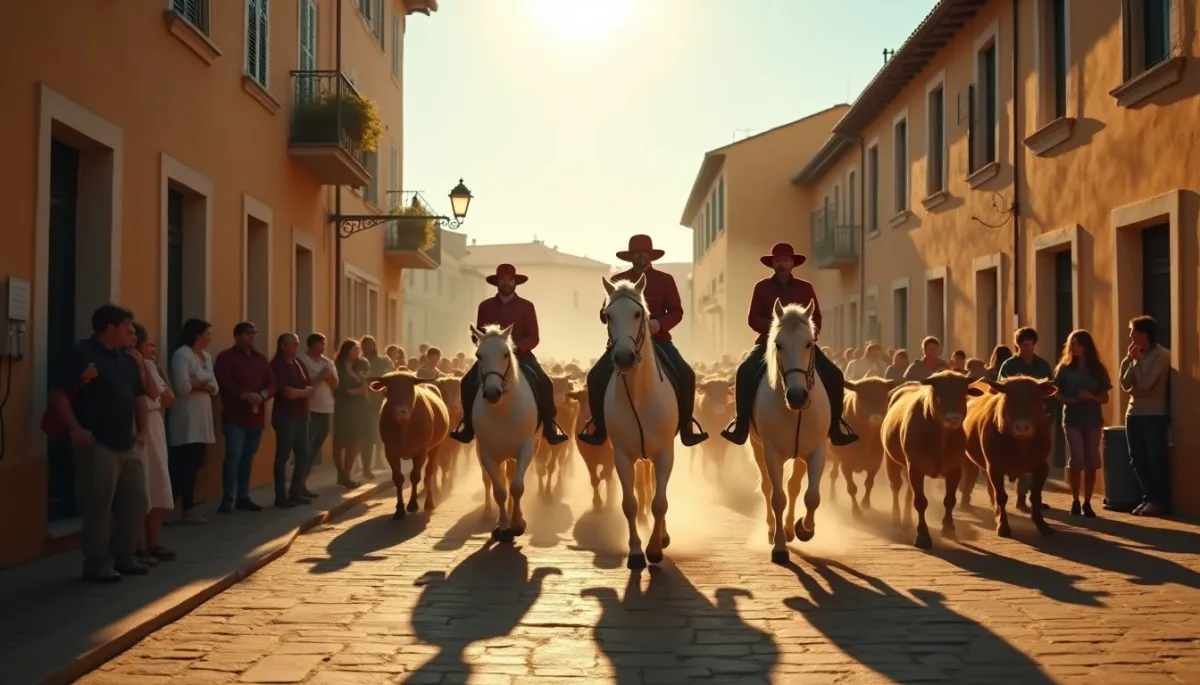
People make the spectacle. Gardians, the Camargue horsemen who tend bulls and sheep, have for centuries ridden at dusk. Their silhouettes, often wearing the traditional wide-brimmed hat, punctuate the skyline. In Saintes-Maries-de-la-Mer, local festivals and the church ramparts create communal vantage points where families gather to watch the day close.
History is visible in the stones of Aigues-Mortes. The ramparts, built in the 13th century under Louis IX, offer an elevated viewpoint. From there, the salt flats and the shimmer of the Bay of Aigues-Mortes fold into the sunset. Sailors and pilgrims once used the city as a departure point, and today its towers frame modern evening rituals.
Artists have long been inspired by these lights. Vincent van Gogh lived in nearby Arles in 1888 and painted Provençal skies that echo the region's colors. While not all his canvases are literal Camargue views, his palette helps us read the light: ochres, crimsons and the sudden blue that follows a warm sunset.
The why of the colors
Why are Camargue sunsets so intense? Geography is decisive. The plain is flat, with few trees or hills to break the horizon. Salt flats and shallow lagoons amplify sunlight by reflection. Particles in coastal air, including salt and humidity, scatter red and orange wavelengths, deepening the tones at dusk.
Season matters too. Late spring and early autumn often produce the clearest, most saturated skies, when humidity and temperature contrasts are favorable. October nights with clear air can deliver crystalline purples and long-lasting afterglow. Summer can be dramatic too, when storm cells offshore catch the last sun.
Migratory birds add motion to color. The Camargue is a major stopover on migration routes. Flocks of flamingos, herons and avocets move through the sky and along the lagoons, turning a static painting into a living tableau as day turns to night.
Practical twilight
For the best results, arrive early. The golden hour begins roughly 45 minutes before sunset; true magic often happens in the last 20 minutes and the 30 minutes after. Check sunset times and local maps for dirt tracks; many viewpoints are accessible by car but require a short walk.
Respect the park and private properties. The Parc naturel régional de Camargue protects nesting sites and fragile dunes. Stay on marked paths, avoid disturbing flocks and keep dogs leashed near breeding zones. Binoculars and a telephoto lens will let you enjoy birds without intruding.
Finally, know the spots: La Capelière and the bird hides for wildlife silhouettes, Salin-de-Giraud for salt-pond reflections, Aigues-Mortes ramparts for historic framing, and Espiguette for raw, endless horizons. Each place offers a different story at sunset, and together they compose the Camargue's evening symphony.