Camargue, a territory apart in France
The Camargue is a landscape of salt, water and light on the edge of the Mediterranean. Between Arles and the sea, traditions and nature live together in a fragile balance.
🚀 Key Takeaways
- Core idea : A unique Mediterranean delta where wild nature and working equestrian culture meet.
- Practical tip : Visit in spring for flamingos and in early May for the pilgrimage of Saintes-Maries-de-la-Mer.
- Did you know : Folco de Baroncelli helped shape modern Camargue identity in the early 20th century.
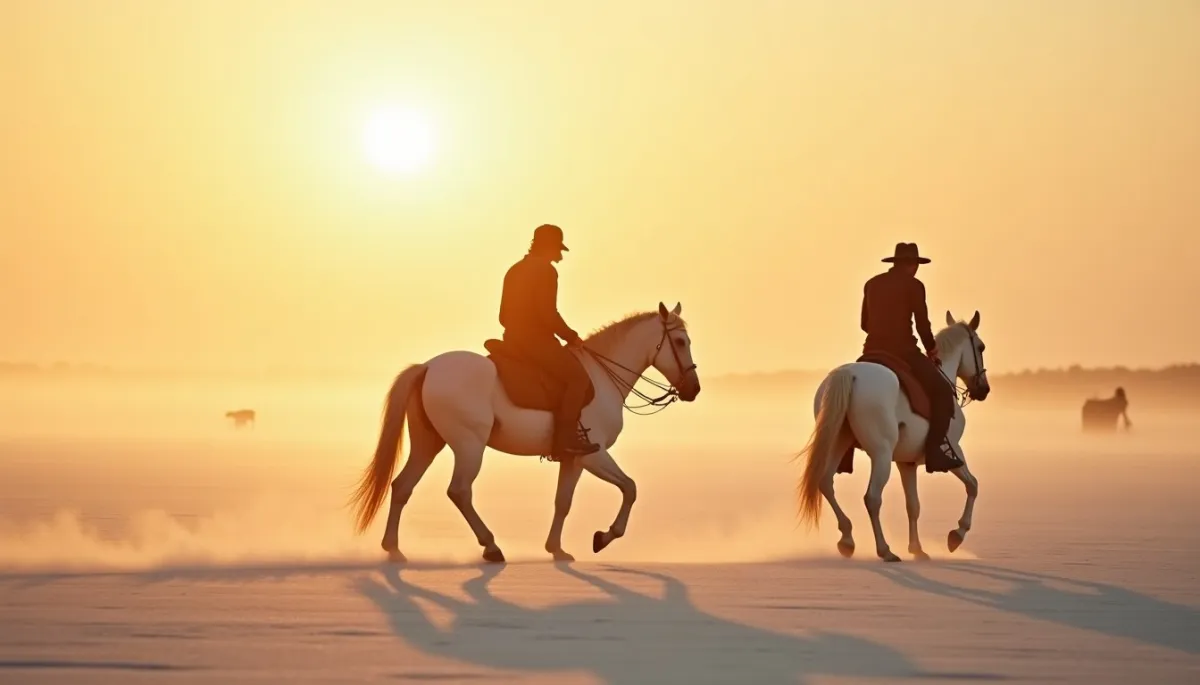
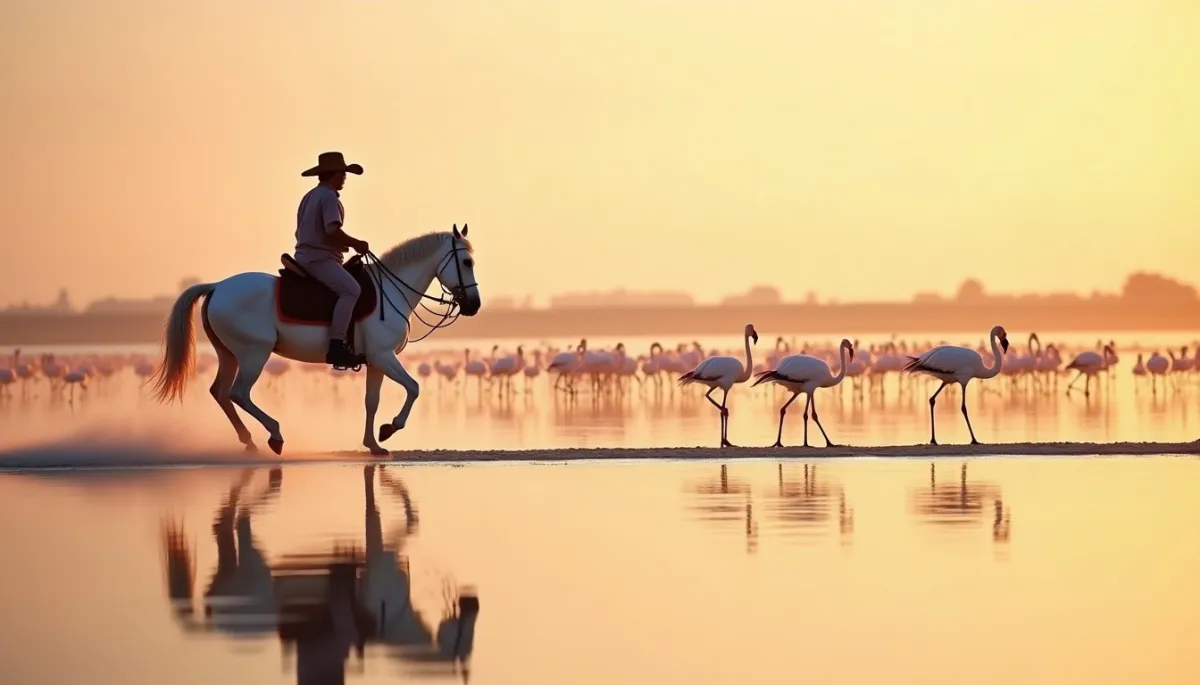
It smells of salt and horse sweat. Morning light spreads on shallow pools, a gardian guides a small manade of grey horses, and a distant flock of flamingos lifts like a living pink flag over the marshes.
Chevaux et gardians
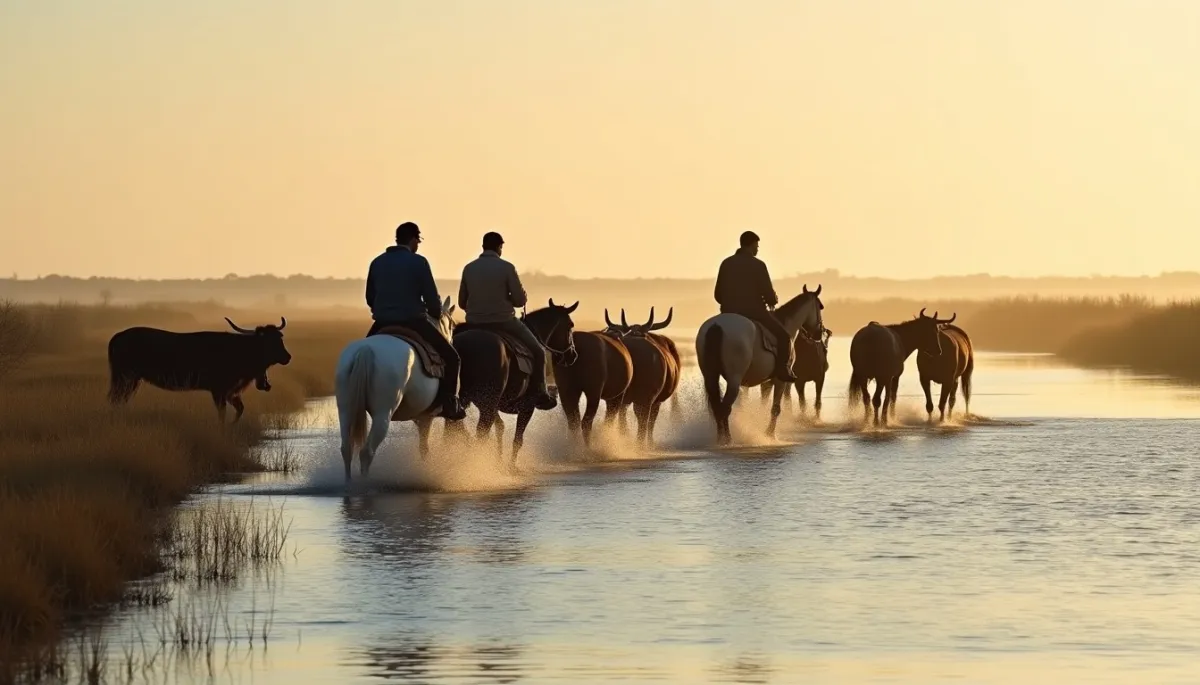
The Camargue horse is a living emblem. Compact, usually grey-white, adapted to brackish marshes, it has worked these lands for centuries. Local breeders keep herds in semi-feral conditions called manades, where horses and bulls roam under the eye of a gardian.
Gardians are the region's mounted herders, comparable to vaqueros or gauchos. Dressed in black and white or blue, they ride one-handed, use a long pike called a trident for herding, and pass techniques from father to child. Their work shapes the landscape as much as any levee or canal.
An important figure in the Camargue story is Folco de Baroncelli-Javon (1869-1943). In the early 20th century he promoted local customs and the concept of the manade. He helped found the Nacioun Gardiano in 1909, an association to protect pastoral culture and rituals that are still visible during festivals and courses.
Terre d'eau et de sel
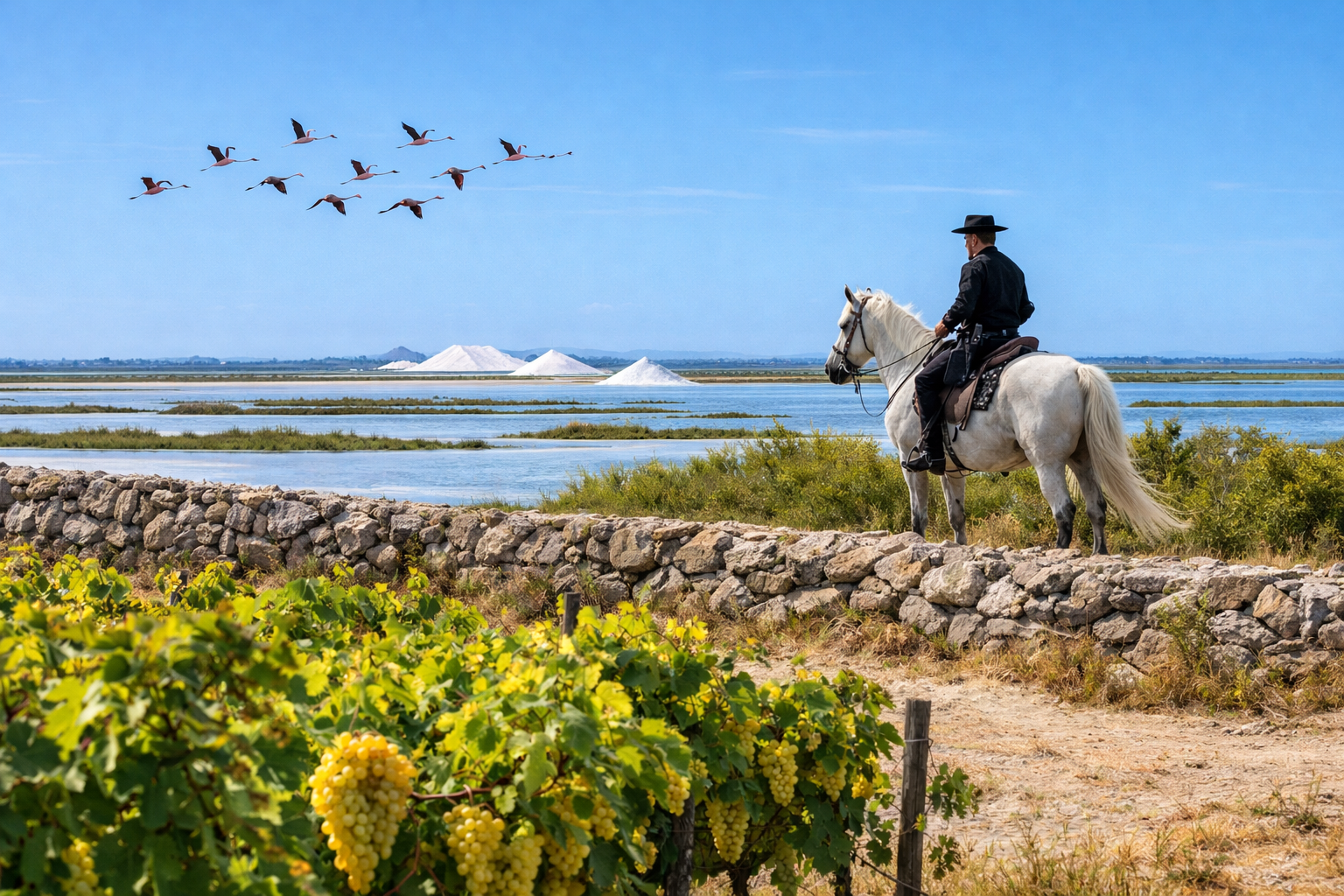
The Camargue is the delta of the Rhône, a triangular land between two arms of the river and the Mediterranean. It comprises marshes, lagoons, dunes, rice fields and salt pans. The Parc naturel régional de Camargue was created in 1970 to protect this mosaic of habitats that hosts migratory birds and a rich aquatic life.
Salt and rice shaped the economy. Saltworks developed in the 19th century along the coast, and the flat lands were irrigated for rice from that period onward. The result is a landscape of geometric fields and shimmering basins where birds feed and breeders move their herds.
The Camargue is also an internationally recognized wetland. It shelters colonies of birds such as the greater flamingo, herons and terns. These species depend on the delicate balance between freshwater inflows and saline basins, a balance challenged by human activity and climate change.
Traditions en mouvement
Every May, Saintes-Maries-de-la-Mer becomes a stage for a centuries-old pilgrimage, with Romani communities, boats, horses and processions. The town, its chapel and the procession are an example of how faith, identity and tourism mingle here.
Bull games preserved in the Camargue follow local rules. Unlike Spanish corrida, the course camarguaise celebrates the raseteur, who seeks to remove a symbolic rosette from the bull's horns, leaving the animal alive. These rituals sustain a working relationship with livestock rather than spectacle alone.
Today, tourism, industry and climate threats complicate life here. Sea level rise and modified water management affect salt marshes and rice fields. Local actors, from manadiers to park managers, experiment with adaptive measures: seasonal grazing regimes, restored canals and guided ecotourism that funds conservation.
Practical advice for visitors: join a guided manade visit to understand herd rhythms, avoid disturbing nesting birds, taste local rice dishes and ask before photographing people at work. The best moments are sunrise and late afternoon, when light and wildlife are at their most expressive.
The Camargue appears timeless, but it is the result of layered histories: pastoralism, salt and rice economies, 20th century conservation, and the creative work of figures like Baroncelli. It remains a territory apart in France, one you can visit to learn how nature and human craftsmanship have shaped each other over centuries.