La Charreada décryptée : plongée au cœur du sport équestre traditionnel du Mexique
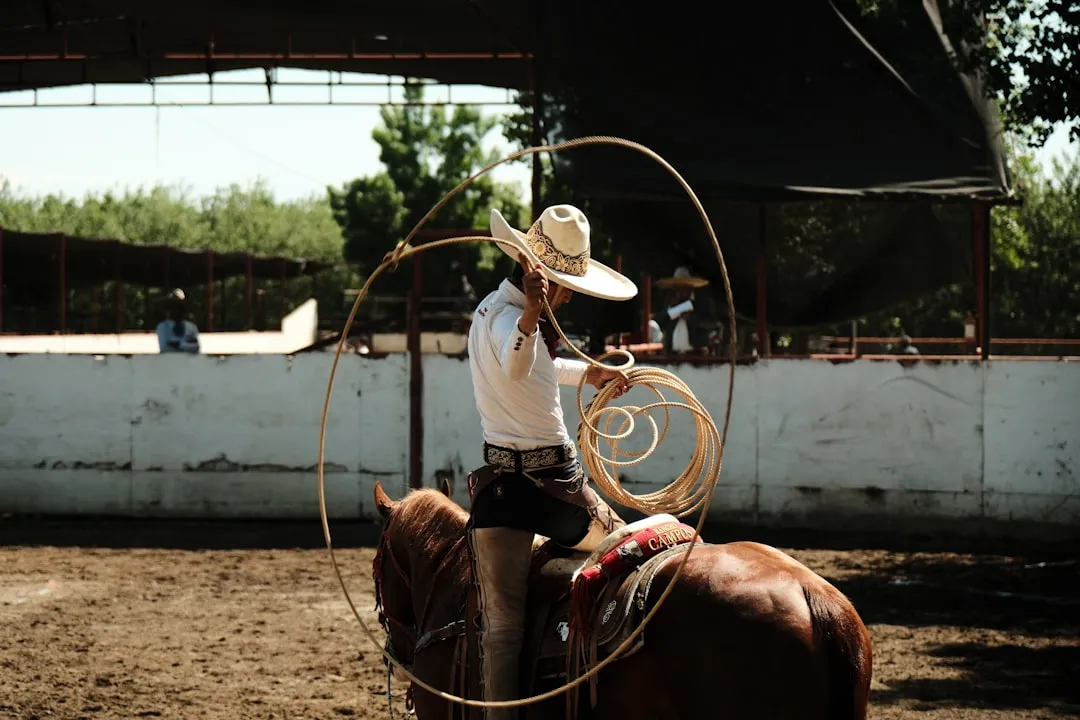
La charreada n'est pas qu'un spectacle. C'est une pratique vivante qui relie savoir-faire équestre, mémoire rurale et fête communautaire.
🚀 L'essentiel
- Concept clé : La charrería, et spécialement la charreada, puise ses racines dans le travail des haciendas et dans les techniques équestres d'origine espagnole.
- Conseil pratique : Pour saisir l'âme du sport, assistez à une feria comme la Feria Nacional de San Marcos et regardez les escaramuzas pendant les échauffements.
- Le saviez-vous : Les épreuves comme le coleadero, les piales et les manganas montrent des compétences distinctes. Il existe des ressemblances sensibles avec les traditions des gardians de Camargue, notamment dans la gestion du bétail.
La charreada est le cœur compétitif de la charrería. À l'origine, il s'agissait de pratiques utilitaires sur les haciendas, transformées au fil du temps en épreuves codifiées. Sur le terrain, la technique se mêle au costume et à la musique pour créer une atmosphère singulière.
Comme l'illustre les fêtes du Jalisco d'Aguascalientes, la charreada est une pratique vivante. Elle n'est pas un simple objet de musée, mais une succession de gestes transmis entre générations.
Origines et contexte historique
La charrería naît des techniques de gestion du bétail sur les haciendas coloniales et postcoloniales du centre du Mexique. Les travailleurs montés développaient des manières de capturer, immobiliser et diriger le bétail. Ces gestes de travail ont progressivement été stylisés en concours amicaux entre cavaliers de hacienda.
Au XXe siècle, la Federación Mexicana de Charrería, fondée en 1933, a contribué à organiser et standardiser les épreuves. Le traje de charro et la sellerie ornée sont devenus des symboles nationaux, particulièrement visibles dans des régions comme Jalisco, Zacatecas et l'État de Mexico.
Règles et principales suertes
Une charreada s'organise autour d'une série de suertes, chacune notée pour une compétence précise. On y voit le coleadero, où le cavalier fait chuter un novillo en tirant sa queue depuis le cheval; les piales, qui consistent à arrêter un bétail en lançant le lazo; et les manganas, figures spectaculaires de capture au lasso.
Les femmes participent via l'escaramuza charra, une suite chorégraphiée où des équipes montent en jupe brodée. Le sport combine précision et esthétique. Les juges évaluent la technique, l'équitation et parfois l'authenticité des équipements.
Signification culturelle et lien communautaire
Les charreadas sont des rassemblements sociaux qui ancrent la vie communautaire. Elles rythment les fêtes patronales, les récoltes et les foires. Familles et amis se retrouvent aux lienzos charros pour partager un repas et raconter des histoires. Les anciens transmettent savoir-faire et récits aux jeunes, de manière semblable aux gardians camarguais qui enseignent la conduite des manades.
La comparaison avec la Camargue apporte un regard fertilisant. Les deux pratiques célèbrent le travail monté autour du bétail, ritualisé en gestes codifiés. Les différences de costume et de terrains ne doivent pas masquer la même logique d'adaptation au paysage et au troupeau.
Où voir une charreada et conseils pratiques
Pour voir une charreada authentique, rendez-vous aux ferias locales. La Feria Nacional de San Marcos est un temps fort reconnu, mais de nombreuses petites villes entretiennent des lienzos charros ouverts toute l'année. Les maisons de la ville et les centres culturels organisent aussi des démonstrations et des cliniques d'initiation.
Conseils pratiques : arrivez tôt pour observer les rituels d'avant-spectacle, prévoyez une protection auditive si vous êtes proches de l'arène et respectez les usages. Demandez la permission avant de photographier, en particulier les escaramuzas. Achetez sur place ou soutenez les organisateurs pour aider à la transmission de la tradition.
Préservation et défis contemporains
La charreada fait face aux défis de la modernité. Les jeunes se tournent vers d'autres loisirs, et la pratique doit s'adapter. Pourtant, de nombreux organisateurs innovent par des programmes jeunesse, des ligues féminines et des actions éducatives qui ouvrent la charrería sans la dénaturer.
Le tourisme peut être un allié si sa pratique est respectueuse. Les visiteurs avertis apprennent la signification des costumes, s'informent sur le bien-être animal et soutiennent les fédérations qui misent sur la formation. Ainsi, la charreada pourra rester une tradition vivante et partagée.