Chuckwagon: how the ancestor of the food truck fed the Wild West
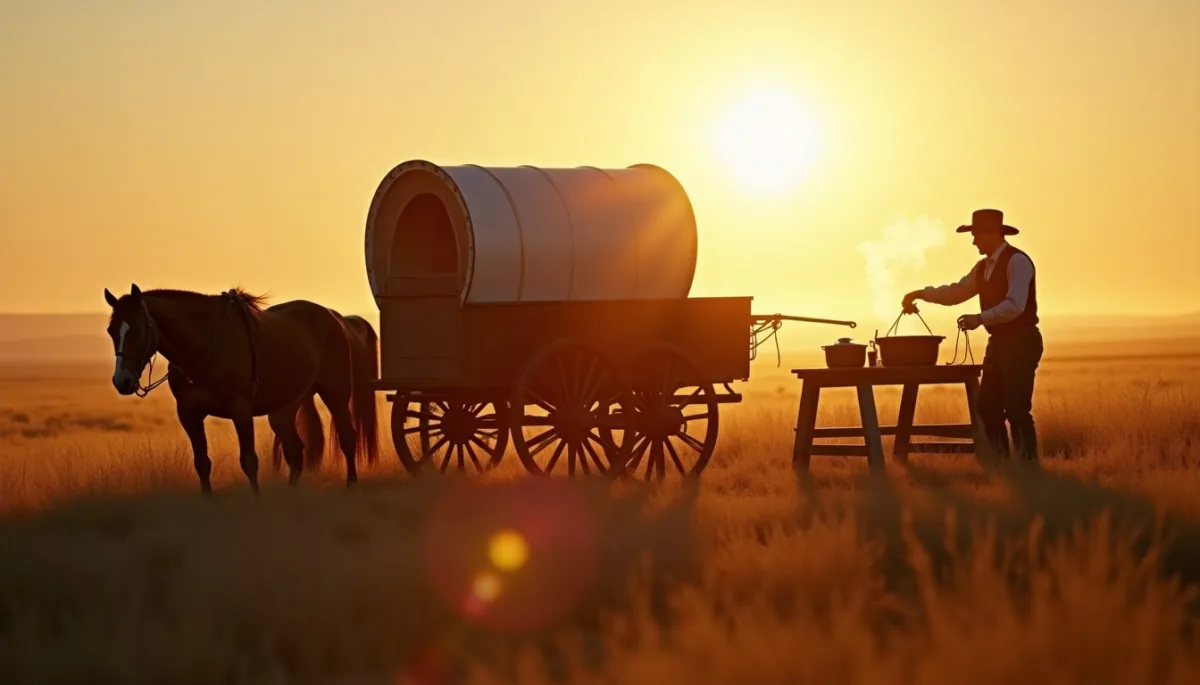
Born on the plains of Texas in 1866, the chuckwagon became the mobile heart of cattle drives that tamed the American West. Its smoke, coffee and cast‑iron rituals fed men, horses and stories across thousands of miles.
🚀 Key Takeaways
- Concept key : The chuckwagon was a purpose‑built mobile kitchen created by Charles Goodnight in 1866 to feed cattle drivers.
- Practical tip : Recreate a chuckwagon meal with cast‑iron skillet cooking, coffee percolated over coals, beans and cornbread.
- Did you know : Chuckwagon races were institutionalized at the Calgary Stampede in 1923, turning the work wagon into a spectacle.
Hot coffee at dawn warms more than hands. Imagine a gray morning in July 1870, a line of tired riders, a single wagon unlimbering its lid, pots clanging and the airy smell of beef and coffee spreading over the prairie.
Wagon kitchen
The first chuckwagon is credited to Charles Goodnight, a Texas rancher and trailboss, who in 1866 modified a sturdy army-issued wagon to carry food and cooking gear for long cattle drives. Goodnight fought to establish the Goodnight-Loving Trail with Oliver Loving from 1866 to 1868, and he needed a reliable way to feed men and horses far from supply points.
He arranged the wagon so the rear tailgate folded down into a worktable, with drawers for utensils, a stove, and compartments for food. This compact, efficient design became the model. The term 'chuck' was frontier slang for food, so the wagon that served 'chuck' became the chuckwagon.
On the trail the wagon was often staffed by the 'cookie', the cook whose skills were as crucial as any rifle. Real names appear in the record, for example Bose Ikard, an African American cowboy and close associate of Goodnight, who played key roles on those drives though he is better known for his riding than as a cook. The cook's lore survives in cowboy songs and journals, where coffee, beans and flapjacks are recurring stars.
Fuel for drives
What did a chuckwagon carry? Staples that travel well: salted beef, dried beans, coffee, flour, lard, molasses and sometimes fresh vegetables when they could be found. Cast-iron skillets and Dutch ovens allowed cooks to braise, fry and bake over coals. Ice was rare; smoked, salted meat and careful packing preserved supplies.
Beyond food, the wagon carried morale. For drovers who rode day after day, the evening meal signaled rest, fellowship and news. Meals were communal rites, with stories of lost cattle and letters read aloud. On the Goodnight-Loving Trail, drives could last months, and the chuckwagon provided routine in a place of constant change.
Historically, cattle drives peaked between roughly 1866 and 1890, when railheads moved west and the need to drive herds long distances diminished. Yet the chuckwagon remained embedded in Western memory through photographs, dime novels and later rodeo shows, where its image was romanticized and sometimes simplified.
Smoke and spectacle
As the era of long cattle drives waned, the chuckwagon found new lives. In 1923, Guy Weadick introduced chuckwagon races at the Calgary Stampede, transforming practical equipment into entertainment. These races celebrated skill and harked back to the trail, attracting crowds and cementing the chuckwagon as a symbol of cowboy heritage.
At the same time, contradictions arose. The romantic image of camaraderie sometimes obscured harsh realities: dangerous work, low pay, and racial inequalities among crews. While songs and postcards show cheerful cooks and easy-going drovers, diaries reveal blistered hands, shortages and conflict over grazing, land and labor.
Nevertheless, the practical innovations of the chuckwagon informed later mobile food culture. Its emphasis on compact storage, modular equipment and one-pot cooking echoes in today’s food trucks and pop-up kitchens, where efficiency and flavor travel together.
From prairie to table
To taste chuckwagon cuisine is to taste history. Typical meals included beef stew, beans slow-cooked in a Dutch oven, cornmeal biscuits or cornbread, and strong coffee served from a percolator or pot. Seasonings were simple, often relying on salt, pepper and rendered fat.
If you want to recreate a chuckwagon feast in the Camargue, try substituting local produce: slow-cook gardiane (bull stew) in a cast-iron pot, serve with hearty rice or cornbread, and share coffee around a fire. The ritual of communal eating, the respect for working animals, and the storytelling after the meal are threads that unite Texan prairies and Mediterranean marshes.
The chuckwagon's legacy is both culinary and cultural. It fed the West physically, and it fed the mythology that still shapes rodeos, festivals and food culture. From Goodnight's 1866 wagon to modern food trucks, the idea endures: food on the move, made with skill, shared without pretense.