An Explanation of the Gardian Culture of the Camargue
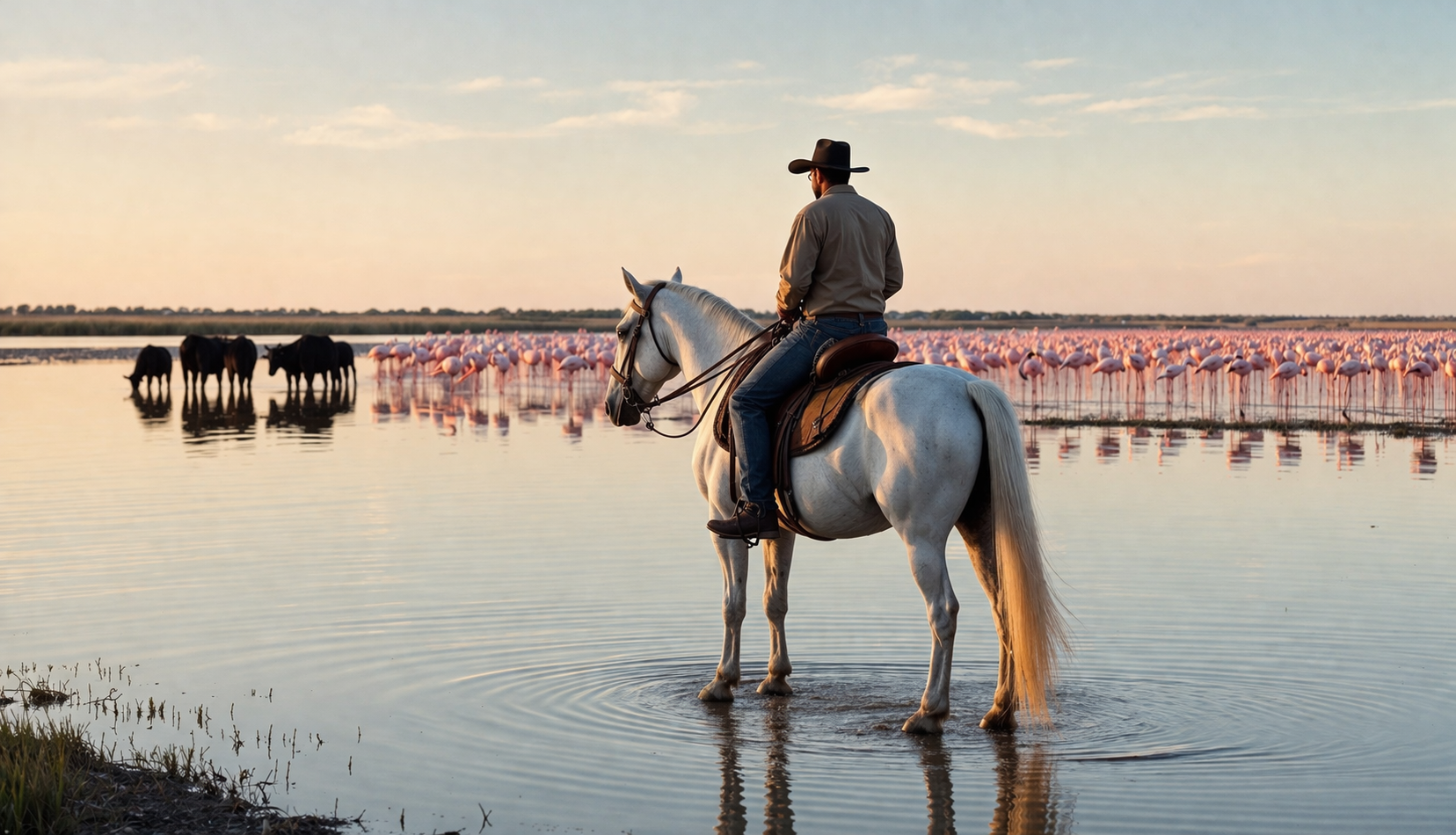
The guardian is the Camargue who rises on horseback. He holds the herd, watches over the marshes and transmits an equestrian memory.
🚀 The essentials
- Key concept: Herd culture combines mounted breeding, herd rites and regional identity.
- Practical advice: Visit a herd in Saintes-Maries-de-la-Mer at daybreak to see horses and bulls on the salt pan.
- Did you know: Folco de Baroncelli shaped the modern image of the goalkeeper at the beginning of the 20th century.
Raw, alive, sensory.
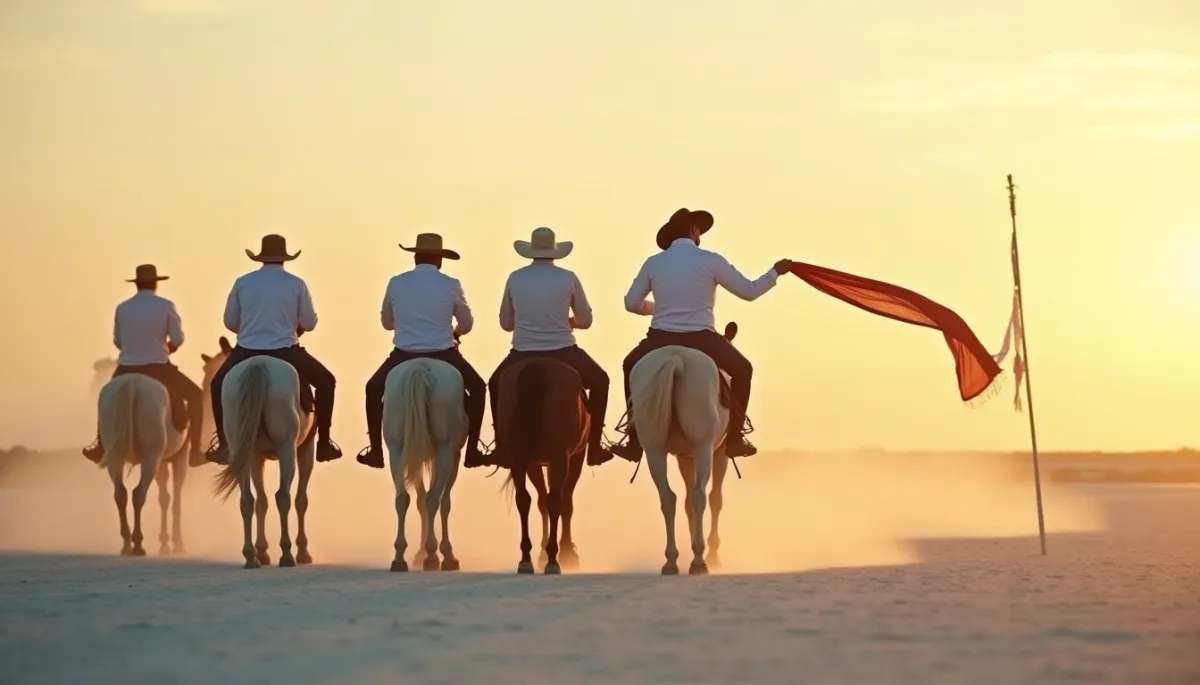
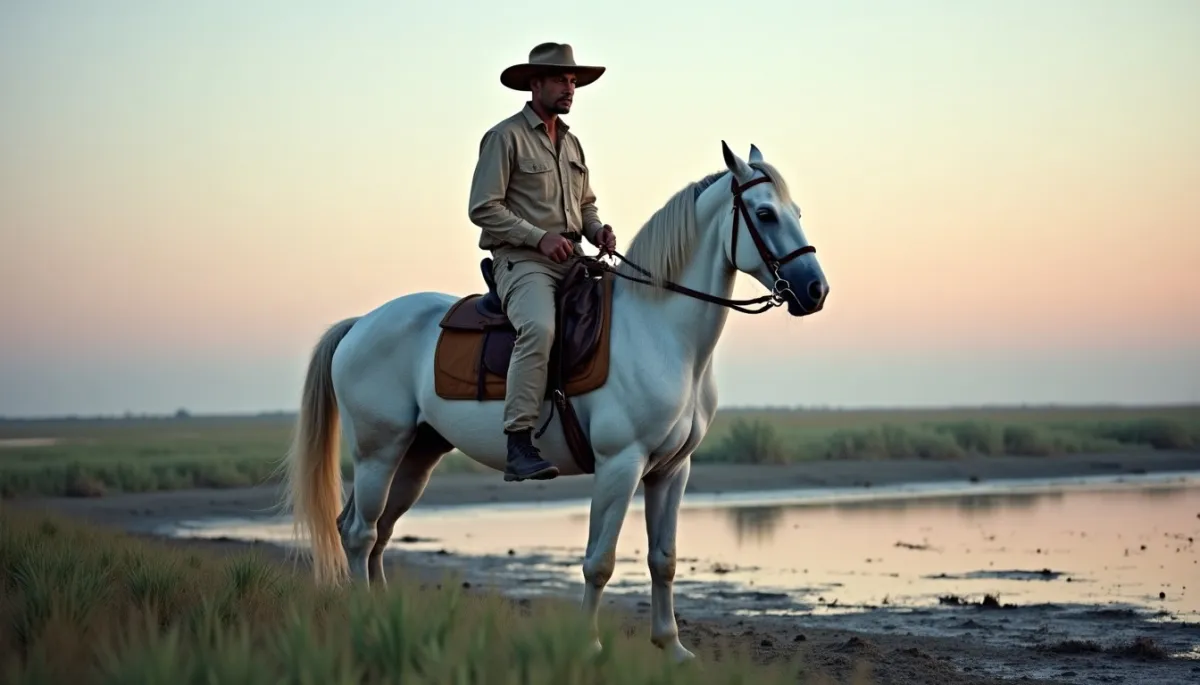
In the early morning, the herd breathes. The mist dissipates over the salt marshes, a Camargue horse advances, its mane stuck with salt and dew. A herdsman, wearing a short jacket and flat hat, ties a lasso with the same precision as his grandfather. The salt mountains reflect a white light which makes the scene almost unreal.
Gardian culture is not a postcard. It weighs on the territory. Between Arles and Saintes-Maries-de-la-Mer, the herds organize the rhythm of the land, maintain adapted breeds such as the Camargue horse and generate economic activities linked to ferias, races and visits. Their presence conditions the preservation of marshes and migratory birds.
Salty March: tangible consequences
The effects of the work of the herders are visible on biodiversity. Extensive grazing prevents overgrowth and encourages the nesting of flamingos and other species. Manades function as ecological management tools. Without them, the landscape would close and certain species would decline.
Economically, herd culture supplies local sectors. The Arles ferias, the votive festivals of Les Saintes and the equestrian tourism offers create jobs. The economy of herds is often family-run, and income from tourism helps finance the selection and maintenance of animals.
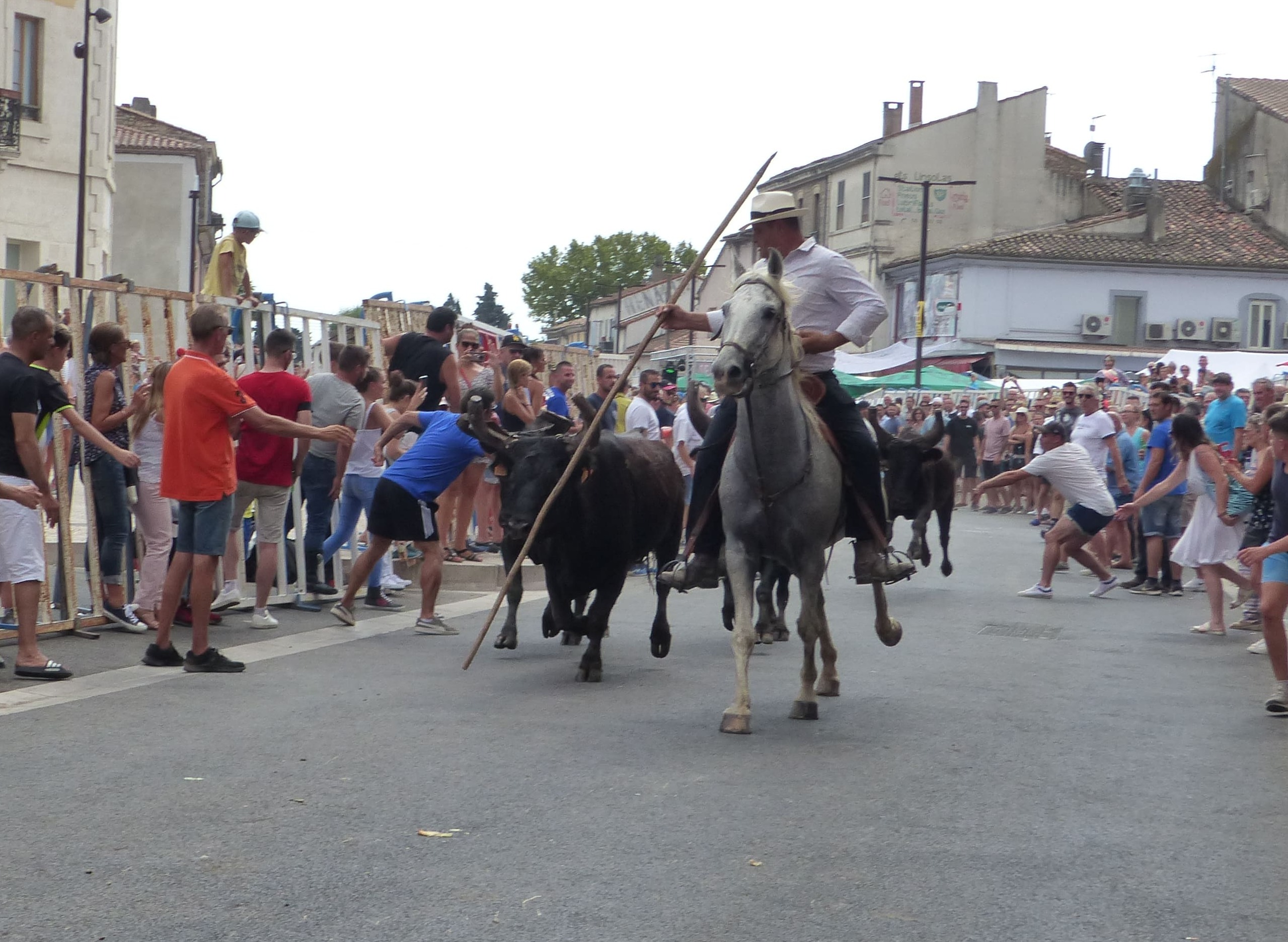
Socially, the guardian is a landmark. The figure is reinforced by historical figures like Folco de Baroncelli, who, at the turn of the 20th century, promoted regional festivals, traditions and a language of identity. Technical terms like ferrade (marking young horses) or abrivado (driving bulls) reflect know-how passed down from generation to generation.
July of manade: origins and reasons
The Camargue has conditioned its practices. Saline soils, river tides and winds have required mobile farming, adapted to seasonal flooding. The Camargue horse, robust and small, was born from this constraint. Its morphology and temperament make it an ideal partner for the guardian.
The Spanish influence explains the relationship with the bull. The Camargue race, a local sport, showcases the skill of the raseteurs who remove attributes attached to the bull, without injuring it. It is a practice which carries a unique ethic of the relationship with the animal, different from bullfighting.
Current initiatives aim to protect these practices. Animal lineage conservation programs, the labeling of Camargue products and local land policies seek to maintain viable herds in the face of land and climate pressure.
November of sources: contradictions and perspectives
Tradition faces limits. The artificialization of land, the rise in land prices and European regulations on livestock farming complicate transmission. Young herders sometimes have to diversify their activities to ensure stable income, which transforms practices.
Climate change amplifies risks. Floods, longer periods of drought and rising sea levels are forcing a rethink of rangeland management. Many herds adapt pasture rotations, invest in mobile barriers and develop eco-responsible approaches.
Some advice from the field: favor visits in small groups, respect the instructions of the herders, do not touch a horse without asking and avoid hours of high heat to observe the work of the herdian. The meeting will remain authentic if it is based on respect.
Gardian culture is a running time machine. It embodies a way of life linked to horses and bulls, and gives the Camargue its most unique face.