Extreme cattle ranching in Brazil: how peões work in jungle and marsh
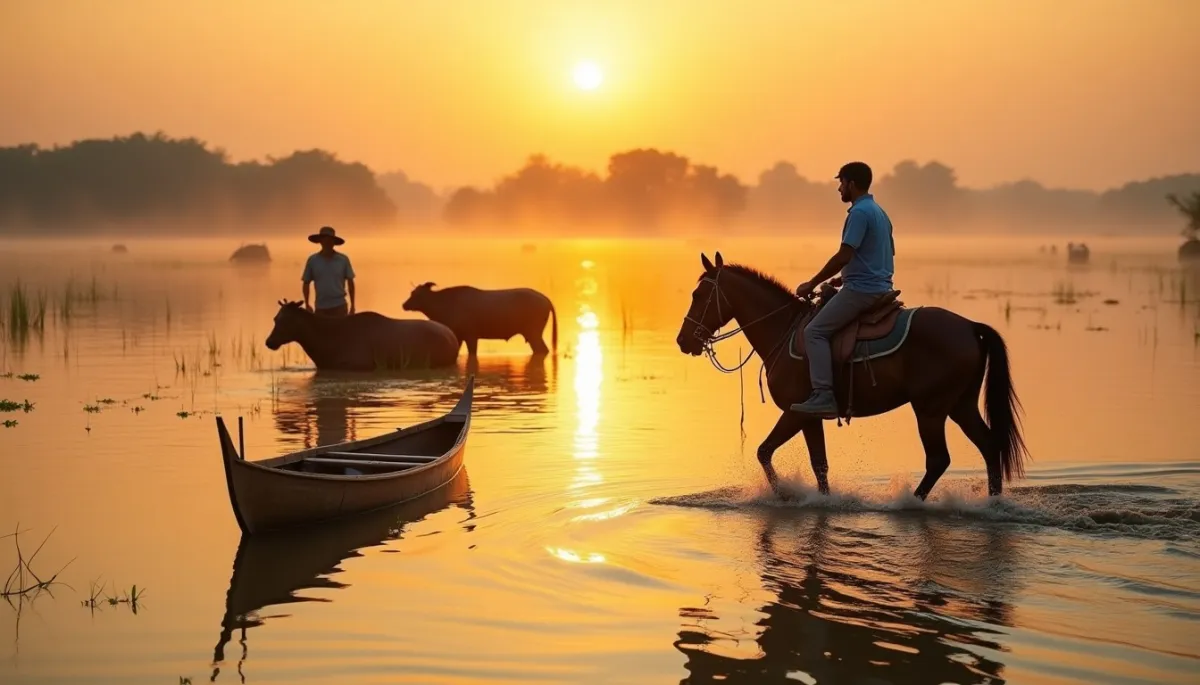
In the flooded dawn of the Pantanal, a horse and a man move like one. Across Brazil's marshes and river forests, peões keep cattle alive where others would give up.
🚀 Key Takeaways
- Core concept : Peões are cowhands who adapt ranching techniques to seasonal floods and dense forest in regions like the Pantanal and Amazon varzea.
- Practical tip : If you visit a fazenda, hire a local guide, wear rubber boots and mosquito repellent, and respect working rhythms at dawn.
- Did you know : In 2020 major fires devastated large parts of the Pantanal, disrupting traditional cattle routes and pushing ranching into more fragile areas.
Sunrise smell of wet earth and horse sweat.
Picture an early morning mist on a flooded plain, cattle bellies half submerged, a peão guiding a small herd from a canoe, rope coiled at the wrist. Around him, waterbirds cry, jacarés slip under floating grass, and distant trees stand like islands. This is not a stylized rodeo, it is daily work on fazendas that border rivers and forest.
La vie flottante
Peões (pronounced pee-OWNs) are the backbone of Brazil's wetland ranching. In the Pantanal and Amazon varzea they alternate horseback, canoe and boat. When rainy season swells the rivers, herds are driven to higher ground or kept in natural islands called 'cordilheiras' by local names.
Tools are adapted: laços and long ropes, sturdy saddles with waterproof leather, facões (machetes) to clear paths, and galochas (rubber boots) for wading. Work is seasonal. Dry months call for long trails, wet months for navigation and swim-trained cattle.
On many fazendas, skills are passed orally. Young peões start by leading calves, then learn to rope, treat ticks and identify river channels that change each year. The trust between rider and horse is vital; jaguars and anacondas are constant ecological presences.
Aux origines
Cattle arrived in Brazil with Portuguese colonizers in the 16th century, but the occupation of interior wetlands accelerated in the 18th and 19th centuries. Large fazendas spread into Mato Grosso and Pará, adapting Iberian techniques to tropical floods.
In the 20th century, zebu breeds (Bos indicus) were introduced to resist heat and parasites, transforming herd management. Infrastructure like airstrips and small ports in the 1950s and 1960s made remote ranches more connected to markets.
Recent decades brought new pressures: road building, soy expansion and deforestation pushed ranching into frontiers, while climate extremes altered flood rhythms. The 2020 Pantanal fires remain a landmark event, forcing many fazendas to rethink herd routes and firebreaks.
Entre tensions
Work in these zones is heroic, but not romantic. Peões face health risks: malaria and dengue in lowlands, snakebites, and accidents during river crossings. Labor is physically intense and often precarious, with seasonal hiring and few protections.
Conservation and ranching sometimes collide. Predation by jaguars leads to conflicts, while larger scale land change threatens floodplain biodiversity. Some fazendas now combine conservation with cattle, using low-density grazing and fire management plans developed since 2020.
For travelers eager to see this world, choose responsible experiences. Support fazendas that respect local communities, avoid driving through sensitive wetlands, and ask permission before photographing workers. You will leave with stories of men and women whose rhythm follows river seasons, not clock time.
Practical advice: get travel vaccinations, bring high-quality insect repellent, and consider an organized stay on a working fazenda to learn the craft without disrupting it.