The ferrade: understanding the traditional branding of young Camargue bulls
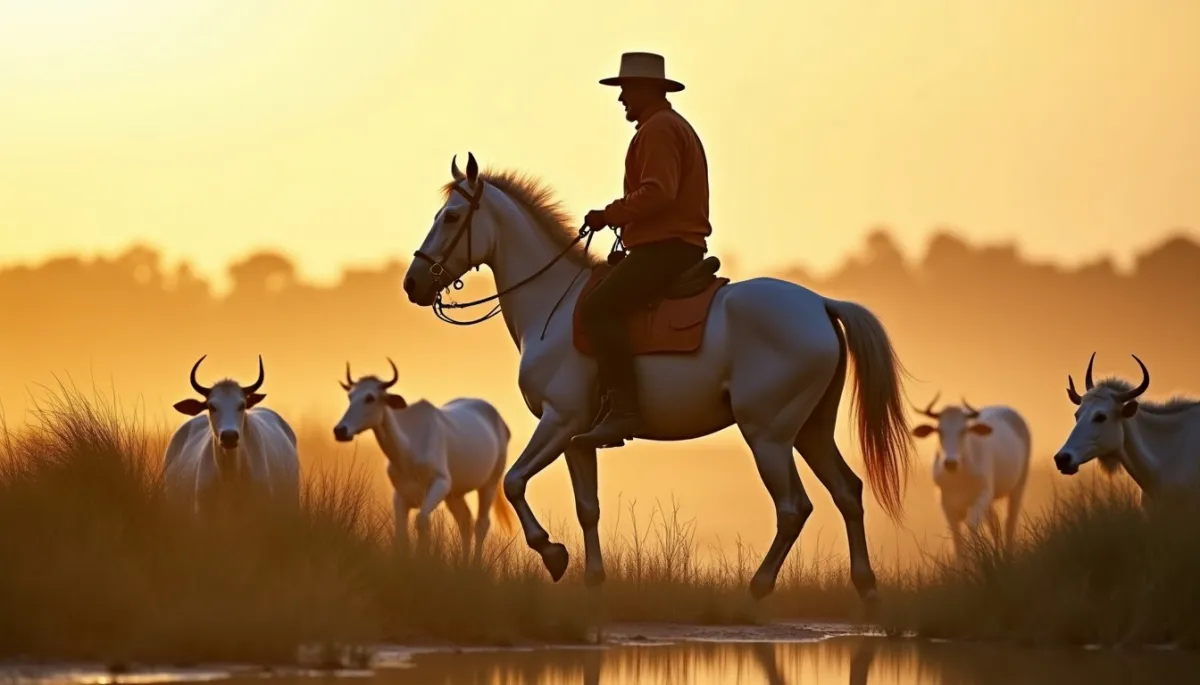
The ferrade is a rite of passage for young Camargue bulls and the gardians who raise them. In the marshes and manades around Saintes-Maries-de-la-Mer, spring brings a day of dust, horses and iron.
🚀 Key takeaways
- Key concept : The ferrade is the traditional branding and selection of young bulls in Camargue.
- Practical tip : Attend in April–May, respect enclosures and ask before photographing.
- Did you know : Gardians work on small semi-wild herds called manades, and branding is both legal identification and herd management.
Dust rises like a short-lived cloud. A chorus of bells, a shuffling of hooves, then a sudden silence before the herd surges.
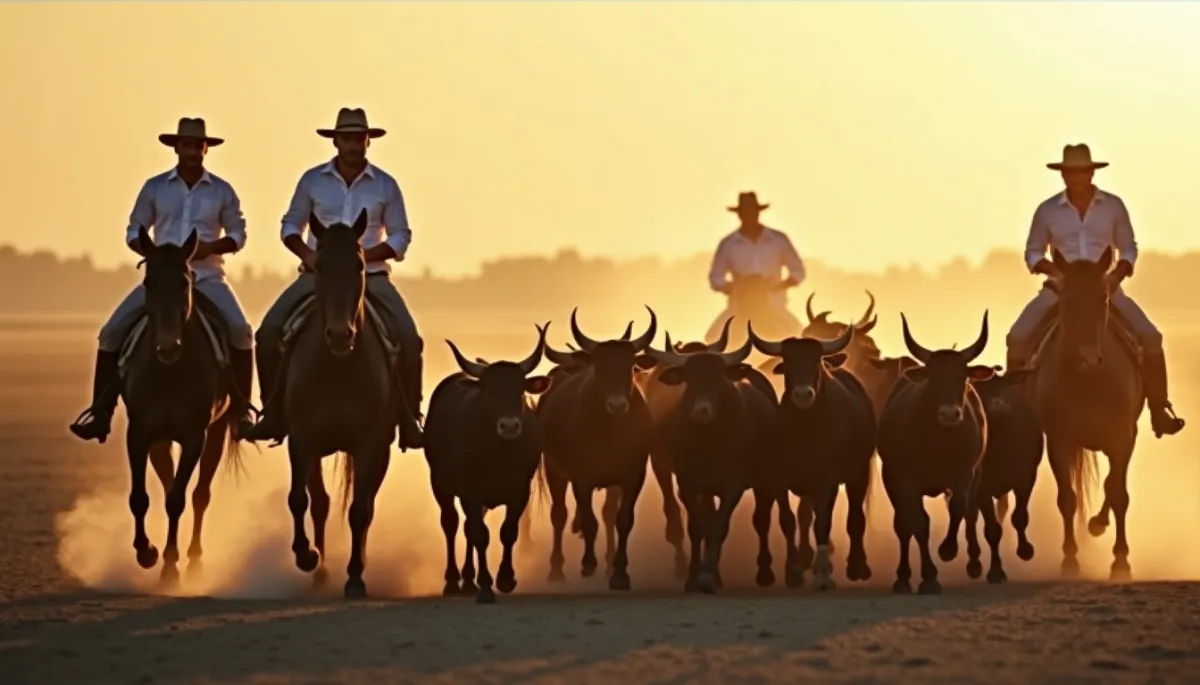
On a narrow track near the saline flats, gardians on dark Camargue horses guide a loose herd of young black bulls toward a wooden enclosure. Men in white shirts and wide hats move with a practiced choreography: a rope here, a steadying hand there, while the oldest man raises a glowing iron. The scene is both harsh and ceremonial, rooted in daily work and in a deep respect for the animal.
Les acteurs en selle
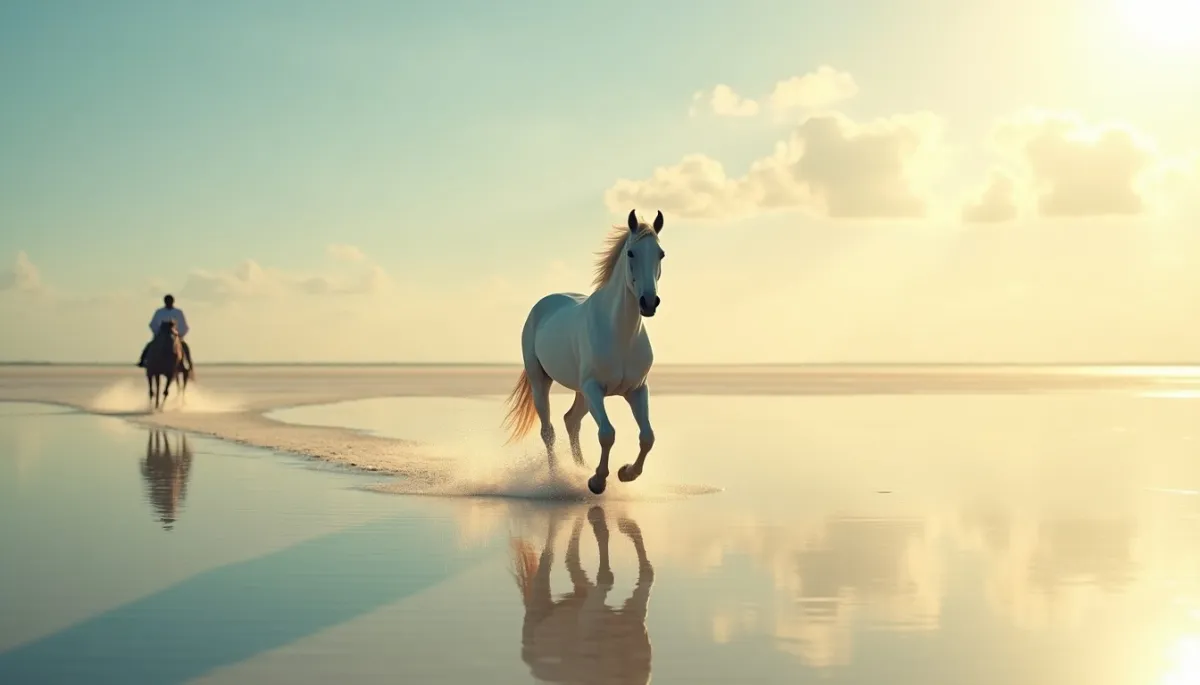
The ferrade involves a few essential characters: the gardians, their white Camargue horses, the manade (the semi-wild herd), and the padré or manadier who manages the operation. Gardians are the mounted herders of the delta; their role combines livestock management, tradition and showmanship.
Manades are family herds often led for generations. Famous names circulate locally — manades in and around Saintes-Maries-de-la-Mer, like those on the plains of Vaccarès, organize public ferrades that welcome residents and visitors.
Each participant knows a script. The manadier supervises selection: which calves will remain for breeding, which will become part of the Camargue bull stock for course camarguaise, the local bull-leaping tradition. The brand marks ownership and clarifies the animal's future.
Les gestes et la marque
The ferrade is primarily a practical operation. Branding (la marque au fer) is used to identify the animal, and often to record its year of birth or its owner. In Camargue, the iron is heated until it glows, then applied briefly to the haunch to leave a permanent mark. It is a quick, skilled gesture intended to minimize suffering.
Besides branding, the ferrade is an opportunity for medical checks, castration when needed, and selection. Vets or experienced gardians inspect legs, eyes and feet. Lambs and foals are sometimes handled on the same day.
Terminology: "ferrade" designates the whole event, "manade" the herd, "gardian" the mounted herder, and "marque" the brand. These words are the key to reading the practice without mystification.
Racines et raisons
Why does the ferrade survive? It answers both legal and pastoral needs. Historically, the fire-brand proved ownership across communal grazing lands. It remains essential in an environment where herds roam large, managed more by grazing patterns than by fences.
Culturally, the ferrade is a link between work and festival. Since at least the 19th century, spring gatherings around manades combined necessary tasks with feasting and communal identity. Today, many manades open their ferrades to the public as a way to share heritage and sustain rural tourism.
Economically, the ferrade helps determine which animals will enter the arena of the course camarguaise or the market. It is an act of selection that shapes the next generation of Camargue bulls and horses.
Questions et tensions
Modern concerns shape the ferrade. Animal welfare standards, veterinary regulations, and tourism pressure create tensions. Professional gardians maintain that the ferrade, done by experienced hands, is less brutal than many assume, and that the speed and expertise reduce suffering.
Conversely, some animal-rights voices and urban visitors question branding itself. In response, manades have multiplied explanations, veterinary presence, and sometimes reduced public access to the most delicate operations.
Looking forward, the ferrade adapts. Some manades add demonstrations, explanatory panels, or workshops on horse handling. The core practice persists because it answers practical herd-management needs and because it embodies Camargue identity.
Aller voir une ferrade
If you plan to attend, aim for April or May. Ask the manade in advance for times, and arrive early. Wear sturdy shoes and neutral clothes, and keep a respectful distance from enclosures. Photography is welcome, but ask before entering a pen or approaching animals.
Good places to start: look for ferrades announced around Saintes-Maries-de-la-Mer, the Parc naturel régional de Camargue, and the small villages along the Rhône delta. Local tourist offices often list dates.
Finally, listen and ask. The best insight comes from the gardians themselves; their hands tell the history of the land as clearly as any book.