Forgotten legends of the Far West: The untold story of Black cowboys
Between Reconstruction and the closing of the frontier, thousands of Black men and women shaped the American West. Their stories were long erased, until historians and artists began to bring them back into the light.
🚀 Key Takeaways
- Core idea : Many cowboys in the late 19th century were African American, serving on cattle drives and ranches.
- Practical tip : Read Nat Love's 1907 autobiography and visit the National Cowboy & Western Heritage Museum in Oklahoma City.
- Did you know : Estimates place Black cowboys at roughly 15 to 25 percent of the workforce during the era of the great cattle drives.
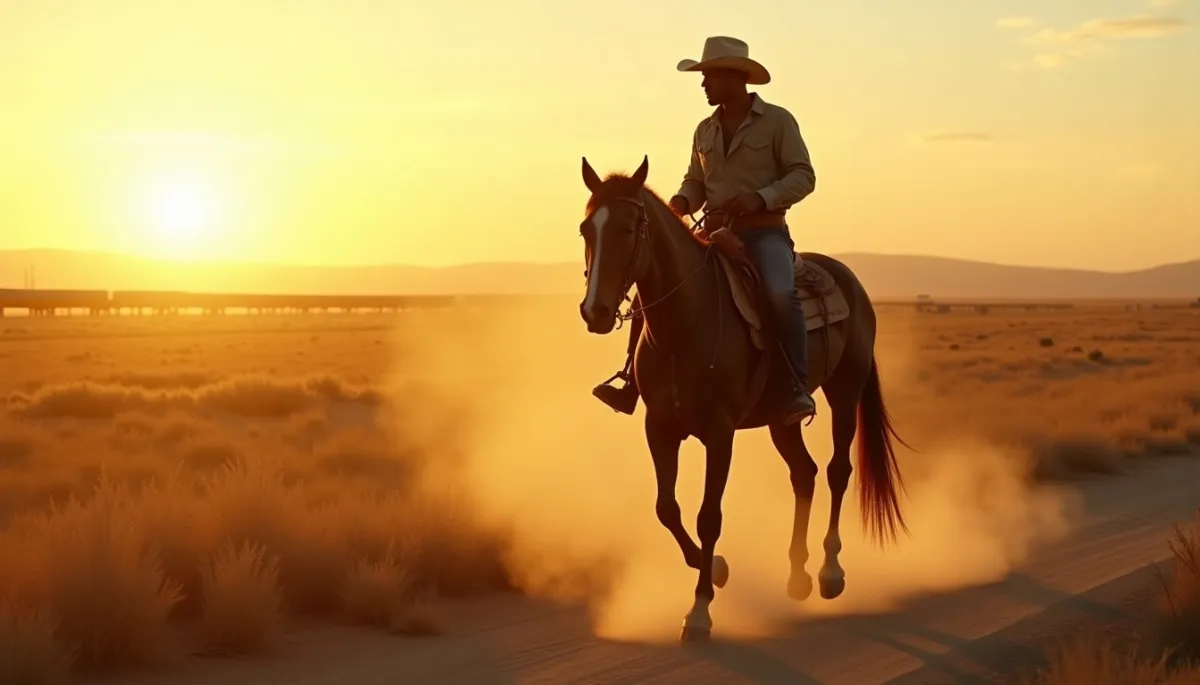
They rode at dawn. Imagine a line of horses and mules crossing the Texas plain, dust glowing in the low sun, voices calling for strays. That was the everyday landscape for many Black cowboys after the Civil War, a life of grit, skill and long days on the trail.
ombres sur la piste
Who were these riders? Names like Nat Love, Bose Ikard and Bill Pickett appear when you look closely. Nat Love, born 1854, published Life and Adventures of Nat Love in 1907, recounting cattle drives on the Chisholm Trail and work across Texas and Kansas. Bose Ikard, born around 1847, rode with Charles Goodnight on the Goodnight-Loving Trail, earning lifelong respect from his employer.
Bill Pickett, born 1870 in Texas, gained fame for inventing "bulldogging" (steer wrestling) and performing in Wild West shows in the early 20th century. Isom Dart, born around 1849, worked as a cowboy and rancher in Wyoming before his death in 1900; his life later inspired fiction and film interpretations. Women also figured in the West. Mary Fields, nicknamed "Stagecoach Mary" (c.1832–1914), became a legendary mail carrier in Montana in the 1890s.
Beyond famous names, thousands of lesser known Black cowhands drove cattle on routes such as the Chisholm Trail (active mainly 1867 to 1885) and the Goodnight-Loving Trail (opened in 1866 by Charles Goodnight and Oliver Loving). Historians estimate that between 15 and 25 percent of cowboys were African American, a reminder that the West was more diverse than the silver screen suggested.
la vie sur la route
Daily life on a drive demanded horsemanship, roping, and endurance. Black cowboys served as trail bosses, wranglers, drovers and cooks. They handled stampedes, branded cattle, and slept under the stars. Nat Love describes in his book the camaraderie and the constant danger of thunderstorms and rustlers.
After emancipation, Juneteenth 1865 marked freedom for many enslaved people in Texas, and cattle work offered a path to wages and mobility. The booming beef economy after the Civil War created demand for skilled hands, and many freedmen turned to ranching and drives for opportunity.
At the same time, Black soldiers known as Buffalo Soldiers (9th and 10th Cavalry, created 1866) patrolled Western territories, building roads, escorting settlers, and fighting in conflicts. Their presence intersected with cowboy culture, though military service and civilian ranch work remained distinct roles.
mémoire en déclin
So why did these stories fade? As Western films and dime novels shaped the popular image in the early 20th century, storytellers preferred a white lone cowboy archetype. Hollywood simplified complex social histories into a narrow myth, and Black contributions were sidelined.
Additionally, Jim Crow segregation and regional politics suppressed many voices. Oral histories were lost, and photographs of Black cowboys were often uncredited. The cultural erasure compounded the physical disappearance of open range life after the 1880s, when barbed wire, railroads and changing markets ended the era of long drives.
Recovery is under way. Scholars such as William Loren Katz documented the Black West, museums have mounted exhibits, and artists have reclaimed narratives. Films and literature of the 21st century, including ensemble Westerns featuring Black casts, help reshape public memory. Local rodeos, living-history events, and Black cowboy associations preserve traditions and teach new generations.
routes à suivre
If you want to learn more, start with primary voices. Read Nat Love's autobiography, seek out collections at the National Cowboy & Western Heritage Museum in Oklahoma City, and explore regional archives in Texas and Kansas. Visit Fort Worth Stockyards or the historic towns along the Chisholm Trail to feel the terrain these riders knew.
Look for living history programs and Black cowboy reunions. Attend a rodeo where Black riders are featured, and listen to elders who carry family stories. On a broader note, draw a parallel with Camargue gardians, who also work cattle on horseback, keep rituals and songs alive, and embody a bond between horse and herder.
These forgotten legends deserve more than footnotes. By naming them, visiting their sites, and reading their words, we restore a fuller picture of the American West, one saddle at a time.