Winter gardians: extreme work when the Camargue marshes turn inhospitable
In the Camargue winter, the salt marshes change temperament and so do those who live there. This article follows gardians who keep herds and livelihoods alive when the marsh becomes inhospitalable.
🚀 Key Takeaways
- Core concept : Gardians work year-round, but winter brings floods, cold and wind that turn routine into emergency.
- Practical tip : Wear layered waterproof clothing, study tide and Rhône forecasts, and respect pasture rotation to avoid bog hazards.
- Did you know : The Camargue Regional Nature Park was established in 1970, formalizing protection of the marshes where gardians have worked for centuries.
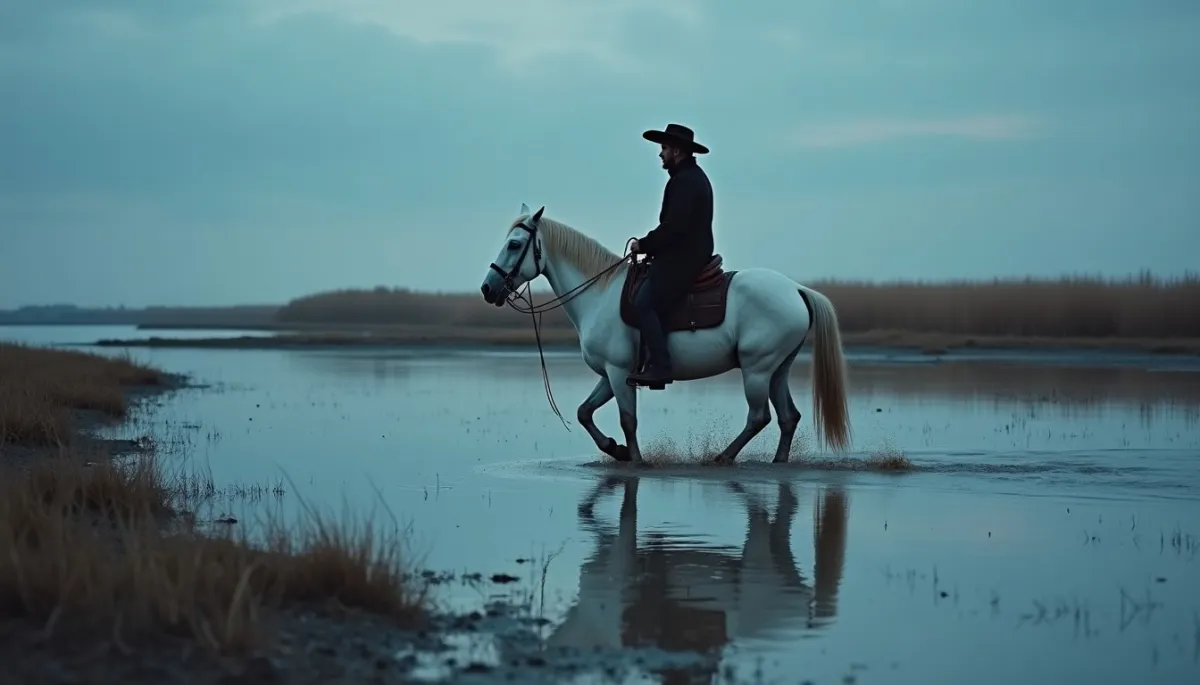
Night compresses the marsh into a palette of glass and mud.
On a January evening near Saintes-Maries-de-la-Mer, floodwater catches the headlight of a four-wheel drive and the silhouette of a gardian on horseback moves like a punctuation mark across a flat horizon. The horses stamp, the air smells of salt and sedge, and beyond the dyke the winter sea breaks into the marsh with a low, persistent sound. This is work that tests skin, tack and stubbornness.
marais en colère
When winter arrives in the Camargue it brings a set of concrete hazards: sudden flooding from the Rhône or the sea, prolonged inundation of salt pans, and cold nights that freeze the thin layer of freshwater on top of saline mud. Gardians face flooded pastures where cattle can get trapped, horses sink deeper in soft peat, and fences are swept away by currents.
These phenomena are not abstract. In January and February, when northern winds meet Mediterranean surge, manades record the highest incidents of livestock distress. Some gardians recall the winter of 1995 that closed roads for days, and the heavy rains of 2014 that forced several manades to move animals inland temporarily.
On the ground, consequences are immediate. Calves born in late autumn risk hypothermia. Salt contamination affects fresh water points, and sheep and cattle need supplementary fodder if grazing is unavailable. The gardian's calendar is reshuffled by weather, emergency fodder runs become routine, and every decision can be about life or loss.
au centre des manades
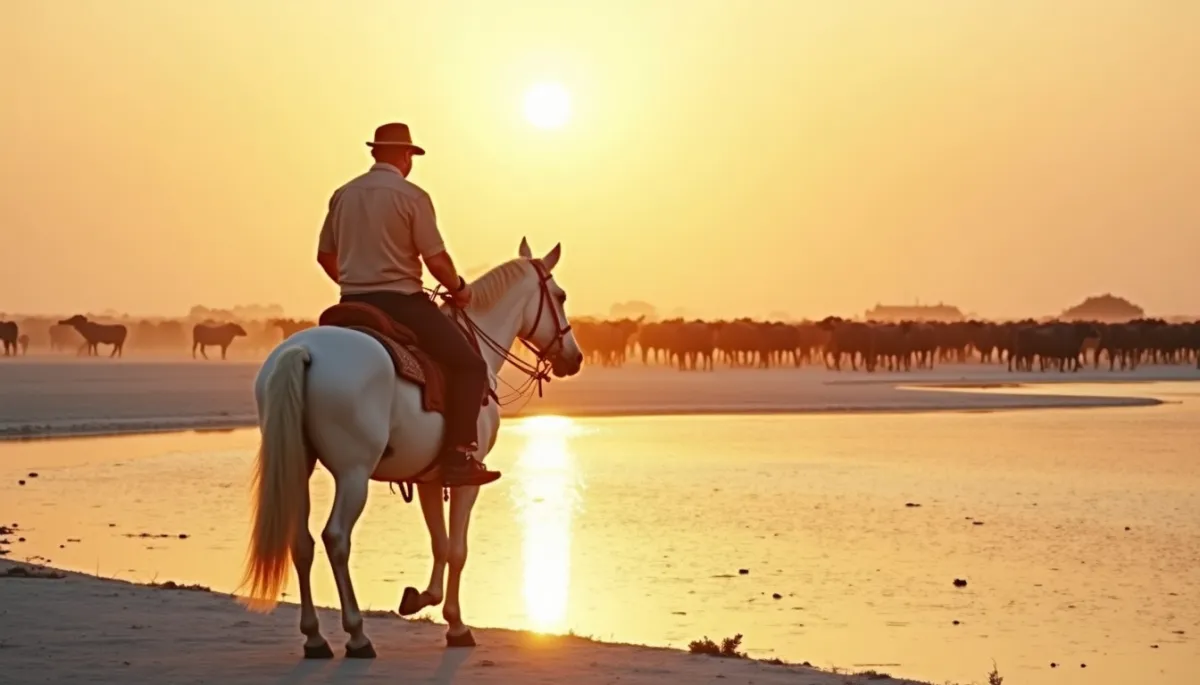
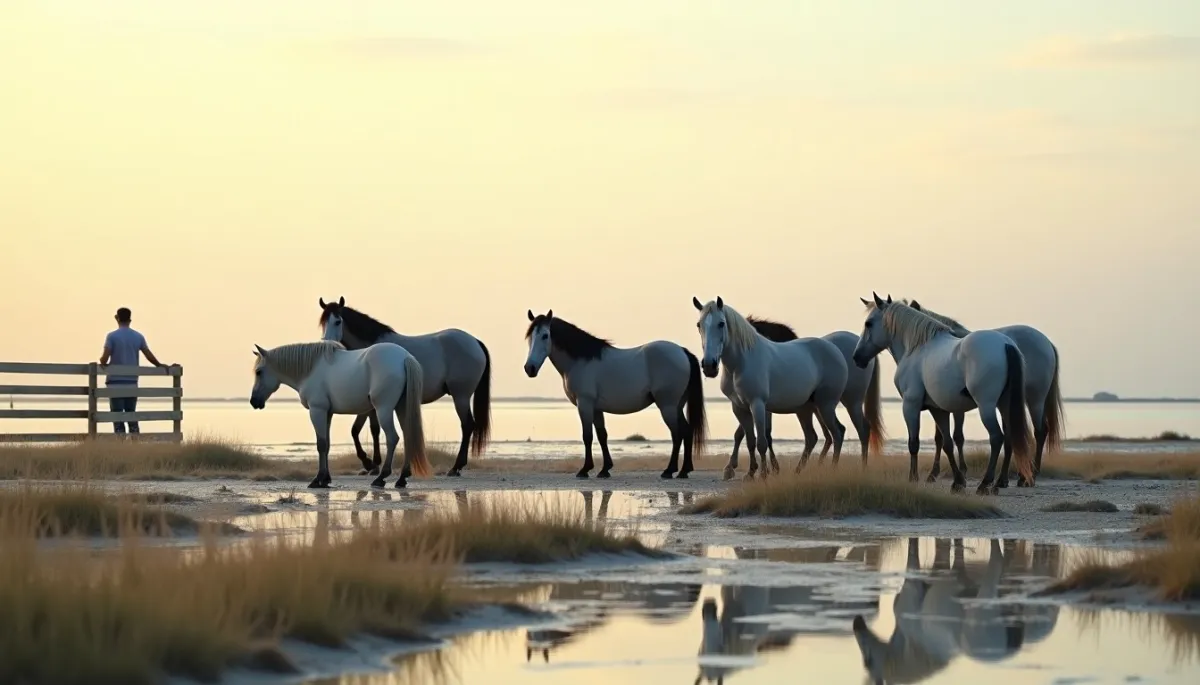
Who are these people in the saddle? Gardians are herders, cavalrymen for the marsh. Many run family manades (ranches) that breed Camargue cattle and horses in semi-wild conditions. They are both practical managers and custodians of a culture tied to events like the course camarguaise, and to annual rituals in Saintes-Maries-de-la-Mer, where gardians lead processions in May.
Recognition comes from labour and lineage. Some families can trace their manade back generations, but many gardians are contemporary figures who combined tradition and modern techniques. They work with regional veterinarians, park rangers, and municipal services to adapt to winter risks.
Anecdotes illustrate this role. In 2017 a young gardian from Aigues-Mortes improvised a raised feeding platform after tides made usual pastures unusable. In other cases, neighbors use tractors and inflatable boats to rescue stranded animals, showing how solidarity is also part of the job description.
entre traditions et renouveau
Why do gardians remain when winter turns the marshes against them? Part of the answer is attachment. The landscape shapes identity: the white horse, the atavistic salt of the air, the small stone mas. The other part is adaptation. Over recent decades, many manades have adopted GPS tracking for valuable breeding stock, installed higher shelters, and learned to anticipate the Rhône's regimes by reading hydrological bulletins.
Climate change complicates everything. Sea level rise and more erratic storms increase winter unpredictability. The Camargue Regional Nature Park, founded in 1970, and local cooperatives now work on managed retreat, restored reedbeds and buffer zones, all intended to give marshes more resilience and to reduce the cost to gardians.
Yet contradictions remain. Conservation rules can limit where animals can be moved, and tourism pressures mean that access roads must be kept open. Gardians juggle livestock welfare, legal constraints, and economic survival. The future will require both respect for tradition and pragmatic innovation.
conseils pratiques
If you come to see gardians in winter, remember that you are entering a working landscape. Dress in waterproof layers, ask before approaching livestock, and prefer guided visits. Respect signs and private tracks, and if you ride with a gardian, rely on their knowledge of soft ground and hidden channels.
For manades, simple measures help. Keep mobile feed stores, maintain portable pumps, and practice evacuation drills. Strengthening community ties, sharing machinery and local know-how have repeatedly saved herds in winter crises.
Above all, listen. The gardians' stories, their weather lore and their quiet fixes to extreme winters, are a form of knowledge accumulated over centuries. When the marsh is in anger, they are not stubborn romantics, they are first responders of a landscape that feeds a regional culture.