Camargue gastronomy: products and know-how
In the Camargue, every plate tells the story of land, sea and horse.
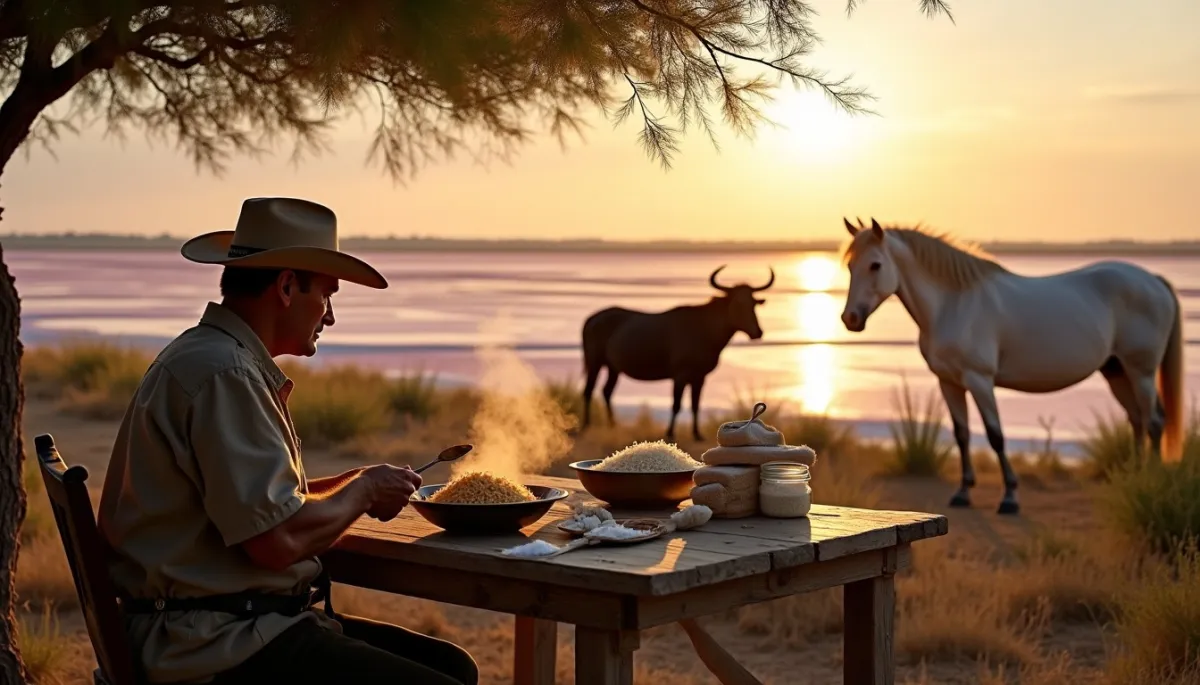
Imagine a low sun burning the horizon, pink salt pans like a painter's palette, a small table under a tamarisk, and the aroma of slow-cooked meat with rice that has soaked up the marshes. A gardian lifts a wooden spoon, passes a bowl of gardianne de taureau, and you can taste the marsh, the wind and years of work.
The gastronomy of the Camargue is born from this landscape. It assembles a few emblematic raw materials, long-standing techniques, and rituals around feasts and manades. Rice, salt, bull meat, Camargue horse culture, fish from the étangs, and the market stalls of Saintes-Maries-de-la-Mer and Aigues-Mortes form a culinary map where products and savoir-faire are inseparable.
🚀 Key Takeaways
- Key concept : Camargue cooking links natural resources (rice, salt, bull) to local traditions.
- Practical tip : Visit a manade at dawn, then taste gardianne in a village bistro, and buy fleur de sel at the salinerie.
- Did you know : The Camargue horse and the gardian culture shape not only work, but the region's plates.
Summer salt and rice: tastes that speak of place
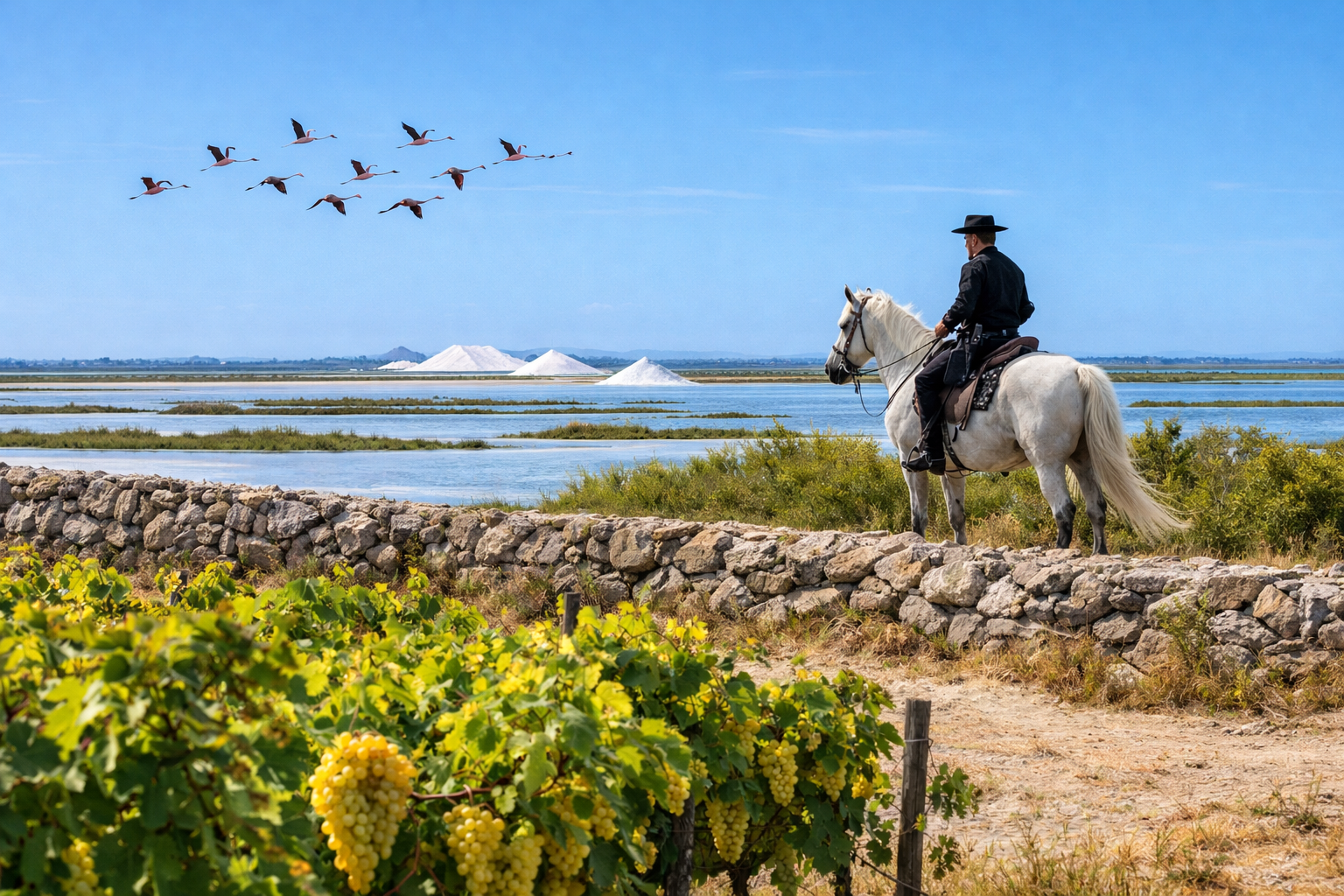
Walk the salt flats of Salin-de-Giraud at sunset and you will understand why sel (salt) became a signature product. Large pans evaporate under the sun, producing sel fin and the prized fleur de sel. These crystals are used sparingly on grilled fish, on rice, and even on desserts to make flavors sing.
Rice fields, planted in spring and harvested in late summer or early autumn, shape the countryside. The local riz de Camargue concentrates water, sun and the patience of producers. It feeds both simple dishes, like riz pilé au lait, and iconic preparations, like rizotto-style camarguais accompanying gardianne.
From the étangs come fish and small shellfish that seasonally enrich markets. At the port of Saintes-Maries-de-la-Mer, traders still sell fish that tastes of brackish water, while small stalls offer tellines and anchovies for lovers of iodized bites. The land and sea meet on the plate, and every ingredient carries a place-name.
Roots and reasons: why Camargue cuisine developed this way
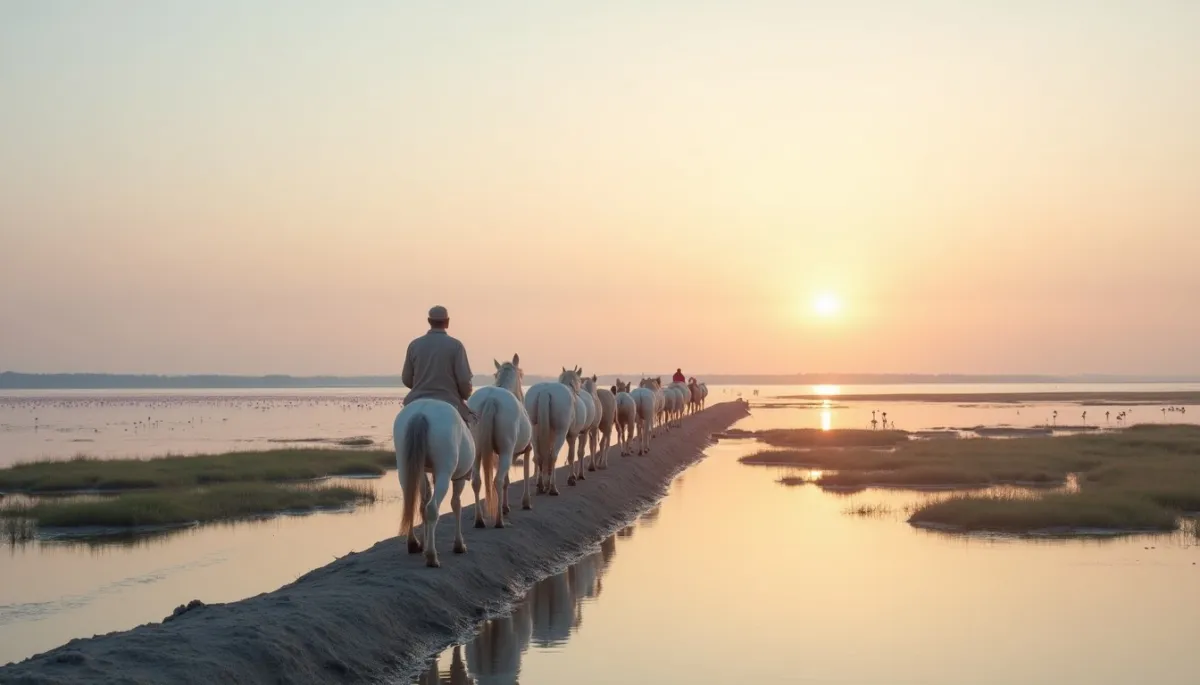
History and ecology explain the food map. The Camargue is a delta, a mix of fresh and salt water, where soil, tides and human labour shaped what could be produced. Salt marshes turned into salines because the climate and the flat terrain favor evaporation. Wetlands became paddies because rice tolerates flooded soils. Herds of taureaux and horses adapted to the marshes and became central to rural economies.
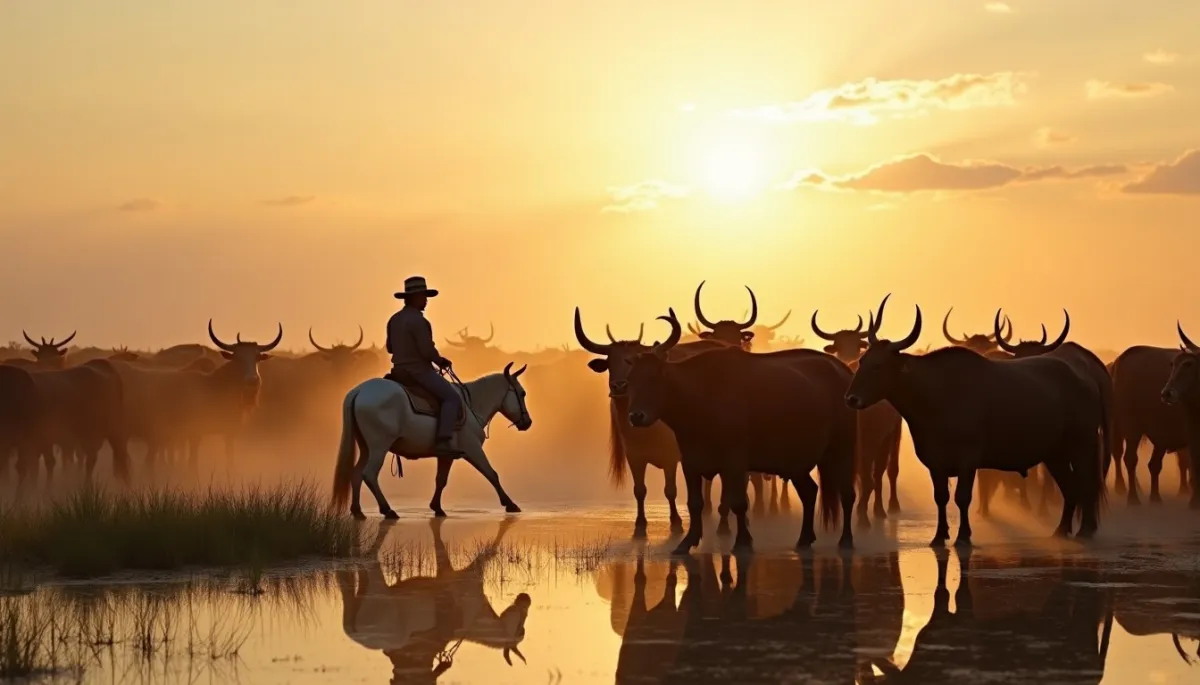
Social practices also matter. The manade (a free-range herd and the farm that manages it) and the gardian (the mounted herder) organized animal husbandry around festivals and rural markets. The need to feed working men and women produced hearty, slow-cooked recipes, like gardianne de taureau. That stew does more than feed, it binds people to rites, to bull games and to village fêtes.
Agricultural policies, labels and short food circuits have reinforced local pride. Producers and chefs defend seasonal cycles, favoring local rice, sel de Camargue and beef from native breeds. Tourism plays its part, by valuing authentic meals after a day of horses and birds watching, and by creating demand for artisan products sold at marchés and salins tours.
Between tradition and change: tensions and new directions
Yet contradictions appear. Tourism brings customers and income, but can also flatten dishes into clichés for visitors. Some restaurants offer 'Camargue' menus that forget artisanal producers, replacing slow-cooked bull with generic beef. Protecting product quality requires vigilance, label certification, and consumer knowledge.
Environmental pressures are real. Water management, rising salinity, and climate variations affect rice yields and the rhythm of saltings. Producers adapt by innovating irrigation, experimenting with rice varieties, or developing direct sales. At the same time, heritage remains strong: local cooperatives and family manades perpetuate techniques passed down for generations.
For the curious visitor, a few tips. Go early to a manade to watch the gardians at work and learn what a razete is. Ask for gardianne de taureau, not just 'beef stew', and pair it with Camargue red wine or robust local rice. Buy fleur de sel and a small sac of freshly threshed rice at a market in Aigues-Mortes. These gestures support the people who keep the Camargue's taste alive.
In the end, Camargue gastronomy is less a cuisine than a conversation between landscape and human hands. Tasting it is reading the land by spoonfuls, and understanding that every grain of rice and every flake of salt carry a story worth listening to.