Manade gastronomy: gardiane of bull and herders' culinary traditions
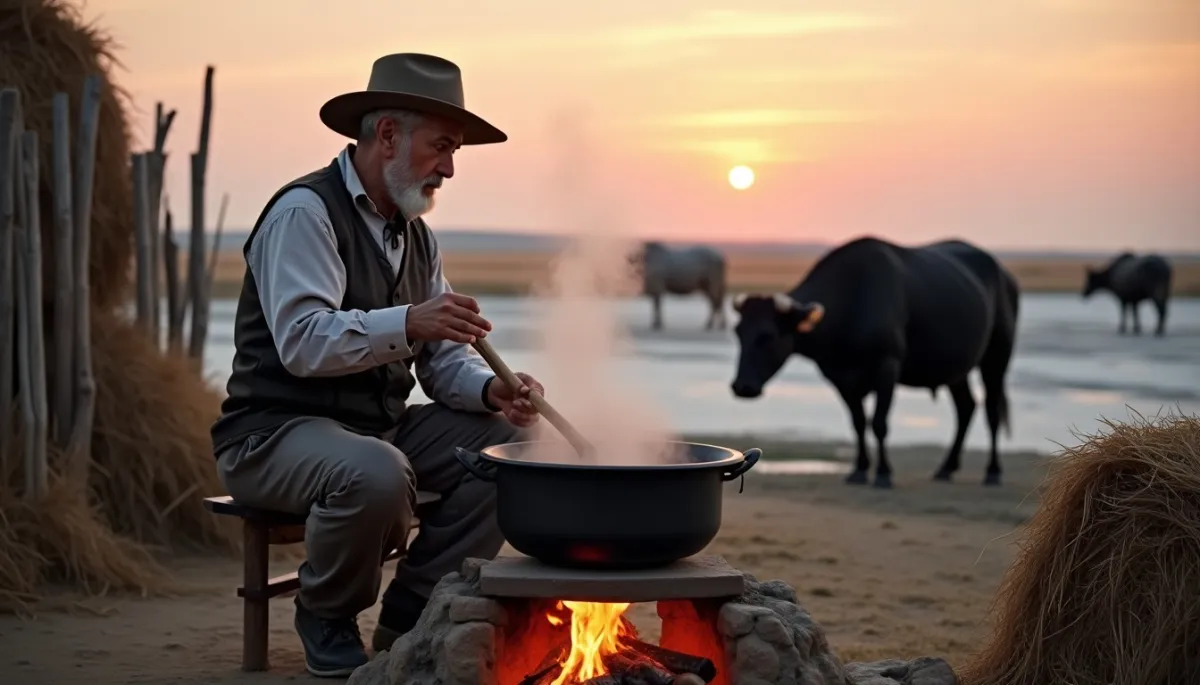
In the salt air of Camargue, a black pot simmers and stories rise with the steam. The gardiane de taureau is more than a dish, it is the culinary memory of manades and gardians.
🚀 Key Takeaways
- Core concept : Gardiane is a slow-cooked stew made from Camargue bull, rooted in manade life.
- Practical tip : Marinate overnight in robust red wine, cook low and long, serve with Camargue rice.
- Did you know : Manades are semi-feral herds managed by gardians (mounted herders) in a regional tradition dating back centuries and protected by the Parc naturel régional de Camargue since 1970.
Heat and tradition.
Picture a dusty courtyard at dusk, a cast-iron pot over smoke, a gardian stirring with the same calm he brings to the herds. Around him, the silhouettes of Camargue bulls move like black islands beneath a sky the color of salt flats. The aroma of red wine, onion and thyme drifts toward the stable, and an entire way of life is distilled in the steam.
From field to pot
The gardiane de taureau is at once practical and ceremonial. It uses meat from the taureau de Camargue, the small, dark-boned bull raised in manades (extensive herds kept in the marshes and wetlands of the delta). Historically, gardians prepared this stew after seasonal labors, a way to feed a group with robust, slow-cooked meat.
Ingredients are simple but precise. Traditional recipes call for chunks of bull, red wine for long braising, onions, garlic, carrots, and a bouquet garni (thyme, bay leaf). Some versions add local olives or a touch of anchovy to deepen the savory base. The usual accompaniment is riz de Camargue, whose short, plump grains match the stew's richness.
Festivals and local tables keep the dish alive. Each year, at fairs and course camarguaise events in Arles and Saintes-Maries-de-la-Mer, communal pots of gardiane are shared. The dish feeds not only bodies but also the ritual of the manade, where stories are exchanged and new gardians are welcomed.
Roots of a taste
The reasons gardiane exists are practical and cultural. Manades operate on extensive grazing, with animals semi-feral and only rounded up for work or events. The gardian needed recipes that suited tough, mature meat and allowed preparation in outdoor conditions during roundups and overnight watches.
From the 19th century, irrigation and salt trade transformed the Camargue landscape. Rice cultivation expanded and the manade system adapted, reinforcing local foodways. By 1970, the creation of the Parc naturel régional de Camargue highlighted the cultural importance of these practices and helped protect the manade traditions.
Personal anecdotes are abundant. Older manadiers recount how a pot of gardiane saved an entire night of work during a storm in the 1950s. They speak of recipes transmitted by mothers and aunts, and of subtle house variations like adding black olives from nearby orchards or a splash of pastis to warm the sauce.
Tradition and reinvention
Yet gardiane is not frozen in time. Over the past two decades, chefs from Arles to Montpellier have revisited the stew, using younger cuts or confit techniques, plating it with reduced wine jus and an upscale rice pilaf. These reinterpretations can attract new diners while sometimes polarizing purists.
There are tensions between valorizing local gastronomy and preserving authenticity. Some manades emphasize traceability and respect for the bull (the animal's life is tied to ritual and local fairs) and resist industrial processing. Others have opened to gastronomic circuits, selling portions at markets and restaurants to sustain their herds economically.
For the curious cook, the lessons are clear. Respect the slow cook: marinate the meat overnight, use an honest red wine, and keep the simmer low. Serve with Camargue rice or polenta, and let the pot be a place of conversation. In doing so, you reproduce a small piece of manade life, and with it, a taste that anchors a people to their land.
Practical recipe tip: for 1.5 kg of bull meat, marinate 12 hours in 75 cl of red wine with 2 bay leaves, 4 sprigs of thyme, crushed garlic. Brown meat, sweat onions and carrots, add wine and bouquet, simmer gently 3 to 4 hours until fork tender. Finish with olives or a spoon of olive paste if desired.