Gaze and cattle sorting: Herding spectacle in the waters of the Rhône
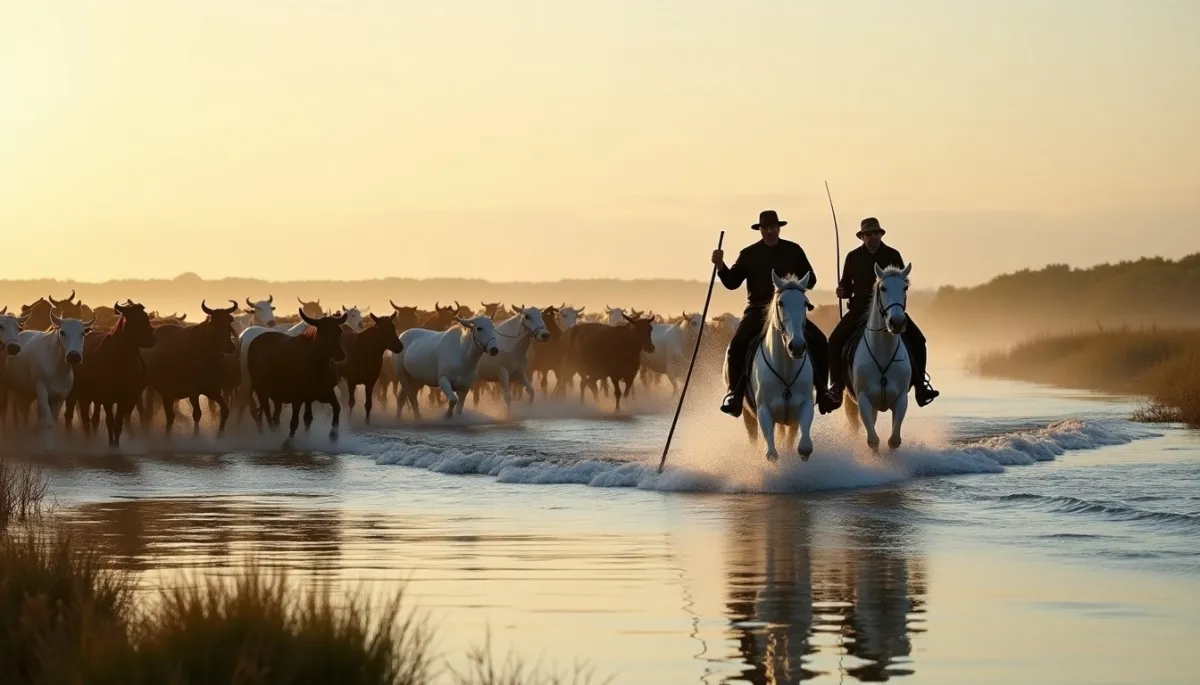
Along the Rhône arms in the Camargue, mounted gardians drive herds through shallow water, shaping a ritual that is both practical and theatrical. This article follows the practice known locally as gaze, and the age-old art of sorting cattle in the river.
🚀 Key Takeaways
- Concept key : "Gaze" is the local term for moving and working cattle in the river, used for crossing and sorting.
- Practical tip : Best observed in spring when marshes swell, watch from hideouts near Arles or Salin-de-Giraud.
- Did you know : The practice links to the gardian culture formalized in the early 20th century by figures such as Folco de Baroncelli.
Water, dust and a low sun. The sight stops you, like a painting in motion.
Imagine a wide arm of the Rhône, shallow and cold, reed beds trembling at the edges. A group of horses, pale and compact, test the current. Behind them, a manade of Camargue cattle moves like a single body, horns level with the horizon. The gardians (Camargue herders) call, clap, and use long, flexible sticks to nudge animals. Splashes flash, birds lift. It is work, it is spectacle, it is centuries of adaptation.
Eaux en mouvement
Gaze, in local parlance, designates the movement des troupeaux through water. It serves several practical goals, from safely crossing wet arms of the Rhône, to cooling and cleansing the herd, to the actual tri, which is the selection and separation of animals.
Historically, moving cattle through water allowed manadiers to reach salt pastures and islands that feed the distinctive black-and-white Camargue cattle. Local maps and travelogues from the 19th century already mention crossings of the Petit Rhône and the Grand Rhône, when seasonal floods reshaped grazing areas.
In the water, the dynamics change. Cattle slow, their hooves sink and the gardians must anticipate momentum differently than on dry land. The river becomes a natural funnel, helping to isolate individuals for medical checks, branding, sale, or selection of breeding stock.
Geste et héritage
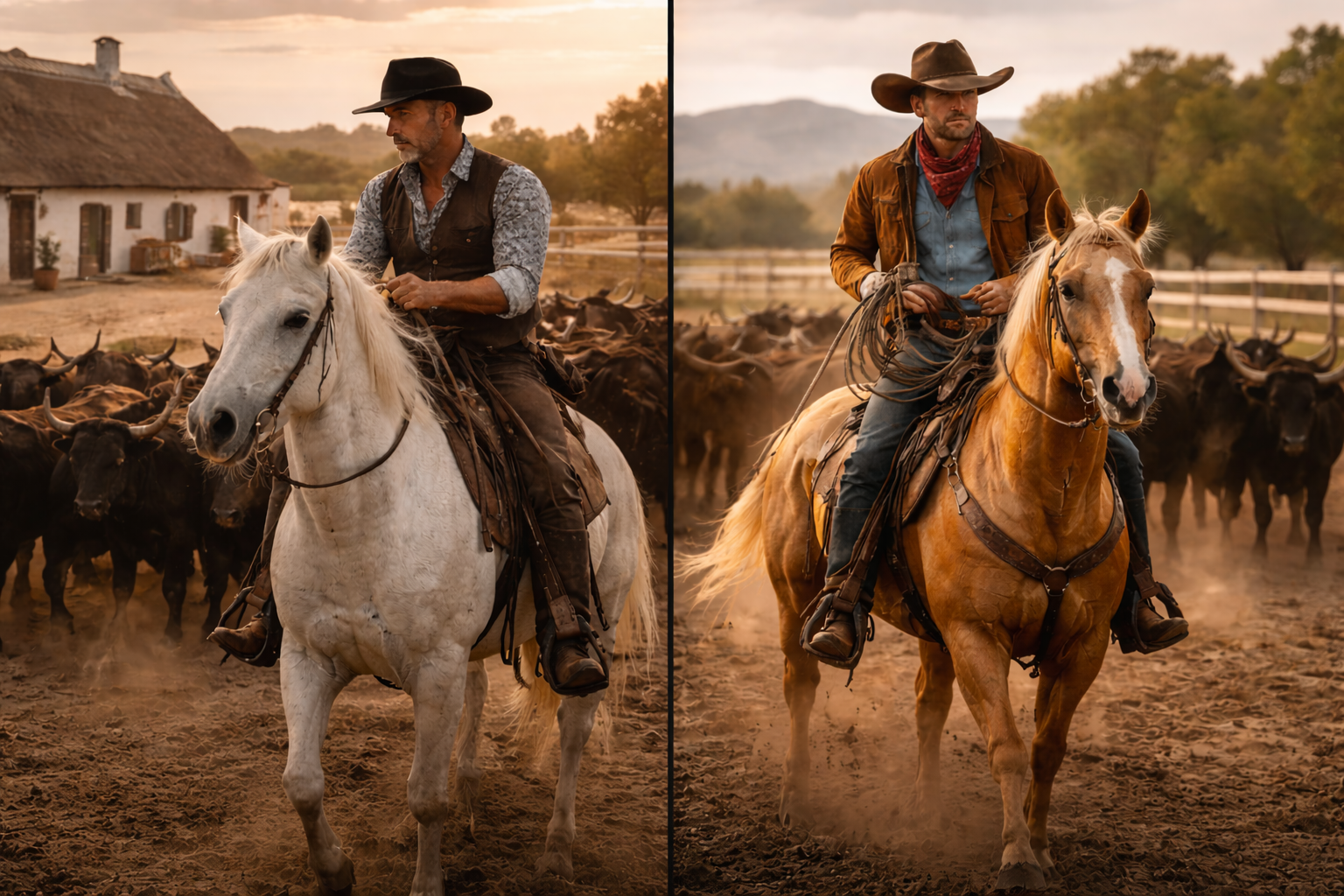
Who are the actors of this scene? The gardians are mounted riders raised in the manade system. A manade is both a herd and the family operation that runs it. These families keep records of bloodlines, and maintain a living link to traditions championed by early advocates such as Folco de Baroncelli (1869-1943), who in the early 20th century sought to preserve Camargue customs.
The spectacle on the water is the result of skills learned young. Riders know the temperament of each animal, the way a particular bull will balk, and how a mare will position herself to shield a calf. The horses are themselves Camargue horses, robust, low-set and steady in current, bred for these exact tasks.
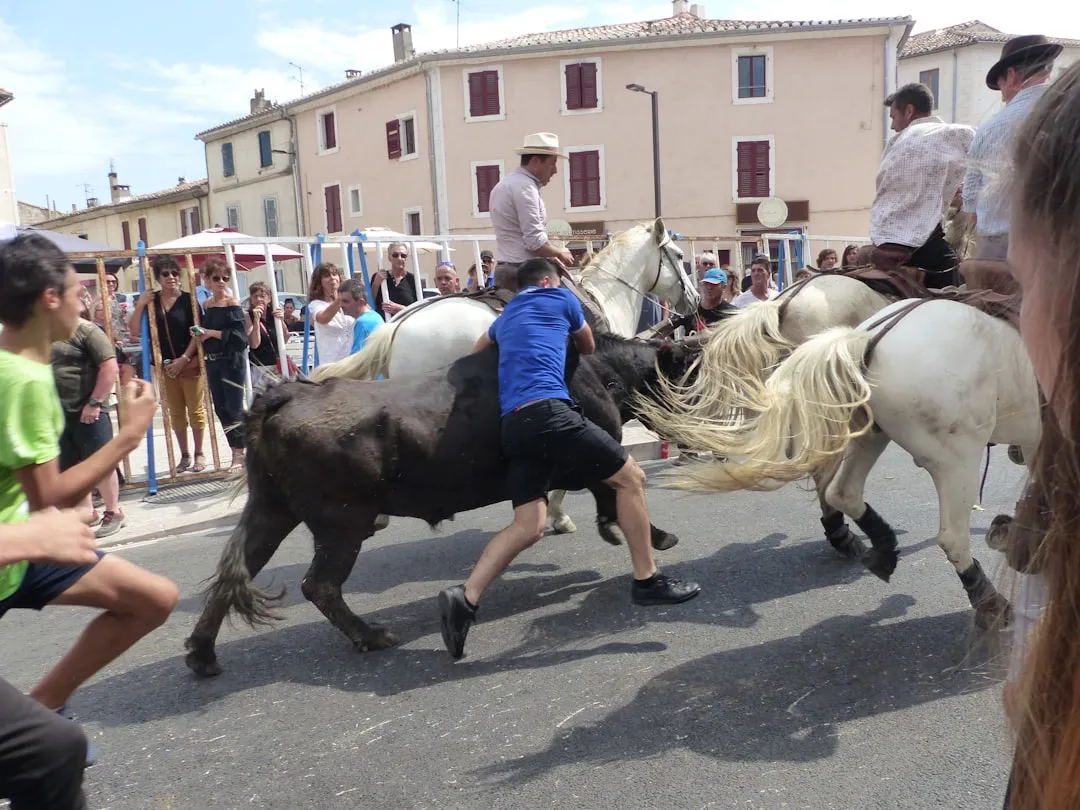
Anecdotes abound. Older gardians tell of winter crossings where ice and swollen currents demanded improvisation; others recall festive tri carried out after the traditional transhumance to mark new bulls, a moment when the community gathered at the riverbank to celebrate the year's herd.
Choix et enjeux
Sorting in the Rhône is about choices. Selecting a bull for breeding, isolating an injured animal, or preparing cattle for the market are decisions with economic and genetic consequences. Manades balance tradition and modern constraints, such as sanitary regulations and the market pressure for specific traits.
Environmental change has pushed these practices to adapt. Rising spring floods and altered sediment flows in the Rhône delta affect crossing points and timing. Some manadiers have moved to flatter access points near Arles or to engineered fords close to Salin-de-Giraud, while preserving the ritual nature of the tri.
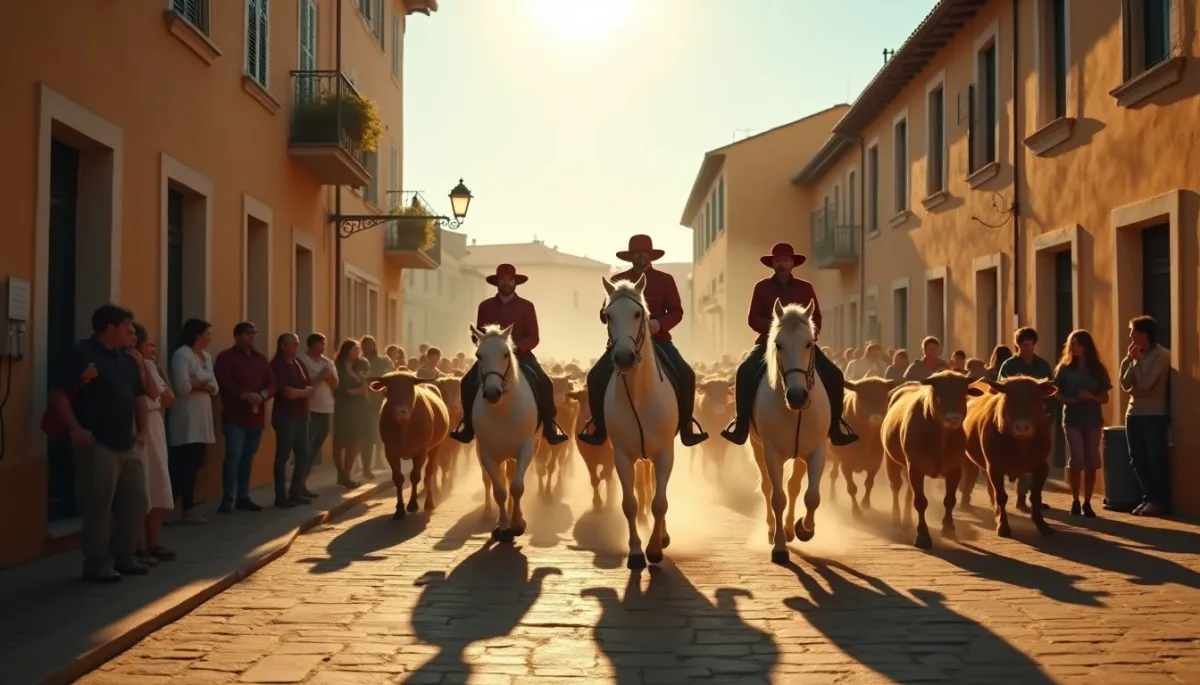
There is also a tourist dimension. Since the late 20th century, visits to manades and live demonstrations have become part of Camargue's offer. This popularity supports local economy, yet raises questions about authenticity, and about ensuring that demonstrations remain faithful to the work's practical purposes.
Savoir regarder
To witness gaze and tri is to read landscape and labor together. Arrive early, in spring or early summer, when marshes are lively. Bring binoculars, a waterproof jacket, and respect the manadiers' space. Many manades welcome visitors by appointment, and guided observations explain why a gardian moves left rather than right, or why a certain bull is singled out.
For photographers, the best light is at dawn and dusk, when reflections and silhouettes enhance the choreography. Keep distance, avoid shouting, and follow local rules about access to riverbanks, especially in protected zones of the Camargue Regional Nature Park.
At its core, gaze and the tri in the Rhône are a living fusion of landscape, animal behavior, and human skill. The scene is utilitarian, poetic, and fragile. Seeing it is to understand how Camargue people invent continuity, by guiding cattle through water, and by connecting past methods to present challenges.