Holistic grazing: how modern cowboys save soils
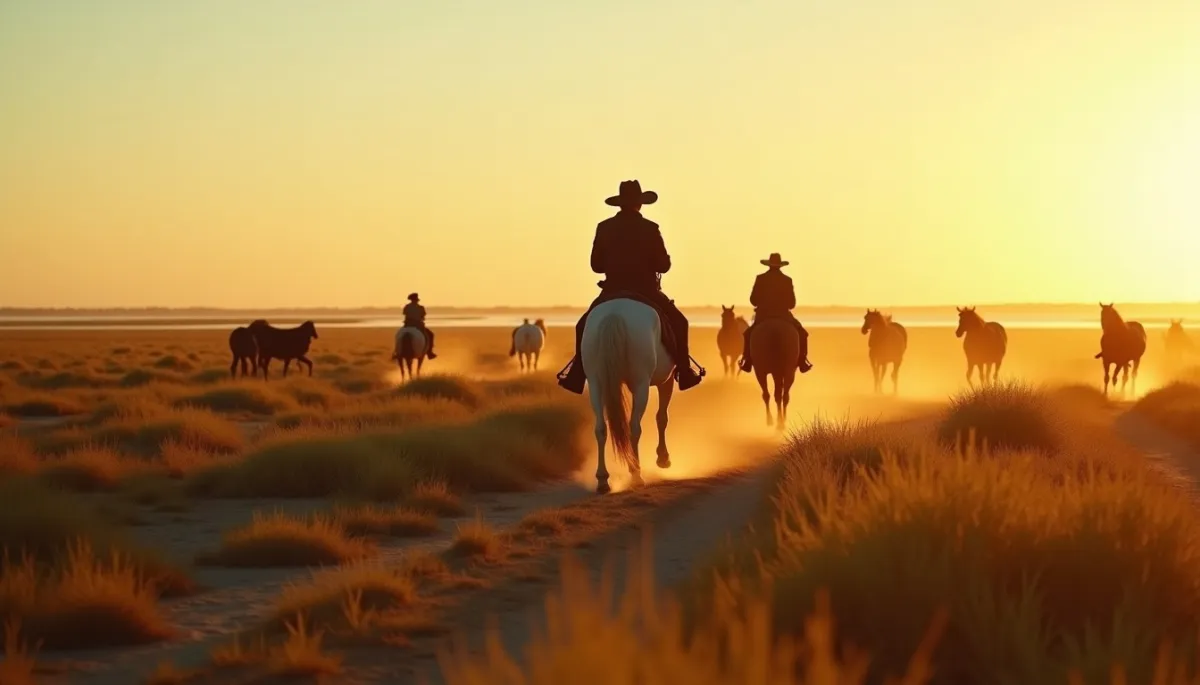
Across North America and the Mediterranean, herders are rewriting the rulebook of pasture. Modern cowboys, inspired by holistic grazing, turn hooves into tools for soil restoration.
🚀 Key Takeaways
- Core concept : Holistic grazing uses planned herd movement to mimic natural grazing patterns and regenerate soils.
- Practical tip : Increase short-term stocking density, shorten grazing duration, then allow long recovery periods for plants.
- Did you know : Camargue gardians historically practiced seasonal moves that echo modern rotational grazing.
The sun slides low, hooves thud, and the smell of damp earth rises. A modern cowboy watches his herd cross a salted meadow, counting days until the grass will recover.
Herbs and hands
Holistic grazing is a deliberate strategy. It relies on moving livestock frequently, concentrating them in tight herds for short periods, then resting paddocks long enough for plants and soil to repair.
The method was popularized by Allan Savory, a Zimbabwean-born ecologist, who developed Holistic Management in the 1960s and 1970s and spoke to a global audience with his 2013 TED talk on desertification.
Since the 1990s, North American ranchers like Gabe Brown have combined no-till cropping and managed grazing to rebuild soil organic matter and water infiltration, outcomes now supported by multiple case studies.
Roots regained
The consequences are tangible. In many restored pastures, roots grow deeper, soil structure improves, and water soaks in faster, reducing runoff and vulnerability to drought.
On working ranches, increased cover also means more insects, birds and a return of small mammals. In semi-arid regions where overgrazing once led to erosion, planned grazing has in some cases reversed land degradation.
In the Camargue, a territory protected since the creation of the Parc naturel régional de Camargue in 1970, gardians have long managed marshes and plains. Their seasonal movements and attention to wetland cycles offer a living parallel to holistic principles.
Why they moved
Why the shift? Two forces converged. First, economic pressure and climate variability pushed ranchers to seek resilient systems. Droughts in the 1980s and 1990s forced many to rethink continuous grazing.
Second, research and on-farm experiments showed that adaptive grazing, when matched to local ecology, could increase pasture productivity. Farmers saw better regrowth when animals were moved according to plant recovery, not calendar dates.
Practical anecdotes abound. A rancher in the American Great Plains who switched to higher short-term stocking and longer rest reported thicker sward and fewer bare patches within three seasons, while neighbours on continuous grazing still battled erosion.
Tensions in the saddle
However, the approach is not a silver bullet. Allan Savory's proposals have faced scientific debate and criticism, especially when broad claims outpaced evidence. The 2013 TED talk generated both enthusiasm and scrutiny from ecologists.
Implementation is another challenge. Holistic grazing demands labour, planning and monitoring. Small properties may struggle with paddock setup, and social acceptance varies. In France, pastoral traditions and rules of manades shape how methods are adopted.
Yet pilots in Europe and the United States continue, blending traditional local knowledge with new tools such as GPS tracking, portable fencing and soil testing. The result is a pragmatic, evolving practice rather than a fixed doctrine.
Practical notes
For those curious to try: start by assessing your soil and plant recovery times. Increase short-term stocking density enough to trample old litter and press seeds into the ground, but keep grazing periods brief, from a few days to a couple of weeks depending on season.
Then rest the ground. Recovery often means several weeks or months, longer in dry seasons. Monitor plant height and root vigor rather than following rigid calendars.
Finally, remember the human element. In Camargue, the gardian culture shows that respect for landscapes, knowledge passed through families, and adaptive rhythms of movement are as important as technical rules.
Modern cowboys are not rewriting history. They are, in many places, reviving an older harmony between hooves and soil, translating it into a method that aims to heal land and secure livelihoods.