Horseback riding in the Camargue: your guide to galloping on the beaches of Saintes-Maries
Ride along the wide, wet sand where sea and marsh meet. Discover how to prepare, where to go, and the living traditions that make a Camargue ride unique.
🚀 Key Takeaways
- Core idea : Gallop on the Saintes-Maries beaches for a timeless Camargue experience.
- Practical tip : Ride early or late, check local beach rules and rinse tack after saltwater exposure.
- Did you know : The Camargue horse and the gardian tradition are protected by the regional park created in 1970.
The wind smells of salt and wet reeds.
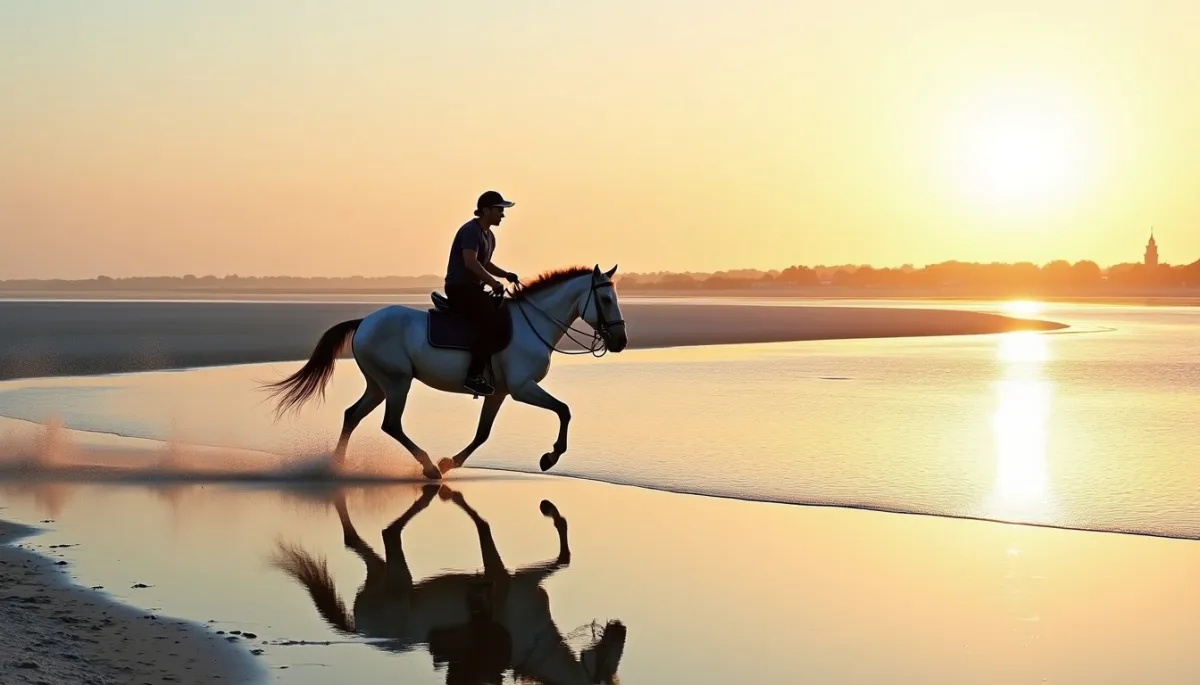
A rider leans forward as his grey Camargue horse stretches into a steady gallop, wet sand throwing a silver spray beneath the hooves. Behind them, the lagoon mirrors a pale sky, and to the right the small bell tower of Saintes-Maries-de-la-Mer punctuates the horizon. You can almost hear the cries of terns and the distant shout of a gardian calling a herd back to the manade.
Sable et sel
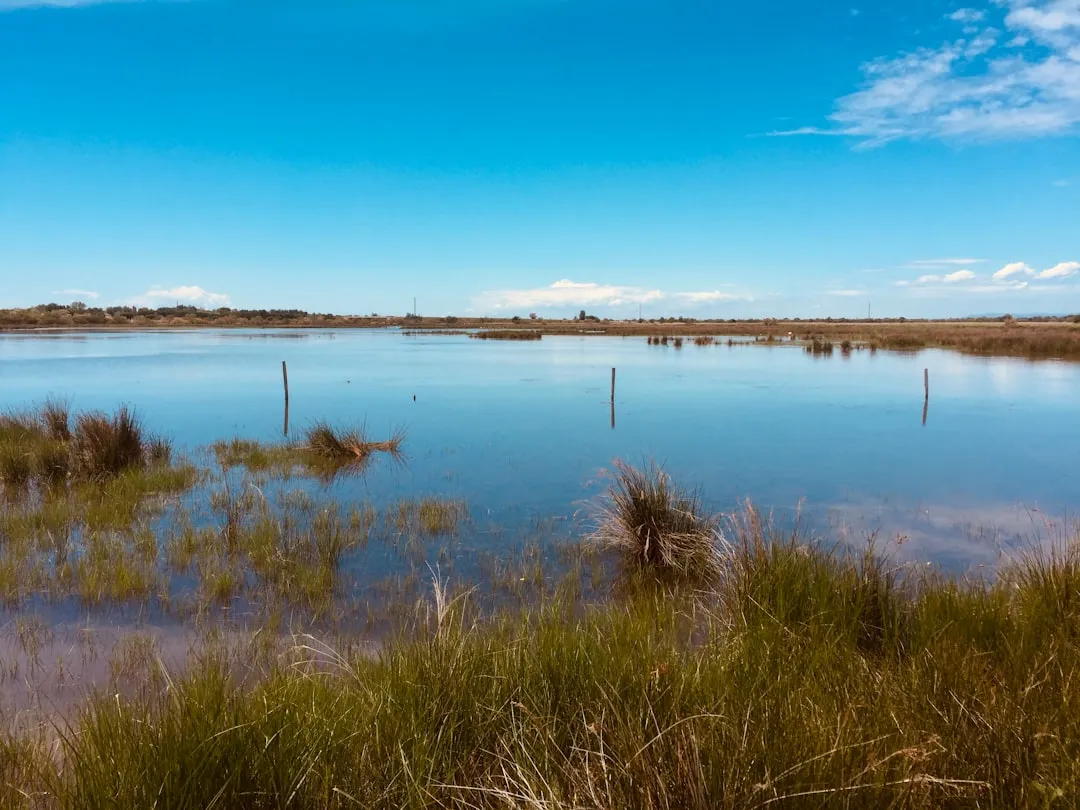
The beaches of Saintes-Maries-de-la-Mer are famous because they combine wide open sand, shallow slope and the proximity of marshes, making them ideal for long canters. The best stretches run from the town's main strand toward the southern dunes, where the tide leaves a compact, firm surface.
Practically, most stables organise rides that last from one hour to a full day. Morning rides at low tide give the firmest sand and cooler temperatures, while evening sessions offer dramatic light and fewer bathers. If you plan a long gallop, ask for a horse accustomed to beaches; the Camargue horse (small, grey, hardy) excels at this work.
On the calendar, the town fills with riders during the pilgrimage of late May, when pilgrims and gypsies come from Europe. Outside those days, you will encounter gardians on their horses moving cattle, a living image often captured by photographers since the early 20th century.
Gardians et manades
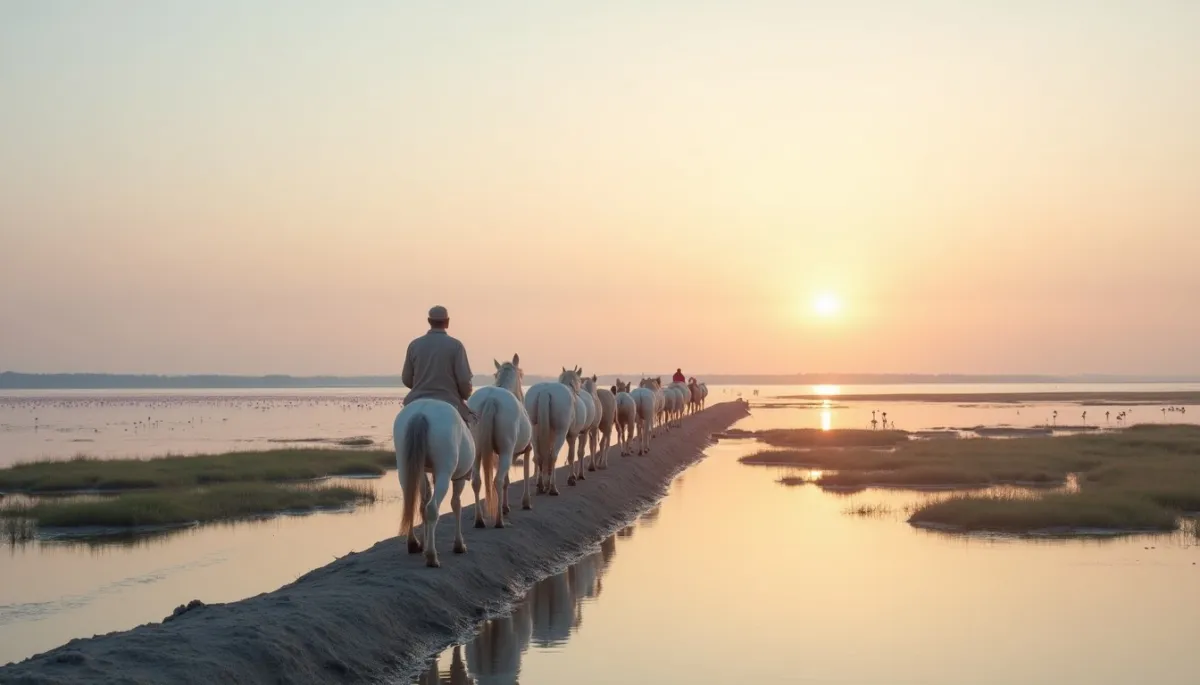
The people behind the rides are the gardians, the mounted herders of the Camargue. Their work is organised in manades, free-ranging herds of bulls and horses. The manade system has deep roots; figures like Folco de Baroncelli (1869-1943) in the early 20th century helped popularise Camargue identity and the image of the gardian.
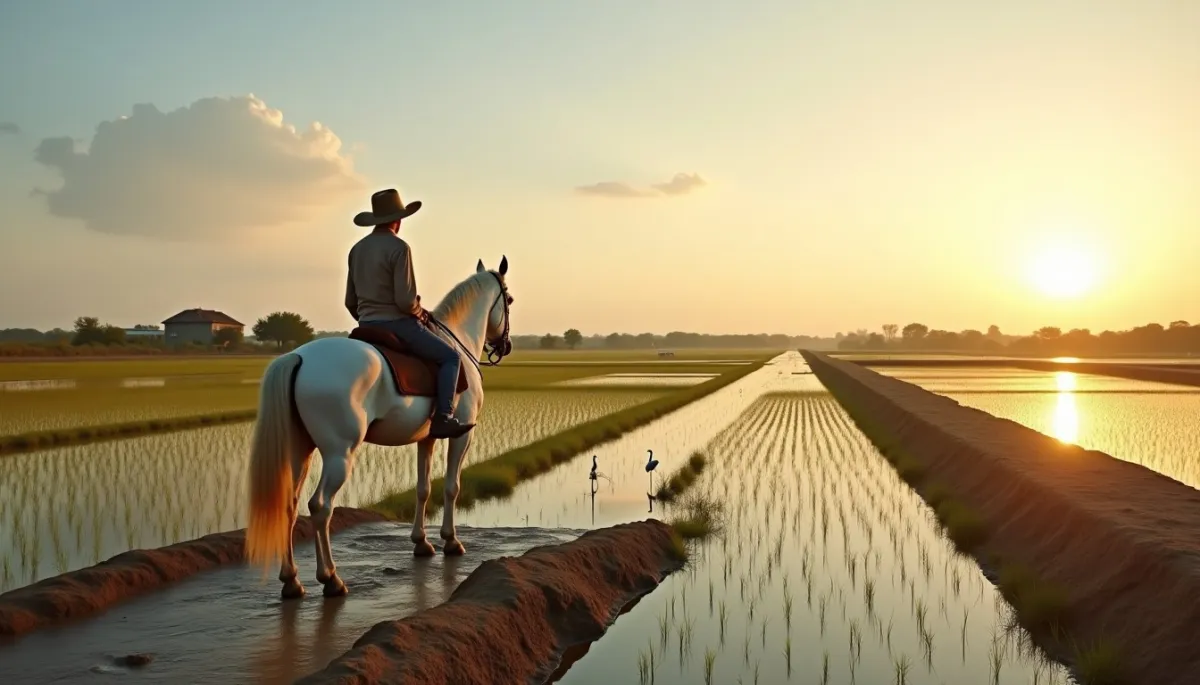
Manades still operate today, both as working livestock operations and as tourist partners offering rides. In spring and autumn many manades open trails that cross salt flats and marsh edges, letting riders feel the rhythm of traditional pastoral life while learning how the gardians handle bulls during abrivados and ferrades.
These encounters are more than spectacle. They pass on knowledge: how to sit in a Camargue saddle, how to read the herd's movement, and how to keep a horse calm when a bull bellows. Ask your guide about local names and places; anecdotes about generations of gardians often surface in conversation.
Entre lois et liberté
Riding on beaches is not without rules. Local regulations vary by season and municipality, so check before you go. During peak summer months some stretches are restricted to protect bathers and nesting birds. The Camargue Regional Nature Park, created in 1970, balances conservation and pastoral use.
Practical constraints also matter. Saltwater damages leather, so rinsing and oiling tack after a ride is essential. Respect tides, wear appropriate gear (helmet, boots), and consider insect repellent for marsh zones. For first-time beach riders, ask for a guide and a well-trained horse; a confident mount and an experienced leader make all the difference.
Despite regulations, riding remains a rite of passage here. Locals preserve a humility toward weather, water and animals. If you arrive at dawn, share coffee with a gardian, listen to a tale about last winter's storms, and you will understand why people return year after year to gallop where the sea meets the marsh.
Practical checklist: book with a certified centre, ride off-peak hours, respect protected zones, rinse tack, and tip your guide for insights shared. With these few rules, the beaches of Saintes-Maries open up into one of France's most authentic equestrian experiences.