Jalisco and charrería: the ultimate guide to Mexico’s equestrian culture
Jalisco is one of the beating hearts of charrería, a horseback tradition that shaped Mexican identity for centuries. This guide brings you into the arena, from the ranches of the 16th century to modern lienzos and female escaramuzas.
🚀 Key Takeaways
- Core concept : Charrería is a living equestrian tradition rooted in ranching, now a cultural symbol in Jalisco and beyond.
- Practical tip : Attend a charreada at a lienzo charro in Guadalajara or a hacienda near Tequila to see maneuvers like piales and manganas.
- Did you know : Women’s escaramuza teams perform precision routines on side-saddle style skirts, a modern emblem of empowerment on horseback.
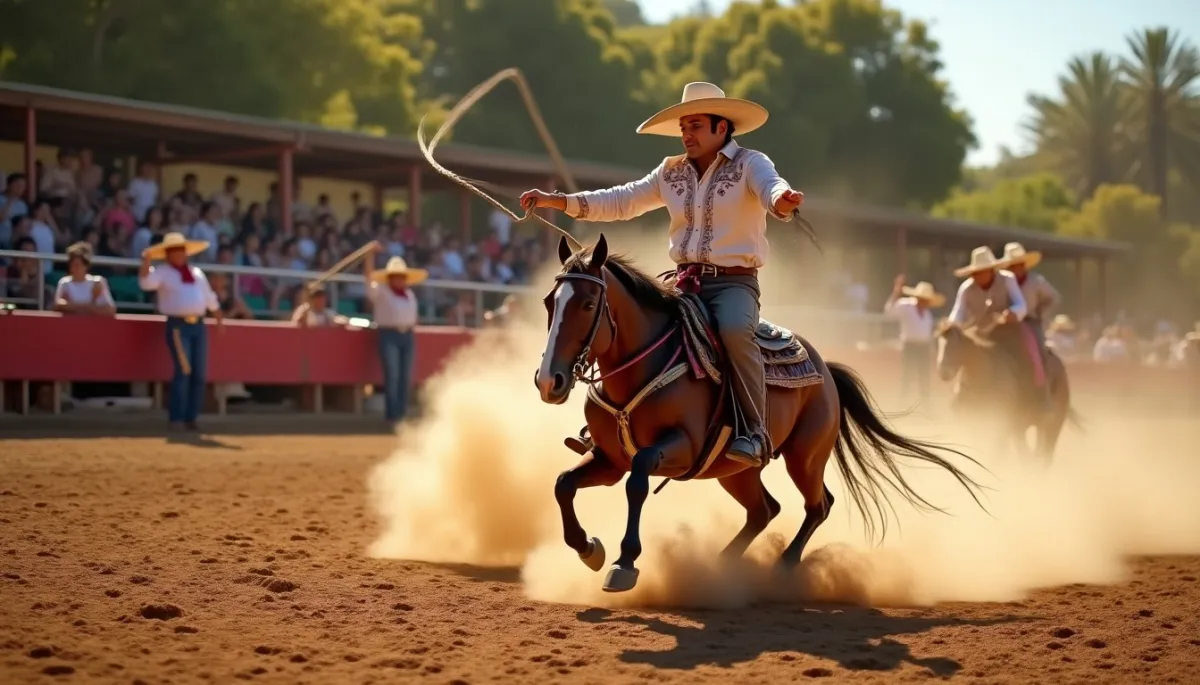
Feel the dust under the horses’ hooves. In a lienzo charro near Guadalajara, a charro tips his sombrero as the rope sings and a mare pivots, the crowd claps in time with the music.
Terre and saddle
Charrería is both sport and ritual, a sequence of equestrian skills born from everyday ranch work. At its core are events like coleadero (tailing cattle), piales en el lienzo (rodeo-style roping), manganas (precision roping from horseback), and jineteo de toro (bull riding).
These maneuvers are judged for technique, speed and style, and they take place in the lienzo charro, the oval arena with packed earth. The traje de charro, the iconic embroidered suit, the short jacket, the tight trousers with silver buttons, and the wide-brim sombrero, transforms workwear into a stage costume.
In Jalisco, the spectacle is often accompanied by mariachi music, linking two cultural languages. Towns like Cocula and Guadalajara have long associations with both mariachi and charrería, creating images that traveled worldwide through film and song in the 20th century.
Roots and rise
The practice grew from Spanish mounted cattle techniques introduced during the colonial period, then adapted to New World livestock conditions on haciendas. By the 19th century, specific riding styles and equipment had emerged among Mexican horsemen, the charros.
After Mexico’s independence and through the 19th century, the charro became a social figure: a skilled horseman, often associated with large estates. In the early 20th century, amid land reform and social change, the charro image was codified into competitions and associations, helping preserve techniques once used daily on ranches.
The golden age of Mexican cinema, roughly the 1930s to 1950s, projected the charro nationwide. Singers and actors adopted the traje de charro on screen, turning figures like Jorge Negrete and later stars into international icons. In Jalisco, local figures and ranch festivals further cemented the tradition as a regional pride.
Pride and friction
Charrería today is both celebrated and debated. It remains a source of identity, taught in schools, and practiced in rural and urban lienzos. At the same time, modern concerns about animal welfare, urban expansion, and generational shifts have forced adaptations, regulations, and clearer safety standards.
Women’s participation has been a powerful development. Escaramuza charra teams, performing choreographed, precision horseback drills in embroidered skirts, gained prominence in the mid-20th century and now attract young riders and international attention, changing gender dynamics within the tradition.
To experience charrería in Jalisco, look for weekend charreadas in Guadalajara, festivals in smaller towns, or hacienda shows in the Tequila region. Respect local customs, arrive early to see preparations, and consider a guided visit that explains maneuvers and vocabulary. For riders, certified instructeurs at local escuelas de charrería can teach basics safely.
Charrería is a living culture. It invites you to listen to the reata snap, to admire silver-thread embroidery, and to understand how a working craft became a national symbol, still evolving in the arenas and ranches of Jalisco.