Living in a manade: the guide to a successful immersion in a Camargue ranch
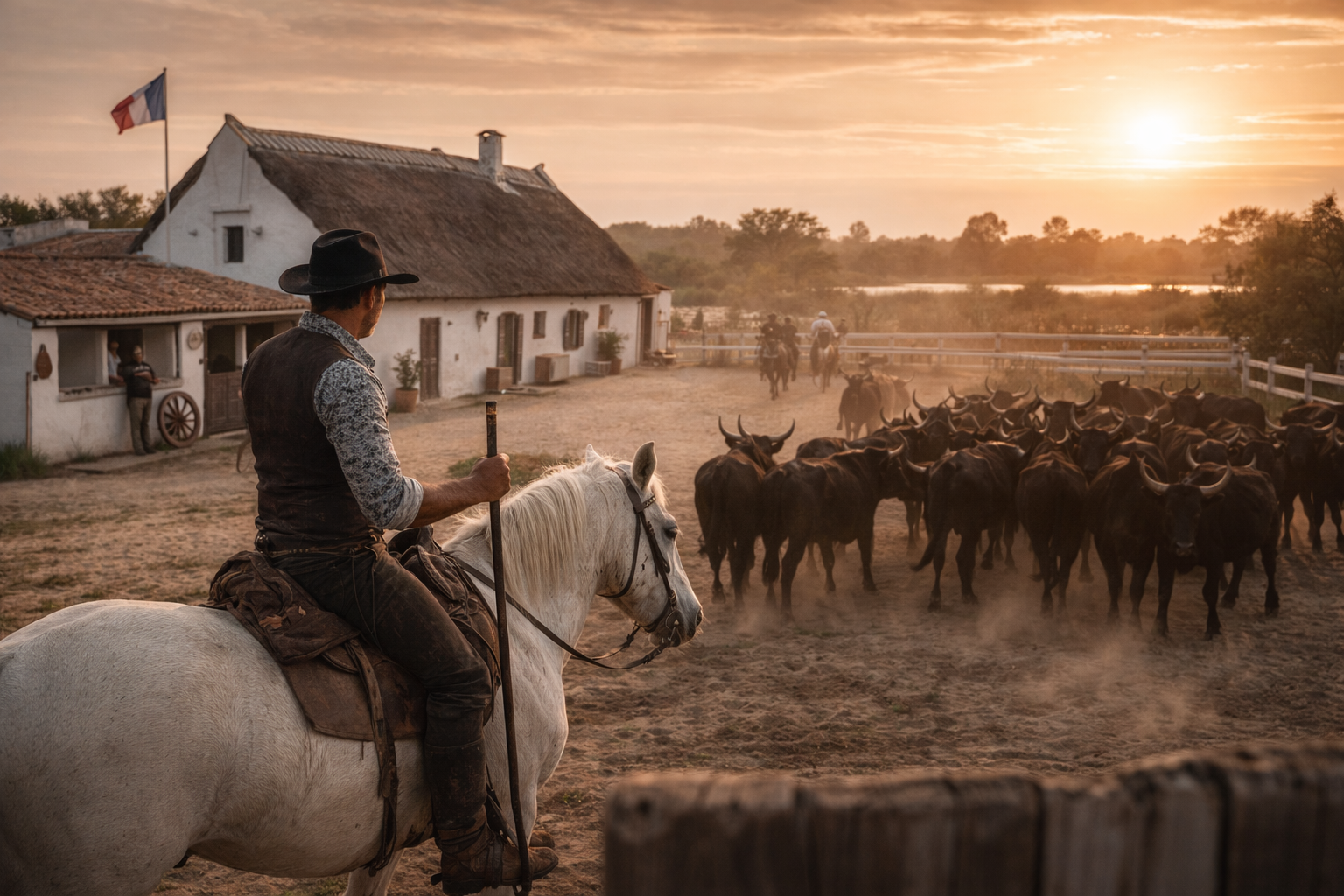
Enter a herd and you will hear another tempo of life: horses, bulls and salty wind mark the rhythm. It is not a tourist spectacle, it is a workplace where tradition retains its rights.
🚀 The essentials
- Key concept: The herd is both a herd and a place animated by the herdman and his herdians, where daily life revolves around the animals.
- Practical advice: Contact the herdsman directly, bring sturdy boots, sun protection and strictly follow the instructions of the herdsmen.
- Did you know: The herdsmen are the local equivalent of the American cowboy, both linked to horses, animals and rural festivals like the abrivado.
The manade is both a workplace and a home. Living in a herd means accepting a rhythm dictated by the animals, the tides and the weather, sharing tasks with the herdsmen and learning on the job.
In this guide I offer concrete advice gleaned in the field, from Saintes-Maries-de-la-Mer to the reed beds of the Camargue Regional Natural Park, so that your immersion is respectful, safe and rich in encounters.
What is a manade and who manages it
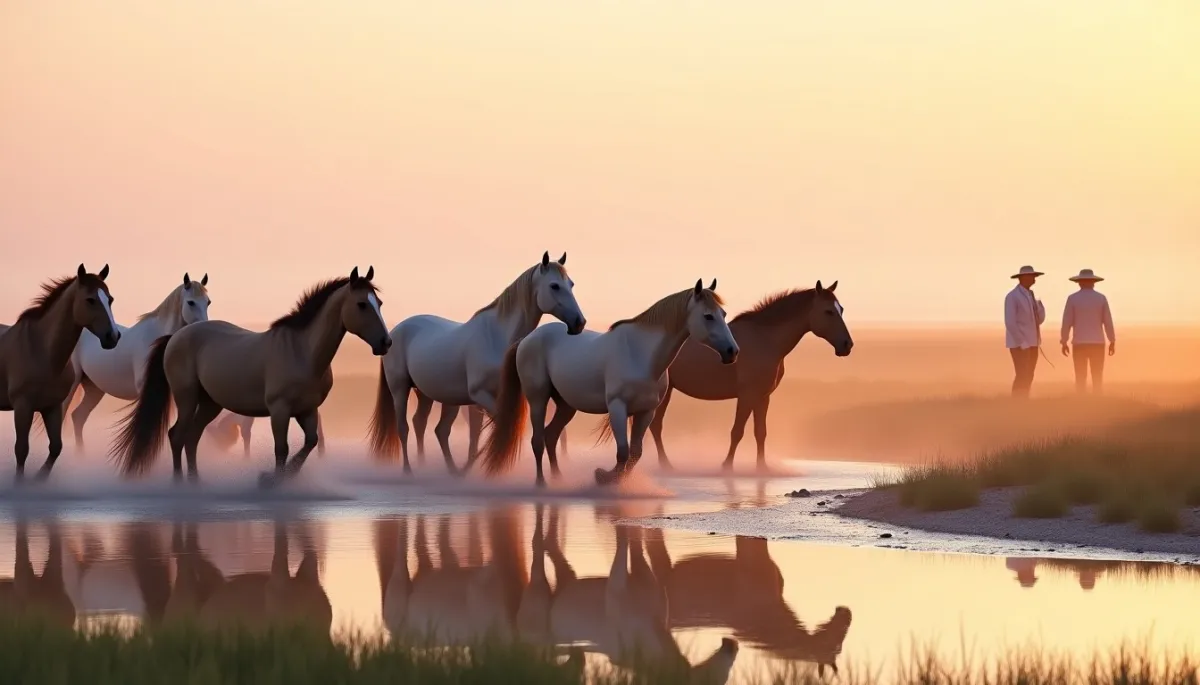
A herd designates a herd of bulls and often Camargue horses kept in semi-freedom on vast marshes and salt flats. It is managed by a manadier. The daily work is carried out by the herdsmen, riders trained in local techniques passed down from generation to generation.
The herds are not alike. Some, close to Saintes-Maries-de-la-Mer, combine traditional breeding and tourist reception. Others remain focused on production and participation in regional festivals. Knowing which type you are talking to changes the experience offered.
Preparing for your stay: practical steps
Prioritize direct contact with the manager. Ask what accommodation is available on the farm, what the working day will be like and what activities you can take part in. Indicate your riding level and your physical limits.
Carry the essentials: sturdy waterproof boots, long pants, breathable shirt, wide-brimmed hat, sunscreen and mosquito repellent. A compact pair of binoculars is useful for observing marsh birds, especially flamingos.
Daily life in a manade
Days often start with checking the herd and fences, then moving between pastures. You will see the herdsmen operating in small teams, using precise signals rather than shouts. The work is pragmatic and rhythmic.
You will learn how to groom horses, drive herds and participate in basic health checks. If your stay coincides with a ferrade, you can observe or help sort and mark the young animals, always in the presence of those responsible.
Safety and good manners with bulls and horses
Respect the rules given by the guardians. Taurus are powerful and unpredictable. Never approach an animal alone, avoid sudden movements and follow instructions. Photography must remain discreet and never interfere with work.
On horseback, maintain a safe distance from bulls unless a herd tells you otherwise. Wear appropriate footwear and, if you are inexperienced, a helmet. The manade is a place of work, your curiosity must be accompanied by restraint and attention.
Activities not to be missed
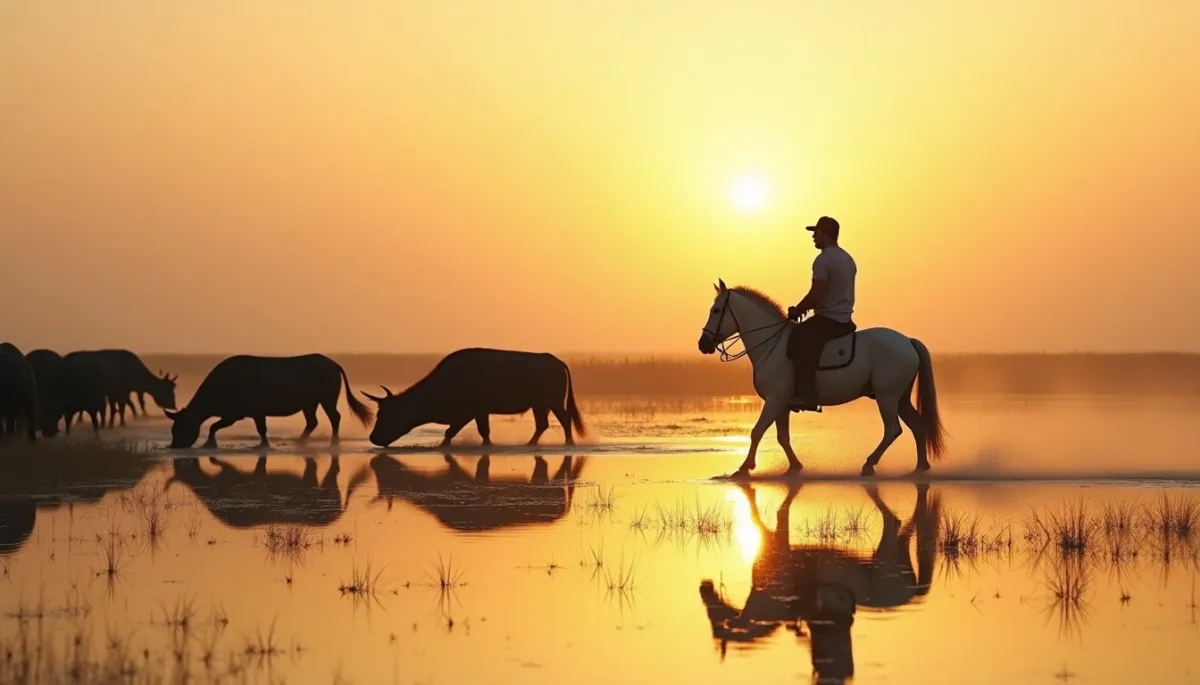
Ride on horseback at daybreak to feel the special light and silence of the salt marshes. Attend an abrivado or entrain at a local festival to see how the herdsmen escort the beasts through the streets, a living tradition comparable to American rodeo parades but with its own rites.
Take the time to visit nearby places that give meaning to the manade: Saintes-Maries-de-la-Mer for its pilgrimage, the Camargue Regional Natural Park for its biodiversity, and local museums on agriculture and traditional tools.
Where to sleep and logistics
Some manades offer a guest room in the farmhouse or simple dormitories for seasonal workers and visitors. Alternatives exist with lodges and rooms near Arles or in the villages of the park. Plan transport, because many herds are isolated.
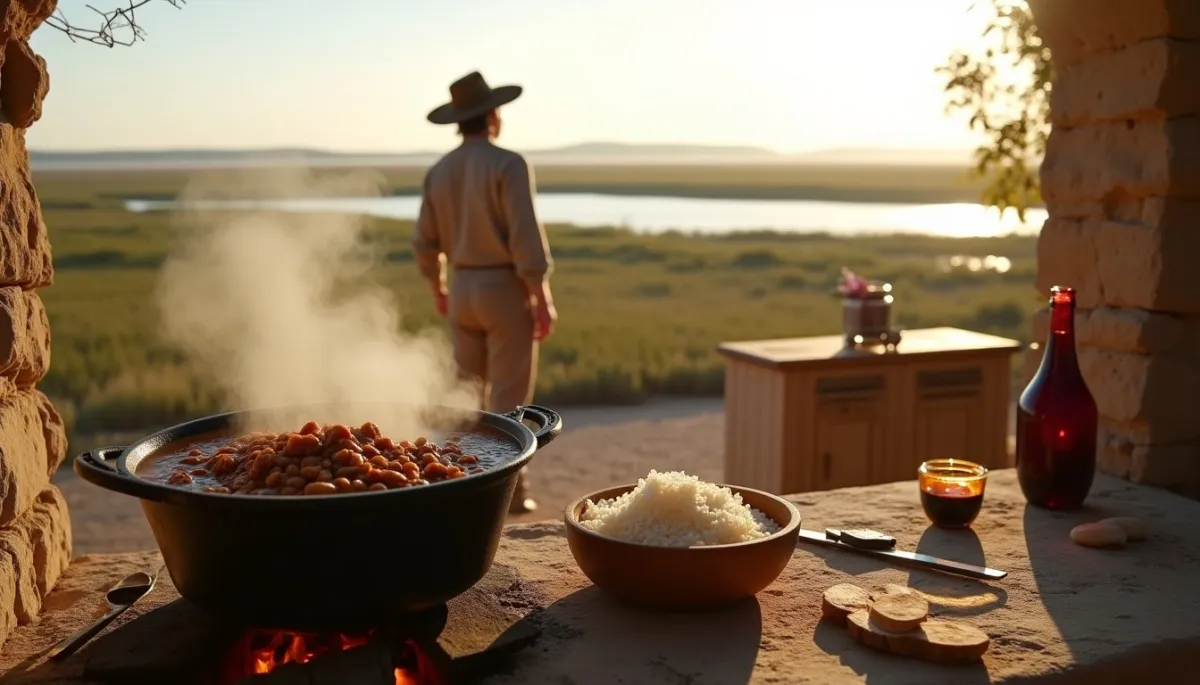
The meal is often shared. If you have special diets, indicate them when booking. Laundry facilities are basic, consider quick-drying clothes and accept simple but authentic comfort.
Traditions and identity
The herds constitute a living heritage. They preserve breeds adapted to the marshes, maintain pastoral landscapes and maintain ceremonies such as the ferrade and the abrivado. The herdsman is a marker of identity, similar to the American cowboy in his profession and his symbolism.
Today, many herds seek a balance between traditions and ecotourism. Responsible visitors help by supporting local practices, respecting instructions and booking directly with the families who maintain this heritage.
Final Tips for a Successful Immersion
Come humble, curious and ready to participate. The best lessons are learned in the saddle or at the edge of fences, not from a guidebook. A successful immersion means leaving with increased respect for the rhythm of the herd and strong human connections.
To start, explore the manades around Saintes-Maries-de-la-Mer and ask the local tourist offices for advice. An experienced manadier prefers a prepared and respectful guest rather than a simple visitor looking for photos.