Living in the Camargue year-round
Living in the Camargue is a choice of rhythm and salt. This article explores what it means to stay here all year, between marshes, manades and Mediterranean suns.
🚀 Key Takeaways
- Core idea : Year-round life in the Camargue blends pastoral traditions and modern constraints.
- Practical tip : Prepare for the Mistral, mosquitoes, and limited public transport; a car and good nets are essential.
- Did you know : The Camargue horse and the course camarguaise are unique cultural assets, with manades dating back centuries.
Light, salt and a distant cry of a flock passing overhead.
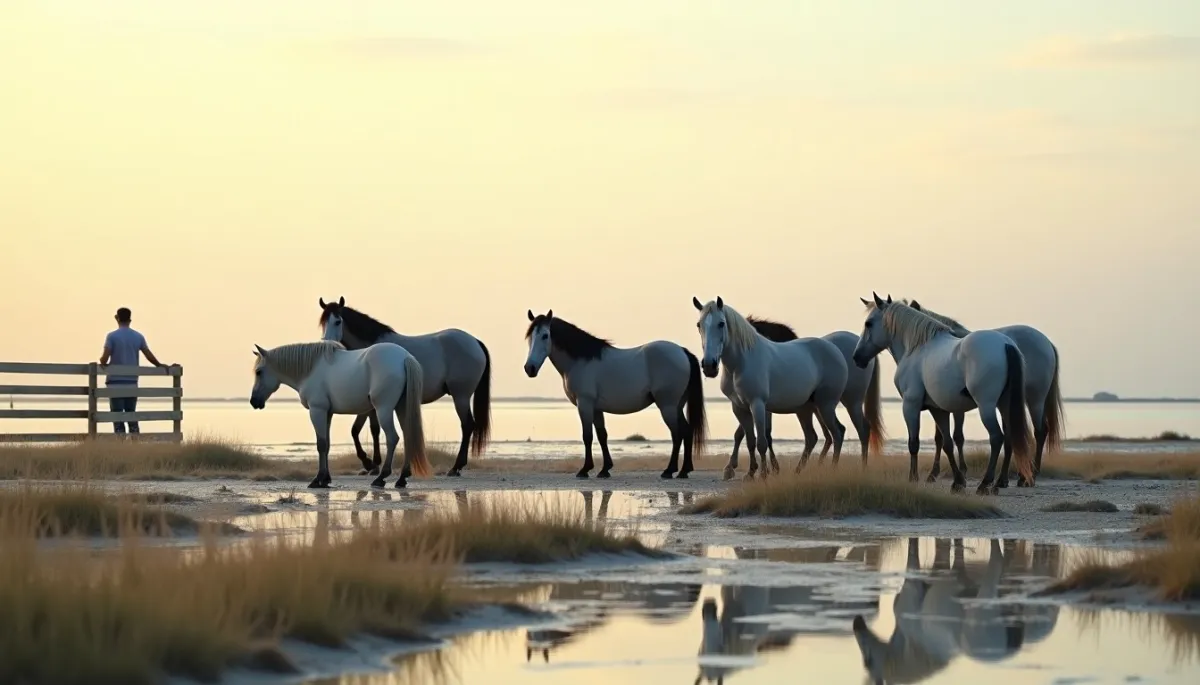
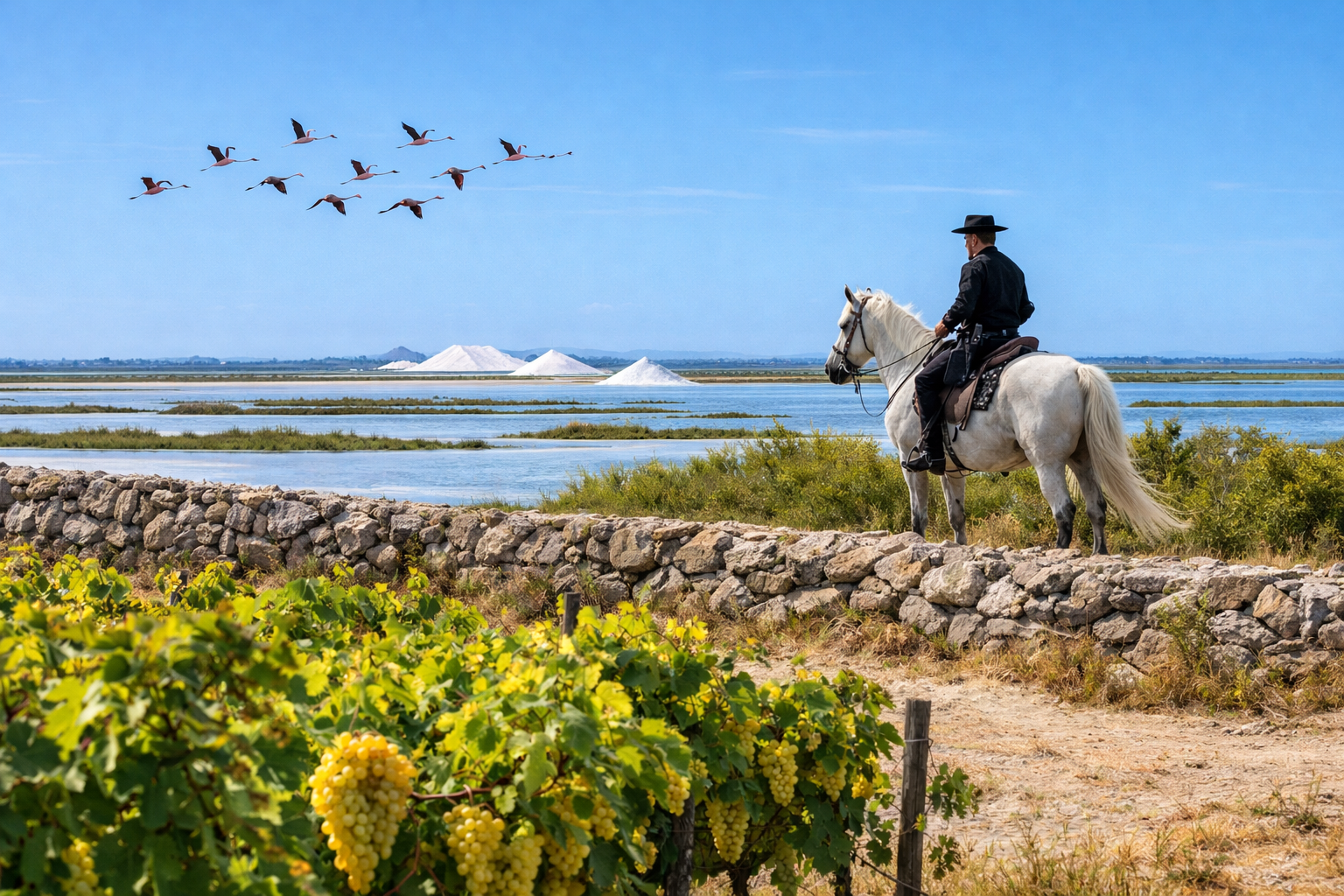
You wake to pale horses in the mist, the marshes reflecting a band of pink where flamingos feed. A gardian on his white horse checks the fences, the scent of brine on the air. In summer the cicadas begin at dawn, in winter the sky clears like an old enamel plate. Living here year-round is to accept seasonal extremes, to learn a lexicon of winds, tides and herds.
Entre soleil et sel
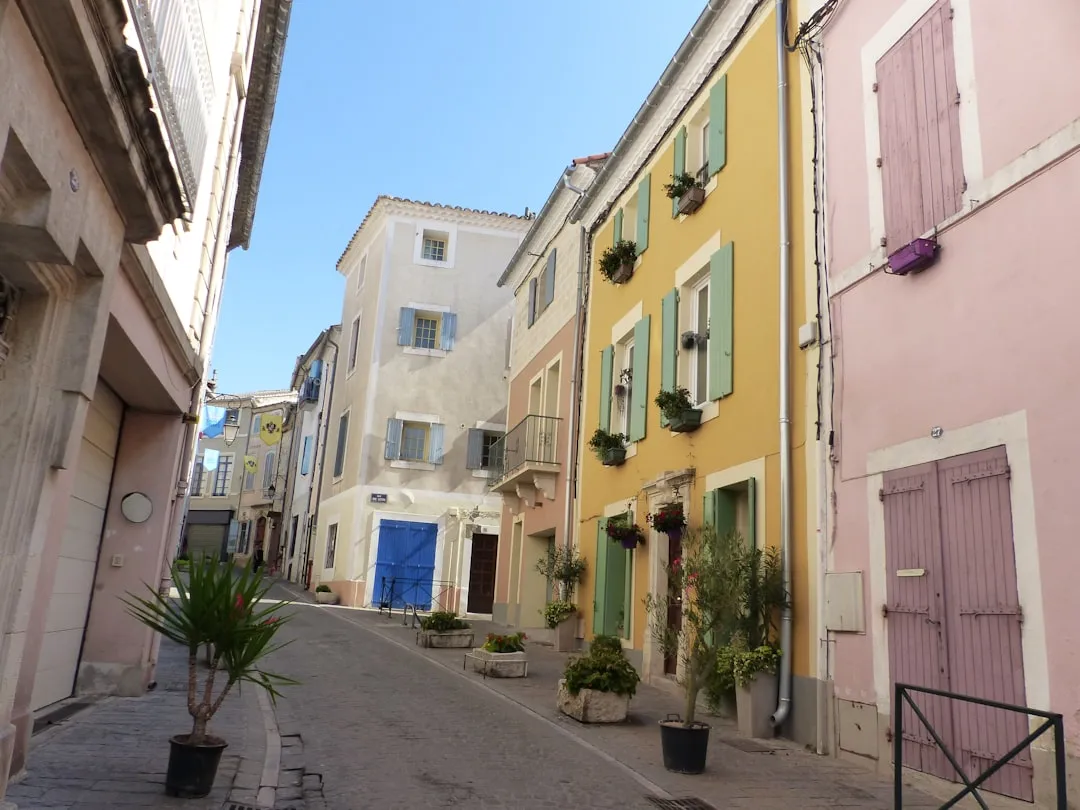
The landscape defines daily life. The Camargue is a triangular delta between the Grand Rhône and the Mediterranean, with salt flats, reed beds and rice paddies. Towns like Saintes-Maries-de-la-Mer, Salin-de-Giraud and Les Saintes lie alongside smaller hamlets and isolated mas (farmhouses).
Climate matters. Summers are hot and dry, winters mild but windy because of the Mistral. Flood risks exist in low-lying zones, historical works like the digues and canals manage water, and the Parc naturel régional de Camargue, created in 1970, balances farming and protection.
For residents this means practical adjustments. Houses are built with thick walls and shutters, many families use mosquito nets, and salt-tolerant gardening is common. The rhythm of agriculture and tourism sets the tempo: busy from May to September, quieter the rest of the year.
Les hommes et les bêtes
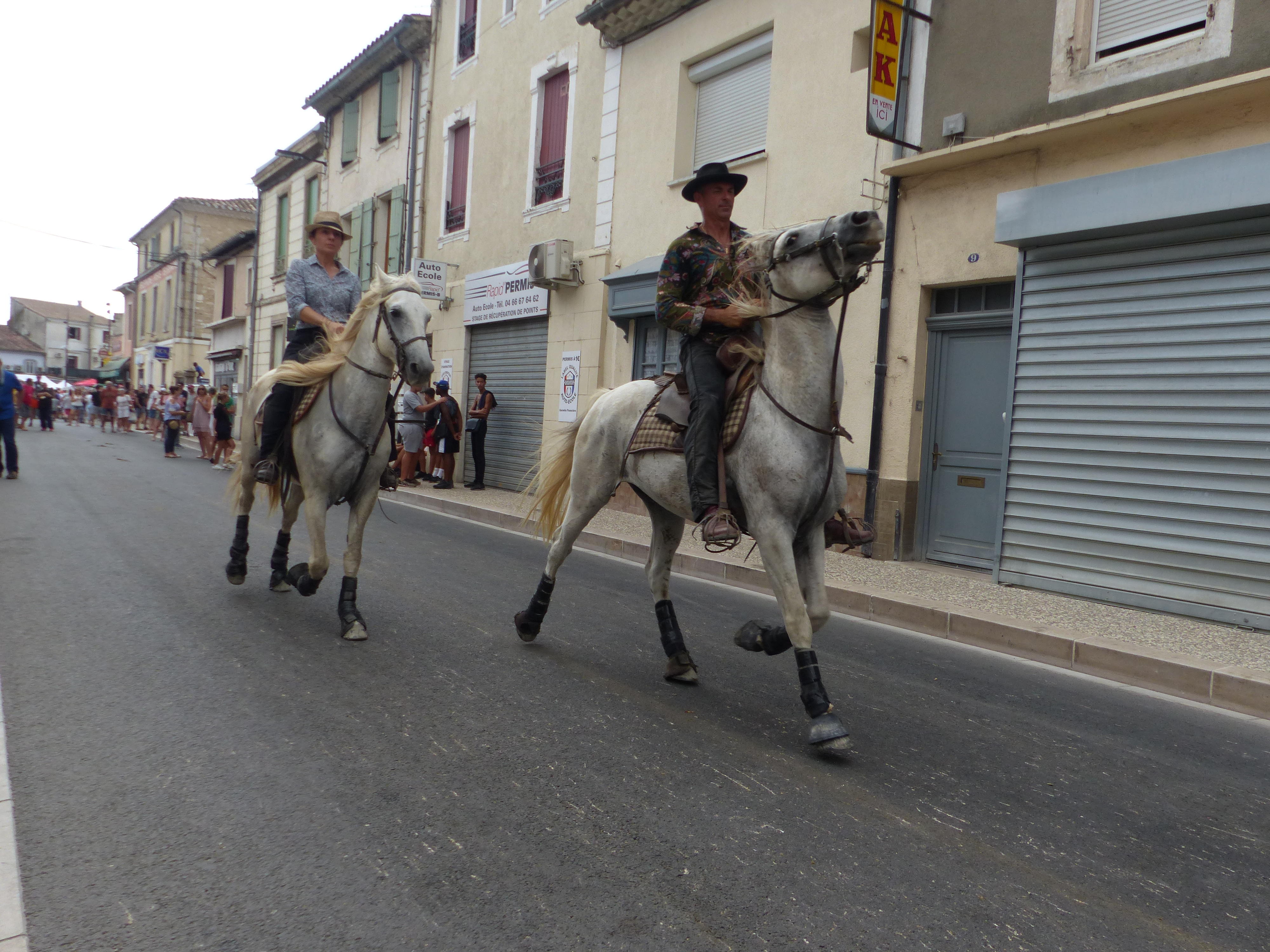
The gardians are the region's heartbeat. Mounted herders who manage manades (free-roaming herds) of Camargue horses and cattle, they continue traditions visible at local fêtes and abrivados. They work on estates such as the historic manades around Arles and Saintes-Maries.
The Camargue horse is small, resilient, often grey, bred for marsh work and now emblematic. The course camarguaise, a non-lethal bull game, contrasts with Spanish corrida, and attracts crowds to arenas in Arles and local villages. These practices shape community identity and seasonal employment.
Anecdotes anchor the culture. Many families can trace their manades back several generations. In Saintes-Maries, the Romani pilgrimage each May draws thousands, mixing religious ritual and local economy, while photographers and painters have long sought the light that makes the Camargue iconic.
Vivre au long cours
Why choose to live here permanently? For some, it is family roots and a vocation for land work. For others, the search for space and a different cadence. Remote workers increasingly arrive, enticed by wide horizons and lower property prices compared to coastal cities.
Yet practical constraints are real. Public transport is limited, so owning a car is often indispensable. Health services are centered in Arles and Nîmes. Broadband has improved since 2020 with better 4G and fibre rollouts in some communes, but coverage remains uneven in marsh areas.
Advice for newcomers: rent before buying, learn basic horse and cattle etiquette, invest in mosquito protection, and build ties with a local manade or association. Participate in village fêtes to understand rhythms and meet residents. Seasonal work in tourism, salt production or rice cultivation can be entry points.
Racines et enjeux
Conserving traditions while facing modern pressures is a constant tension. Land use debates involve salt production (Salins du Midi has operated here for decades), rice farmers, conservationists, and tourism operators. The regional park mediates, but choices about water use and development are complex.
Climate change adds uncertainty. Rising sea levels and changing rainfall patterns affect rice yields and wetland ecology. Local initiatives since the 2010s focus on adaptive management, combining traditional knowledge from gardians with scientific monitoring of bird populations and salinity levels.
Despite challenges, the Camargue remains a living territory. To live here all year is to join a community that navigates modernity without erasing its roots, to wake with the tides, to share bread at village tables, and to respect the animals that shape the land.