The Marquis de Baroncelli: the incredible story of the “Buffalo Bill” of the Camargue
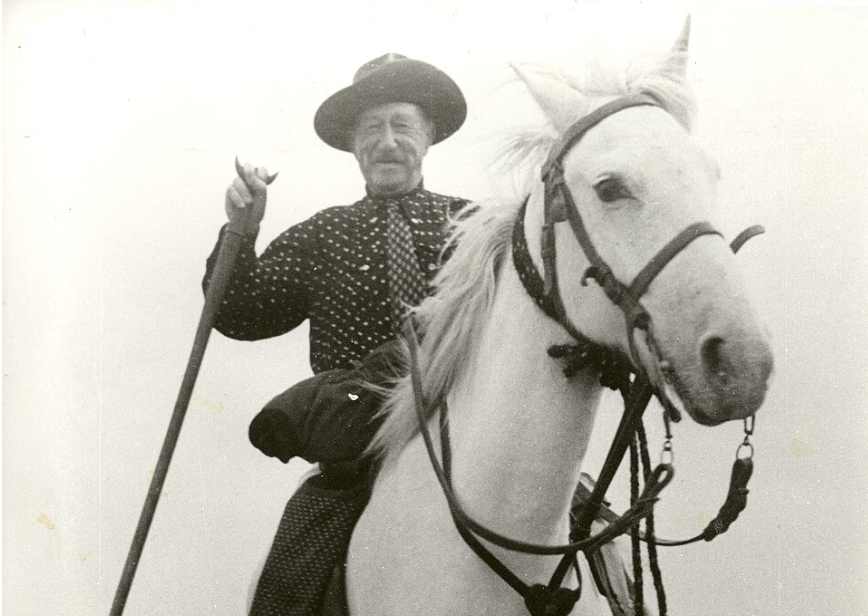
He roamed the marshes like a legend, the voice of a poet and the hands of a breeder. Folco de Baroncelli shaped the image we have today of the Camargue.
🚀 The essentials
- Key concept: Folco de Baroncelli embodies the Camargue cultural renaissance, between breeding, poetry and popular rites.
- Handy tip: Visit a herd and attend a local festival to see the herdsmen at work.
- Did you know: Baroncelli helped create the Nacioun gardiano to protect local traditions.
Born from Tuscan nobility and devoted to the land, Folco de Baroncelli was the living bridge between aristocracy and peasant culture. He personified a romantic and stubborn passion for the marshes, the bulls and the white horses that define the Camargue.
Through festivals, writings and daily rides, he promoted rites and clothing which are still at the heart of Camargue identity. Some contemporaries compared his theatrical presence to that of Buffalo Bill; the nickname reflects less a literal equivalence than a proximity in the making of the myth.
One man, two worlds
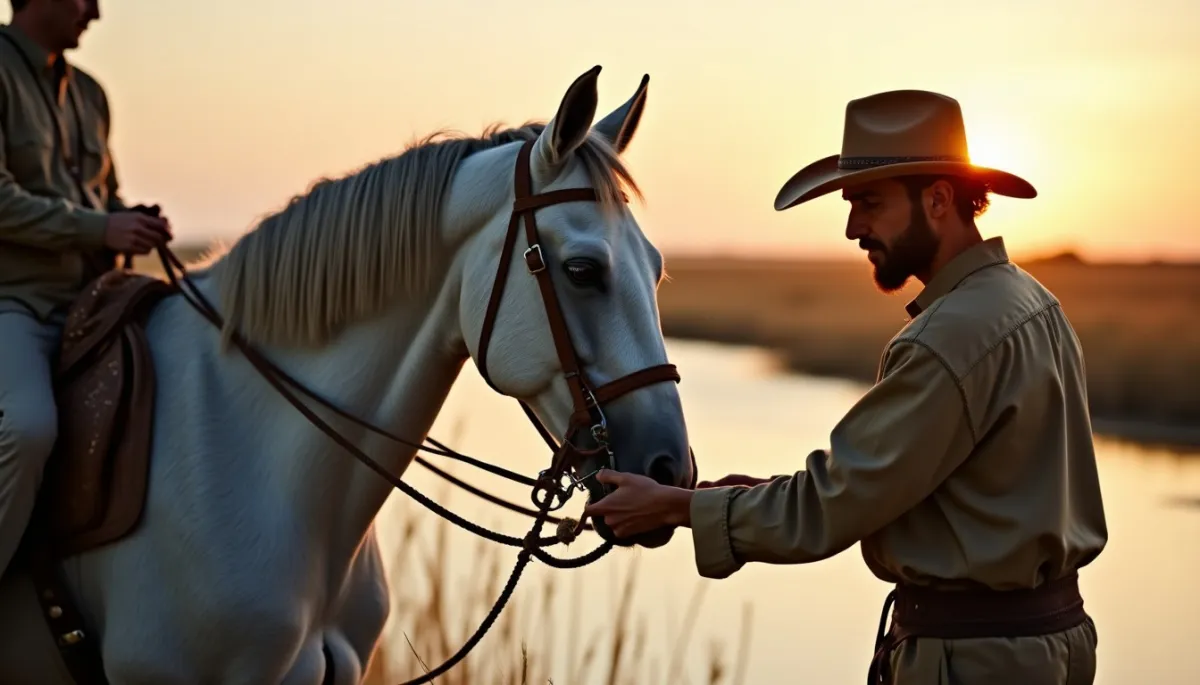
Marquis and caretaker at the same time, Baroncelli donned the uniform of the worker and took part in the tasks of the farmhouse. This dual position gave him credibility and freedom. It circulated between owners, poets and guardians, translating customs into symbolic gestures and stories.
He wrote in Provençal, organized public festivals and adopted marsh dress. His choices had political and cultural significance. By elevating common practices to the rank of symbols, he offered the Camargue a language of identity capable of resisting standardization.
The Nacioun gardiano and cultural action
At the beginning of the 20th century Baroncelli played a decisive role in the institutionalization of Camargue traditions. He participated in the creation of the Nacioun gardiano, an association dedicated to the preservation of the language, rites and the world of the herd. The objective was to give the herdsmen a framework to transmit their know-how.
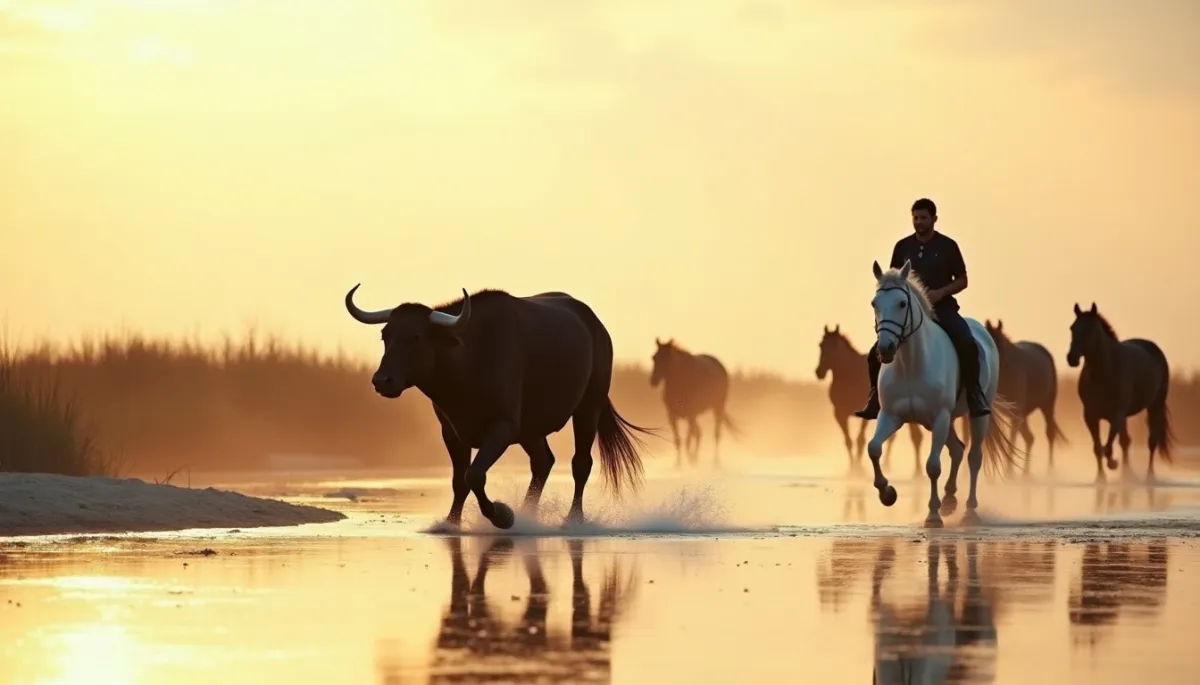
Beyond formal structures, he staged rituals. He promoted the Camargue race, a specific relationship with the bull different from Spanish bullfighting. He insisted on respect for the animal and on techniques born from working in the marshes. His approach mixed ethnography, theater and agrarian protection.
Why call him “Buffalo Bill”?
The comparison with Buffalo Bill highlights commonalities. The American showman sold an image of the frontier, composed of staged episodes and celebrity. Baroncelli did not market the Camargue in the same way, but he created a public image, mixing showmanship and authenticity to make the region desirable.
Calling Baroncelli the “Buffalo Bill of the Camargue” remains a metaphor. It underlines a similar capacity to forge a myth: each used the spectacle and the personal figure to create a legend that townspeople and tourists could recognize. But Baroncelli remained anchored in the daily life of the herd.
A living heritage: horses, festivals and memory
The Camargue still bears Baroncelli's fingerprints. The Camargue white horse, the herdsman's outfit and the seasonal festivals attract visitors and enthusiasts eager to see living practices rather than museum relics. The herds continue to raise bulls and horses following traditions that he helped to defend.
Local festivals, processions and gatherings of the Nacioun gardiano preserve an oral and material culture that is both fragile and resilient. For those who come to the Camargue, understanding the role of Baroncelli helps to read the landscape as a cultural palimpsest, where work, ritual and identity are revealed layer after layer.
Follow in his footsteps in the Camargue
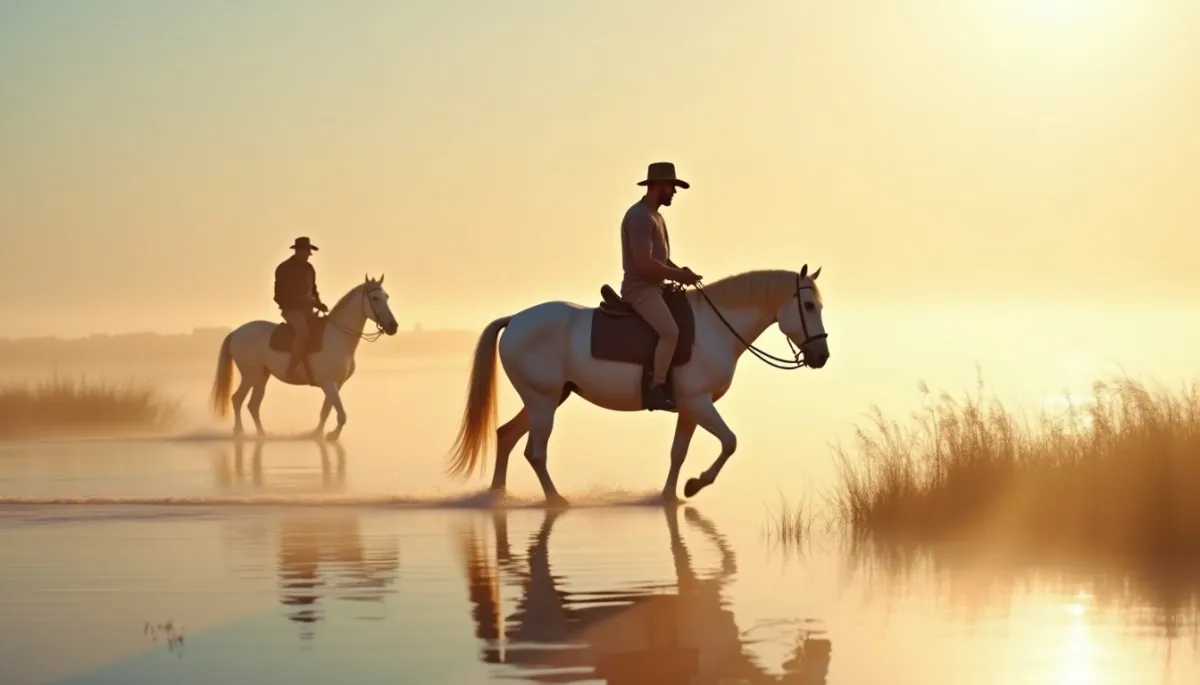
To feel the world of Baroncelli, leave the beaches and take the salt paths at daybreak. Visit a herd, watch the herdsmen rise in the mist and listen to local storytellers. Museums and events in Arles and neighboring villages often evoke his life and the movement he supported.
Respect the work pace of the herds. Curiosity and photography are welcome, intrusion is not. The most beautiful memories are born from a coffee shared with a herdsman, a village festival or the silent observation of a team at sunset.