Natural horsemanship: what modern cowboys learned from horses
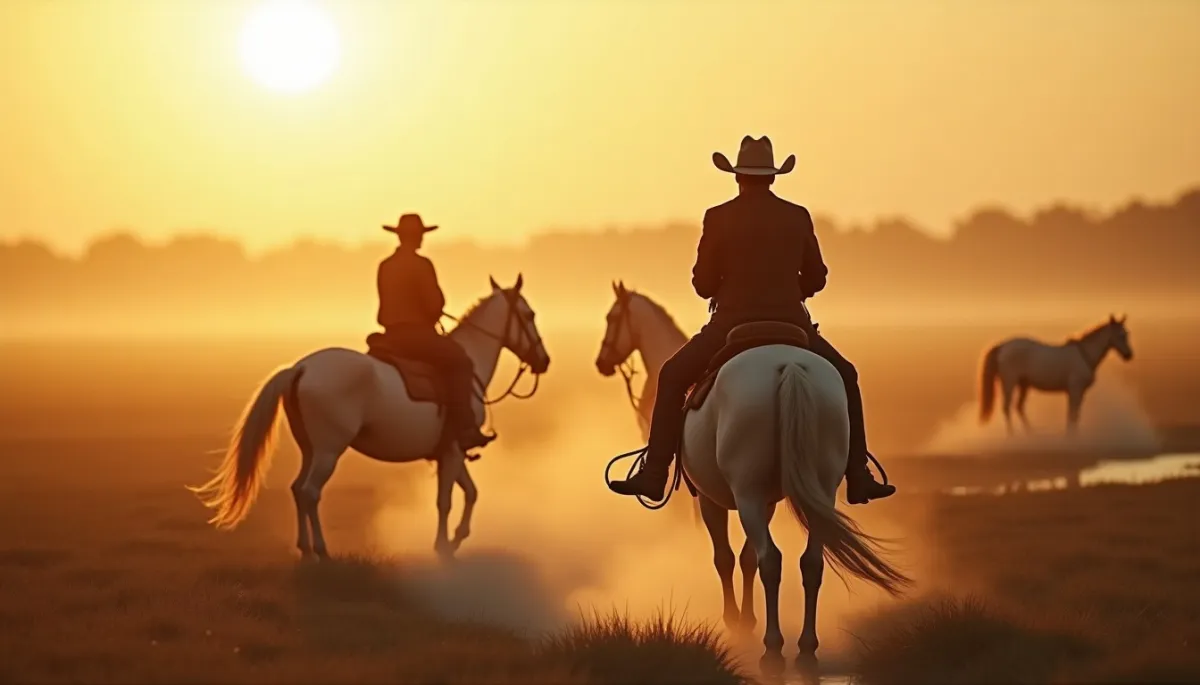
Across ranches from Montana to the Camargue, a quieter language took hold. The modern cowboy listens first, and rides second.
🚀 Key Takeaways
- Concept key : Natural horsemanship is communication based on herd behavior and pressure release.
- Practical tip : Watch a horse's eyes and neck, offer pressure then release to invite cooperation.
- Did you know : The term "horse whisperer" was popularized by a 1995 novel, but the techniques are older and rooted in working cowboy traditions.
Listen. The breath of a horse in the morning tells you more than a shout.
On a low ridge, light spills across a herd. A young cowboy moves without haste, palms soft, reins loose. A mare lifts her head, studies him, then returns to grazing. The moment is quiet, but it contains a pact: understanding before force. That scene, repeated on ranges from Wyoming to the wetlands of the Camargue, illustrates the turn toward horsemanship that respects equine nature.
Onde d'influence
Natural horsemanship gathered momentum in the late 20th century, as riders grew skeptical of harsh methods. Names like Tom Dorrance (1919-2003), Ray Hunt (1929-2009), Monty Roberts (born 1935), Buck Brannaman (born 1951) and Pat Parelli (born 1954) became reference points. Their work emphasized listening to horses and shaping behavior through empathy.
Monty Roberts brought public attention to "Join-Up"—a method observed in mustangs where a horse seeks connection with a human by following calm body language. His book, The Man Who Listens to Horses, and public demonstrations in the 1990s made the idea accessible to many riders.
Buck Brannaman, famously documented in the 2011 film Buck, learned from Tom Dorrance and translated those lessons into clinics across North America. Dorrance himself distilled decades of ranch experience into subtle cues that favored timing and feel over force.
Racines du lien
Where did this change come from? Partly from the failures of dominance-based training. Horses trained by pain or intimidation often masked fear with compliance. Riders began to notice that compliance did not equal trust, and that frightened horses were unpredictable in the arena or on the trail.
Practical circumstances also drove the shift. Working cowboys needed horses that could think under stress, calm companions for long days in difficult terrain. Observing herd dynamics offered blueprints: lead mare signals, grooming rituals, subtle postures that regulate proximity and movement.
In the Camargue, gardians have long known the value of calm, practical handling. The local Camargue horse, small and hardy, responds to consistent signals. That regional knowledge converged with the broader natural horsemanship movement, creating a dialogue between American western traditions and Mediterranean marshland practices.
Chemins partagés
Yet the movement is not monolithic. Commercialization led to divergent branches, from experiential clinics to product-driven franchises. Pat Parelli, for instance, turned methods into a branded program that many adopted, while critics warned against oversimplified recipes.
Also, some trainers still favor traditional muscle-based correction for specific issues. The debate centers on ethics and effectiveness, not on a simple good or bad. Many modern cowboys blend approaches, adapting tools to horse temperaments and task demands.
Important milestones anchor the story. The novel The Horse Whisperer by Nicholas Evans, published in 1995, and its 1998 film adaptation, brought a romanticized vision to a broad audience, while the practical, often gritty work of Dorrance, Hunt and Brannaman continued on ranches and in clinics.
Signe et pratique
For riders who want to apply these lessons, start with observation. Learn to read the horse's eyes, neck, tail and breathing. These are the primary signals by which horses communicate.
Understand pressure and release (apply a cue, then immediately remove it when the horse responds). This is the cornerstone: the horse learns that yielding brings relief, and relief becomes the reward.
Be consistent, patient and humble. Horsemanship is a long conversation, not a checklist. On a Camargue manade or a Montana ranch, the best riders are those who keep listening.
Dernières pistes
Natural horsemanship reshaped modern cowboy culture by insisting that horses are partners, not machines. The movement is rooted in specific people, named techniques, and age-old observation of herd life.
Respect for tradition does not mean rejecting innovation. Rather, the most durable methods are those that marry regional knowledge with universal equine behavior.
Whether you ride in the marshes of the Camargue or the open plains, remember this: the horse offers a language. The modern cowboy learned to answer.