Raço di Biòu bull: guardian of the delta's biodiversity
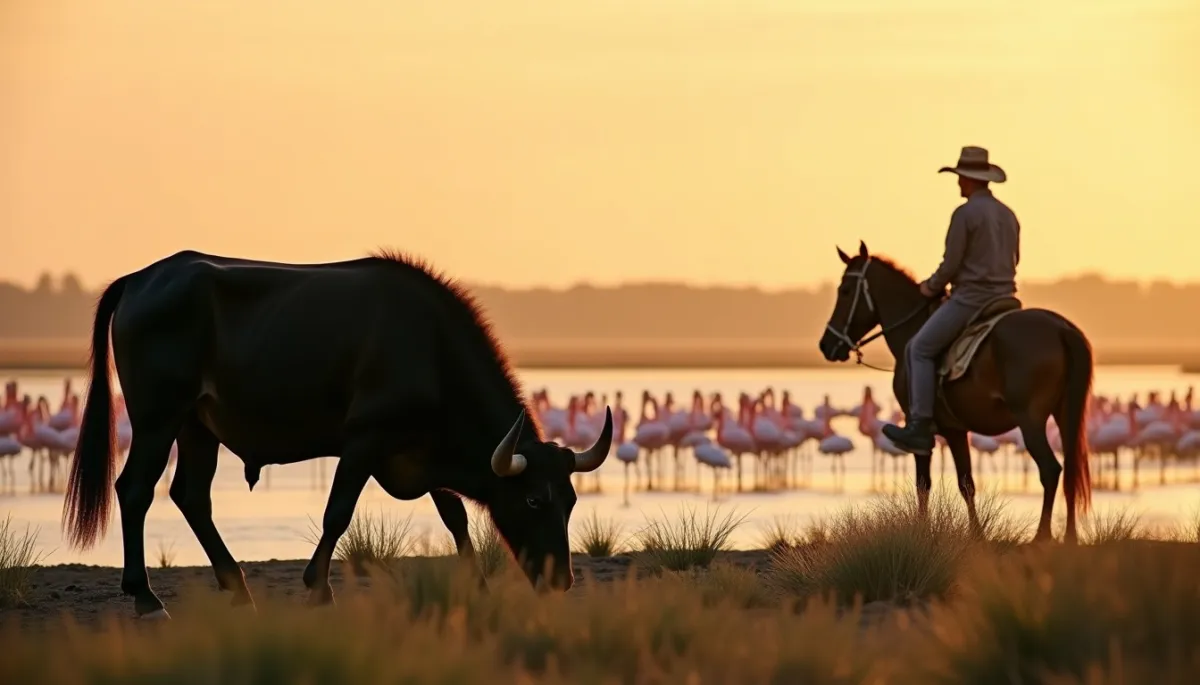
The Raço di Biòu is more than a breed. In the Camargue delta, this black bull shapes landscapes, cultures and wildlife every season.
🚀 Key Takeaways
- Core concept : The Raço di Biòu helps maintain open wetland habitats through extensive grazing and traditional manade management.
- Practical tip : Visit a manade near Saintes-Maries-de-la-Mer in spring, and respect distances; ask a gardian about grazing rotations.
- Did you know : The Camargue hosted one of France's first nature reserves in 1927; the bulls have long been allies of wetlands and birdlife.
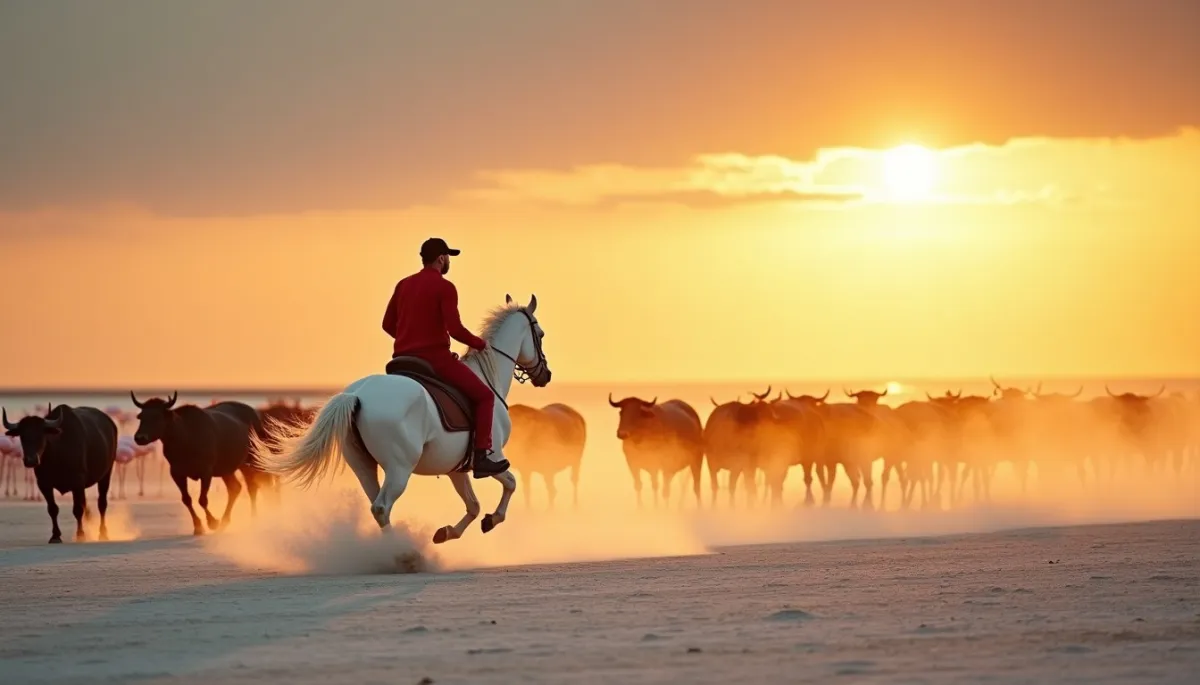
Black silhouettes in the morning light. The air is salt, the sky enormous, and a gardian guides a small herd along the reed edge.
From the saddle, you hear the clop of horses and the soft lowing of Raço di Biòu bulls as they push through marsh grass. Flamingos lift and wheel in a pink cloud, startled but not lost. This is the delta: a stitched landscape of canals, salt pans and pastures where the Camargue bull writes its presence into the terrain.
Herbe et marais
The Raço di Biòu is an ancient local cattle, adapted to saline soils and seasonal floods. By grazing, trampling and browsing, bulls and cows keep reed beds from taking over lagoons and maintain mosaic habitats used by waders and passerines.
This ecological function is tangible. In spring, grazed pastures near the Étang de Vaccarès host higher densities of meadow birds than ungrazed reed belts. The animals disperse seeds on their coats and in dung, creating microhabitats where wildflowers can establish.
The presence of manades, the free-ranging herds run by gardians, is therefore not only cultural, it is ecological. Since the creation of the Réserve naturelle nationale de Camargue in 1927 and the Parc naturel régional de Camargue in 1970, managers have acknowledged extensive cattle grazing as a tool to preserve wetland biodiversity.
Héritiers à cheval
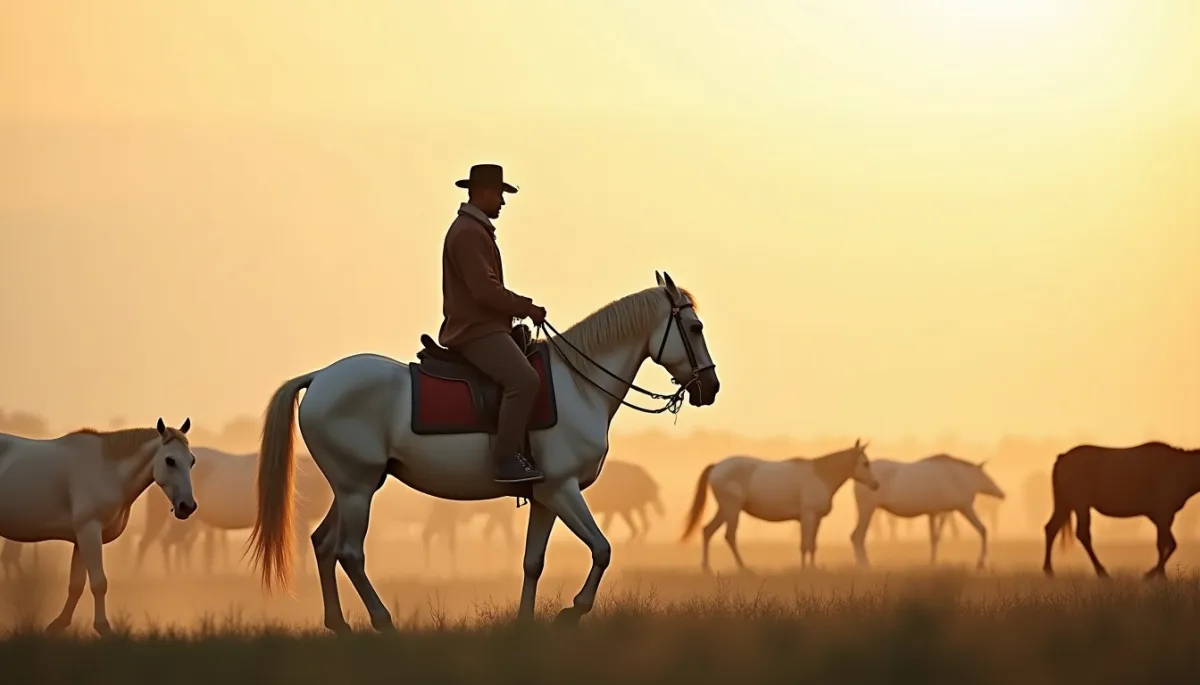
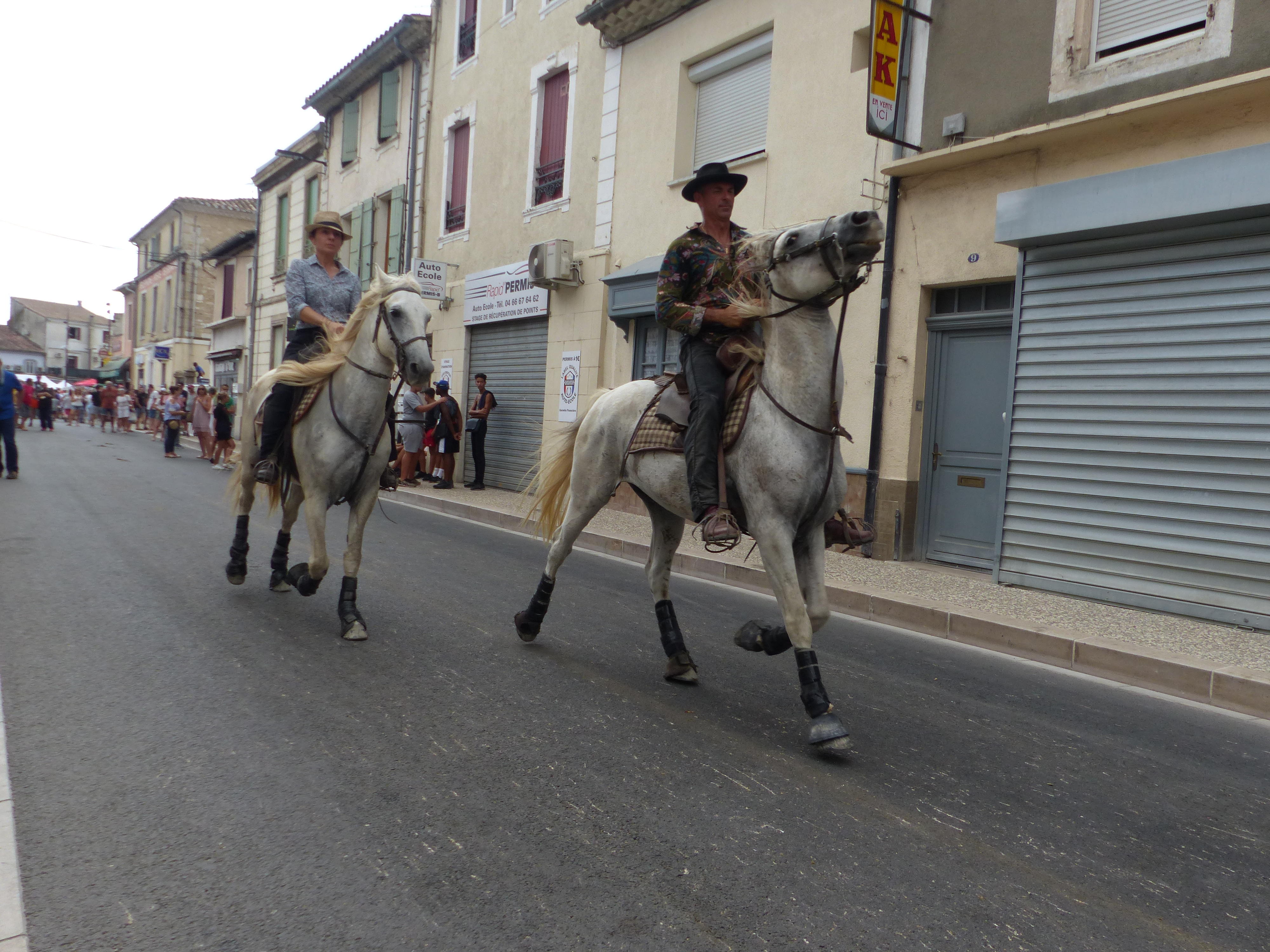
Gardians are the Camargue cowboys. Mounted on small, durable Camargue horses, they tend manades, select bulls for temperament and run the old seasonal rounds. The manade system is a transmission of knowledge, often within families, where livestock, land and local festivals are linked.
The Raço di Biòu is also the star of the course camarguaise, the regional bull game. Unlike Spanish corrida, it is bloodless. Raseteurs, the agile players, attempt to pluck a ribbon or rosette (la cocarde) from the bull's head. The spectacle codifies respect for the animal and for the man's skill on foot.
These traditions reinforce conservation. By giving economic and symbolic value to keeping native cattle in the landscape, they encourage maintaining extensive grazing rather than converting marshes to intensive agriculture or housing.
Menaces et enjeux
Yet contradictions exist. Tourism brings income and interest, but also pressure: roads, boating and uncontrolled access fragment habitats. Intensification of neighboring agriculture threatens water quality through runoff, and climate change increases salt intrusion and summer droughts.
Some manades have reduced herd sizes, or altered grazing rotations, weakening the ecological pressure that once maintained open habitats. At the same time, demand for spectacle and meat drives marketing choices. Finding balance is the community's challenge.
Conservation pathways are active. Co-management projects between manadiers, the Parc and ornithologists promote grazing schedules that favor nesting birds, and certification initiatives encourage responsible visits. Practical advice for visitors: don't chase or feed animals, keep dogs on a leash, ask before entering fields, and favor guided manade tours that explain seasonal rhythms.
In the Camargue, the Raço di Biòu remains a sentinel. Its bulk alters marsh edges, its behavior shapes reed dynamics, and its cultural role secures incentives to keep pastures open. To protect the delta's biodiversity is to protect the bulls, the gardians and the slow work of grazing over seasons.