Rawhide art: The vaqueros' braided secrets
In the warm dust of ranchos and the hush before a roundup, rawhide sings under skilled hands. This is the story of vaqueros, their braided reatas, and the living craft that still ties past and present.
🚀 Key Takeaways
- Concept key : Rawhide braiding (reata) is an untanned hide braided wet, then dried to form strong ropes used for lariats, reins and tack.
- Practical tip : Soak rawhide several hours, braid tight, finish with beeswax; keep dry after curing to avoid softening.
- Did you know : Vaquero techniques reached American cowboys during the California Gold Rush (1848-1855) and evolved into the buckaroo tradition.
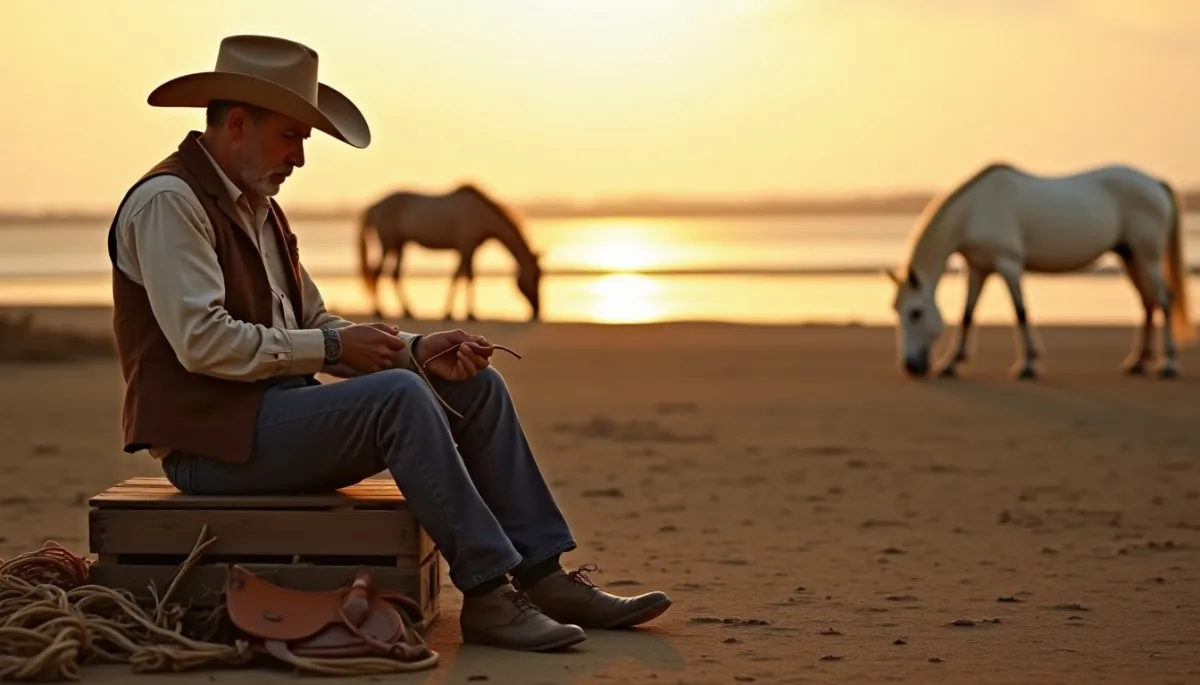
Hands that remember every knot. I see a vaquero seated on a weathered wooden crate, the sun low, coiled rawhide on his knees, fingers moving like a storyteller.
cordes vivantes
Rawhide means what it says, the hide not fully tanned, prepared to take shape. When wet it is pliable, and when dried it becomes glass-hard and remarkably strong, ideal for lariats and tack.
The vaqueros (Spanish for cattle herders, rooted in the word vaca) developed a vocabulary of braids: simple flat plaits, round six-strand ropes, and complex decorative braids used on bosals, reins and reatas. A correctly made reata resists abrasion and absorbs shock when thrown around a horn.
These objects are not only tools. Reatas and mecates carry identity: the thickness, the color, the knotting pattern can announce a rider's region, skill, or family tradition. Museums such as the Autry Museum in Los Angeles and the National Cowboy & Western Heritage Museum in Oklahoma City preserve notable examples.
origines et transmission
The craft traces back to Spanish and Mexican ranching, where large haciendas and ranchos from the 16th to 19th centuries required durable gear. By the 18th and 19th centuries, vaqueros had perfected techniques adapted to local cattle and terrain.
During the California Gold Rush of 1848-1855, American settlers adopted vaquero gear and vocabulary. The word vaquero morphed into cowboy and buckaroo in different regions. Buffalo Bill's Wild West shows, from 1883 onward, helped popularize lariat tricks and roping as spectacle.
Practical reasons explain continuity. Rawhide is abundant, inexpensive, and repairable in the field. Its craft passed from father to apprentice, often without written patterns, relying on touch and memory rather than drawings.
entre tradition et renouveau
Today, artisan braiders combine old patterns with contemporary uses: decorative cinches, modern mecates for dressage, and bespoke reins for collectors. Workshops and ranch schools in California, New Mexico and northern Mexico teach braiding to new generations.
Yet there are tensions. Rawhide is sensitive to moisture, and modern wet climates and synthetic alternatives challenge its everyday use. Conservationists and curators debate preservation techniques for historic pieces, since humidity and insect damage accelerate deterioration.
If you want to try, begin with a small flat braid. Supplies: thin rawhide laces (3 to 6 mm), a bowl of warm water, beeswax, and patience. Soak the strips until supple, keep them damp while braiding, finish by rubbing beeswax to seal. Never leave a dried rawhide out in rain, it will soften and weaken.
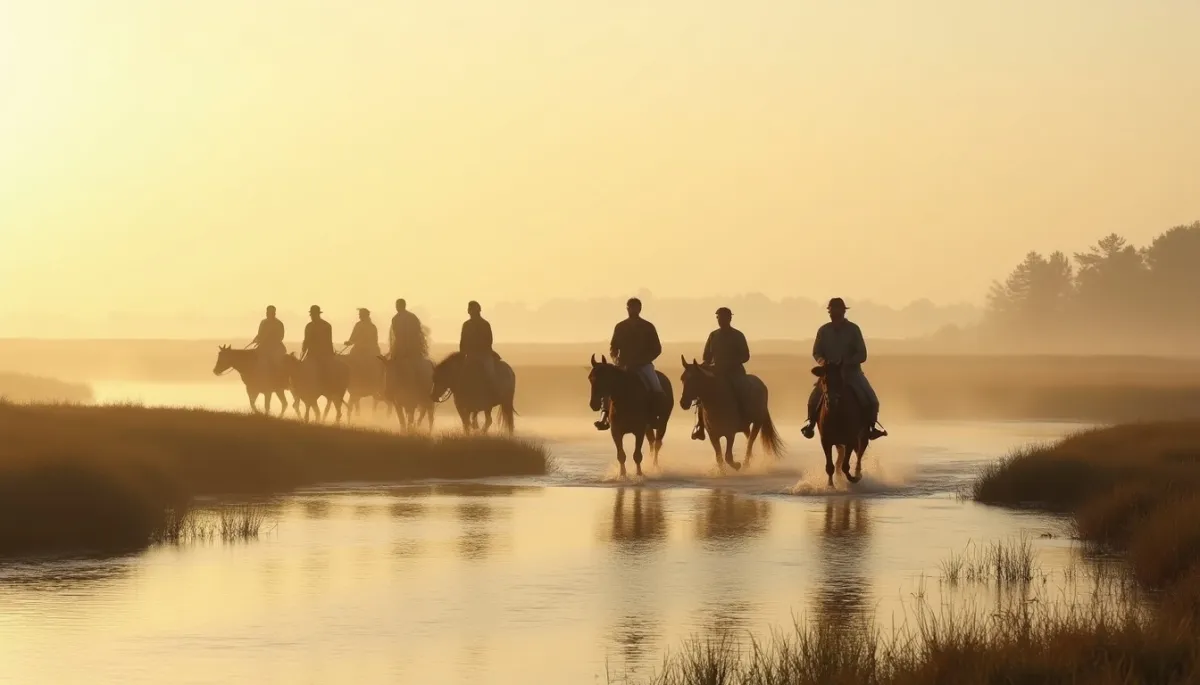
In the Camargue, the gardians work horses under a different light, but the bond to animal, rope, and land is close. Comparing a vaquero's reata and a gardian's lasso reveals a shared language of practicality, rhythm and respect for materials.
Rawhide braiding is a tangible link to a living past, a craft where history is measured in knots and the slow drying of leather, and where every loop tells a story.