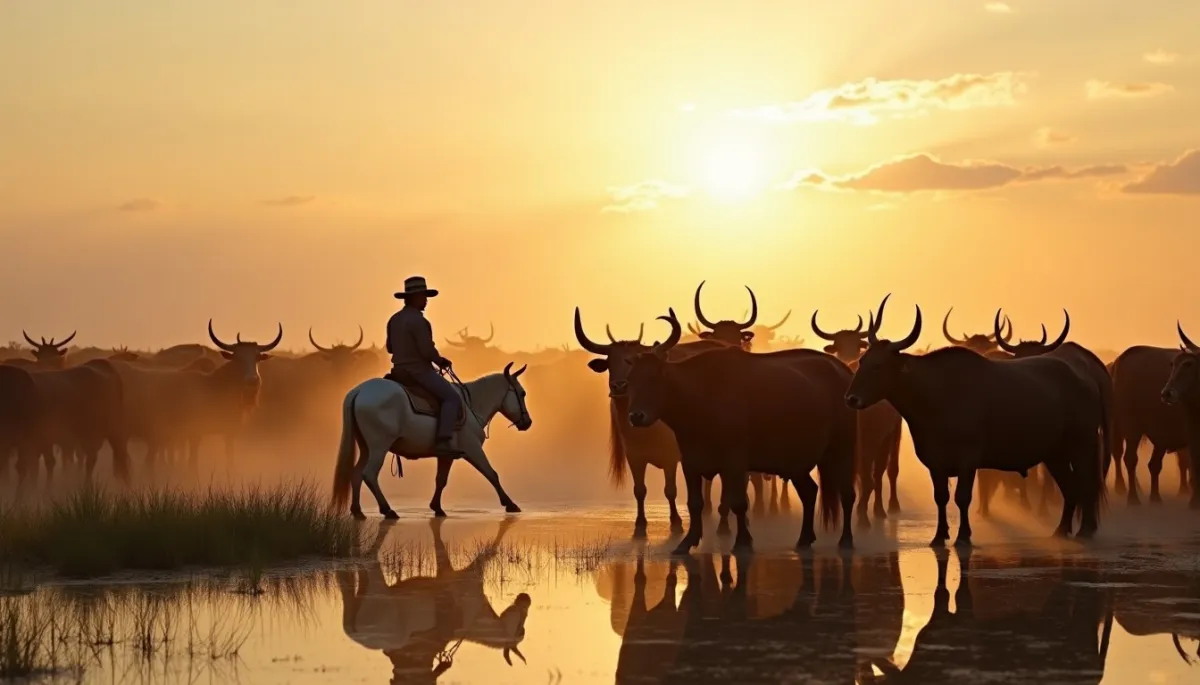
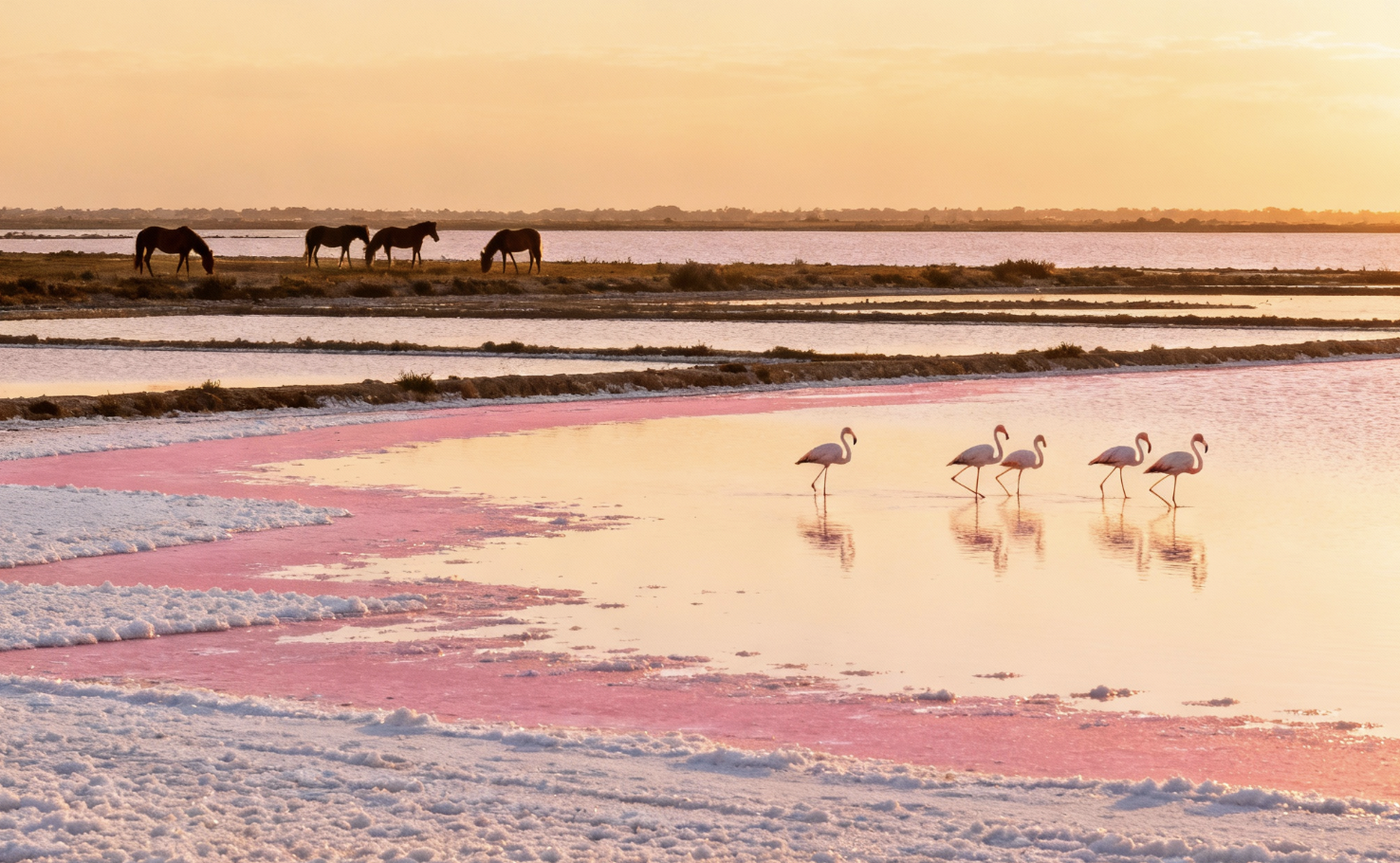
Salt marsh flora: salicornia and obione, the wild buffet of Camargue horses
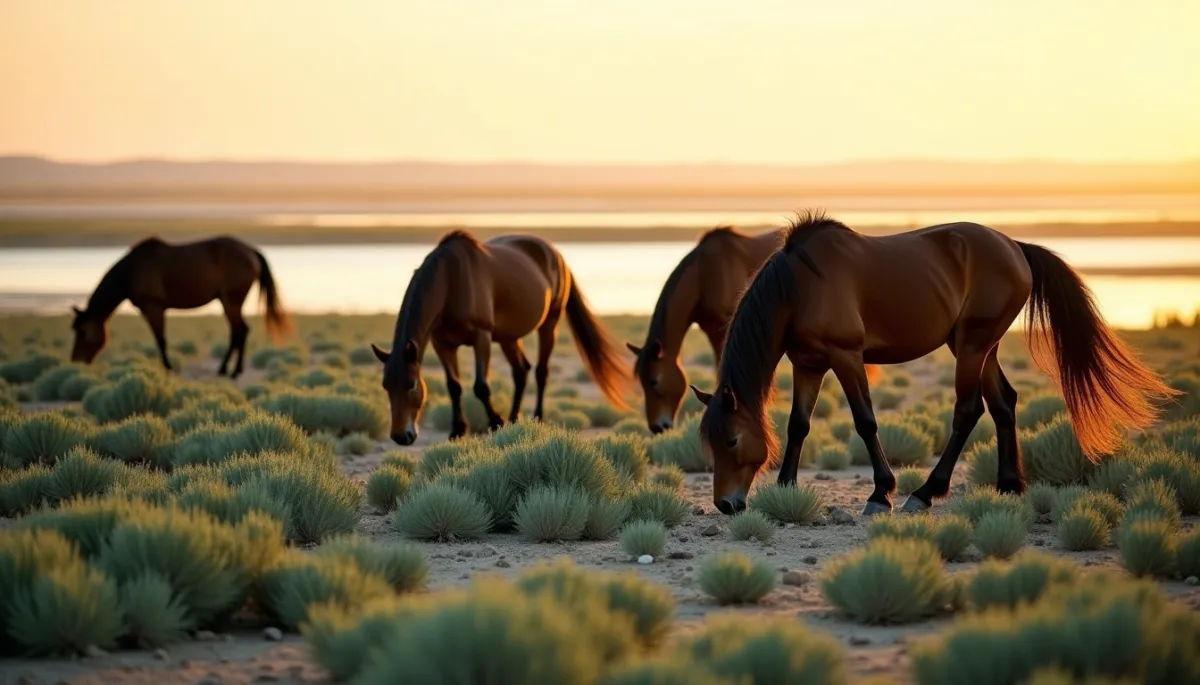
In the Camargue, the salt marsh is a living pantry for horses and gardians. Salicornia and obione color the lagoons and sustain a landscape of traditions.
🚀 Key Takeaways
- Key concept: Salicornia (samphire) and obione (Atriplex) are halophytes, plants that tolerate and concentrate salt, essential to the Camargue marsh ecosystem.
- Practical tip: Best time to observe tender salicornia is late spring to early summer; leave large stands intact, observe from a distance.
- Did you know: Folco de Baroncelli helped popularize the gardian tradition that shaped how Camargue horses graze these saline plains.
La lumière frappe la vase, les épaulettes des chevaux brillent de sel. On entend le bruit des sabots et le cri lointain des oiseaux marshaux.
salted buffet
Along the Vaccarès lagoon and the peripheral sansouires, low succulent mats of Salicornia and dense clusters of obione (Atriplex portulacoides) form a patchwork of edible greens. Salicornia europaea, known as samphire, appears in spring as bright green shoots and turns crimson in autumn, a spectacle that locals and photographers prize.
These plants are halophytes, adapted to live where freshwater meets the sea. Their tissues retain salt, which influences both taste and physiology. For horses and bulls, grazing these species provides mineral supplements their pasture might lack, especially sodium and certain trace elements.
Historically, salicornia had industrial uses. Through the 18th and 19th centuries, coastal communities harvested glasswort ashes to extract soda for glass and soap making. Today, culinary chefs prize young samphire in salads and as a garnish, a tiny echo of older traditions.
roots of flavour
Why do Camargue horses seek the marsh? The answer lies in habitat and history. Gardians, the mounted herders of the Camargue, traditionally let semi-feral horses graze marsh edges. Folco de Baroncelli-Javon, at the turn of the 20th century, helped codify the manade system that conserved both horses and grazing lands.
Obione, commonly called sea orache, offers a salty, tangy leaf. Atriplex portulacoides stabilizes muddy flats with a network of roots, trapping sediment and creating microhabitats. As tides flush nutrients, these plants convert them into biomass accessible to grazers.
Anecdotes from local manadiers tell of foals learning the palette of the marsh by following older mares. They sample tender salicornia shoots, then progress to tougher obione stands. This learning is part of behavioral transmission within herds, observed by ethnographers and naturalists since the 1950s.
gentle paradoxes
The benefits for horses come with constraints. Halophytes concentrate salts, which can be hard on unadapted animals. Camargue horses are hardy, but managers monitor water and supplementary feed, especially in dry summers when salinity rises.
Conservation tensions also appear. Salt extraction, tourism pressure near Saintes-Maries-de-la-Mer, and rising sea levels threaten the delicate salt marsh balance. The Parc naturel régional de Camargue, created in 1970, coordinates protection and working traditions, but climate change remains a long term challenge.
Practical advice for visitors: observe grazing scenes at dawn or late afternoon, photograph the red autumn Salicornia, do not trample without permission, and ask a local manadier about the manade life. Respecting the plants preserves both the landscape and the living buffet that sustains Camargue horses.