Sleeping in a gardian cabin: the pioneers' delta dwelling
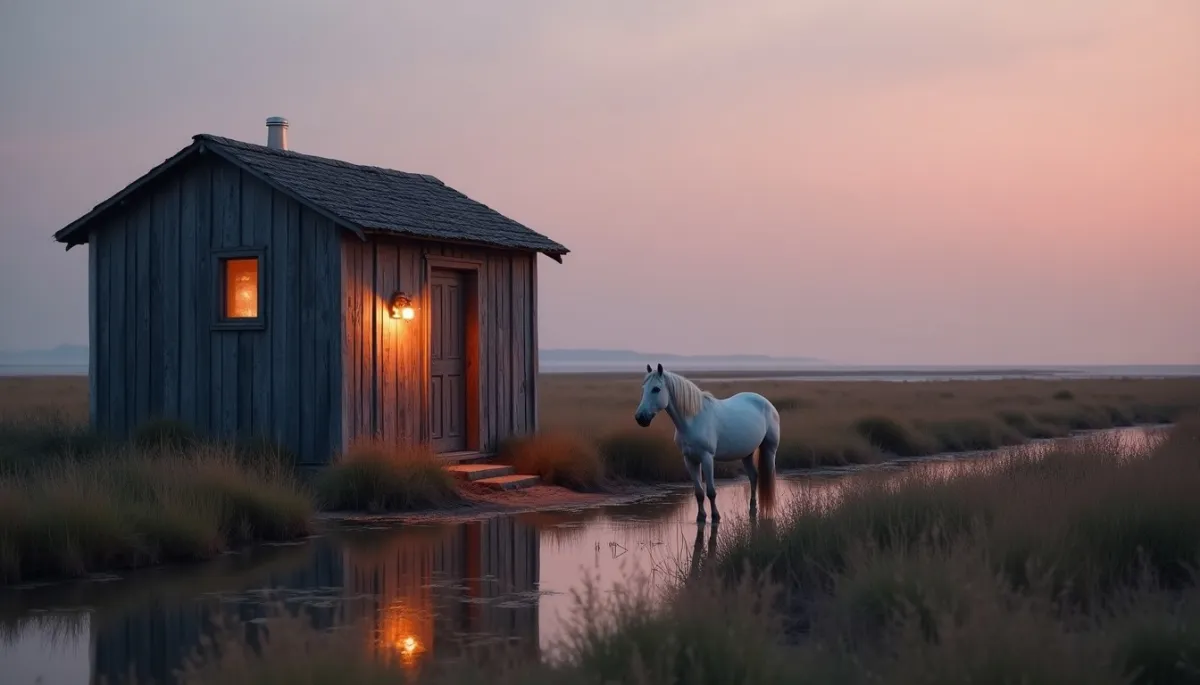
Between salt flats and reed beds, small cabins cling to the edges of the Camargue. These are the cabanes de gardian, once the shelters of the delta's horsemen, now invitations to sleep in a landscape of wind and water.
🚀 Key Takeaways
- Key concept : Cabanes de gardian are simple marsh cabins used by Camargue herders (gardians) to live near their manades.
- Practical tip : Bring a warm sleeping bag, insect repellent and waterproof boots for an authentic stay.
- Did you know : Folco de Baroncelli (1869-1943) helped popularize Camargue traditions and created the Nacioun Gardiano in 1909.
Close your eyes, and you hear the wind over the salt, a white horse breathing nearby.
Night falls low and pink behind the marshes, and a low wooden hut, half-hidden by reeds, glows by the oil lamp. Inside, the air smells of hay, smoked meat and wet wood. A gardian's saddle rests against the wall, horseshoes hang above a narrow bed, and the rhythm of distant bells marks the night watch of the manade.
Horses and households
The cabane de gardian is above all a practical shelter. Built close to the pastures where the manade grazes, it allowed the gardian to live, work and sleep without losing sight of his herd. These cabins were common from the 19th century, when delta farming intensified, and they remain strong symbols of Camargue identity.
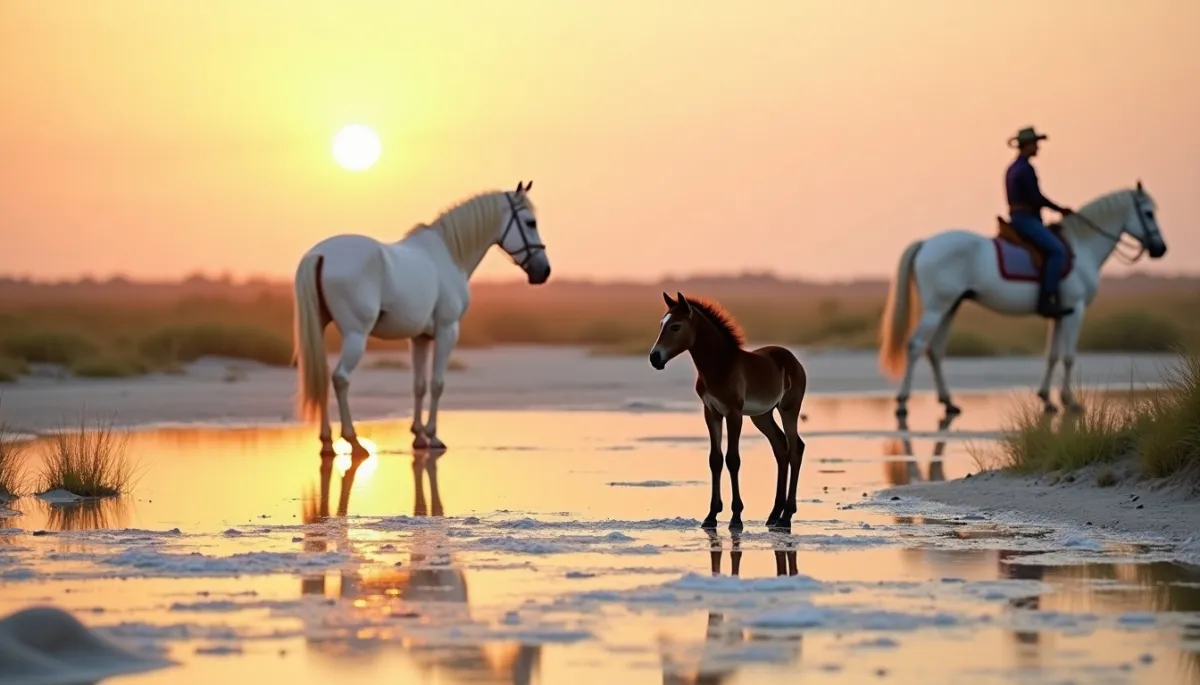
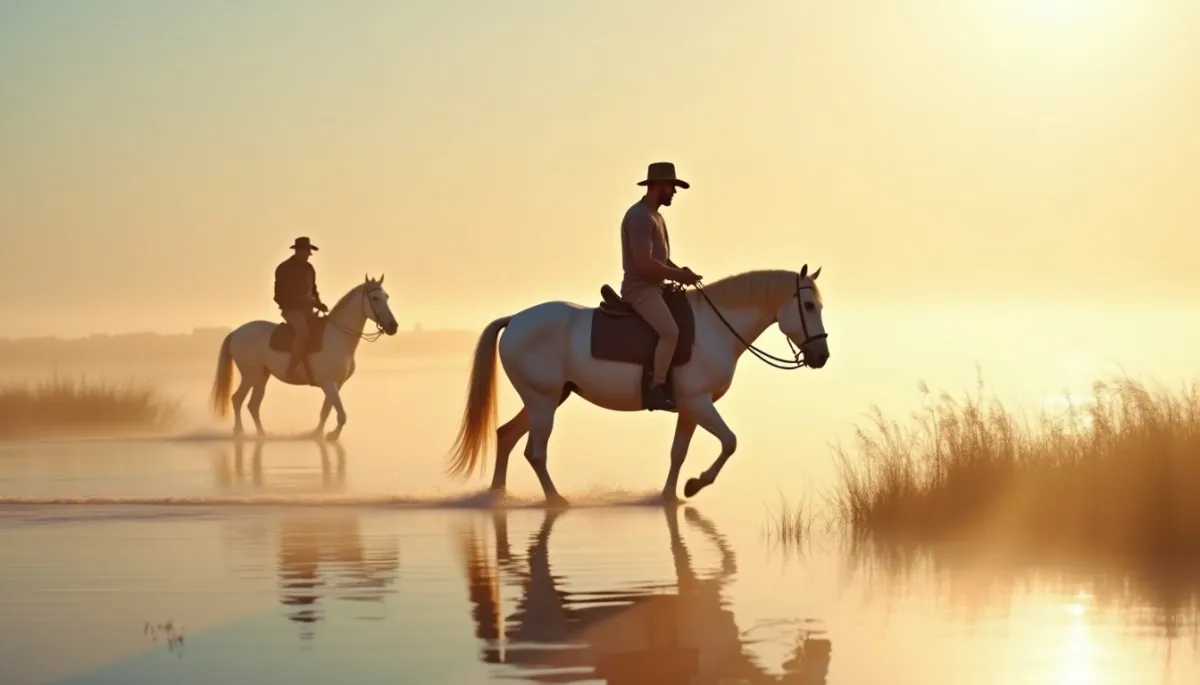
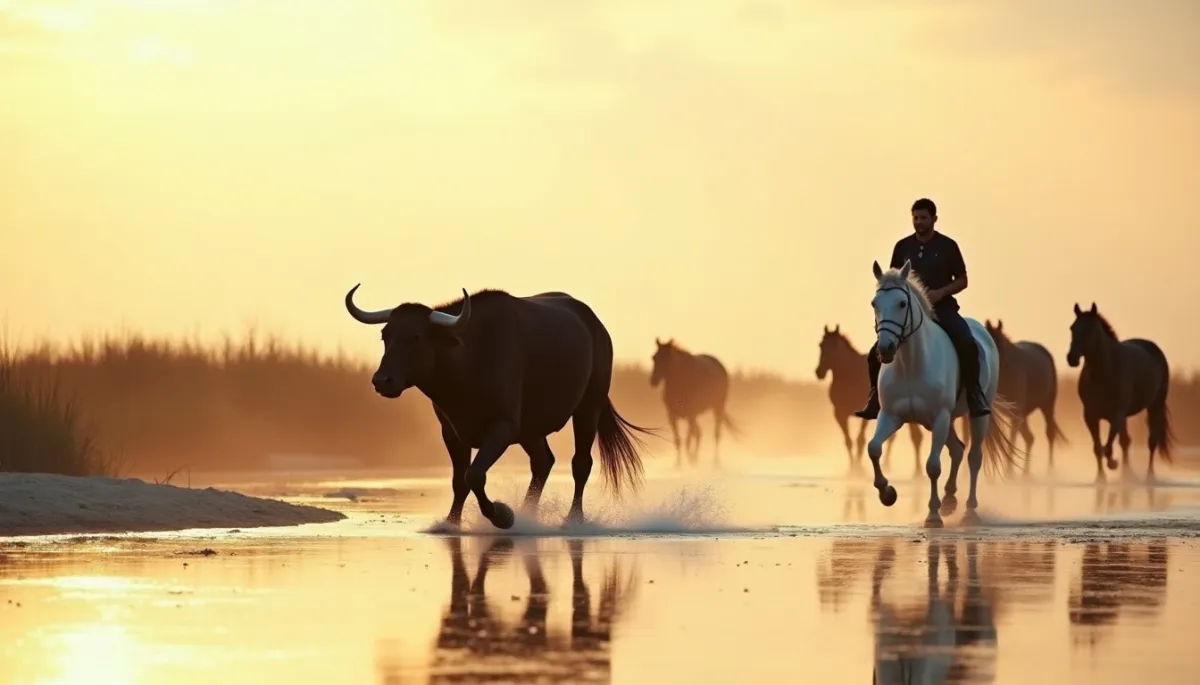
Gardians are the local mounted herders, guardians of the white Camargue horse and of cattle used for the course camarguaise. Their social role moved into cultural prominence in the early 20th century, notably through figures like Folco de Baroncelli (1869-1943), who in 1909 founded the Nacioun Gardiano to defend local customs and language.
Architecturally, cabanes vary. Some are simple wooden frames with reed walls and thatched or tiled roofs. Others are small stone or brick constructions raised slightly on foundations to fight humidity. Inside, storage is minimal, a loft or bench bed serves as sleeping space, and every object has a use tied to the rhythm of pastoral life.
Salt, wind and survival
Living in a cabane is to live at the mercy of the elements. The Camargue is a dynamic delta, its marshes shaped by tides, storms and the mistral wind. Cabanes were designed for resilience rather than comfort. Low eaves reduce wind pressure, elevated floors limit damp, and reed walls breathe to moderate humidity.
These shelters were also places of work. A gardian might tack up at dawn, move the herd through saline flats, repair fences at noon, then return for an evening meal cooked on a simple hearth. The cabane is therefore a combined kitchen, workshop and bedroom, the heart of a seasonal, mobile way of life.
The region's protection evolved over the 20th century. The Parc naturel régional de Camargue was created in 1970, which helped safeguard landscapes and traditions but also pushed for tourism that sometimes clashes with authentic practice. Cabanes have become both heritage objects and tourist experiences.
Courts and rituals
Camargue culture threads through festivals and rituals. The pilgrimage of Les Saintes-Maries-de-la-Mer in May gathers gardians and horsemen, who parade their herds and don traditional outfits. The cabane is part of that ritual universe: it stores the gear, the flags, small altars or talismans kept by families for generations.
Anecdotes are plentiful. Old gardians will tell you of nights when a stray bull returned and nosed open the door, or of storms that flooded low-lying cabins and forced a retreat to the mas, the larger farmhouse. These stories, told around shared meals of riz au lait or gardiane de taureau (a beef stew), keep memory alive.
Today, some manades open a cabane to visitors for a night, offering an intimate way to experience the delta. Hosts usually insist on basic rules: respect the rhythm of the herd, close gates, avoid open fires and ask before photographing people at work. Staying overnight is not glamour, it is immersion.
Practical advice
If you plan to sleep in a cabane, accept simplicity. Bring a high-quality sleeping bag rated for cool nights, thermal layers, headlamp, waterproof footwear and insect repellent. Food is often shared; offer a small gift, like coffee or dried goods, to thank your hosts.
Ask about access and tides. Some cabins sit on tracks that need a 4x4 or a firm vehicle. Respect private property, follow the gardian's instructions, and avoid disturbing grazing routes. Photography is welcome, but personal exchanges matter more.
Sleeping in a cabane de gardian is a lesson in humility and presence. You will learn to read the weather in the sky's color, to recognize the bell of a favorite mare, and to appreciate the austere poetry of a landscape that shaped an equestrian culture unique in Europe.