Traditional trades of Camargue: gardians, manadiers and living customs
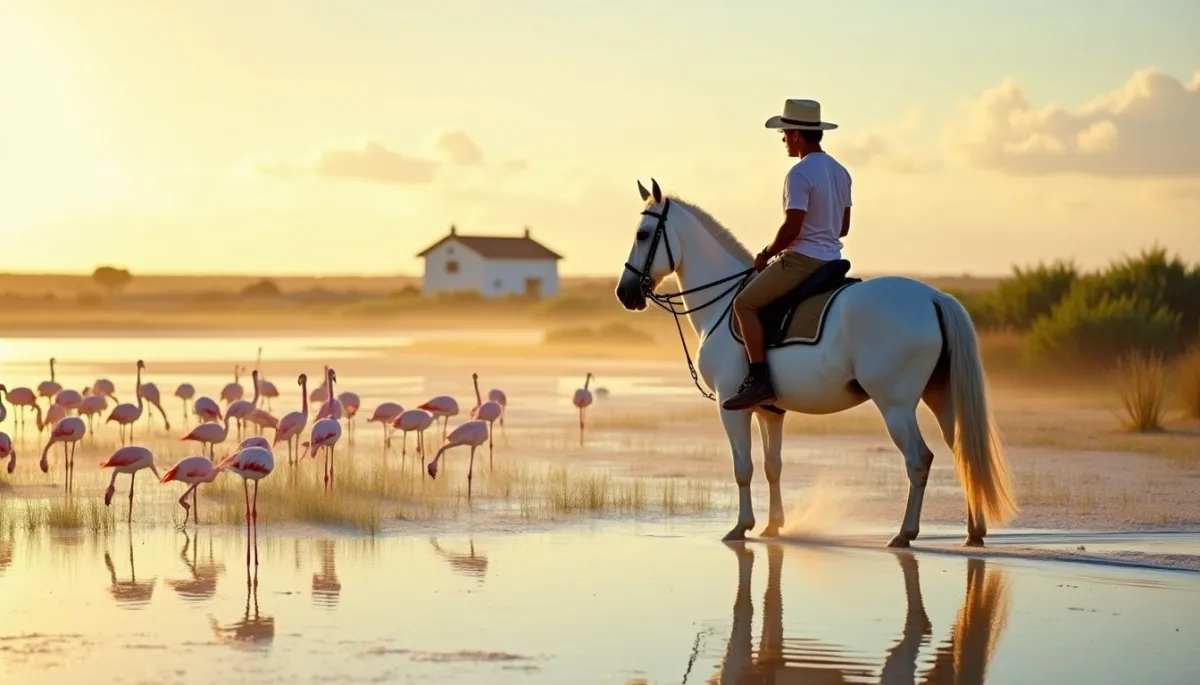
In the wild light of the Camargue, men and horses write the same history. Between salt flats and reed beds, ancestral trades resist time while adapting to modern pressures.
🚀 Key Takeaways
- Core concept : Gardians and manadiers keep Camargue pastoral traditions alive.
- Practical tip : Attend a ferrade in spring and visit a manade near Saintes-Maries-de-la-Mer.
- Did you know : Folco de Baroncelli (1869-1943) helped institutionalize Camargue identity with the Nacioun Gardiano in 1909.
Sun, wind, horse breath.
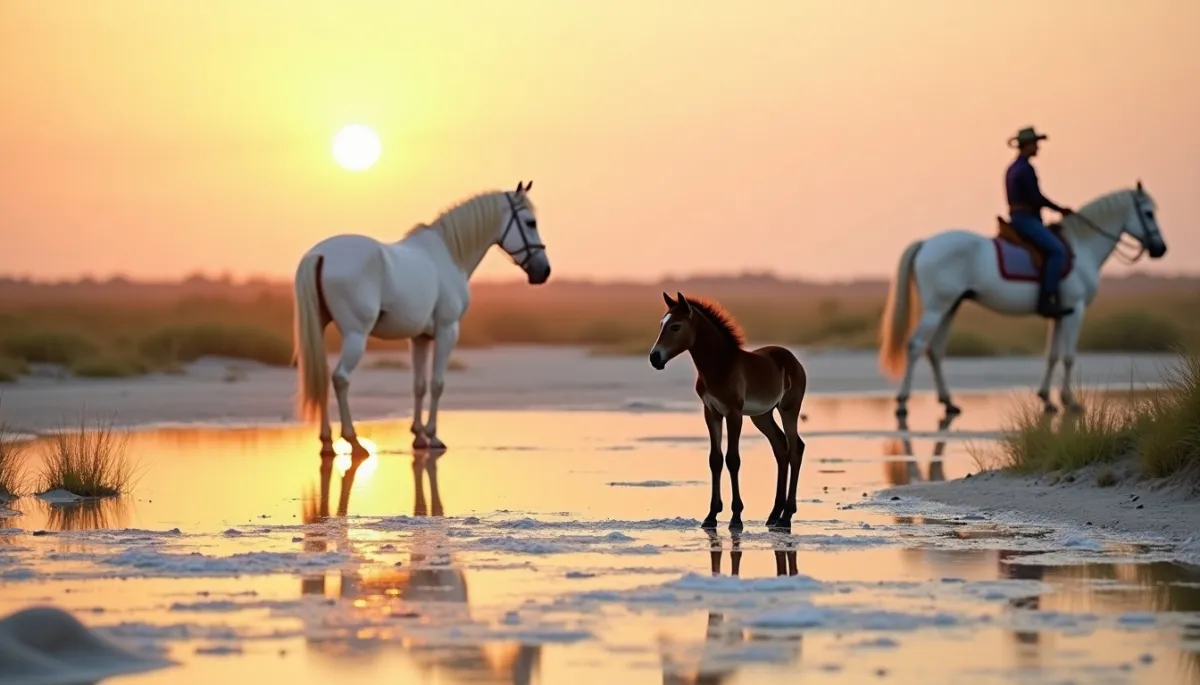
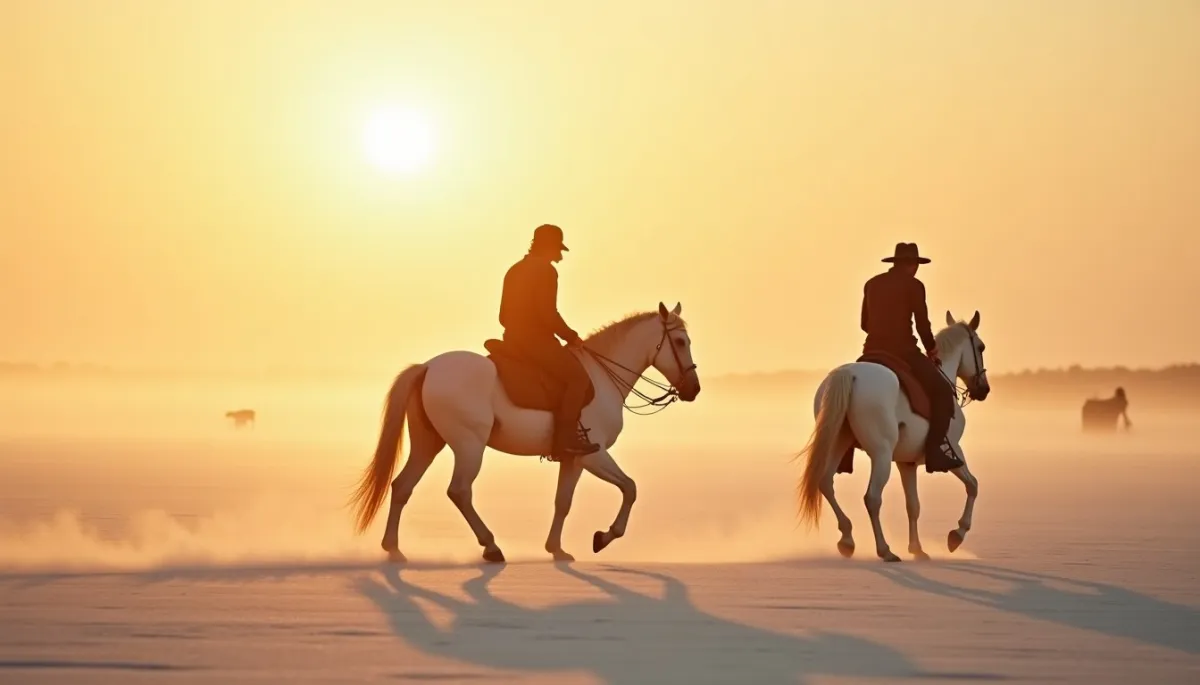
On a low-angled morning road outside Saintes-Maries-de-la-Mer, a line of white Camargue horses moves like smoke over the saline ground. A gardian in a felt hat guides the herd with calm authority, the bells of the manade chiming against a pink horizon. You can almost hear the centuries in the soft clink of tack and the distant cry of a heron.
entre chevaux et taureaux
At the centre of Camargue life are the gardians, the mounted herders who tend manades, traditional semi-wild herds of Camargue cattle and horses. The term manade refers both to the herd and to the estate where animals run free across marsh and plain.
Gardians wear a distinctive outfit: wool hat, short jacket and a saddle specific to their trade. The Camargue saddle favours mobility and close contact with the horse, unlike bulky tourist saddles. It is a working tool as much as a cultural emblem.
The ferrade is one of the most emblematic moments. Usually held in spring, it gathers manadiers, families and villagers to round up animals, mark and castrate calves, and celebrate the herd. The ferrade mixes practical husbandry and ritual, and for many young gardians it remains a passage into adulthood.
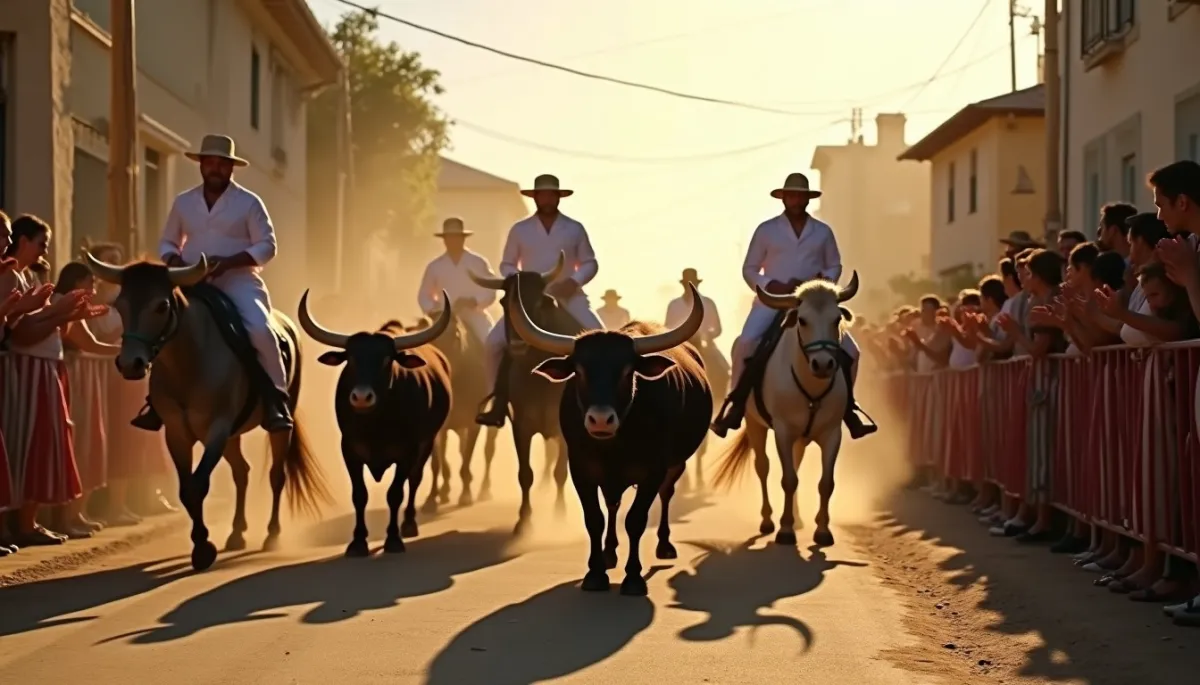
Another public ritual linked to livestock is the abrivado, where bulls are driven through village streets to the arenas. In Arles and Saintes-Maries-de-la-Mer, these spectacles animate local festivals and maintain a living link between fieldwork and popular culture.
héritage et personnes
Some names anchor the memory of Camargue's professions. Folco de Baroncelli, born in 1869 and died in 1943, was decisive in giving the region a cultural voice. In 1909 he helped found the Nacioun Gardiano, an association aimed at defending local customs and the language of the Camargue.
Manade Méjanes, near Arles, is an example of a property where tradition meets public life. The Méjanes domain has long opened its doors to festivals and film shoots, and its manade is a living testimony to pastoral techniques preserved across generations.
Beyond famous names, dozens of small manadiers work quietly. Their expertise covers seasonal grazing cycles, salt-tolerant pastures and water management. These tacit skills are often learned by apprenticeship, on the saddle, rather than in a classroom.
Course camarguaise deserves a mention. Different from Spanish bullfighting, it is an arena sport in which raseteurs try to snatch a cocarde (a ribbon) tied to the bull's horns. The bull is not killed, and the ritual emphasizes agility and respect for the animal.
tradition en pratique
The reasons these trades persist are both economic and cultural. Practically, cattle and horses continue to shape Camargue wetlands, maintaining open landscapes that sustain biodiversity. Economically, manades produce meat, stud animals and tourism experiences that feed local economies.
Culturally, rituals such as the ferrade or the course camarguaise create social cohesion. Festivals in Saintes-Maries-de-la-Mer and Arles attract thousands each year and keep oral histories alive. They also serve as living classrooms where newcomers learn language, songs and techniques.
Yet preserving these practices has been a long fight. The creation of the Parc naturel régional de Camargue in 1970 gave formal protection to much of the landscape, but pressures persist: urbanisation, industrial salt works, intensification of agriculture, and climate change that raises sea levels and alters freshwater inputs.
fragile équilibre
The contradiction is visible: tourism both sustains and threatens traditions. Visitors pay for authentic rides and festivals, but too much commodification risks turning living trades into theatrical shows. Many manadiers are wary of being reduced to photo ops, while recognizing the necessity of visitor income.
Another challenge is generational shift. Fewer young people choose to inherit hard outdoor work. Apprenticeships and professional diplomas for equine and pastoral trades have multiplied in the last two decades, offering paths to recognition, but the rhythm of a gardian's life remains demanding.
There are solutions at work: cooperative marketing of manade products, seasonal agreements to limit mass tourism, and educational programmes that pair schools with manades. Visiting responsibly, booking with certified manades, and attending a ferrade rather than a staged show are simple ways to support living tradition.
Advice: plan visits in spring for ferrades, summer for festivals in Arles and autumn for calmer rides. Respect animals, follow local instructions, and ask before photographing. The real reward in the Camargue is not a picture, but a story told by a gardian over coffee, about a mare that never left the marsh.