Western spurs: tool of precision or style accessory?
From medieval stirrups to modern ranches, spurs have signalled authority and skill across centuries. Are they a delicate tool of communication with the horse, or mainly a cowboy's decorative signature?
🚀 Key Takeaways
- Core concept : Spurs are primarily a communication tool, refined over centuries.
- Practical tip : Choose shank length and a smooth rowel; try locally with an experienced trainer.
- Did you know : Spanish vaqueros in the 16th century shaped the spur traditions later adopted on American cattle trails.
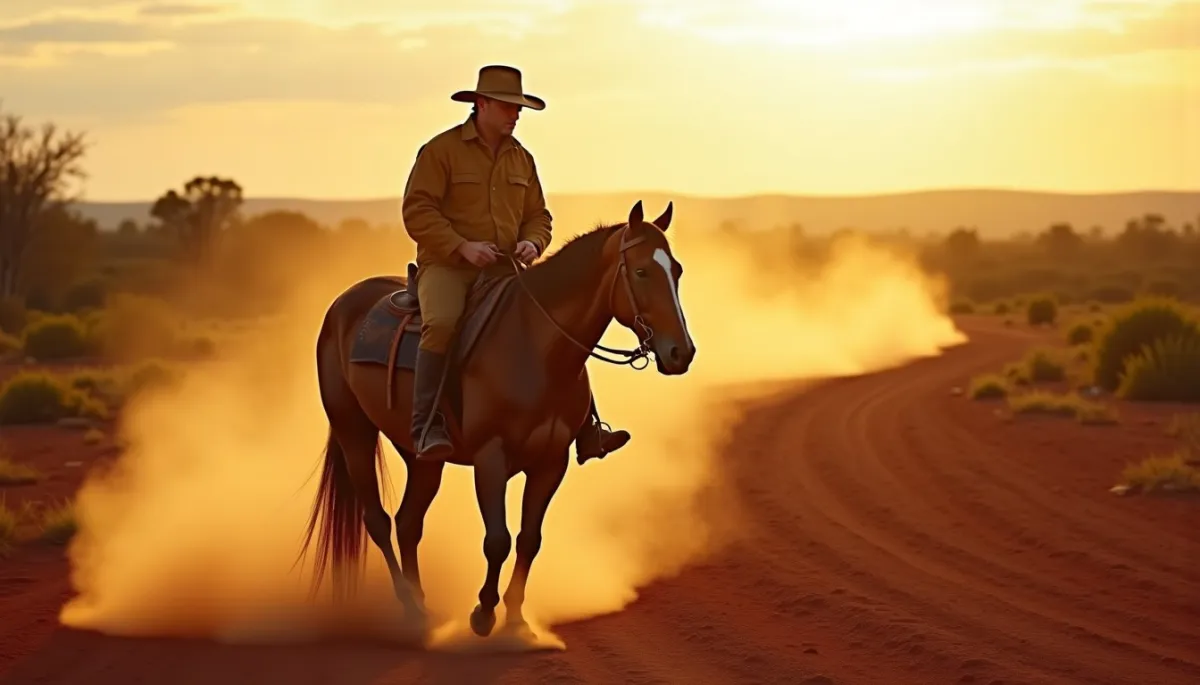
That metallic click can change a herd's direction. Picture a dusk cattle drive on the Chisholm Trail, 1870s dust hanging low, a rider's spurs flashing as he nudges a stubborn cow.
Across the ages
Spurs did not originate on the American plains. Their story goes back to medieval Europe, where knights used them as a means to urge warhorses into disciplined movement. The device evolved: a short neck and a rotating wheel, or rowel, appears in the archaeological record from the late Middle Ages.
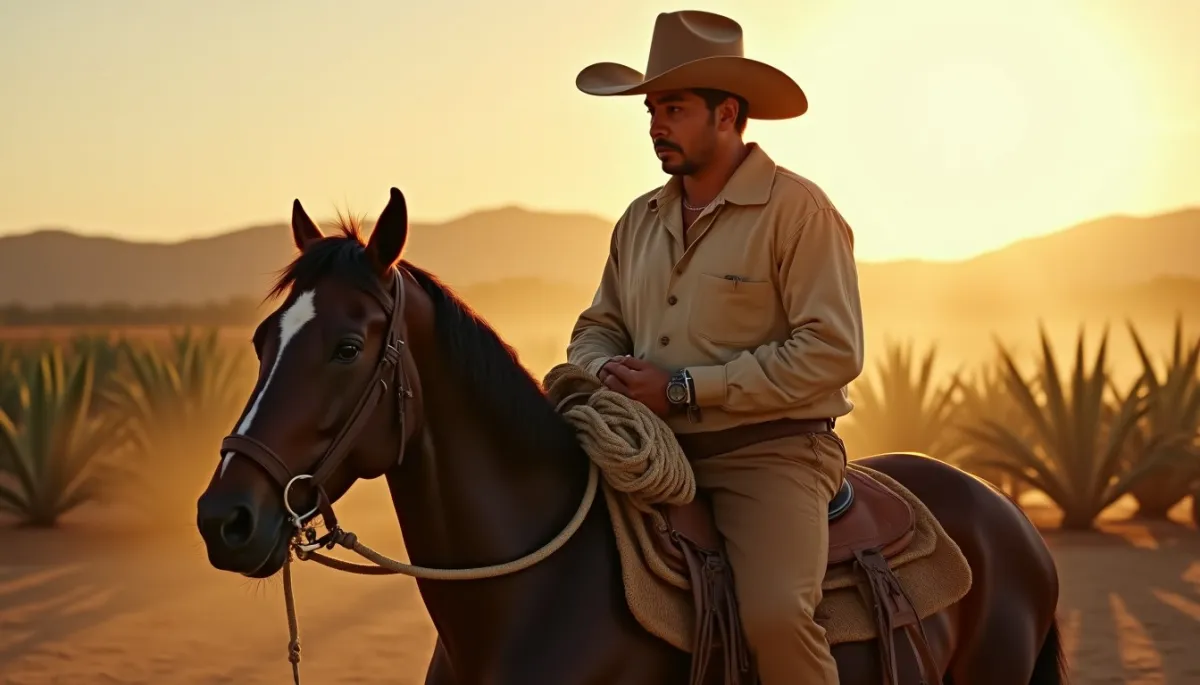
When Spanish riders brought horsemanship to the Americas in the 16th century, the vaquero traditions married Old World metalwork with local needs. Those vaqueros refined cues and tack, including the spur, which reached the cowboys of the 19th century as a practical instrument during long cattle drives.
By the late 1800s, the image of the spur had two faces. On one hand, it was a precise aid on trails such as the Chisholm (established around 1867) and the Goodnight-Loving. On the other, Wild West shows from the 1880s, notably Buffalo Bill's spectacle from 1883, elevated the ornate spur into theatrical costume.
Form and function
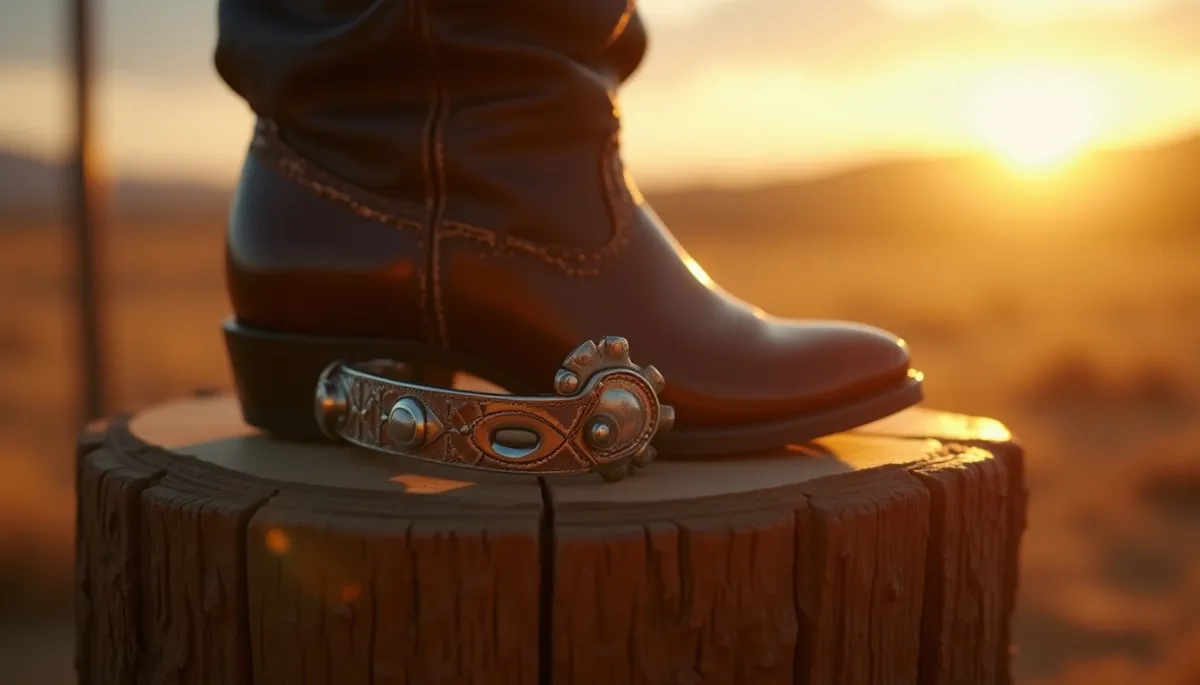
At its core a spur is simple: a heel band that straps to the boot, a shank (or neck) that projects backward, and a rowel or point that contacts the horse. The rowel may be blunt, sharp, fixed or freely rotating; modern ethical practice favors smoother, rolling rowels to reduce injury.
Different styles answer different needs. Vaquero-style spurs tend to be low and subtle, crafted for precise leg cues. Texas-style spurs often feature longer shanks and larger rowels, useful when a clearer signal is required over a noisy, chaotic herd.
Materials and ornamentation tell another story. Simple steel or brass meets functional life on the ranch. Silver inlays and engraved necks belong to parade, rodeo and cinematic wardrobes, where spurs become badges of identity as much as tools.
Stories and contradictions
Actors like John Wayne and the singing cowboys of the 1930s to 1950s helped mythologize the spur. On film, a flash of silver and an aggressive kick make dramatic scenes. In reality, excessive or improper use harms the horse and betrays poor horsemanship.
Controversies persist. Animal welfare advocacy and modern training increasingly reproach punitive reinforcements. Many contemporary riders and trainers emphasize communication, not coercion, using spurs only when the horse is responsive to lighter aids.
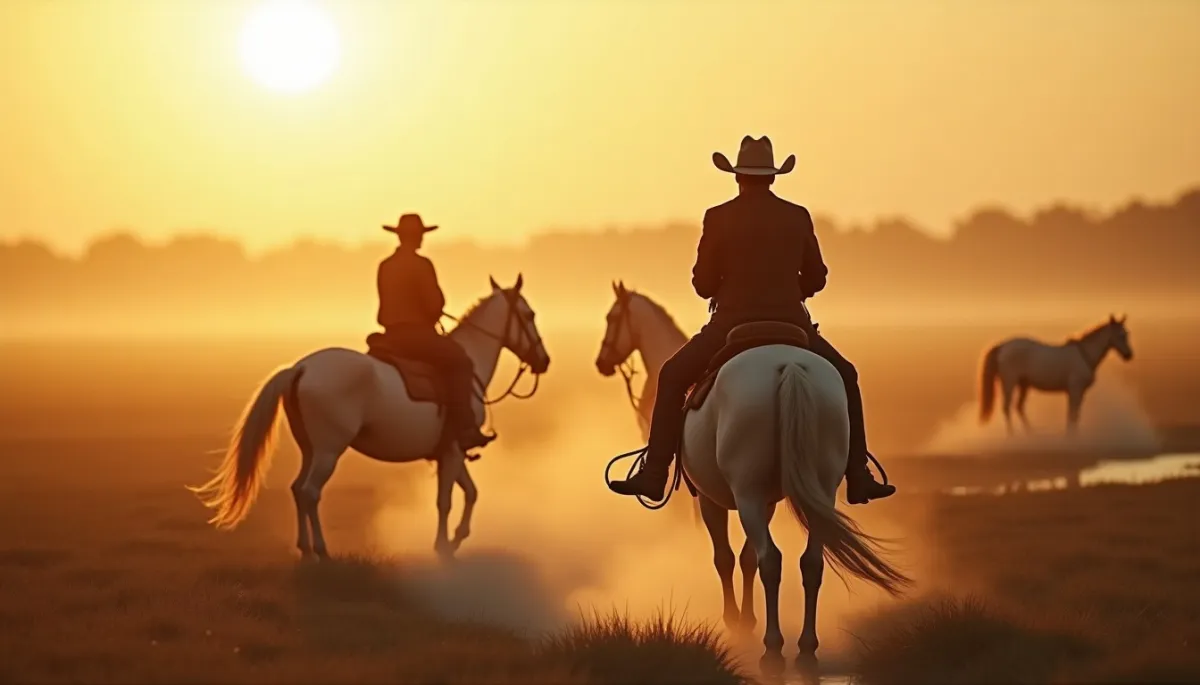
In places like the Camargue, comparisons are revealing. Gardians value a different silhouette: spurs that are modest, built for daily work in marshes and rice fields, and for close, respectful handling of mounts and bulls. That regional sense of restraint echoes a broader reassessment in equestrian circles.
Practical advice
If you choose spurs, keep safety and ethics first. Start with a modest, rounded rowel that rotates freely. Avoid long, pointed rowels unless under the direction of an experienced trainer.
Fit matters. The heel band should sit stable on your boot without pressing, and the shank length should allow the rowel to rest near the horse's flank when your foot is in a natural riding position. Check local tack shops and ask to try different sizes.
Finally, treat spurs as a communication upgrade, not a shortcut. Regular schooling, clear leg aids, and a calm seat remain the foundation. Use spurs to refine an already consistent cue, and remove them when schooling young or sensitive horses.
Whether a precise instrument or a symbol of style, spurs carry history, craft and responsibility. In the end, true mastery lies in making the smallest metallic whisper perform the loudest work.