White Mane and the Camargue dream: how a 1953 film revealed a land of horses
In 1953 a short film captured an untamed stallion and a boy, and with them a landscape. White Mane (Crin-Blanc) would become the postcard image that introduced the Camargue to the world.
🚀 Key Takeaways
- Core idea : Albert Lamorisse's 1953 film used real Camargue horses and marshes to create a global myth.
- Practical tip : Visit Saintes-Maries-de-la-Mer or the Parc ornithologique du Pont de Gau in spring to see horses and flamingos.
- Did you know : The Camargue horse is a small, hardy breed that is born dark and often turns white with age.
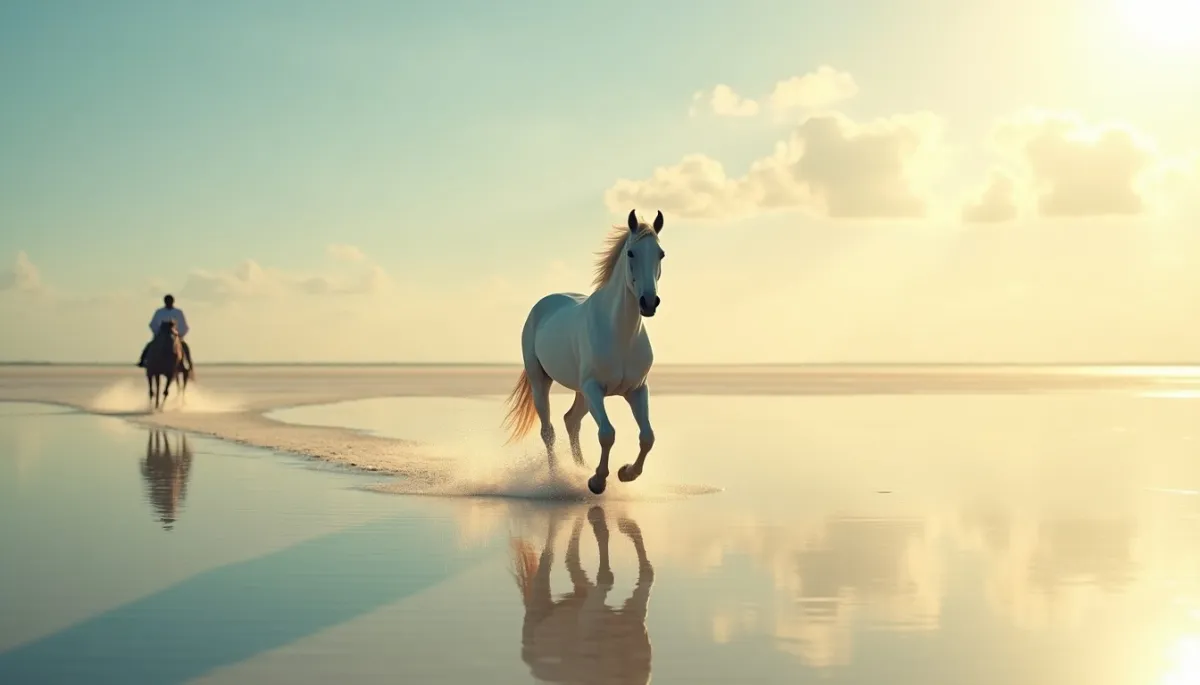
Pure and wild. Imagine salt air, flat horizons and a white stallion cresting a low dune. The camera follows hoofprints in the mud, and the light makes the mane almost luminous.
marais et lumière
When Albert Lamorisse filmed White Mane in 1953, he chose the Camargue for its extremes, and for the horses that seemed born of the land. The film's simple story, a boy and a wild stallion, sits against salt pans, reedbeds and the vast sky above the Rhône delta.
White Mane used real landscapes and local people. That authenticity translated well on screens abroad. The film travelled to festivals and cinemas, and later to television, where its images became the reference for what many foreigners imagined by "the Camargue."
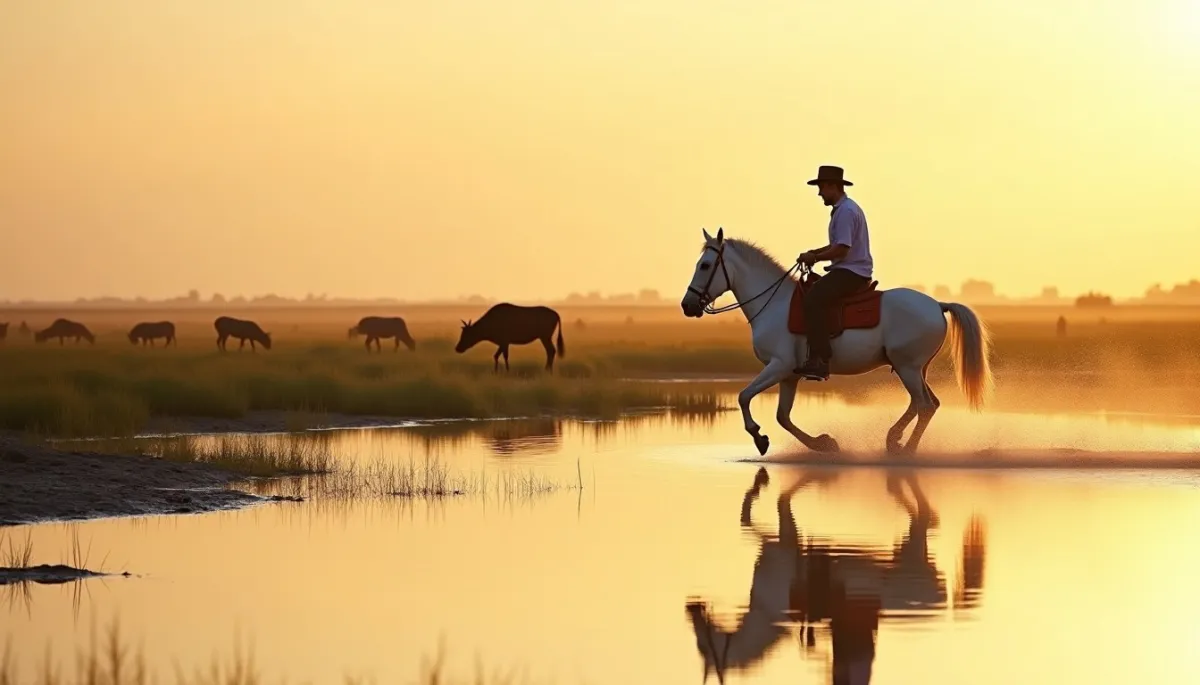
Consequently, postcards, posters and travel brochures began to borrow Lamorisse's iconography. The white horse on a salt-flat, the lone gardian (the Camargue cowboy) with his trident, the flamingos in the shallows, all entered popular imagination. The film turned landscape into symbol.
un film, un peuple
Albert Lamorisse (1902-1970) was already known for poetic short films. After White Mane, he made The Red Balloon in 1956, a piece that sealed his reputation. Lamorisse worked with non-professional actors and favoured authentic settings, choices that gave his images a documentary weight and a lyrical tone.
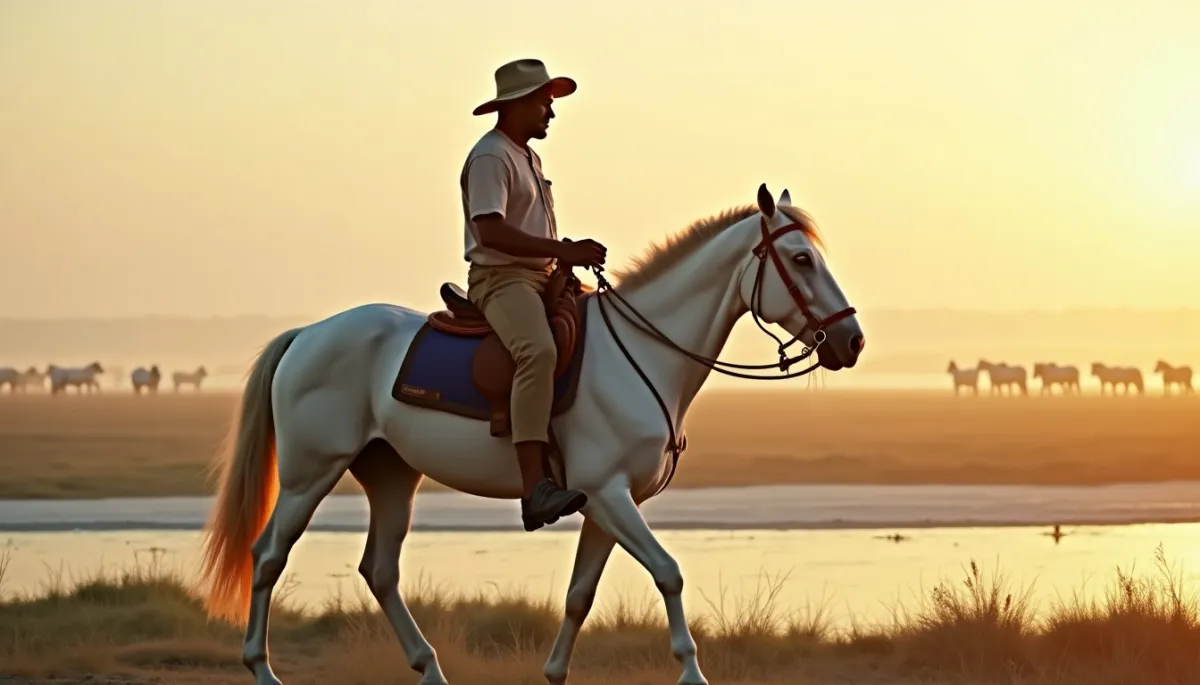
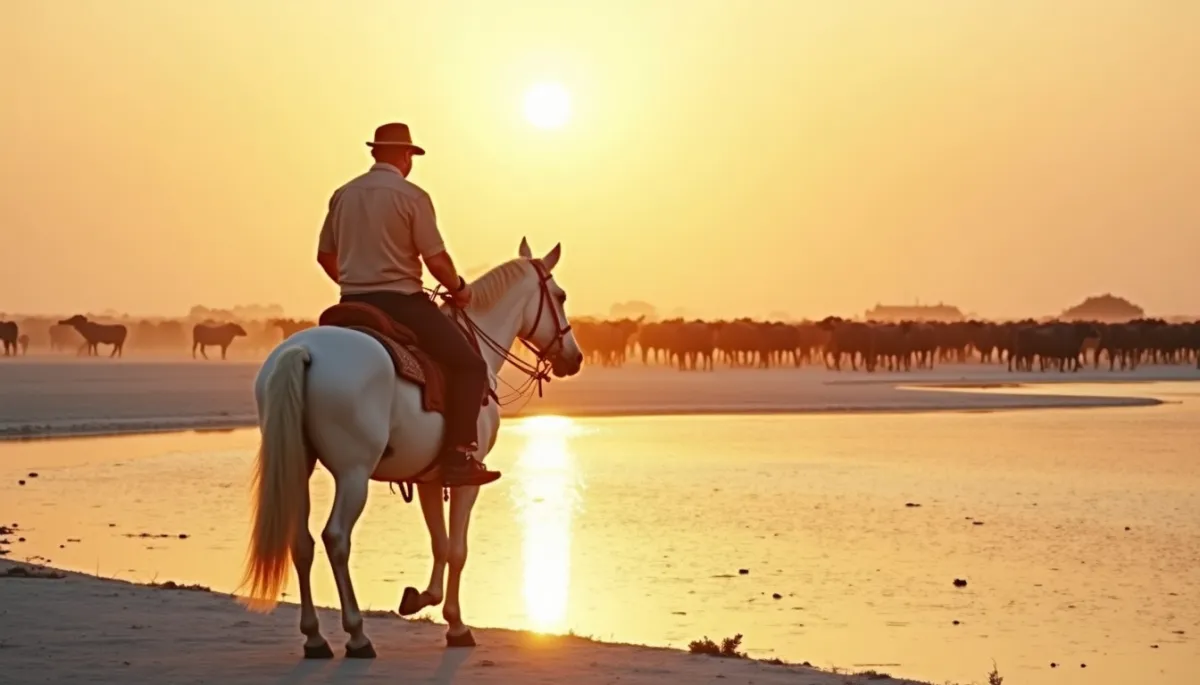
The other protagonists of the story are not stars, but the Camargue people and animals. The gardians, horseback herders of the marshes, practice a form of stockwork similar to cowboys or gauchos. Their tool is the trident, their herd management is called a manade (a semi-wild herd), and the Camargue horse is a small, robust breed adapted to salt and water.
This cultural tableau, captured on film, made the gardians into recognizable characters. Tourists wanted to meet them, visitors wanted to see manades and watch roundups (abrivados and ferrades). The film created curiosity, then demand, around an entire way of life.
sur le sentier du mythe
The film's popularity had concrete consequences. Tourism to the Rhône delta increased in the decades after 1953, and the Camargue became a destination for people looking for "authentic" nature and tradition. That attention helped launch local economies, but it also carried risks.
Commercialisation followed imagery. Some traditions adapted to visitors, with staged demonstrations and horse shows. At the same time, the increased pressure on water, salt works and grazing lands raised environmental questions that would lead to protection measures, including the creation of the Parc naturel régional de Camargue in 1970.
Maintaining balance remains a challenge. The myth of Crin-Blanc helps conservation when it inspires interest and funding, but it can also flatten a complex reality. The true Camargue is a living territory, shaped by agriculture, salt production, migratory birds and communities that adapt each season.
racines et images
Why did Lamorisse choose Camargue? The answer lies in visual drama and human stories. The landscape offers simple, strong compositions: horizontal horizons, reflective flats, and a light that changes by the hour. A white horse on that palette becomes almost a living icon.
Production choices mattered. Lamorisse filmed outdoors, with natural sound and local handlers. Horses were not trained movie stars but semi-wild animals from manades. That realism produces unpredictable, memorable moments on screen, which audiences remember more than polished studio scenes.
In short, White Mane did not invent the Camargue, but it named an image we now associate with the region. That image has traveled in travel writing, photography and film since the 1950s.
conseils au visiteur
If you go: prefer shoulder seasons, spring or early autumn, when birds, foals and moderate light make the landscape most receptive. Respect manades: observe from a distance, follow guides, do not attempt to touch semi-wild horses.
Where to go: Saintes-Maries-de-la-Mer for village life and horseback traditions, Parc ornithologique du Pont de Gau for birds, and the salt pans near Salin-de-Giraud for the geometric landscapes that film-makers love.
Terminology quick guide: manade, the herd managed semi-wild; gardian, the Camargue herdsman on horseback; abrivado, the driving of bulls or horses through the streets during festivals. Knowing these words enhances visits, and shows respect for local knowledge.
Crin-Blanc is both a film and a mirror. It revealed the Camargue to a world that then fell in love with an image. Today, that image helps protect the place if we keep its complexity in view, and if we let the marshes, the horses, and the people tell their own stories on their own terms.