Camargue, the French Wild West
The Camargue stretches where the Rhône meets the Mediterranean, a flat world of salt, reeds and light. Here horses, bulls and gardians keep a living tradition that echoes North American and South American ranch cultures.
🚀 Key Takeaways
- Key concept : The Camargue is a working delta where the Camargue horse and the toro camargue shape rural life.
- Practical tip : Best visits: spring for flamingos, late May for the Saintes-Maries pilgrimage and local abrivados.
- Did you know : The Parc naturel régional de Camargue was created in 1970 to protect this unique landscape.
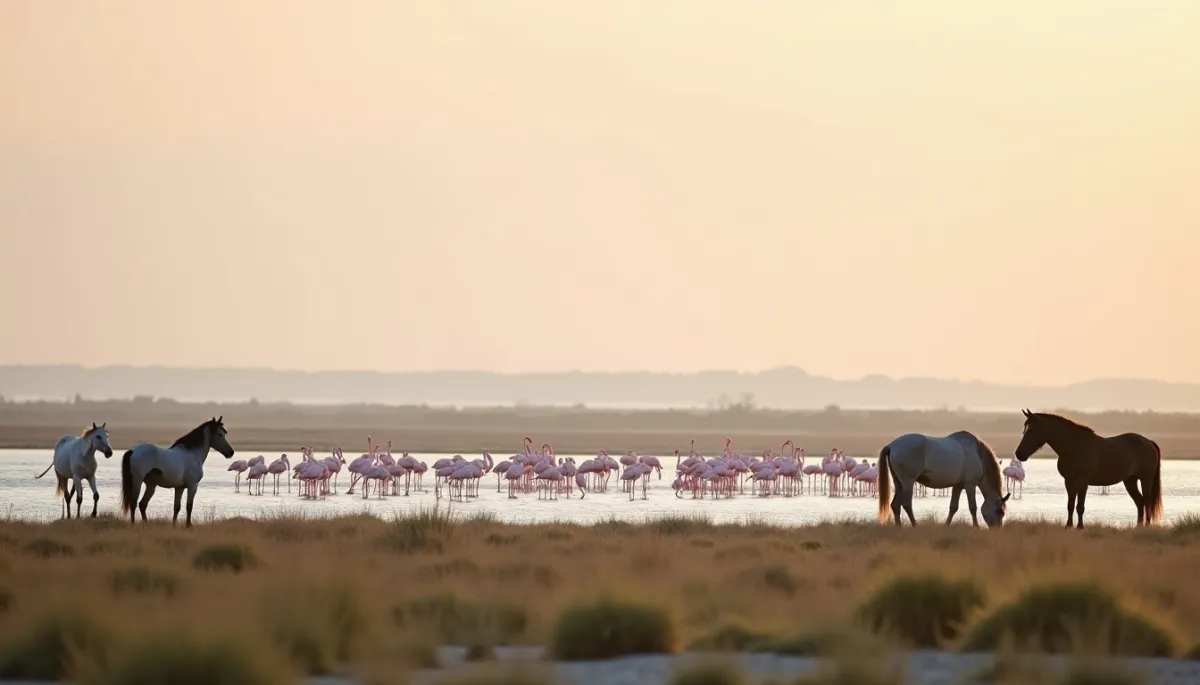
White horses against a copper sky.
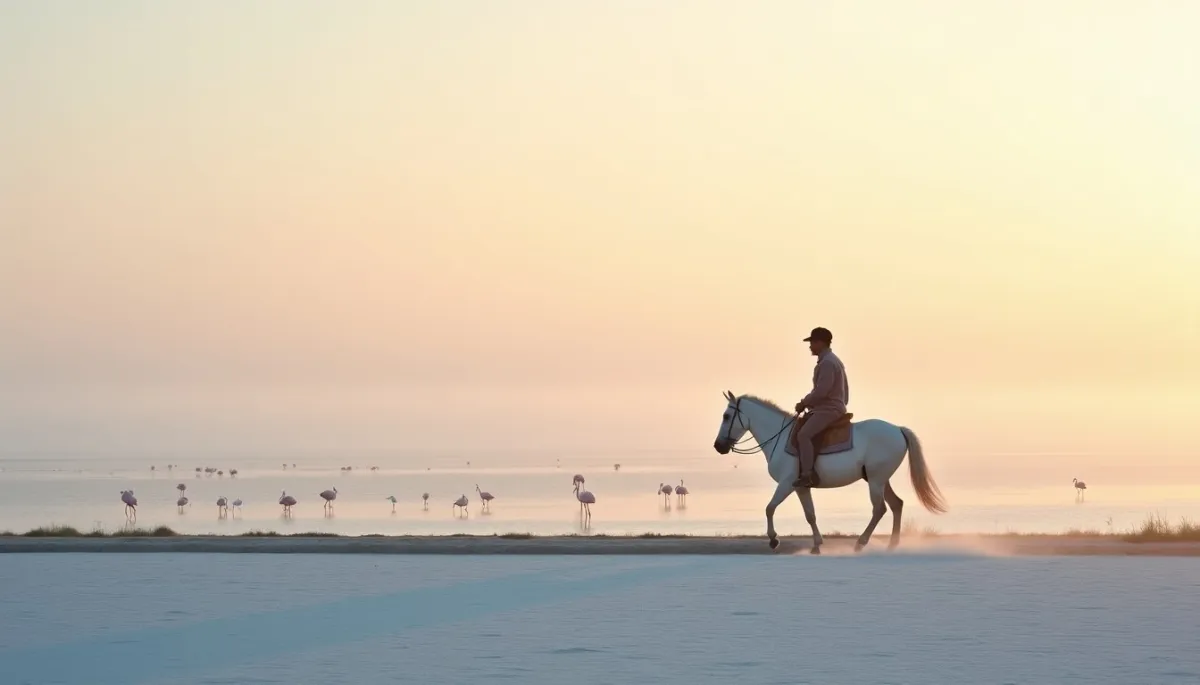
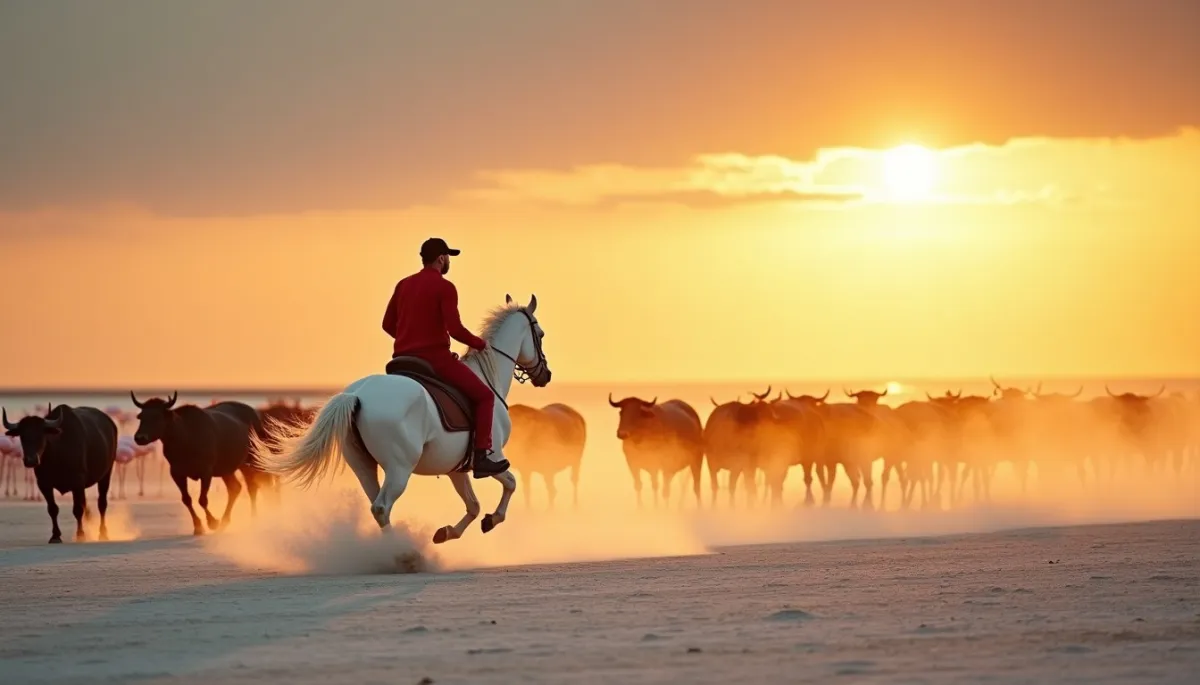
Imagine a low horizon where wind combs the salt flats, flamingos punctuate the pink lagoons, and a gardian urges his white Camargue horse through a herd of dark bulls. The air tastes of sea and reed smoke, a space where time seems to slow and work — rounding up bulls, salt-harvesting, bird-watching — sets the rhythm of the day.
Herbes et sable
The Camargue is a delta at the mouth of the Rhône, shared between the Bouches-du-Rhône and the Gard. Its landscape is a mosaic: lagoons (étangs), marshes, dunes and salt pans. The contrast of flat land and enormous skies gives it a cinematic quality.
Protection of the area began early in the 20th century. A first reserve was established in 1927 to safeguard birdlife, and the Parc naturel régional de Camargue was created in 1970. These protections coexist with grazing and farming, which shape the place as much as the water and the wind.
Flocks of greater flamingos arrive in spring, tens of thousands of migratory birds use the Camargue as a stopover. For the visitor, binoculars are as essential as comfortable boots. Spring and autumn are the richest seasons for wildlife, while summer brings the bustle of pilgrimages and fêtes.
Gardiens et manades
At the centre of Camargue life are the gardians, mounted herdsmen who manage manades (herds). The manadier is the keeper of a manade, a model close to family enterprise where cattle and horses roam semi-wild most of the year.
The Camargue horse, small, robust and often grey or white, is bred for agility. It is ridden daily by gardians; its presence defines scenes of work and ceremony. The toro camargue, smaller and muscular, is raised for the tradition of the course camarguaise, a bloodless bull game where the bull is respected and returned to the land.
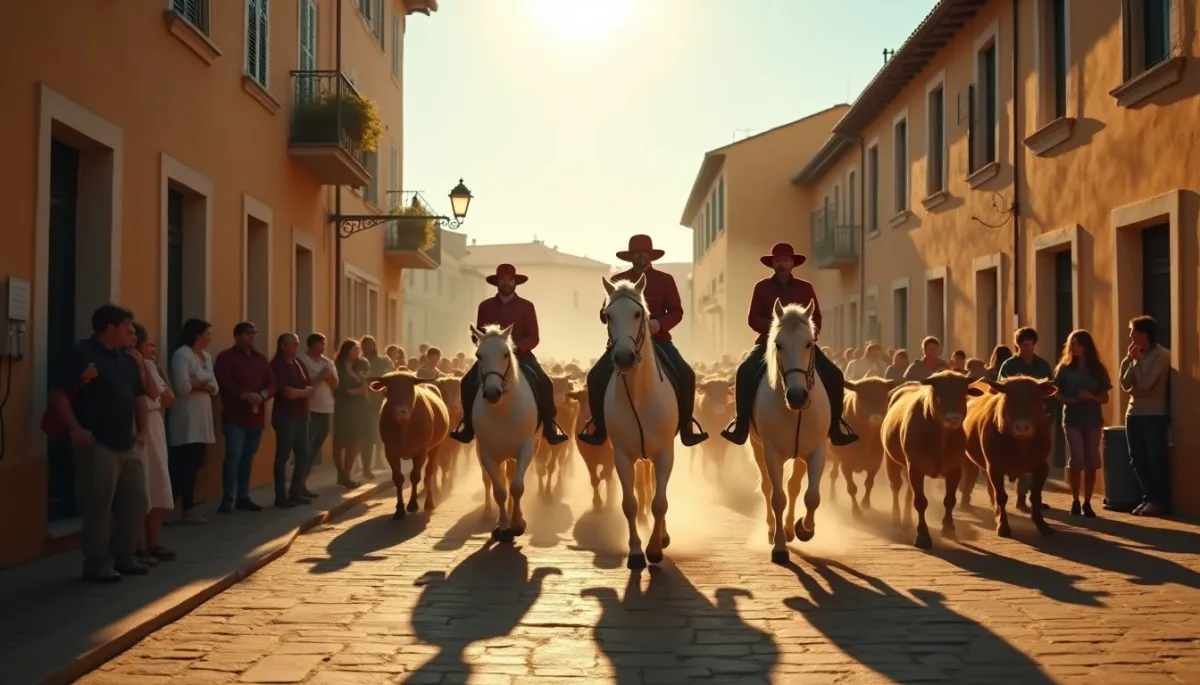
Names like Saintes-Maries-de-la-Mer evoke both pilgrimage and livestock markets. Each May 24–25 the town hosts the Gypsy pilgrimage, adding layers of devotion, music and horsemanship to the local rhythm. During local fêtes, you will witness abrivados and bandido: the swift movement of bulls escorted by mounted gardians through town streets.
Entre tradition et avenir
Why does the Camargue feel like a French Wild West? The parallels are in landscape, labour and ritual. Like American cowboys or Argentine gauchos, gardians work on horseback, wear practical clothing shaped by the land, and depend on livestock for their identity and economy.
Yet the Camargue is not a reproduction of the West. Its roots are Mediterranean: salt production, rice fields established in the 19th century, and centuries of human adaptation to marshes. Conservation policies from 1927 and 1970 show an attempt to reconcile heritage and environment, balancing tourism with fragile ecosystems.
Challenges remain. Rising sea levels, intensification of agriculture, and the pressure of mass tourism threaten habitats and traditional ways. Many manades adapt by diversifying: guided tours, educational stays, and certified organic products help keep traditions alive while funding conservation.
Conseils pour le visiteur
To feel the Camargue, wake at dawn. The light is decisive, and the mornings reveal birds and riders in motion. Bring binoculars, sun protection and neutral-coloured clothes; avoid disturbing nesting areas.
Attend an abrivado rather than a corrida: you will see bulls and horsemanship without bloodshed. Visit a manade (ask beforehand), meet a manadier, and ask about seasonal work: parage (hoof trimming), tri (sorting cattle) and ferrage (shoeing) are practical, sensory moments that explain this lifestyle.
Finally, respect the land. Stick to marked trails in reserves, keep distance from breeding areas, and buy local: salt from Salin-de-Giraud, rice from local producers, and handicrafts sustain the Camargue economy.
The Camargue is, in its bones, a place of work and ritual where horses and bulls tell a story older than tourism. It is a French Far West, but with flamingos on the horizon and a Mediterranean light that insists on being different.