Gardians of the Camargue: echoes of the cowboy
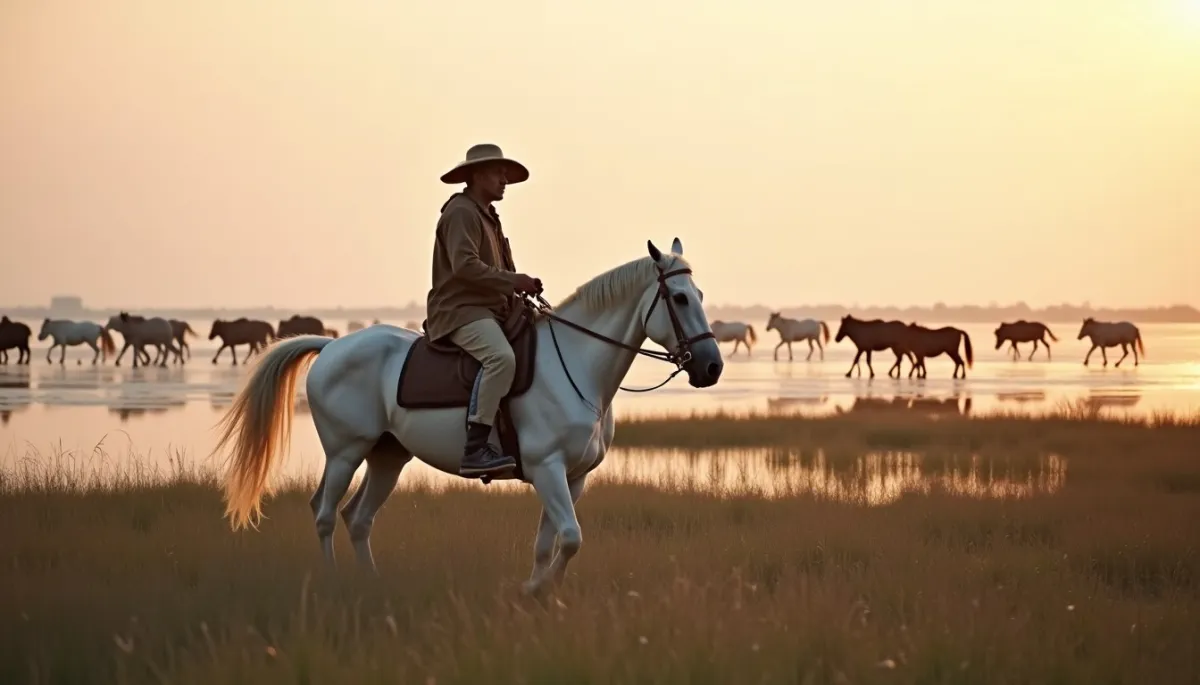
In the flat light of early morning, the Camargue breathes like a living film, white horses cutting through mist and herds of bulls lowing in reed-lined marshes. Between tradition and spectacle, the gardians keep a way of life that resonates with the myth of the American cowboy.
🚀 Key Takeaways
- Core idea : The gardian is the Camargue’s cowboy, guardian of horses and bulls.
- Practical tip : Visit a manade (herd) in spring for an authentic abrivado and to meet a manadier.
- Did you know : Folco de Baroncelli founded the Nacioun Gardiano in 1909 to defend local traditions.
Warm light. A white horse rears, reeds whisper, bells tinkle. You are in the marshes, feet barely touching a narrow path, the horizon a pale, endless line.
The gardians are the protagonists of this landscape. Mounted, weathered, they move with the calm precision of people who read the tide, the wind, and the temper of a young bull. Picture a manadier calling his herd at dawn, his voice carrying over saline flats, the Camargue horse stamping, ready.
Sous le soleil
The gardian is more than a rider. Historically, gardians managed manades, which are semi-wild herds of Camargue bulls and horses kept for breeding and for local spectacles. The manade system dates back centuries, but it took modern shape in the 19th and early 20th century as salt marshes and rice paddies defined the territory.
Folco de Baroncelli (1869-1943) is a landmark figure. In 1909 he founded the Nacioun Gardiano, an association to promote the language, festivals, and traditions of Camargue. His work codified rituals that now attract visitors from around the world, and preserved the image of the gardian as custodian of a living culture.
Camargue horses, small, sturdy and often white, are adapted to marshy ground. They appear in records and art since at least the medieval period, and gained international fame with Albert Lamorisse’s film "Crin-Blanc" (1953). The imagery of white manes and tidal light made the region cinematic, a European echo of the American West.
Le fil du temps
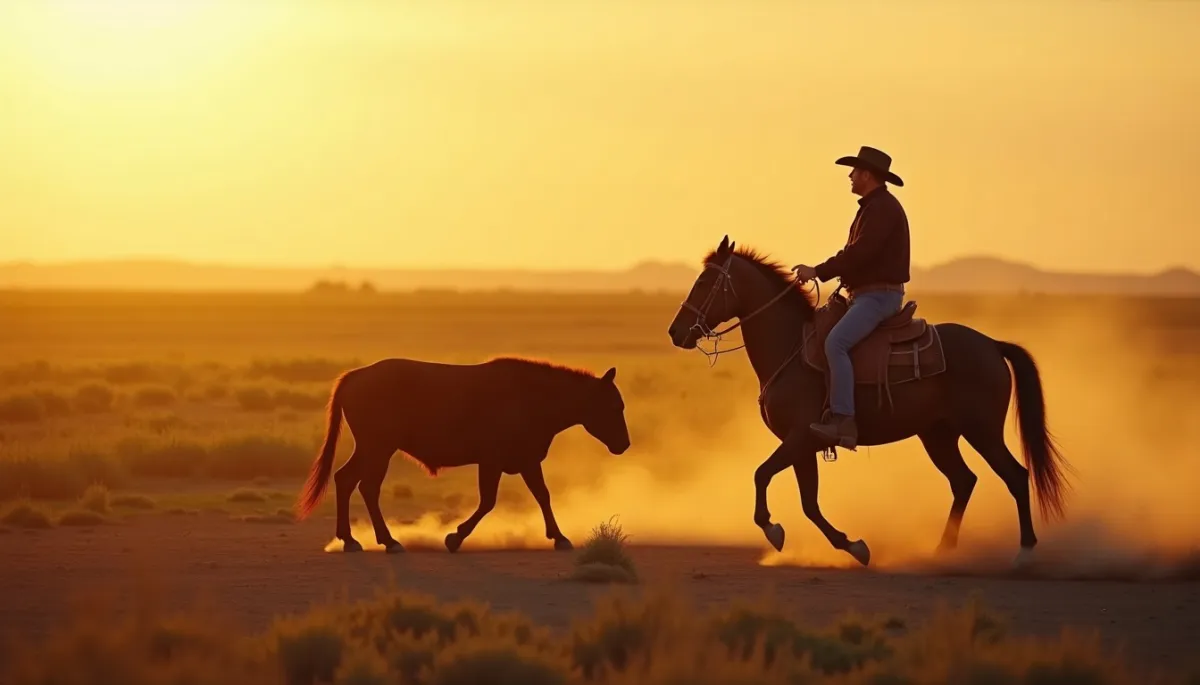
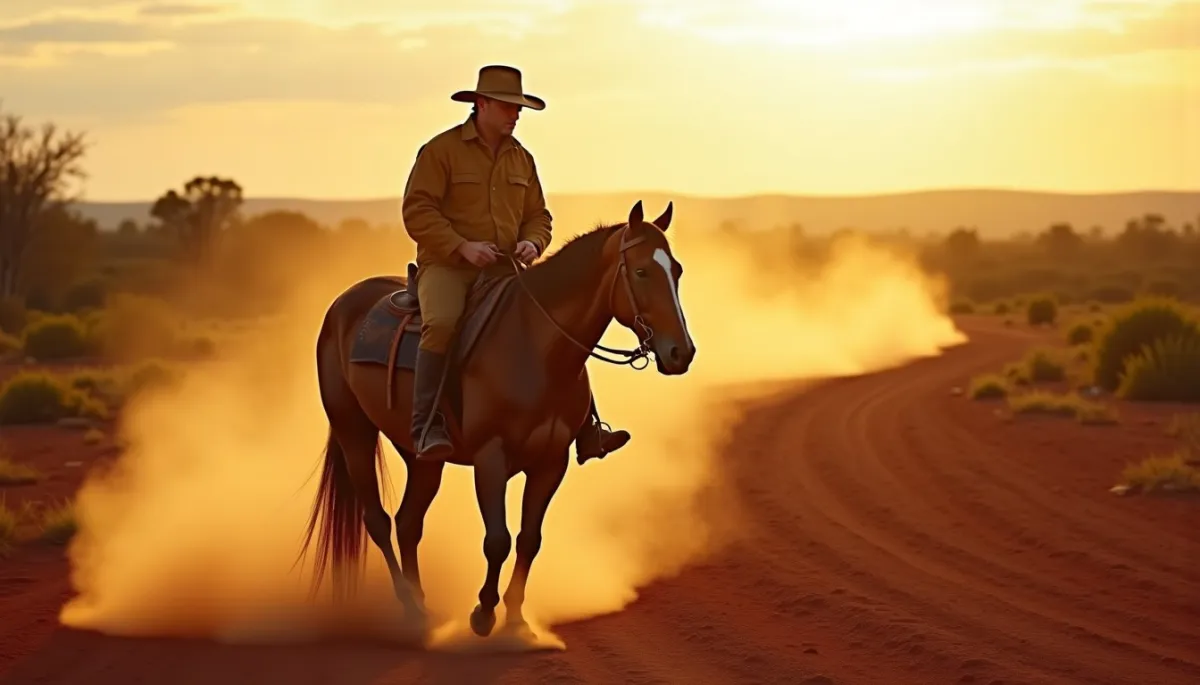
Why does the image of the gardian recall the American cowboy? Cultural exchanges are older than we think. In the 19th century, Spanish vaqueros and Mexican traditions influenced North American cattle handling. In Europe, Buffalo Bill’s Wild West shows toured the continent in the 1880s and 1890s, popularizing Western iconography. Locally, the gardian evolved separately, but both figures share an attachment to horse, herd, and open sky.
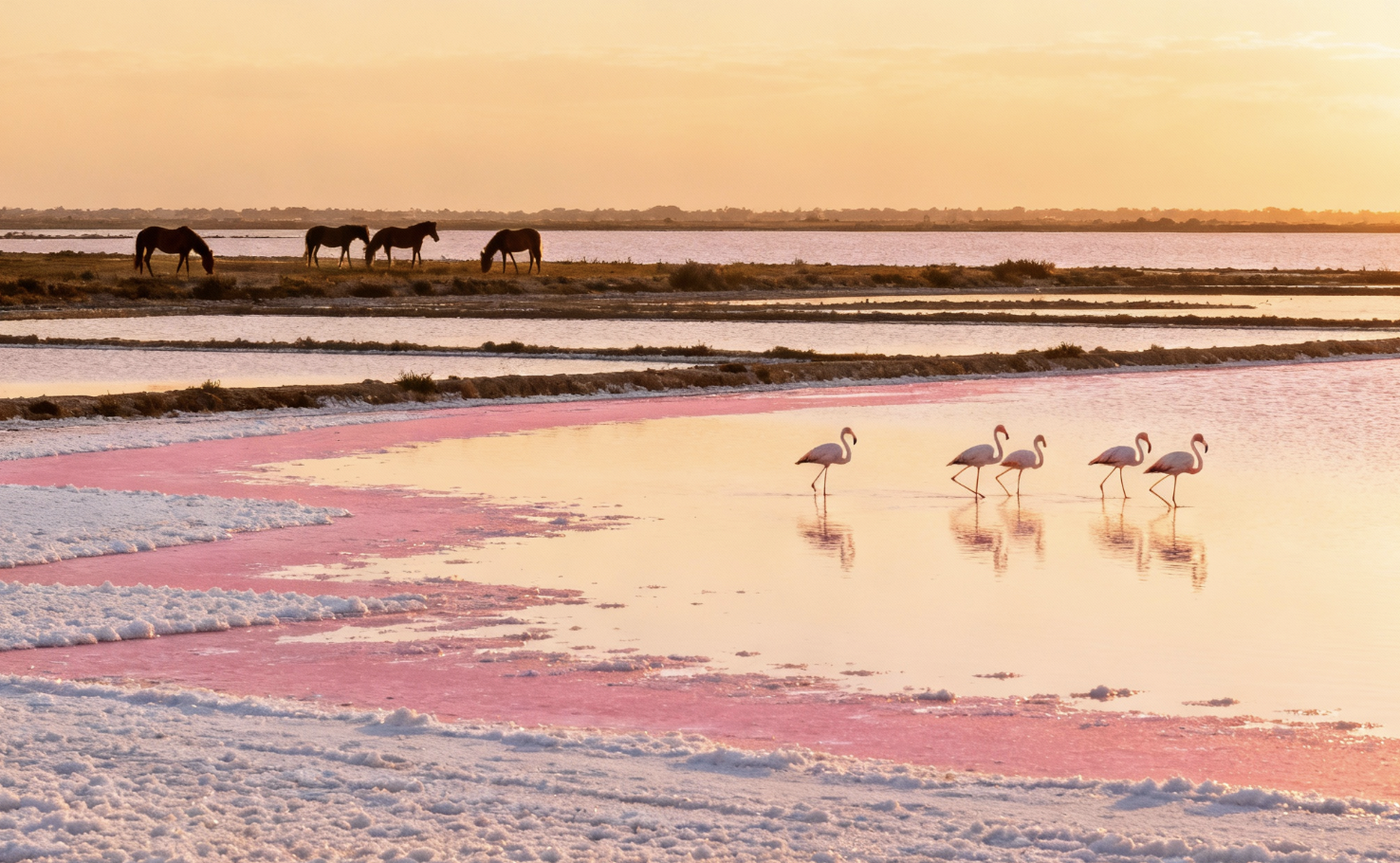
Economic and environmental causes shaped the manade. Salt production, rice culture, and fishing forged a landscape where animals could graze freely on marshy plains. Manades remained practical units of production and identity. The manadier (owner-manager) developed skills in selective breeding, maintaining the hardy Camargue horse and the robust fighting bull, used in the course camarguaise, a bull game distinct from Spanish bullfighting.
Folco’s activism was also a response to modernity. As tourism and industry arrived, he sought to define and protect intangible heritage. The creation of the Parc naturel régional de Camargue in 1970 institutionalized protection of landscape and traditions, a legal consequence of earlier cultural work.
Entre rituel et modernité
Contradictions persist. Tourism brings income and visibility, but also risks commodifying traditions. Abrivados, gardian parades, and staged herding events are spectacular, yet they may simplify complex practices into photo opportunities. Manades face economic pressures: land costs, water management, and regulatory constraints linked to environmental protection.
At the same time, gardians adapt. Some manades offer educational visits, artisan workshops, and participative herding experiences. Young gardians blend ancient know-how with digital outreach. On social media, short videos of a bold horse crossing saline flats echo the viral reels of rodeo riders, bringing a new audience to Camargue craftsmanship.
Practical advice for visitors. Attend a course camarguaise rather than a Spanish corrida to understand local relations with the bull. Visit in spring and early summer for grazing scenes and abrivado festivities. When approaching manades, respect schedules, do not disturb the animals, and ask before photographing people at work. To learn more, seek out the Musée de la Camargue in Arles and local manades in Saintes-Maries-de-la-Mer or the Parc Naturel Regional.
In the end, the gardian stands as an emblem of regional resilience. Between reeds and salt, their horses carry memory and craft. The parallel with the cowboy is not imitation, it is kinship: two answers to life on the edge of wildness, shaped by land, weather, and the simple poetry of a rider and his horse.