The gardian games: origins of Camargue's traditional "rodeo"
Between marsh, salt and braid, mounted gardians stage a spectacle rooted in work and ritual. These are the Jeux de Gardians, ancestral exercises that became a living, local "rodeo".
🚀 Key Takeaways
- Core concept : Tests of skill by gardians on Camargue horses, drawn from herding practices.
- Practical tip : Watch them at the Arles ferias or at a manade open day for an authentic show.
- Did you know : Folco de Baroncelli helped popularize these rites in the early 20th century.
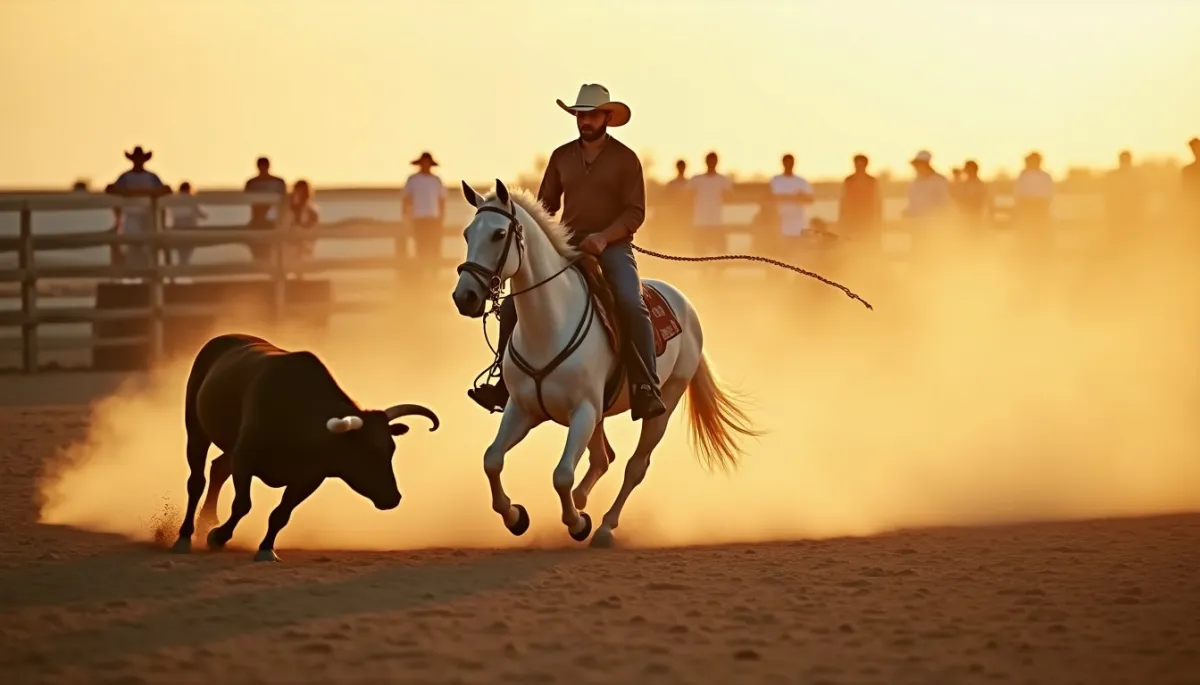
Dust, sun and a single whistle. In the arena, a gardian bends with his horse, the rope unfurling like a practiced calligraphy.
Arènes et traditions
The Jeux de Gardians are public displays where mounted herdsmen (gardians) demonstrate the skills used daily to manage the taureaux and vaches of the manade (semi-wild herd). Events range from the abrivado, where bulls are run through the streets escorted by gardians, to choreographed exercises in an arena showing rope work, control of the herd and precise riding.
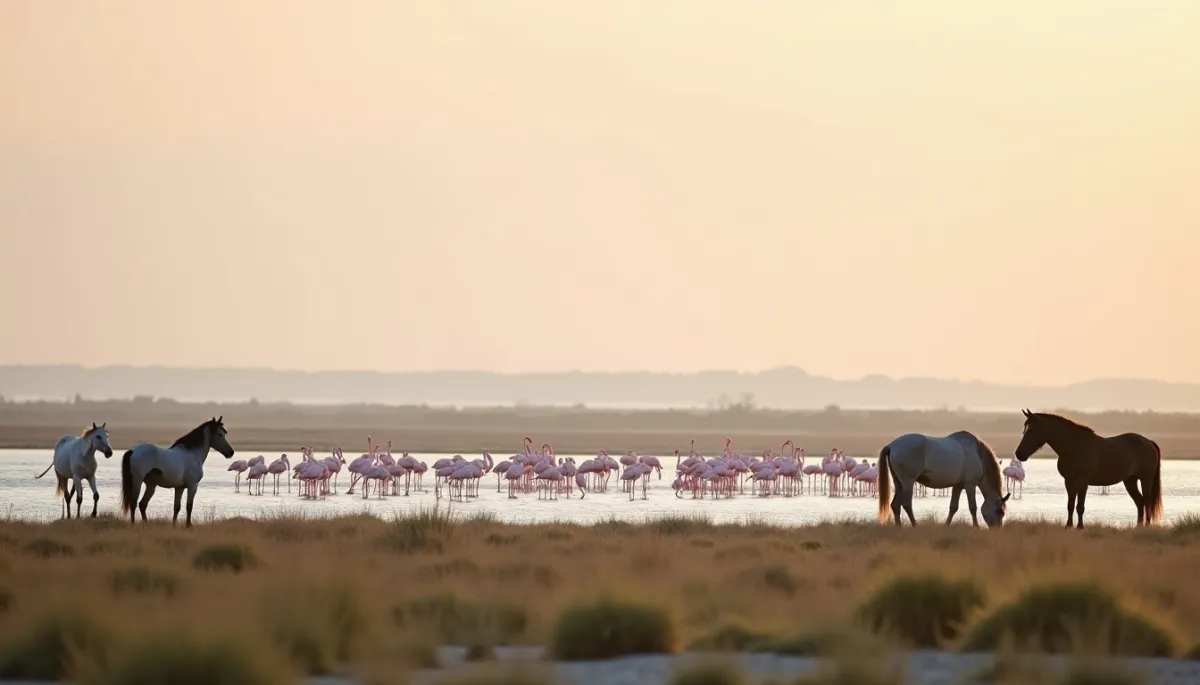
These games are part celebration, part assessment. In rural fêtes and the famous ferias of Arles, Saintes-Maries-de-la-Mer or Istres, gardians compete in categories that judge speed, accuracy and harmony with the Camargue horse, a compact white breed adapted to marshy ground. Spectators cheer not for risk alone, but for the dialogue between man and animal.
For visitors, the spectacle is both visual and cultural. You will notice the sun-bleached hat (chapeau), the braided lasso (corde) and the simple leather equipment—objects that are as much identity markers as tools. The mood is festive; but the origin of each gesture is practical, born of years spent with cattle in open spaces.
De la manade
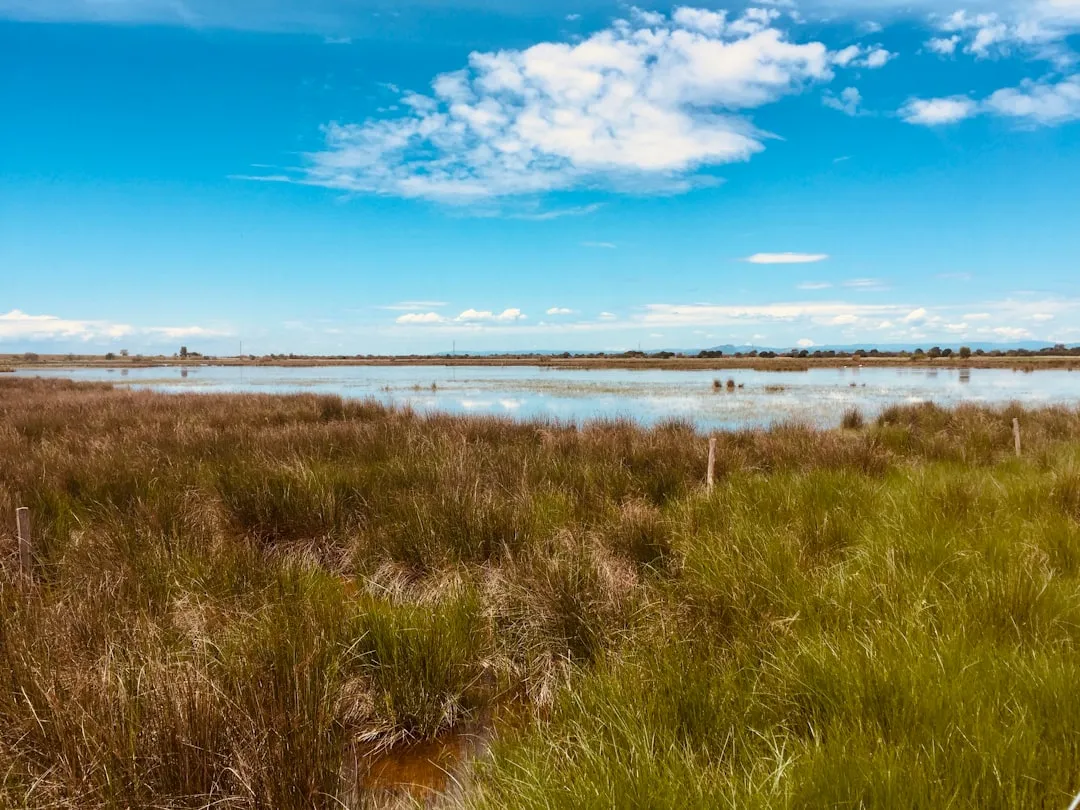
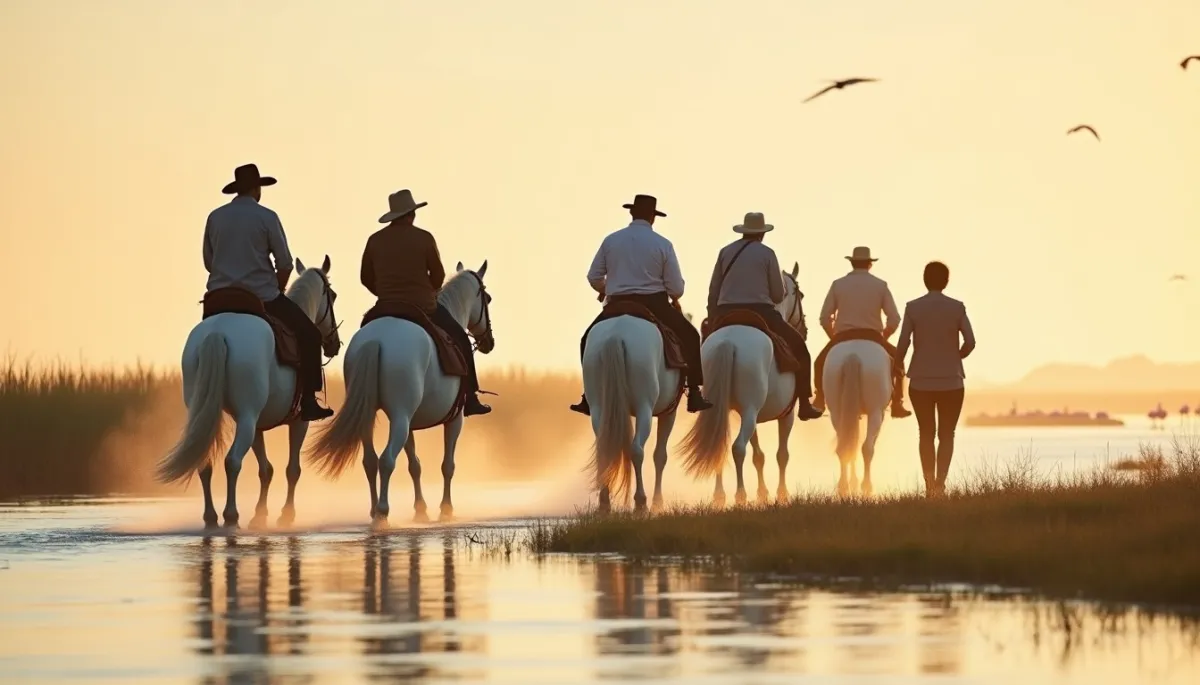
To understand why these "games" exist, go back to the manade. Historically, the gardian was the mounted herdsman of the Camargue, whose task was to move, isolate and protect cattle across marshes and plains. The techniques—lassoing, guiding a reluctant bull, controlling a herd in water—were essential to work, not show.
Folco de Baroncelli (1869-1943) is a central figure in the transformation from practice to performance. Writer and passionate defender of Camargue life, he organized festivals and re-enacted rural customs in the early 20th century, giving visibility to manades and their rituals. His efforts helped turn useful gestures into emblematic traditions cherished by townspeople and tourists alike.
Over decades, certain tasks were formalized into judged exercises: the precision of a throw, the speed of a pick-up, the calm with which a rider brings a taureau to a stop. Judges prize not brutality, but technique and the preservation of animal welfare, a distinction that separates Camargue practices from other more violent spectacles.
Évolutions et défis
Today the Jeux de Gardians face twofold pressures. On one side, tourism and media have amplified visibility, turning local rites into must-see attractions during ferias. This brings money and renewed interest, but also the risk of simplification, where performances are trimmed for spectacle rather than fidelity to technique.
On the other side, modern regulation, animal welfare concerns and changing economic models for manades challenge traditional modes of transmission. Some young gardians choose modern equestrian careers or leave the land, making apprenticeship rarer. Associations and a few committed manadiers respond by opening manades to visitors and by organizing workshops that teach rope and riding skills as living crafts.
Despite tensions, the heart of the Jeux de Gardians endures. In arena competitions, at the gates of a manade like Méjanes (near Arles), or during an abrivado through village streets, the same values persist: solidarity among riders, respect for animals, and an aesthetic born of working life. The spectacle remains a lesson: the best show is never pure show, but the visible mastery of a craft.
Conseils pour le visiteur
If you want an authentic experience, time your visit to a feria—Easter and September gatherings in Arles are notable—or attend a manade open day. Arrive early to see preparations, talk to manadiers, and respect instructions: safety and animal calm are priorities. Bring sun protection; the Camargue sun and the dust of the arenas are part of the memory you will carry home.
Finally, listen to stories. A gardian will tell you how he learned to read the light on a bull's flank, or how a rope can become an extension of the arm. Those anecdotes are the living thread that links work, identity and celebration in the Camargue.