The secret origin of the Camargue horse: myths and realities
The Camargue horse carries salt in its mane and stories in its hooves. From the Rhône delta to the global imagination, its origin mixes legend, local pride and recent science.
🚀 Key Takeaways
- Key concept : The Camargue is a semi-feral, ancient Mediterranean breed, shaped by environment and culture.
- Practical tip : Visit a manade in early morning to see gardians at work and respect fenced perimeters.
- Did you know : Foals are born dark and turn grey to white with age, a signature trait of the breed.
White as salt, tough as marsh reed.
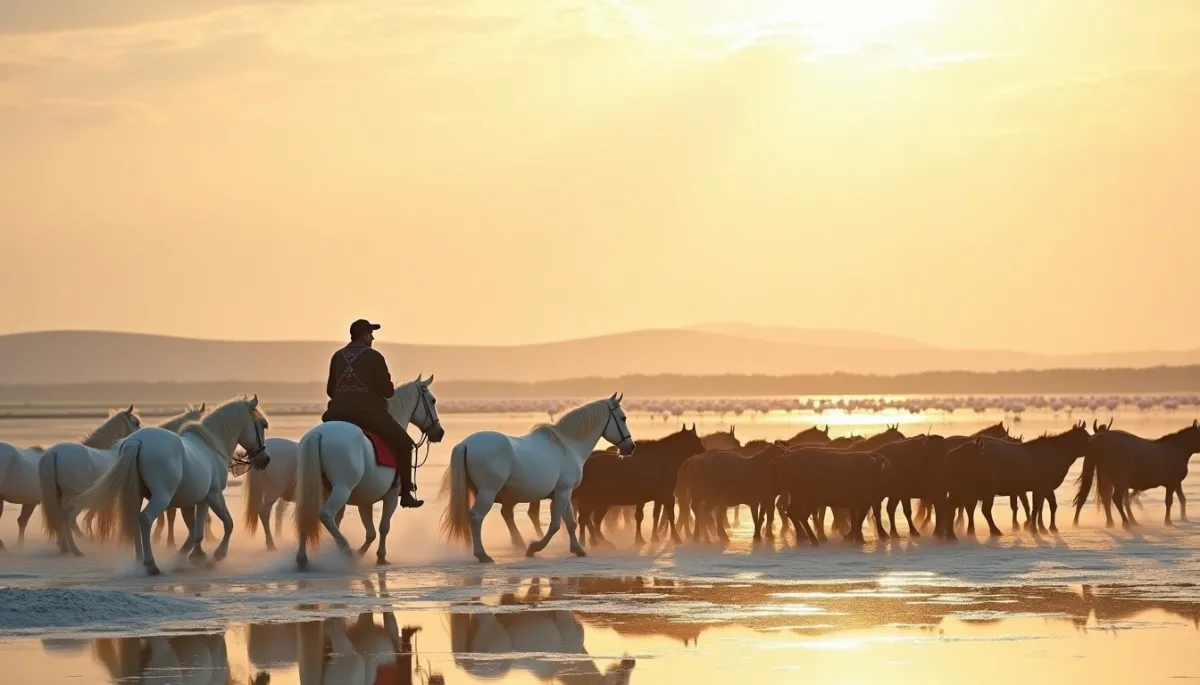
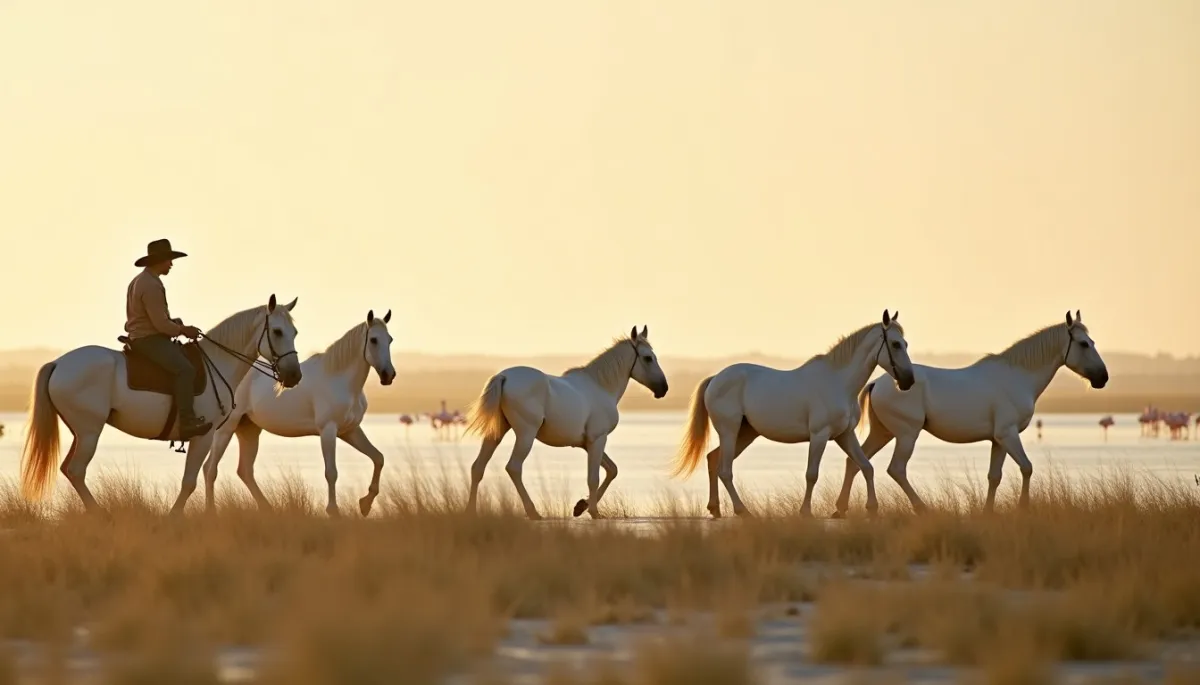
Imagine a low sun on the Vaccarès lagoon, a small herd moving slow through brackish grasses, a gardian perched on a compact horse that seems born from the earth itself. The air carries the thud of hooves and the distant call of flamingos, while the animal, mane glowing, scans the flat horizon like a living emblem of the Camargue.
Visage du marais
The Camargue horse is the emblem of the Rhône delta. Small and robust, usually measured around 1.35 to 1.47 m, it thrives in salt marshes, reed beds and sandy soils where other breeds struggle. Its hard, broad hooves and compact body make it exceptionally adapted to soft, unstable ground.
Local life and economy revolve around manades, the semi-feral herds managed by gardians. These herds live outdoors year-round and are rounded up only for marking, medical care or the seasonal work with bulls. The manade is more than a herd, it is a social unit, a way of life codified by local traditions.
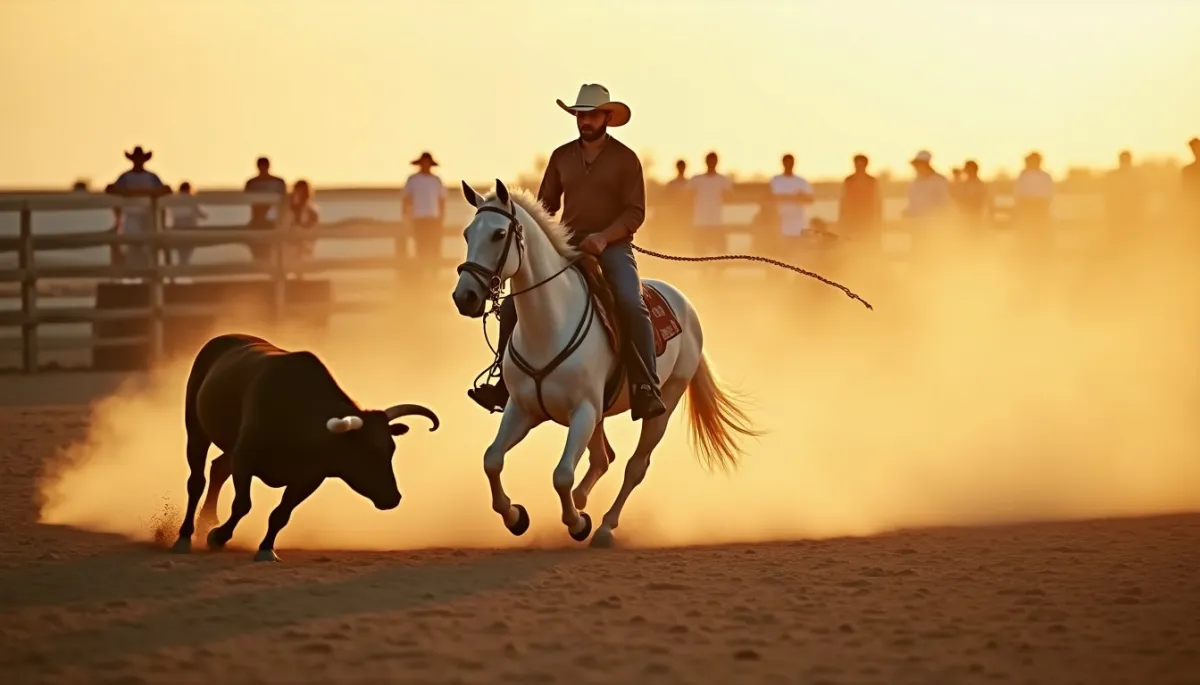
The horse is inseparable from cultural practices like the course camarguaise, a non-lethal bull game, and the work of gardians who drive bulls in salt flats. Photographers and painters from the 19th century to today have immortalized the white horses, but the image you see is the result of centuries of selection by nature and humans.
Racines croisées
Where does the Camargue come from? For a long time, answers came from stories. Local legend speaks of horses roaming the delta since Antiquity. Archaeological remains in the Rhône delta and surrounding Provence show equid presence from prehistoric times, up to Bronze Age layers and Roman accounts that mention hardy local horses.
Folco de Baroncelli (1869-1943), the poet and manadier, played a decisive role in recasting the Camargue horse as a regional symbol. At the turn of the 20th century, he organized manades and festivals that fixed the white horse in popular imagination. The creation of the Parc naturel régional de Camargue in 1970 also helped protect the ecosystems that sustain the animals.
Recent genetic studies conducted since the early 2000s show affinities between the Camargue and other Mediterranean breeds, notably Iberian types. These results support a model of gradual admixture: local primitive stock, periodic introductions from Iberia or North Africa, and sustained natural selection by the delta environment. In short, the breed is a living mosaic.
Entre mythe et science
Legends persist. Some older tales describe the Camargue as a remnant of wild horses that never knew plow or bridle. Others claim influence from Andalusian or Arabian lines. Scientific evidence tempers absolutism: there is no single ancestor, but a long process of adaptation, cross-breeding and cultural selection.
Management practices also shaped the horse. The traditional extensive husbandry meant only the most hardy survived the marsh: animals resistant to salt, humidity, parasites and scarce forage. This survival filter, over centuries, produced the small, long-lived and sure-footed horse we see today.
How to experience this heritage? Visit a reputable manade, especially those that open to the public around Saintes-Maries-de-la-Mer, the Vaccarès lagoon and the Parc naturel régional. Observe quietly, ask the gardian about marking rituals, and avoid touching foals without permission. Supporting local manades helps preserve both the breed and the wetlands they depend on.
In the end, the origin of the Camargue horse is less a single secret than a layered story: marshes, human stewards, migrations and modern genetics. The horse remains a mirror of the Camargue, salt and sun distilled into living form.