Training the Camargue horse: a method forged by the harshness of nature
In the flat light of the Camargue, training a horse is a conversation with wind, water and wildness. The méthode gardiane grew out of generations of manadiers and gardians adapting to marsh, salt and bulls.
🚀 Key Takeaways
- Core concept : Training relies on herd socialization and gradual, practical desensitization.
- Practical tip : Start foal handling early, prioritise calm exposure over force.
- Did you know : The modern garde-robe of the gardian and the saddle camarguaise mirror functional needs born from the marshes.
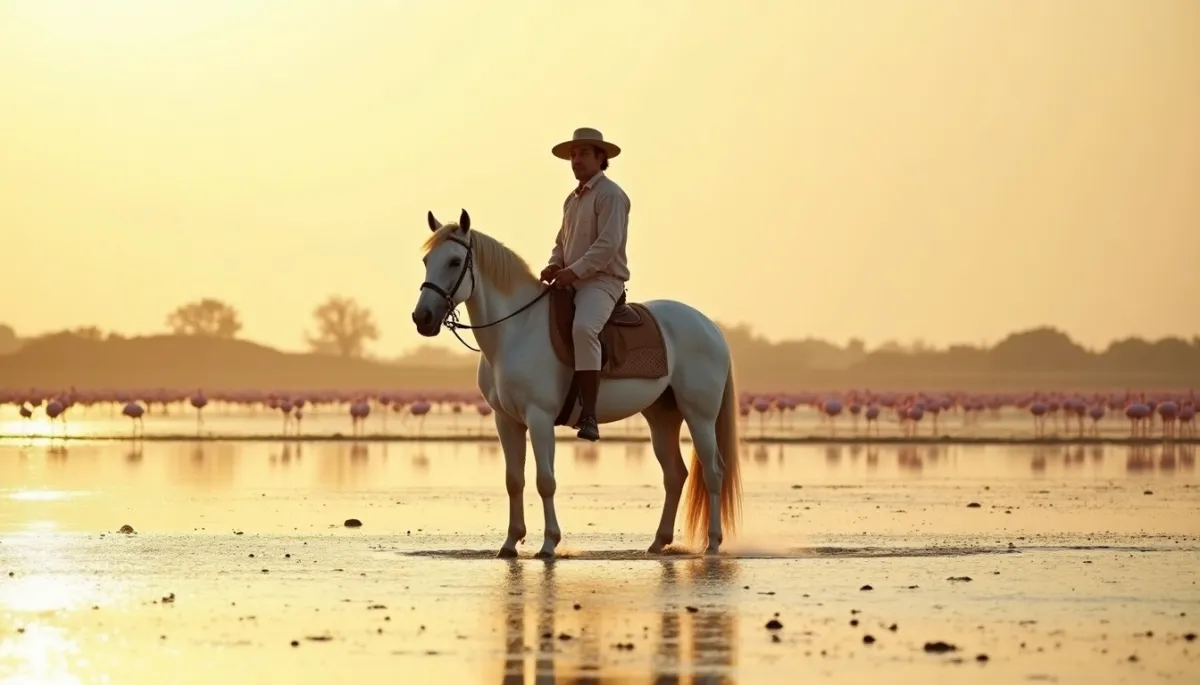
A white horse outlined against a band of flamingos is a promise of resilience.
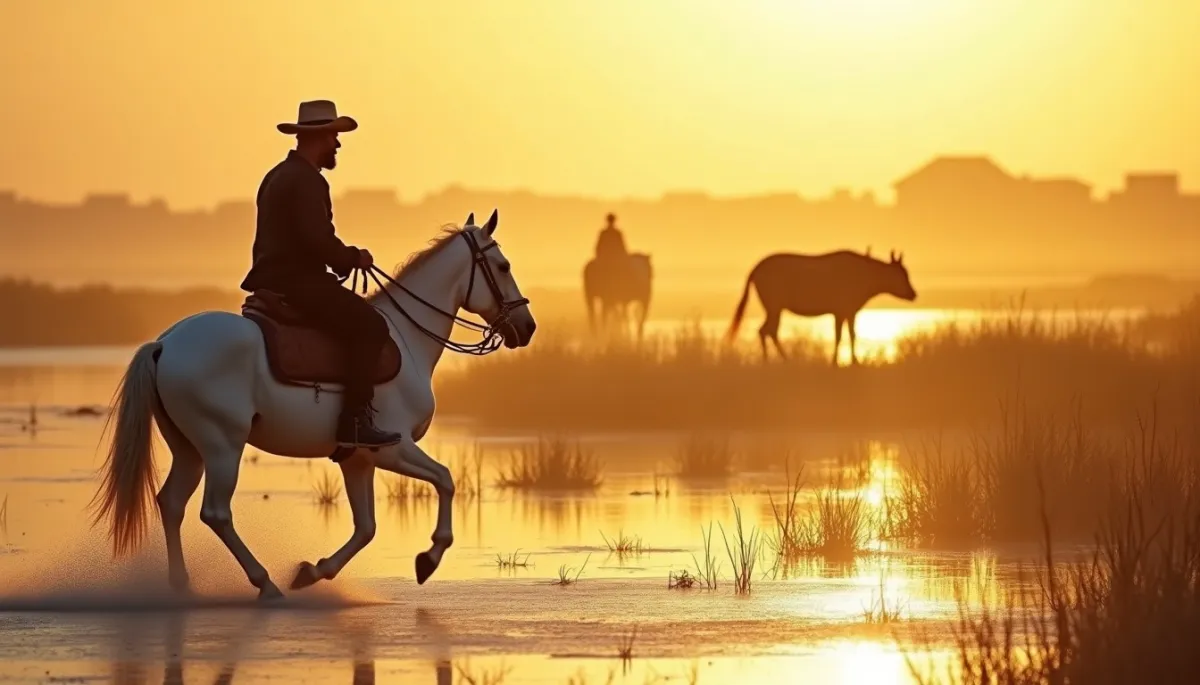
Imagine a manadier at dawn in the plain near Saintes‑Maries‑de‑la‑Mer, the saline smell in his nostrils, a filly nuzzling his hand while a mare eyes the distant bulls. The Camargue horse is not tamed in a ring; it is educated in the rhythm of the manade, within a living herd, by riders who learned to read the land and the animal at the same time.
marques du sel
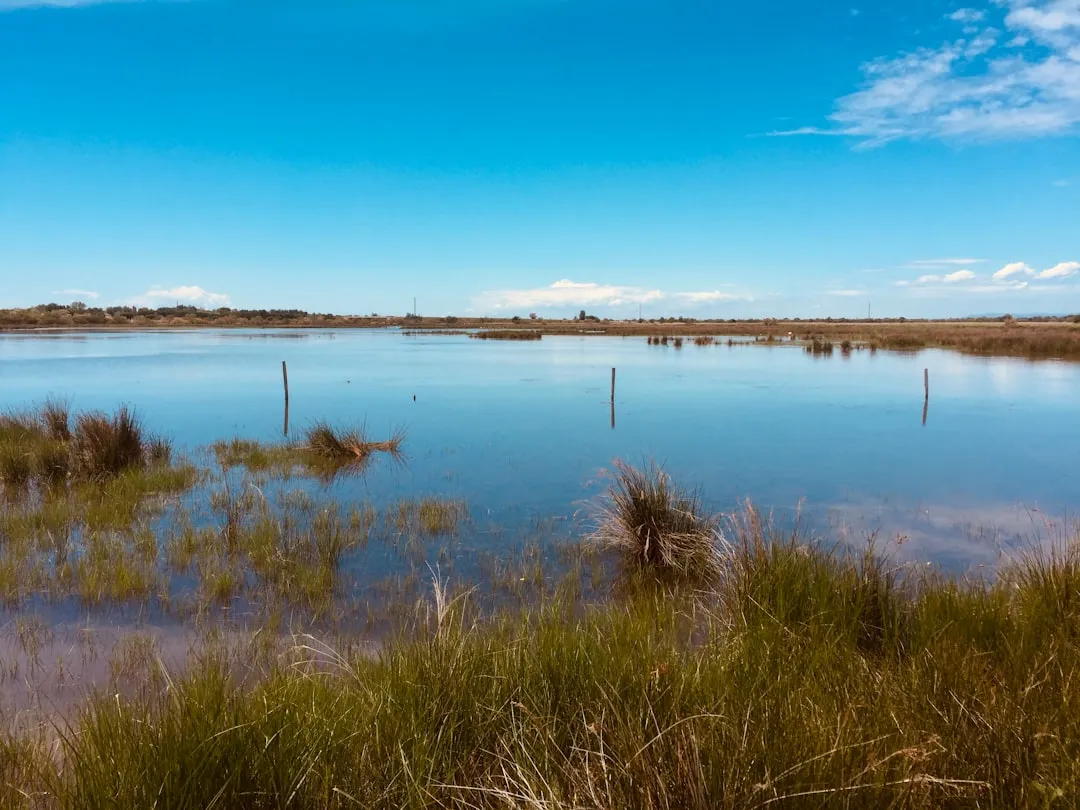
The Camargue horse (often called the white horse though foals are born dark) evolved in the Rhône delta for centuries. Observers from the 18th and 19th centuries already noted their hardiness. Their coat, short back and strong legs suit marshy ground and brackish water.
Training shows those marks of place. Movement is economical, cow‑wise and frank. A trained Camargue horse responds to light rein, weight shifts and a few voice cues; it has learned balance on unstable ground and reaction to sudden bull charges.
Folco de Baroncelli (1869–1943), who founded the Nacioun Gardiano in 1909, helped formalize the cultural role of these horses. He codified ceremonies, fairs and the visible practices of gardians, giving an identity to a way of riding born of utility rather than sport.
école du marais
At the heart of the méthode gardiane is the manade, the herd. Foals grow surrounded by mares and learn social rules before they learn bit and saddle. That social education shortens the gap between wildness and work; a young horse already understands herd cues when a rider appears.
Practical training follows progressive steps: early handling to create trust, long‑line work at liberty to develop balance, and then mounted exercises focused on calmness rather than flashy movements. The saddle camarguaise, low and close to the horse's back, encourages that grounded connection.
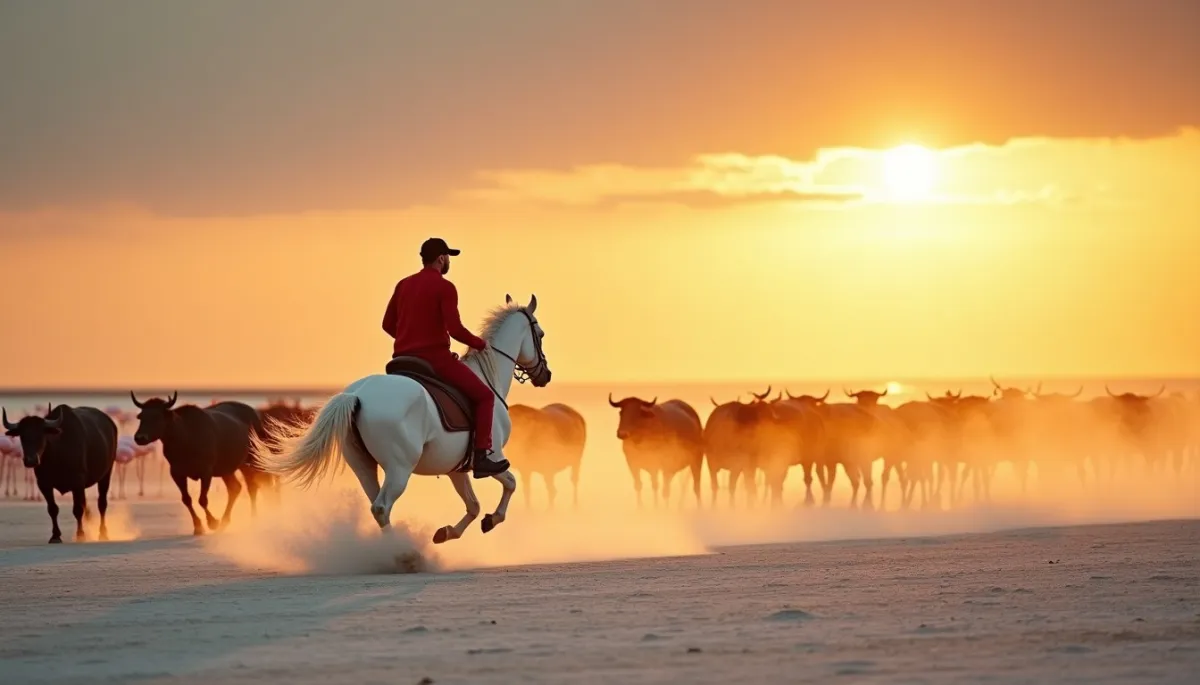
Desensitisation is concrete. Horses are exposed to wind, salt spray, birds and the nearby presence of bulls. A common exercise is to work alongside an abrivado (the driving of bulls through the town), so the horse learns to keep steadiness amid confusion—a skill any gardian values more than a collected piaffe.
sillons partagés
Why this method endures? Because it is efficient. The Camargue horse is not bred for dressage competitions; it must turn fast, hold a herd and live outdoors. Training is a craft tuned to daily needs, transmitted within families of manadiers and via local traditions.
Yet modern tensions appear. Tourism and shows have pushed some trainers to adapt aesthetic criteria: whiter coats, more polished tack, demonstrations in arenas. That raises questions about preserving functional traits versus creating a spectacle for visitors.
At the same time, contemporary natural horsemanship techniques have found real echoes in the Camargue. Trainers who once relied only on practical cues now sometimes mix methods: gentle pressure‑release, understanding equine body language and keeping the manade's social lessons at the centre.
conseils du gardian
Practical advice for anyone who wants to understand or start similar training: begin early, keep sessions short and predictable, and prioritise exposure to real conditions (wind, mud, birds) over artificial exercises. The Camargue method teaches you to read rather than to command.
Respect the manade rhythm. A horse that spends days in the paddock will never acquire the same calm as one living with its herd. When riding, favour simple, clear aids; the Camargue horse answers better to economy of gesture.
Finally, visit. See a manade near Arles or Saintes‑Maries‑de‑la‑Mer, watch a gardian at work, talk with breeders. Knowledge transmitted by watching the land remain the best lesson.