The Camargue horse and wetland stewardship
The Camargue horse is more than a figure of regional identity. It is an active agent in the ecological management of Mediterranean wetlands.
🚀 Key Takeaways
- Core concept : Extensive grazing by Camargue horses maintains open wetland habitats and benefits many species.
- Practical tip : Visit a manade in spring or autumn to see grazing management in action and support local breeders.
- Did you know : Gardians and their manades combine centuries-old expertise with modern conservation objectives.
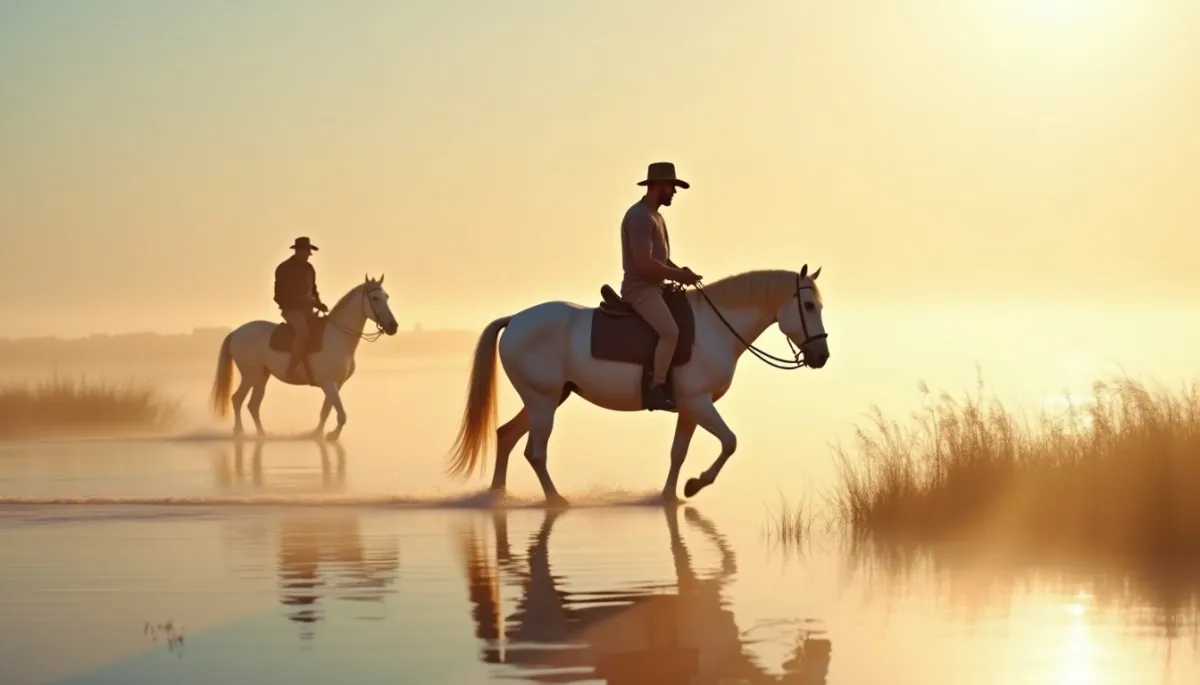
White horses moving through mist, salt on their flanks. A morning like this is the best classroom for understanding the delta.
Marche des prés
The Camargue horse grazes where machines cannot. Its diet of reeds, grasses and halophyte plants shapes plant communities across marshes, salt flats and temporary ponds.
Through selective grazing and trampling, horses limit the spread of tall reeds (Phragmites) and favor a mosaic of short swards and open water. This mosaic is essential for species such as wading birds, amphibians and invertebrates that depend on shallow feeding grounds.
Seed dispersal is another quiet service. Seeds cling to manes and hooves or pass through the digestive tract, allowing plant colonization in newly restored basins. On a small scale, the horse behaves like a living landscaper, moving nutrients and structure across the marsh.
Racines du métier
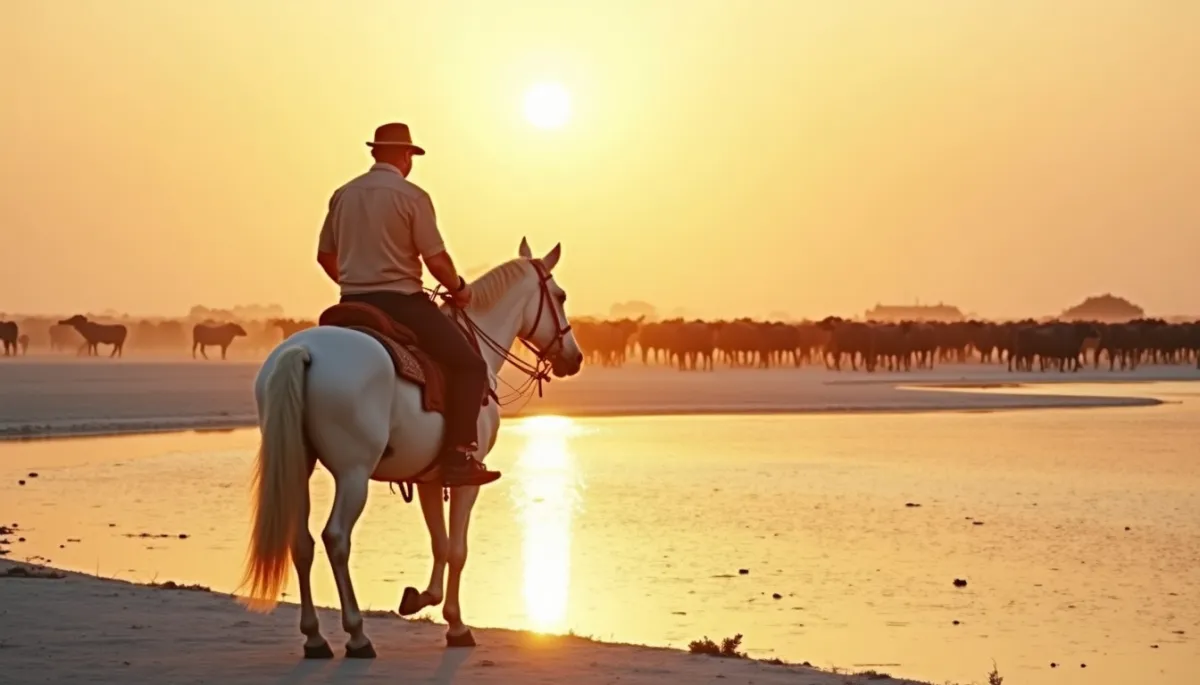
The relationship between the cheval Camargue and the gardian is ancestral. For centuries, local herdsmen organized livestock in manades, the semi-feral breeding units adapted to delta life.
Modern conservation frameworks have integrated this tradition. The Parc naturel régional de Camargue was created in 1970 to protect the delta's landscapes and species, and subsequent land purchases by the Conservatoire du littoral, founded in 1975, helped secure key wetland parcels. In this context, manadiers became partners of biodiversity management.
Today, many manades balance livestock production with ecological objectives. They coordinate grazing periods with managers to avoid sensitive nesting seasons for birds, and they use low-intensity grazing regimes that mimic historical disturbance patterns rather than intensive pasture use.
Entre défis et promesses
The role of the Camargue horse is not a panacea. Hydrological changes, rising salinity, and land reclamation have shrunk habitats. Climate change increases the unpredictability of flooding and drought, making grazing timing more difficult.
There are also risks if grazing is mismanaged. Overgrazing on small islands can erode soils, and unmanaged horses can conflict with rice cultivation or road networks. These tensions require careful planning and dialogue between farmers, park authorities and local communities.
Yet the outlook has promising innovations. Ecopastoral projects combine scientific monitoring with traditional knowledge. Rotational grazing, seasonal exclusion of sensitive zones, and targeted opening of channels to restore natural flooding all show that horses can be part of adaptive management strategies that support both livelihoods and wildlife.
Gestes et savoirs
To understand these dynamics, watch a gardian at work. His decisions are pragmatic. Where to move the herd, when to let mares foal in high ground, how to open a reed bed for nesting birds, these choices shape ecosystems over decades.
Practical advice for visitors and managers: respect signage during breeding season, favor guided visits with manades that practice conservation grazing, and ask about seasonal constraints. Purchasing local breeding services and tourism helps sustain the manade model.
Terms to remember: a manade is a semi-feral herd and its ranch, a gardian is the Camargue herdsman, and ecopasture (écopâturage) means using grazing animals as ecological tools under planned regimes.
Horizon salin
At landscape scale, integrating horses into wetland management preserves the open character of the delta. This is crucial for iconic species, from flamingos that feed in shallow lagoons to small passerines that nest in low vegetation.
Public policies that combine land protection, water management and support for traditional breeders reinforce this role. The conservation value of the Camargue horse makes it both a cultural emblem and a living partner in stewardship.
In short, seeing a white Camargue horse crossing a lagoon at dawn is aesthetic, but it is also ecological practice. These animals embody a form of low-tech, place-based management that remains essential as we face accelerating environmental changes.