The wild salt pans of the Camargue: the white and pink desert of southern France
On the edge of the Mediterranean, vast salt pans unfold like a lunar plain. White ridges and pink pools carve a landscape both industrial and wild, where birds and men share the harvest.
🚀 Key Takeaways
- Key concept : Solar saltworks in the Camargue combine traditional harvesting and industrial production.
- Practical tip : Visit at sunrise in summer for best colors, bring sun protection and binoculars.
- Did you know : The pink hue comes from halophilic algae (Dunaliella) and bacteria, and brine shrimp feed flamingos.
Silence and blinding light.
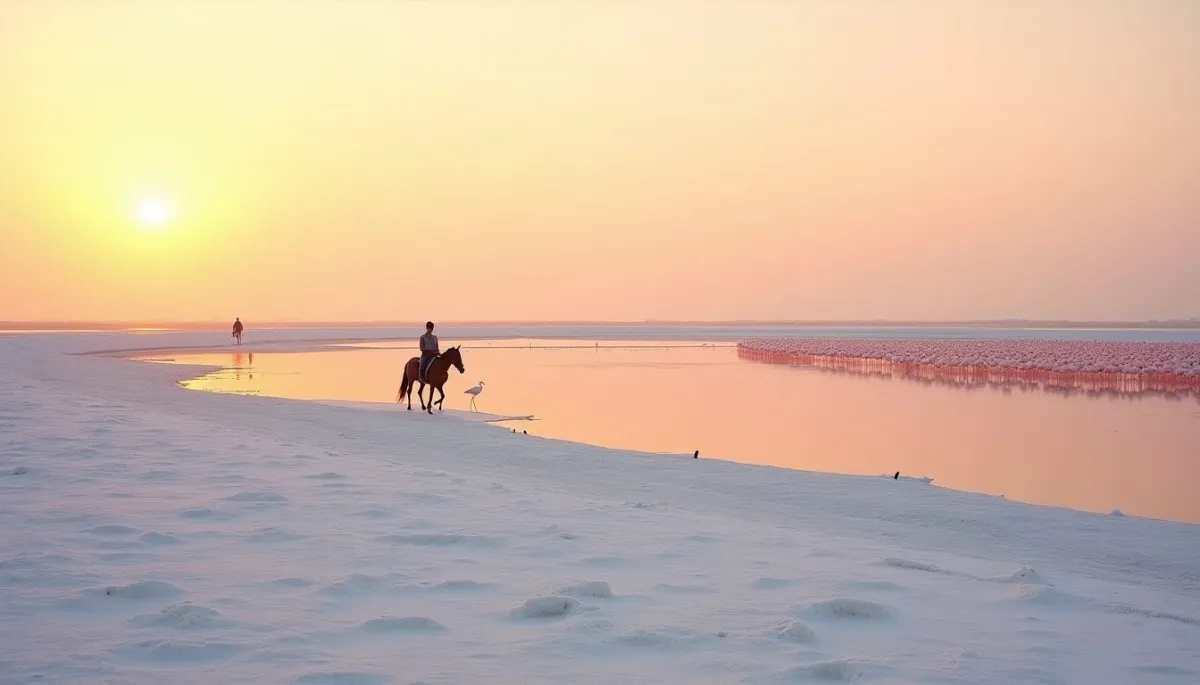
Imagine walking on hard salt crusts under a sky that seems too bright, while shallow basins reflect a pale, metallic white and, further away, bands of intense pink. Small machines and long rakes move rhythmically, gardians on horseback cross distant embankments, and flocks of flamingos stand like living punctuation marks on the horizon.
Mirrors and ridges
The salins of the Camargue are vast evaporation tables, where seawater is guided through a sequence of ponds until crystals precipitate. Places like Salin-de-Giraud and the saltworks near Aigues-Mortes are both cultural and industrial sites, visited by photographers and naturalists alike.
Salt has been collected here since antiquity, and the region’s modern salt economy developed strongly in the 19th century, with companies and local communities shaping the landscape. The white piles you see are the product of months of solar evaporation and seasonal harvests, often concentrated in late spring and summer.
Visitors can sometimes witness the manual harvest of fleur de sel, a delicate layer prized by chefs, as well as machine-assisted collection for bulk salt. The texture, the color, and the smell of the place tell a long story of work between land and sea.
Living pink
The pink shades are not decoration, they are life. Microscopic algae called Dunaliella salina accumulate carotenoids in high salinity, and halophilic bacteria add warm tones. Together they create the rosy bands that make the salins emblematic.
These extreme habitats host brine shrimp (Artemia), which sustain flocks of flamingos. Since the 1970s, the Camargue has become an important breeding and feeding area for greater flamingos, and the salt pans are part of that ecological network inside the Parc naturel régional de Camargue, created in 1970.
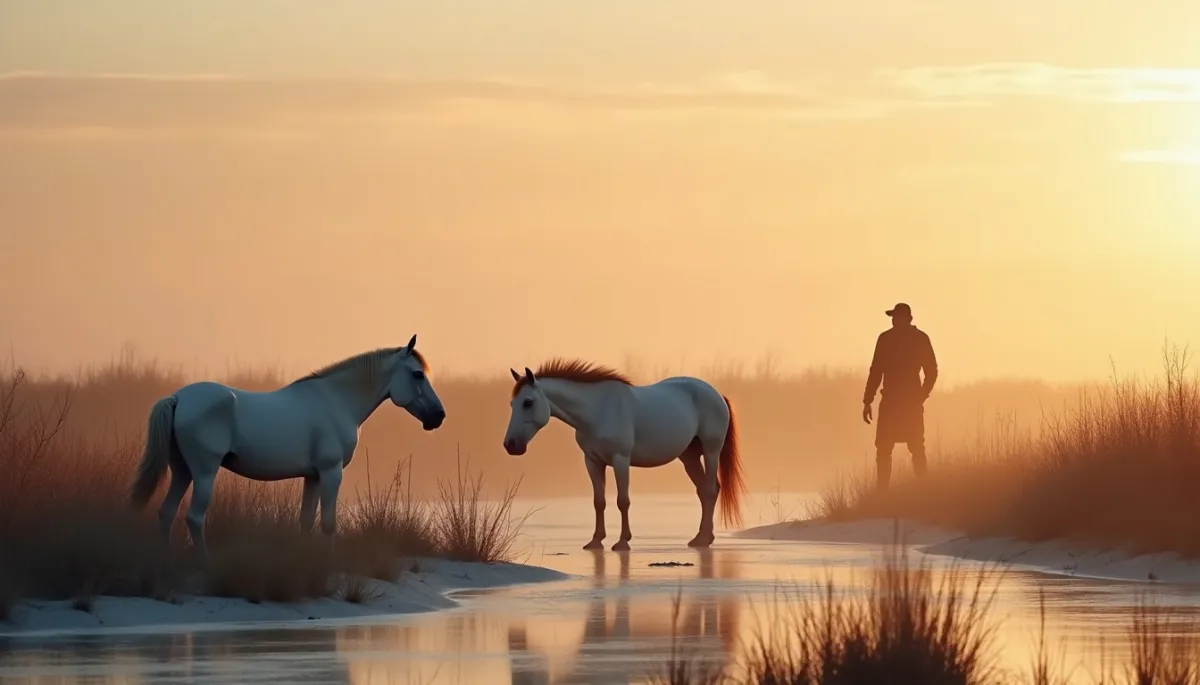
Local gardians, the mounted cattle herders of the Camargue, have long navigated these salt plains. Their salt-stiffened boots and sun-darkened faces are part of an enduring human presence, connecting pastoral practices to maritime industry.
Use, challenges, advice
Salt production is both a livelihood and a conservation challenge. Industrial groups operate large salins, while small-scale producers protect artisanal know-how. Balancing economic activity and biodiversity requires careful water management and seasonal restrictions.
Climate change and shifting rainfall patterns are real concerns for saltworks that depend on predictable evaporation. At the same time, the unique habitats they create are valuable for migratory birds, so management decisions carry ecological weight.
For visitors: aim for early morning light, respect private and operational zones, join guided tours where available, and bring sunscreen and water. A good lens or binoculars will reveal flamingo behavior, and a simple rake and salt heap tell of a craft shaped by centuries.