Camargue vs Far West: A comparative look at two working-horse cultures
Between salt marsh and prairie, two horse cultures speak the same language, with different accents. From the manades of the Rhône delta to the cattle drives of the Chisholm Trail, traditions of work and ritual shape riders and landscapes.
🚀 Key Takeaways
- Concept key : Camargue gardians and American cowboys are both working equestrians, shaped by environment and cattle economy.
- Practical tip : Visit a manade in spring, and attend a rodeo week like Cheyenne Frontier Days for a full experience.
- Did you know : Buffalo Bill popularized the cowboy image worldwide from 1883 onward, much as Folco de Baroncelli revived Camargue identity in the early 20th century.
Light, wind, hooves.
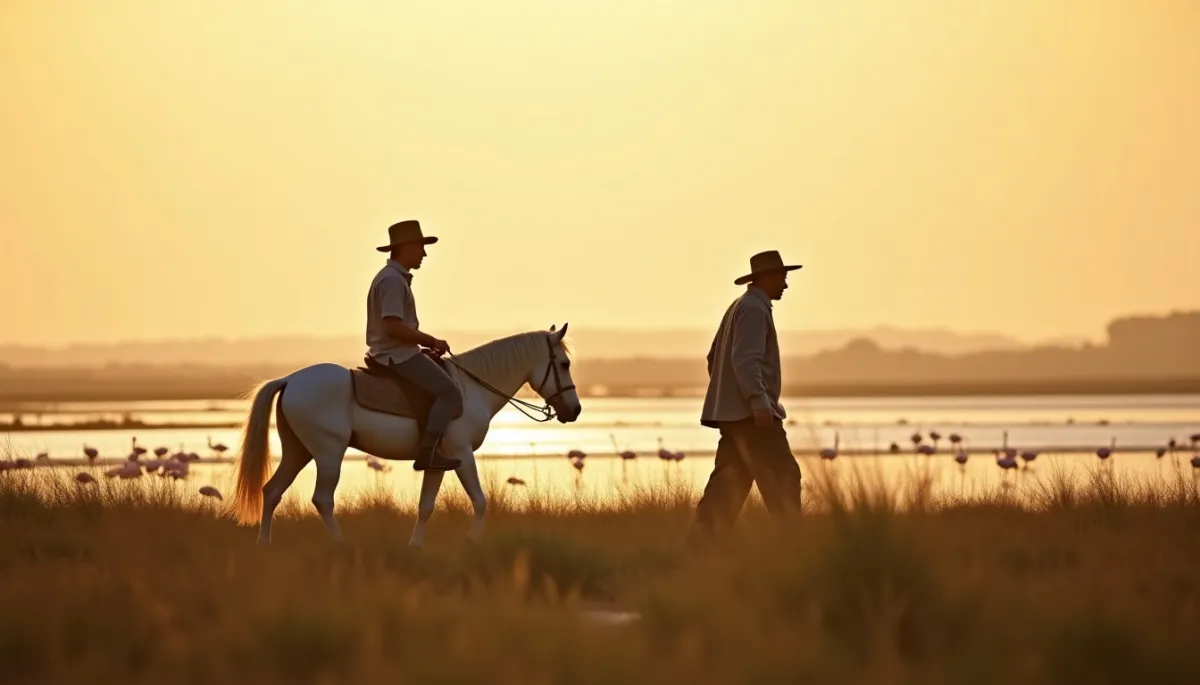
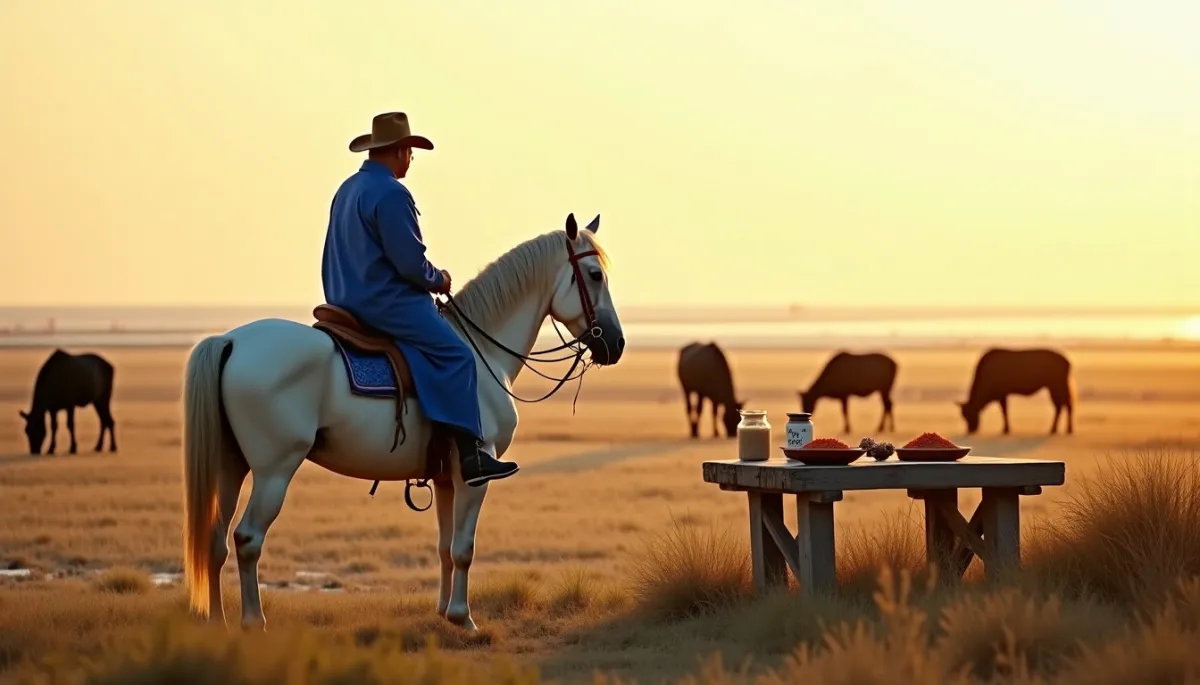
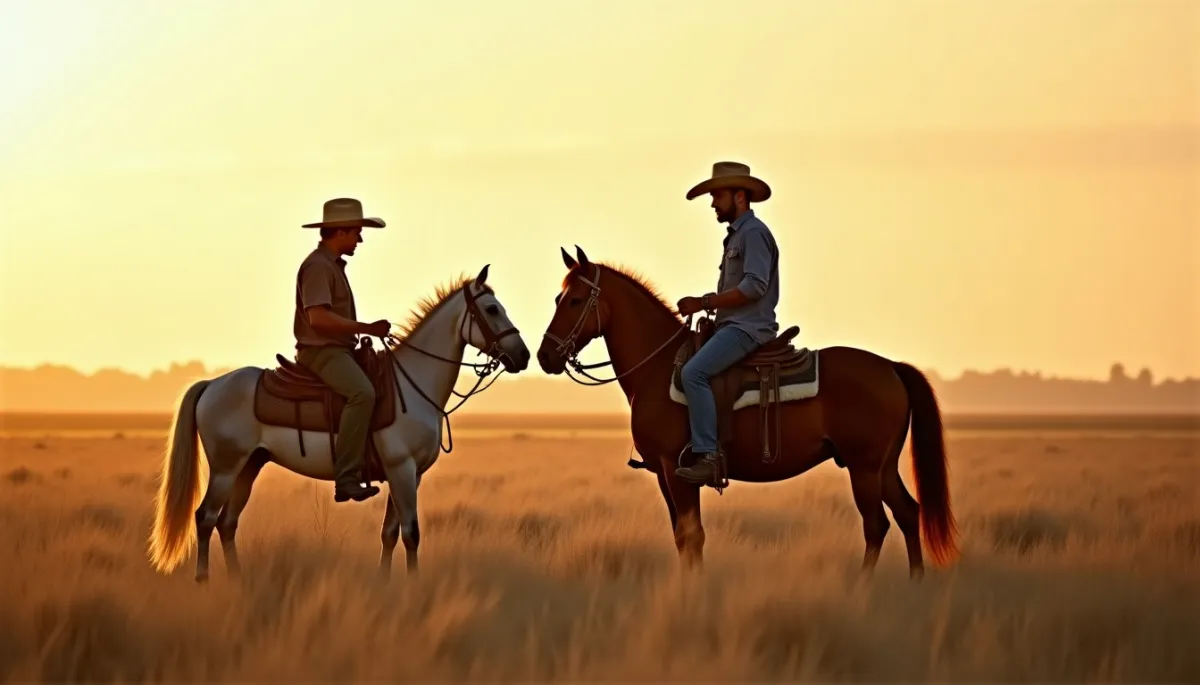
Imagine a low sun on wet salt plains, a small grey Camargue pony galloping beside a chestnut Quarter Horse on a dusty trail, riders calling to their herds. On one side, a gardian in a flat hat guides a manade of black bulls. On the other, a cowboy in a wool shirt scouts cattle on the open range. You can smell brine and dust together, and feel how horses become an extension of each rider.
Horses and people
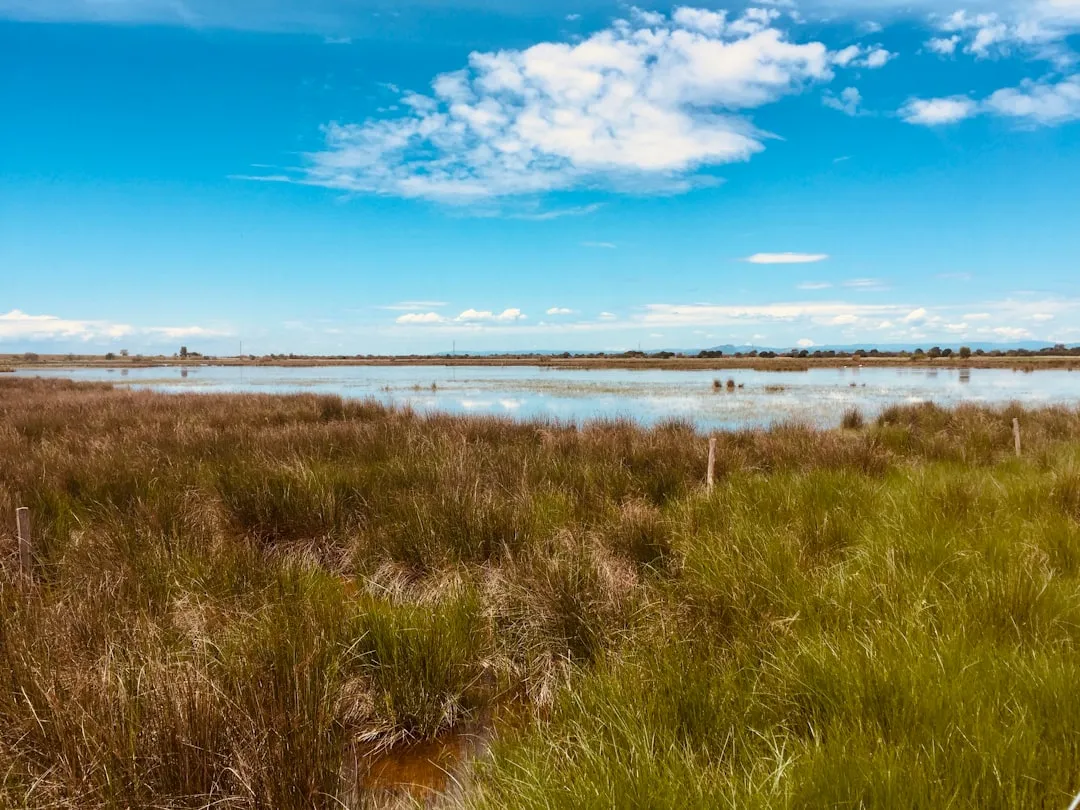
The Camargue horse is compact, mostly grey, adapted to marshes and salt, semi-feral in many manades. It has long been associated with gardians, the mounted herders of the delta who manage bulls and salt-tolerant cattle.
Across the Atlantic, the American cowboy relied on stock horses such as the early foundation bloodlines of the Quarter Horse, prized for acceleration, cow sense, and versatility. Cowboys were itinerant after the Civil War, especially during the cattle drive era from roughly 1867 to 1884 along trails like the Chisholm Trail.
Both cultures produced specialized tack and techniques. The Camargue saddle is low and close; the western saddle includes a horn for roping. Both aim to make long hours on horseback sustainable, but their forms reflect wetlands versus open plains.
Rituals and public life
In Camargue, events like the abrivado and the course camarguaise are central. The abrivado, a dramatic escort of bulls through village streets, accompanies pilgrimages such as the Saintes-Maries-de-la-Mer festival, a ritual with roots in local devotion and identity.
In the United States, rodeos professionalized by the late 19th century, with Cheyenne Frontier Days starting in 1897 and Buffalo Bill's Wild West shows from 1883 exporting a stylized cowboy worldwide. These spectacles turned work skills into public sport.
Both models blend economy and pageantry. In Camargue the manade (a herd managed by a family or camp) remains an economic unit, registered and passed down. In the U.S., ranches grew into large enterprises, and the rodeo circuit became a livelihood for many riders.
Origins and turning points
Camargue identity was reshaped by figures like Folco de Baroncelli (1869-1943), who in the early 20th century promoted regional language, the manade system, and the image of the gardian. His work helped preserve local customs at a time when modernization threatened them.
The cowboy myth emerged from real needs: post-Civil War beef demand, railroads that opened markets, and trails that moved tens of thousands of cattle north to railheads between 1867 and the mid 1880s. People such as William F. Cody transformed the reality into entertainment, while lawmen and outlaws like Wyatt Earp and Billy the Kid fed the legend.
Economic and environmental pressures also diverge. Camargue land is fragile, protected increasingly since the 20th century, forcing manades to adapt. American range grazing faced fencing, barbed wire, and later land management laws that changed the cowboy's work by the late 1800s.
Contrasts and continuities
At first glance, the contrasts are obvious: size of herds, scale of landscape, styles of saddle and rope. Yet continuity lies in the human-horse partnership, the transmission of skills, and a shared vocabulary of mounted herding.
Modern revivals bring both cultures to tourism and conservation. In Camargue, eco-tourism and protected areas (Camargue Regional Nature Park, created 1970) support manades but also require new practices. In the U.S., rodeo circuits and Western heritage museums preserve skills while adapting to animal welfare standards.
If you go, a few practical tips: in Camargue, choose a guided manade visit in spring or during the Saintes-Maries pilgrimage, wear boots and respect herd distances. In the U.S., see a sanctioned rodeo to appreciate the skill set, and ask ranch operators about seasonal work to avoid disturbing operations.
Two traditions, one horizon. They remind us that culture grows from landscape and labor, and that the bond between horse and human writes some of our most enduring stories.